Trusted Source for Mandi Bhav Updates









Select Mandi
Trusted Source for Mandi Bhav Updates
Select Mandi

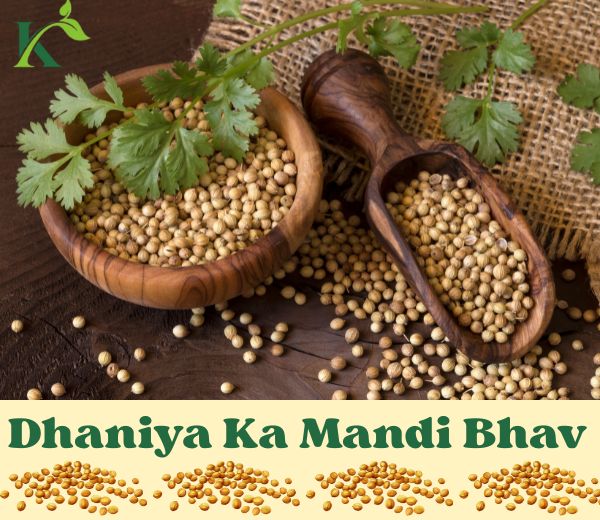
Dhaniya: All Prices Are in Quintal
Description
Dhaniya, or Coriander, is a crop that holds a special place in the Indian kitchen and the farmer's heart.
Dhaniya is admired for its dual-purpose nature and its ability to fit perfectly into the winter cropping cycle of Rajasthan, Madhya Pradesh, and Gujarat.
Sowing Window: For the best seed quality, it is usually sown from mid-October to mid-November. If you're growing it just for green leaves, sowing can happen in multiple batches through December.
Climate: It enjoys the cool, crisp winter air.
Soil: It thrives in well-drained loamy or clay-loam soils.
One of the biggest advantages of Dhaniya is the flexibility it offers in earning:
Green Leaf Harvest: Farmers can take 2–3 "cuttings" of fresh green leaves to sell in local vegetable mandis before finally letting the plant go to seed.
The Spice Market: Once the seeds turn a golden-yellow or light green, they are harvested and dried. These seeds are a major export commodity, used in everything from perfumes to pharmaceuticals.
Low Input, High Return: Compared to wheat, Dhaniya requires less water and fewer fertilizers, making it a "smart" choice for areas with limited irrigation.
The "Color" Premium: In the mandi, the greener the seed (for the "Parrot" variety) or the brighter the gold (for "Eagle"), the higher the price. Discolored seeds due to late rains can lead to significant price drops.
Moisture Levels: To reach the export market, seeds must be dried to below 9% moisture.
Market Sentiment: With a reported 12-15% dip in production across Rajasthan and MP this year, the market sentiment remains bullish. Smart farmers are storing their "A-grade" stock to sell during the peak demand months of the monsoon.
| Mandi | Price | Date |
|---|---|---|
| Neemuch MP | 7,810.00/- | 11 May, 2026 |
| Mandsaur MP | 12,810.00/- | 11 May, 2026 |
| Indore MP | 10,415.00/- | 11 May, 2026 |
| Ujjain MP | 11,210.00/- | 11 May, 2026 |
| Ratlam MP | 11,550.00/- | 11 May, 2026 |
| Kota | 13,000.00/- | 11 May, 2026 |