





Crops
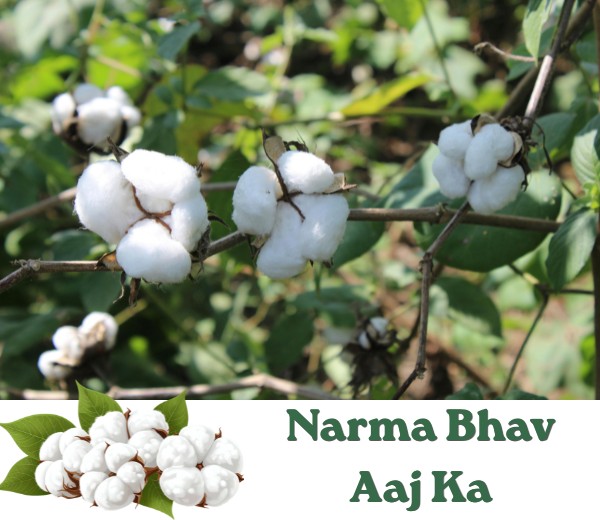
Picture this: you are a narma grower in Hanumangarh. Your tractor is loaded, the cotton is packed, and you need to decide right now whether to head to the mandi or hold for another day. That decision hinges entirely on the narma ka bhav, the cotton rate, at that yard this morning, and whether nearby mandis like Pillibanga or Ellenabad are quoting better. The difference is not trivial. Selling a 50-quintal lot at ₹8,600 per quintal versus ₹8,400 puts ₹10,000 more in your pocket from a single morning's decision. Narma cotton prices shift every auction day, and mandi-to-mandi gaps of ₹100, ₹200 per quintal are common on the same day, enough to matter significantly across a full season's harvest. KhetiKisaan publishes live narma ka bhav sourced directly from contacts physically present at APMC auction yards each morning, and many North Indian cotton growers check it before they load their carts. This article covers what moves the daily cotton rate, how the APMC auction works, which mandis are quoting the best prices, how to convert between candy and quintal, and where to get verified data every day without delay. What actually moves narma cotton rates at the mandi Narma cotton prices on any given day are shaped by three forces acting together: the physical quality of the cotton arriving at the yard, the national MSP floor set by the government, and the demand signals coming from textile mills and exporters. Understanding all three helps you decide not just where to sell, but when. Quality is the most direct price lever Gin recovery is the percentage of usable fibre extracted from seed cotton at the ginning mill. The standard benchmark in Indian cotton markets is around 34%, as referenced by CIRCOT (Central Institute for Research on Cotton Technology). When your narma delivers gin recovery above this level, buyers bid more because they extract more fibre per quintal purchased, though there is no single industry-wide published cutoff that formally defines a "premium" grade. Staple length and moisture content complete the quality picture: damp or short-staple kapas consistently receives lower bids at the bol-chaal auction because it costs the buyer more to process and yields less finished product. MSP and mill demand set the market ceiling and floor The government sets a Minimum Support Price (MSP) for cotton each Kharif season as a safety net for farmers. For Kharif 2026-27, the Cabinet-approved MSP stands at ₹8,267 per quintal for medium staple and ₹8,667 per quintal for long staple narma cotton. When textile mills face low yarn inventory or export orders surge, the cotton rate pulls above MSP. When imports rise or demand softens, rates settle back toward that floor. Knowing where your local mandi rate sits relative to MSP tells you whether the market is offering a genuine premium or barely clearing the minimum. How APMC auctions price your kapas cotton At every APMC mandi, narma cotton is priced through a live oral auction called bol-chaal, where licensed traders bid against each other for each lot. The highest bid wins, and that number becomes the day's cotton rate for that quality. The entire process is fast, transparent, and happens before most people finish their morning chai. The bol-chaal process, step by step When you arrive at the mandi, your lot is weighed and inspected visually by traders before bidding begins. Multiple licensed buyers call out competing bids; the commission agent, known as the arhatiya, facilitates the process. Trading happens in the early morning hours, and each lot is typically cleared quickly, often in only a few minutes per lot, though this can vary by yard and arrival volume. The quality inspection at this stage is where grade differences directly translate into real rupee gaps: two lots arriving the same morning can fetch materially different prices if one is cleaner and drier than the other. Mandi fees and your actual take-home per quintal The narma ka bhav quoted in mandi reports is the gross auction price, not what you receive in hand. In Haryana mandis, standard deductions include a market fee of around 2% and an arhatiya commission of around 2.5%, as per the Haryana APMC fee schedule. Rajasthan mandis carry a total levy of approximately 3.6%, per the Rajasthan APMC notification. Knowing these charges before you choose a mandi lets you compare net realisations fairly, rather than comparing headline rates that do not account for deductions. Why a ₹100, ₹200 gap exists between mandis on the same day Local buyer competition, the volume of cotton arriving at a given yard that morning, and proximity to ginning mills all create micro-level price differences within the same region. A mandi with more active buyers and fewer arrivals will typically bid higher than a neighbouring yard facing heavier supply pressure. Moisture content and pick quality compound this further: cleaner, drier cotton arriving at one market fetches a measurably better rate than comparable cotton at another yard the same day. This is exactly why tracking narma mandi rates across multiple yards before you load your cart matters so much. Candy to quintal: the conversion every narma seller must know In Indian cotton markets, 1 candy equals approximately 356 kg, or 3.56 quintals. To convert a per-candy price to per quintal, divide by 3.56. To go the other way, multiply your per-quintal rate by 3.56. Some mandis and ginners still quote ginned lint cotton in candy, so knowing this formula is non-negotiable. The simple calculation with a real example Ginners who deal in processed lint sometimes quote prices on a per-candy basis. To illustrate: if a ginner quotes a ginned lint candy rate of ₹1,97,580, that works out to approximately ₹55,500 per quintal of ginned lint (₹1,97,580 ÷ 3.56). Note that these are ginned lint figures, not seed cotton rates. Seed cotton (narma ka bhav per quintal at the mandi) and ginned lint prices operate on entirely different scales. If a ginner quotes you a candy price, run this conversion and confirm whether they mean seed cotton or ginned lint before assuming it is a comparable deal. A few seconds of arithmetic can stop a costly misreading. How quality grade shifts what you get per candy Grade differences at the auction have a direct impact on your earnings. Keeping your kapas dry, clean, and free of contamination before you arrive at the mandi directly protects your price every season, even a small downgrade at the bol-chaal can translate into a meaningful rupee loss when multiplied across a full candy's weight. How to check live narma ka bhav before you sell each morning The fastest and most reliable way to check kapas bhav aaj (today's cotton price) is through a platform that has someone physically present at the APMC yard during the live auction. A portal pulling delayed government feeds hours after trading closes gives you yesterday's market dressed up as today's news. Why government portals lag behind real auction prices Official platforms like Agmarknet update rates with a delay that can stretch from a few hours to an entire trading day. By the time those numbers appear on your screen, the morning auction is already concluded. A farmer acting on yesterday's rate in today's market is negotiating blind: you may drive to a mandi expecting ₹8,600 only to find the yard settled at ₹8,400 several hours earlier. Where KhetiKisaan fits into your daily selling decision KhetiKisaan publishes narma cotton prices from on-ground contacts who attend live APMC auctions across Rajasthan, Haryana, and Madhya Pradesh each morning. The rates reflect actual bol-chaal bids from that morning's auction, covering key mandis including Sri Ganganagar, Nohar, Hanumangarh, Sirsa, and Ellenabad. Checking the latest narma ka bhav on KhetiKisaan before you load your tractor gives you a realistic price target and tells you which mandi is worth the extra distance that day. Bottom line: know your narma ka bhav before you move Narma cotton prices are not a single fixed number. They vary by mandi, by quality, and by the day's buyer competition at each yard. These three things, understanding what drives the rate, knowing the candy-quintal conversion, and checking live mandi data every morning before you sell, together add real money across a full season. Bookmark KhetiKisaan for your daily narma ka bhav check. The few minutes you spend tracking the market each morning can easily return thousands of rupees more per lot, without changing a single thing about your farming. Narma Mandi Bhav Today Narma Mandi Bhav today helps farmers check the latest cotton rates in different mandis. Narma or American cotton, is a long-fiber cotton crop. It is cultivated primarily in Rajasthan, Haryana and Punjab, where it finds application in the textile industry. Narma is a Kharif crop. It is sown from mid-April to May. Early sowing is better in some areas so the crop can be ready before winter frost. It grows well in warm weather and needs full sunlight when the cotton opens. The crop gives good results in deep alluvial soil or sandy loam soil. Good drainage is important because the crop does not handle waterlogging. Narma is in high demand because of its strong and fine fiber. Mills use it to produce fine cloth and products that are of export quality. Bt cotton is also cultivated by many farmers because of the protection offered against pests such as bollworms. Oil and cattle feed are obtained after harvest using seeds. Key Factors Affecting Narma Mandi Bhav First picking gets a better price Low moisture gives a higher rate Clean and white cotton is preferred Global demand affects price Quality of cotton changes rates Narma Mandi Bhav today depends on quality and demand. Farmers check cotton prices in India daily to decide the right time to sell and get better value.
 Read More
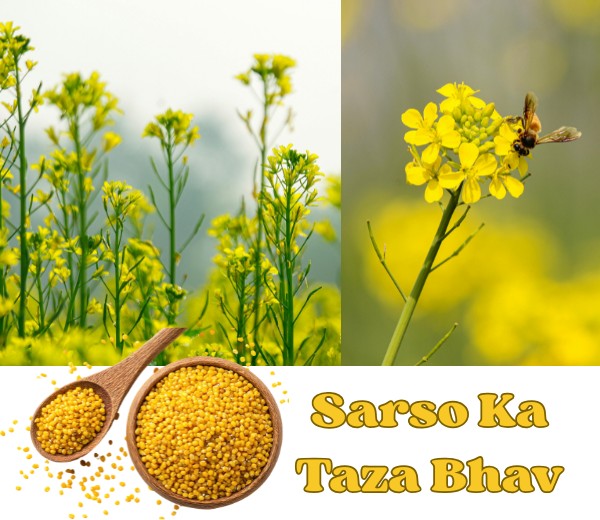
Quick facts (sarso crop mandi bhav): Understanding the sarso crop description and what affects sarso mandi bhav begins with the basics. Sarso (mustard, Brassica juncea ) is India's dominant edible oilseed crop by cultivated area, B. juncea is the principal oilseed type grown commercially across the Hindi-heartland rabi belt. The crop is sown from October to November and harvested between February and March. Major varieties yield between 1,300 and 2,767 kg/ha depending on irrigation and seed type, with oil content typically ranging from 38% to 45% in high-yielding commercial lines. Sarso is not just another rabi fasal. For kisaans across Rajasthan, Haryana, and adjoining states, it is an important source of seasonal income, for many farm households in these belts, it is the primary cash crop of the year. A difference of ₹400, 600 per quintal, entirely within the range that market timing and quality choices can deliver, materially affects whether a season ends in profit or merely breaks even. Understanding what moves sarso mandi bhav is not an academic exercise; it is a practical tool for protecting your earnings. Tracking live APMC bol-chaal data from mandis across Rajasthan and Haryana, as KhetiKisaan does through on-ground contacts, reveals just how dramatically prices can shift within a single season. The same variety, sold in February versus April, from the same district, can fetch a per-quintal rate that differs by hundreds of rupees. This guide explains why that happens and what you can do about it. Sarso crop description: varieties, oil content, and what affects mandi rates Not all sarso is priced equally at the mandi. The variety you grow, its oil content, and the physical condition of the seed at delivery directly influence the per-quintal bid you receive from crushers and traders. A clear sarso crop description, covering which variety you have and its typical oil recovery, is often the first question a serious buyer asks before quoting a price. Brown/Indian mustard: the dominant oilseed type Brown mustard ( Brassica juncea ), locally known as raya or rai, accounts for the vast majority of commercial sarso grown in India. High-yielding varieties like Giriraj (2,246, 2,767 kg/ha, 38.7, 42.5% oil) and NRCDR 601 (1,939, 2,626 kg/ha, 39, 42% oil) are the benchmark against which crushers judge their purchase decisions. GDM-5 (Gujarat Dantiwada Mustard 5) is another consistent performer, yielding 2,081, 2,360 kg/ha at 38, 41.4% oil. Crushers calculate their bid partly on expected oil recovery per quintal, so varieties with consistently higher oil content receive stronger offers at the mandi, all else being equal. Yellow sarso and Laha: smaller acreage, distinct market Yellow sarso has lower pungency and earlier maturity, with oil content generally in the mid-30s to mid-40s percent range. Under typical field conditions across Rajasthan and Haryana, most commercial yellow sarso lots fall in the 36, 40% oil band, though this varies with agronomy and seed source. Laha is the local name for Brassica juncea in some regional markets and is generally classified alongside raya/rai at the mandi rather than as a separate premium category. Where yellow-sarso lots arrive with oil content in the lower part of that range, crusher bids tend to be softer compared to bold-seed brown mustard with proven oil recovery above 40%. Variety traits that directly influence what a trader offers Beyond oil percentage, three quality parameters separate a standard bid from a premium one at any APMC mandi. Bold seed size signals higher oil-bearing surface area and better crushing recovery. Moisture content at delivery is the single most controllable quality variable: new-crop sarso arriving above approximately 8% moisture attracts a discount because the crusher must account for drying costs and weight loss, in line with APMC quality norms. Erucic acid and glucosinolate levels matter primarily to premium buyers and processors targeting food-grade or export-grade mustard oil, but this is an emerging premium segment rather than the day-to-day mandi norm. Where sarso grows and when: the regional calendar behind mandi timing The production calendar is the foundation of price anticipation. Knowing when your state harvests relative to other producing states tells you whether you are selling into a building supply wave or a tapering one. Rajasthan and Haryana: why they dominate sarso production Rajasthan is consistently one of the largest mustard-producing states in India, with key producing districts including Alwar, Bharatpur, and Sri Ganganagar. According to Rajasthan Agriculture Department data, Bharatpur division contributes approximately 48% of the state's mustard output. Haryana is the second-largest producer, with its own significant contribution to the national arrival curve. The critical point is that both states harvest within the same narrow February, March window, which creates concentrated arrival pressure at mandis across the region simultaneously. State-wise sowing and harvest windows The table below summarises the production calendar across major sarso-growing states. Notice that Rajasthan, Haryana, Gujarat, and Uttar Pradesh all share the February, March harvest window, this simultaneous supply surge is the primary driver of peak-season mandi bhav pressure, and it is a pattern that repeats each year. State Sowing window Harvest window Rajasthan November February, March Haryana Late October, November February, March Gujarat October, November February, March Uttar Pradesh October, November February, March Punjab October, November April, May Knowing this calendar helps you understand your competition in the mandi. When Rajasthan and Haryana harvest simultaneously, they together flood national markets with supply. Gujarat and UP add to that pressure within the same window. Punjab, harvesting slightly later, faces a market where early arrivals have already cleared. Why the harvest window is your first pricing signal Peak APMC arrivals for sarso in Rajasthan typically run from March through May, with April often recording the highest monthly volumes. January and February are genuinely low-arrival months in most mandis. A farmer selling in the second week of February, before the main harvest rush, faces meaningfully less competitive supply than one selling in mid-March at the height of arrivals. This seasonal timing is not a secret, but most farmers still sell at peak arrival because of cash-flow pressure rather than deliberate choice. Seasonal arrivals and sarso mandi bhav: how supply volumes push prices up or down Arrivals are the most immediate, observable price lever. You don't need a commodity trading background to read this signal; you just need to watch what is happening at your nearest mandi before you load your trolley. The inverse relationship between arrivals and price When large volumes of new-crop sarso hit major APMC mandis simultaneously, traders know supply is plentiful and bids soften. This is not speculation; it is documented in mandi-level data. Markets like Sumerpur, recording 3,000 or more bori arrivals on a given day, show consistent downward bid pressure. The pattern holds at a season level too: tight arrivals in a lean month support prices, heavy arrivals in the peak window suppress them. This inverse relationship between arrivals andsarso mandi bhavis the most reliable short-term pricing pattern in sarso markets. Old crop versus new crop: sarson price dynamics at the mandi Old-crop sarso stored from the previous season typically commands a ₹100, 200 per quintal premium over freshly harvested new crop at the same mandi during the March, April arrival rush. The reason is straightforward: stored sarso has lower moisture, better oil recovery, and has already proven it can survive storage without spoilage, which signals quality to crushers. New crop arriving directly from the field, especially if not properly dried, sits at the bottom of the day's bid range. This premium for stored sarso is one of the clearest arguments for farmers with storage capacity to hold some of their produce beyond the peak arrival period. Reading arrival data before you take your fasal to the mandi Watching arrival volumes reported from major mandis in your region over the previous three to five days gives you a directional signal before you make the trip. A sudden spike in daily receipts across multiple mandis means supply is building and bids are likely to soften. A tapering of arrivals into April, May, once the main harvest rush subsides, often restores better prices for farmers who can wait. Platforms like KhetiKisaan track mandi-level arrival and price data in real time, giving you the same information that commission agents and traders already have before the bol-chaal begins. MSP as the price floor: what the government's support price really means for sarso farmers MSP is the most quoted number in sarso markets. Its effect on actual mandi bhav is real but more nuanced than most farmers realise, and knowing the nuance helps you use it properly. How the MSP announcement shifts market expectations The government's minimum support price (MSP) declaration establishes a clear price floor for sarso, giving farmers confidence that they will not receive less than the announced rate. This assurance encourages growers to withhold sales when open-market offers fall below MSP, prompting traders and crushers to raise their bids to secure the crop. By signalling production-cost recovery and inter-crop parity, the MSP announcement influences market psychology, underpins mandi rates and helps stabilise price movements throughout the rabi season. When MSP fails to protect and what to do about it Despite its role as a support mechanism, MSP may not prevent mandi rates from dipping below the support level during periods of heavy arrivals or surges in edible-oil imports. To secure price support, farmers should register with procurement agencies (such as NAFED or their state procurement board) before the harvest season begins. Only registered farmers can access MSP through designated procurement centres, so early registration is essential. Additionally, exploring collective marketing via farmer producer organisations, direct sales to crushers, or simple value-addition practices can reduce dependency on MSP alone and improve price realisation. Buffer stock procurement and its open-market effect When government agencies buy large volumes for buffer stock, open-market supply tightens and spot prices lift. Conversely, when government releases buffer stock to control retail oil prices, it adds supply to the market and can cap mandi bhav. Tracking procurement and release announcements alongside daily mandi data gives you a more complete picture than price data alone. This macro-level intelligence is exactly what traders monitor every day; farmers who do the same narrow the information gap significantly. Import duties and global edible oil prices: the macro lever most sarso farmers overlook Domestic sarso mandi bhav does not move in isolation. International edible-oil markets transmit directly into what crushers are willing to pay for your crop at the APMC gate. The mechanism is simpler than it sounds. Why palm oil import duties matter to your sarso bhav India imports significant quantities of palm oil and soybean oil. When the government reduces import duties on these oils, cheaper foreign edible oil enters the domestic market, reducing the pressure on crushers to source domestic mustard. The result is softer bids for sarso. When duties are raised, imported oil becomes costlier, demand for domestic mustard oil rises, and crushers bid more aggressively at mandi auctions. Duty changes illustrate this clearly. For example, basic customs duty on crude palm oil was raised from 0% to 20%, lifting the effective import duty to 27.5% and supporting domestic oilseed prices. When this duty was later reduced to 10% (effective 16.5%), some of the upward pressure on domestic sarso prices eased. Refined palm oil duty, raised to 32.5% (effective 35.75%), remained unchanged thereafter. How global edible-oil price cycles affect sarso mandi bhav Global palm oil prices, driven by Malaysian and Indonesian output, and soybean oil prices, shaped by US and South American harvests, create cycles that ripple directly into Indian sarso mandis. A bull run in global edible oils generally supports domestic sarso bhav because it makes imported alternatives costlier and encourages domestic crushing. A global edible-oil price collapse tends to cap domestic sarso prices even when Indian supply is not particularly large. Traders and crushers monitor these international commodity markets closely, and their bids at your mandi already reflect those global signals in real time. Crushing demand: the industrial engine behind mustard mandi rates Mustard oil mills and solvent extraction plants are the primary buyers at APMC mandis. When crushing margins are healthy, when mustard oil retail prices are firm and oilcake (khali) demand from the animal feed sector is strong, crushers bid aggressively and prices stay supported. When crushing margins tighten, their bids soften even if sarso supply has not changed. Khali demand is often driven by the dairy and poultry sectors. A season with strong livestock feed demand can provide an additional floor under sarso prices that purely supply-side analysis would miss. Weather and crop quality: underrated signals that move mustard prices Two consecutive seasons of weather stress can sustain a multi-season price rally. One bumper crop can unwind months of bullish market sentiment within weeks of the harvest arriving at mandis. Weather signals are forward-looking price indicators that traders use well before harvest; farmers can use them too. How monsoon carryover affects rabi sarso output Sarso is a rabi crop, but its performance depends partly on soil-moisture carryover from the kharif-season monsoon. A weak or spatially uneven monsoon reduces groundwater recharge and depletes the moisture profile that October, November-sown sarso relies on for early establishment and root development. Lower carryover moisture generally translates into lower yields across the belt. Lower expected yields mean lower expected arrivals in February, March, which tends to support mandi prices even before a single grain of new crop arrives at the APMC yard. Heat stress, frost, and their impact on oil content and yield Field trial data from ICAR and international climate-agronomy research indicate that warming during the growing season reduces sarso yields, with experimental results showing declines ranging from approximately 0.36% for 0.5°C of warming to 1.4% for 2°C of warming above baseline temperatures. Frost during the flowering stage destroys pod set and directly reduces total marketable output. Beyond yield impact, heat during the seed-filling period lowers oil content, which matters to crushers who calculate their purchase bid on expected oil recovery per quintal. A season with visible quality stress, abnormal heat in January or unseasonable frost at flowering, is often one where prices remain firmer despite adequate-looking arrivals on paper. This is the market adjusting for quality-adjusted supply, not just raw volume. Moisture content at the mandi: the quality factor you control New-crop sarso arriving at the mandi with high moisture content attracts a discount at every APMC auction because the crusher must account for drying costs and weight reduction during transport and processing. Properly dried sarso at or below 8% moisture commands a cleaner bid and reduces post-harvest weight loss. This is one quality variable entirely within a farmer's control. Simple sun-drying after threshing, spread over two to three days on a clean surface, can shift your lot from the lower tier of the day's bids to the upper range. Practical steps to protect your sarso price realisation Understanding the sarso crop description and what affects sarso mandi bhav is only useful if it leads to action. The following steps are concrete, low-cost, and applicable to any scale of sarso farming. Time your sale around the arrival peak, not despite it The February, March peak arrival window is the riskiest time to sell if you have any flexibility. Based on historical mandi time-series data, farmers with 30, 45 days of proper storage capacity have often been able to realise a premium of around ₹100, 200/quintal by holding produce beyond the peak arrival rush and selling as arrivals taper into April, May. The calculation is straightforward: weigh storage cost, including drying, gunny bags, and spoilage risk, against the typical post-peak price recovery in your local mandi. For most farmers with pucca storage space and properly dried produce, the arithmetic favours holding. Grade, dry, and clean your produce before loading Bold, clean, and dry sarso consistently fetches higher bids than mixed or moist lots. Proper threshing, winnowing to remove weed seeds and plant debris, and sun-drying to reduce moisture are low-cost improvements that many farmers skip in the rush to get produce to market. These steps take one to two additional days but can shift your lot from the bottom of the day's bid range to the top. Clean, graded produce also signals to the trader that you are a serious seller, which itself affects the opening offer you receive. Use live sarso mandi bhav data to make informed decisions Real-time information is a genuine competitive advantage for any kisaan trying to read sarso mandi bhav explanation. KhetiKisaan sources its sarso mandi bhav data directly from on-ground contacts physically present at APMC auctions during live bol-chaal, the actual bidding process, rather than from delayed government feeds or estimated averages. The prices you see reflect what is actually being paid that day in mandis like Nohar, Sri Ganganagar, and other major mustard market centres across Rajasthan and Haryana. Check mustard mandi rates across multiple centres before deciding where to sell, and track the arrival trend over the previous three to five days to judge whether sarson price today is rising or softening. Combining live mandi bhav data with the macro signals covered in this guide, MSP announcements, import duty changes, global edible oil price movements, gives you an information edge that most traders already have but most farmers historically have not. That gap is closing, and the farmers who close it earliest benefit most. This is precisely where understanding the sarso crop description and what affects sarso mandi bhav translates into real rupees at the point of sale. Latest Sarso Mandi Bhav in India Welcome to khetikisaan.com, your trusted online platform for real-time agricultural data. We are dedicated to providing farmers, buyers, and traders with accurate, daily market rates for various winter crops across North and Central regions. Our digital crop information service specializes in delivering the Latest Sarso Mandi Bhav in India straight from active trading hubs. By offering fast and reliable daily price summaries on our website, we ensure that you stay ahead in the market, track daily rate changes smoothly, and maximize your profits. Market Information We help you track the Latest Sarso Mandi Bhav in India with simple crop insights. Here are the key details from our platform: Daily price tracker: We offer exact daily market rates per quintal for major agricultural trading centers like Nohar, Kota, and Neemuch. Oil content focus: Our platform shows how high oil percentage varieties, usually around 40% to 42%, fetch top premium rates in the market. Quality parameters: We guide traders on how to properly dry seeds with low moisture to prevent price cuts and maintain elite quality. Multi-use crop information: Gain comprehensive information about all components of the crop, such as edible mustard oil, animal edible feed, and culinary greens. Regional coverage: Check-corrected, real-time market information in major agriculture areas in Rajasthan, Haryana, Madhya Pradesh, and Punjab.
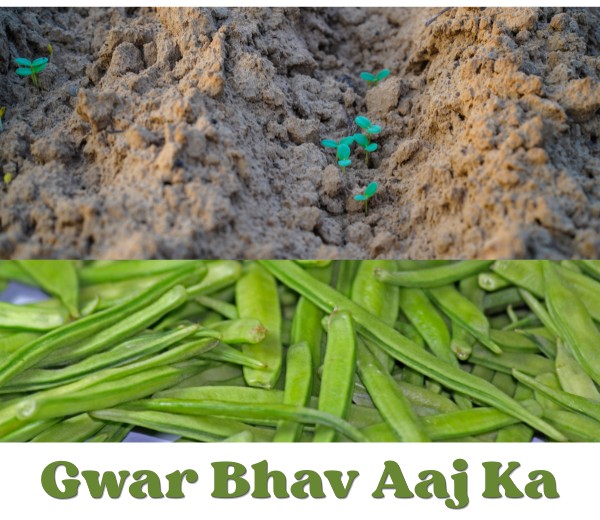
To look at a gwar plant standing in a sandy Rajasthan field, you would not guess that its small, hard seeds end up in oil wells in Texas, ice cream factories in Germany, and pharmaceutical tablet presses in Japan. That gap between what gwar looks like and what it actually does in global industry is exactly why this crop deserves serious attention from every kisaan who grows it or plans to. This guide covers the full gwar crop description and explains what moves guar mandi bhav, so you can make sharper planting and selling decisions. Gwar, or cluster bean, is one of Rajasthan's most important kharif fasal crops and a significant agricultural export earner for India. It is also one of the most volatile crops to trade because its mandi bhav responds not just to local monsoon rainfall but to crude oil prices, US drilling activity, and rupee-dollar exchange rates, all at the same time. Understanding why that happens is the key to making better decisions at every stage. This article covers two things: first, what gwar is and how it is grown; second, what actually moves guar mandi bhav and how you can use that knowledge to sell smarter. Gwar seed prices at Rajasthan mandis shift daily with global events. Platforms such as KhetiKisaan publish guar mandi rates sourced from APMC auction floors in Rajasthan, always verify the rate source and timestamp before acting on any figure, since bhav can shift sharply within a single session. Note: "Gwar" and "guar" refer to the same crop, Cyamopsis tetragonoloba. "Gwar" is the common Hindi name used in farming contexts; "guar" is the standard spelling used in trade and export documentation. Both terms appear throughout this article. Quick Facts Crop type Kharif (rainfed) Scientific name Cyamopsis tetragonoloba Primary state Rajasthan (~80% of India's area) Key product Guar gum (galactomannan) Top export destination United States Typical harvest window September, October What exactly is the gwar plant and why does it matter to Indian farmers? Gwar (Hindi: गवार) is the common name for cluster bean; its scientific name is Cyamopsis tetragonoloba, and it belongs to the legume family. The plant is erect and bushy, typically reaching 60, 90 cm in height, and produces pods in clusters along its stem, which is how it earned the name "cluster bean." The part that makes gwar commercially extraordinary is not the pod but the seed endosperm: it contains a polysaccharide called galactomannan, which is the raw material for guar gum. For certain industrial uses, notably fracking, there is no widely available substitute at the same scale; in food and pharma, alternative hydrocolloids exist, but guar gum remains the preferred choice for cost and performance reasons. It is worth clarifying one common confusion: the gwar grown industrially is not the same as the tender gwar phalli sabzi you buy at the vegetable market. Both come from the same species, but industrial selections are typically focused on seed yield and galactomannan content, rather than pod tenderness. A kisaan growing industrial gwar is essentially cultivating a chemical-grade raw material, not a vegetable. Beyond its industrial value, gwar offers real agronomic advantages that make it attractive as a rotation crop. It fixes atmospheric nitrogen into the soil, improving fertility for the next season's crop. It thrives on sandy loam soils and is tolerant of the low rainfall typical of western Rajasthan, generally performing well at temperatures between 25 and 35°C. This makes it perfectly suited to Rajasthan's arid belt, where other crops struggle to survive. Because guar gum faces limited substitution in several industrial applications, demand is relatively inelastic for certain uses, particularly fracking. Buyers cannot simply switch to another product when guar supply tightens. This inelasticity is what makes guar price swings sharper and faster than those for foodgrains like wheat or chana. Where gwar grows in India and how the crop cycle works Rajasthan accounts for roughly 80% of India's guar cultivation area and around 77% of total seed production. Haryana and Gujarat are the next significant producers, but their combined contribution remains well below Rajasthan's dominant share. The key districts include Sri Ganganagar, Hanumangarh, Bikaner, Churu, Nagaur, and Barmer, the same names you will find on the most actively traded mandi lists for guar seed across the state. Western Rajasthan suits gwar so well because the crop is built for exactly the conditions this region offers: low and erratic rainfall, sandy soils, and long dry spells after flowering that actually aid seed setting. A crop that needs more reliable moisture simply would not survive here; gwar thrives precisely because it does not. Production can swing 20, 25% from one season to the next based purely on how the monsoon performs across these districts, a major driver of price volatility. The cultivation timeline follows a clear seasonal pattern. Sowing happens in June, July, ideally timed to the first good monsoon showers; delayed sowing reduces seed yield significantly. The crop goes through its vegetative phase in July, August, when it needs at least two to three good rainfalls. Pod setting and seed maturity happen in August, September, and excess rainfall during this stage can damage seed quality even if the earlier rains were ideal. Harvest runs from September through October, with threshing, cleaning, and bagging following before the crop reaches the mandi. Under rainfed conditions, yields vary considerably depending on monsoon adequacy and farm management, official state-level averages have ranged widely across seasons, with some Rajasthan district averages falling well below 600 kg per hectare in drought years. In a good monsoon year, well-managed plots in better districts can push considerably higher. This yield variability, driven almost entirely by monsoon behaviour, is one of the primary reasons guar mandi bhav moves so sharply from year to year. From gwar seed to guar gum: the value chain explained Understanding how raw gwar seed becomes the guar gum that global industries buy helps explain why mandi bhav behaves the way it does. The seed has three distinct parts: the outer hull (husk), the germ (embryo), and the endosperm, which holds the galactomannan. Processing involves de-hulling the seed, splitting it to separate the endosperm from the germ, and then grinding the endosperm into guar gum powder. The by-product of this process is guar meal, a protein-rich animal feed that has its own market value and partially offsets processing costs. The Jodhpur and Bikaner districts host one of the world's largest and most concentrated clusters of guar gum processing units. Raw gwar seed is procured directly from mandis in surrounding districts, processed at these factories, and then exported as gum powder or specialised derivatives. This geographic concentration means that the procurement decisions of a handful of large processors in the Jodhpur belt can move gwar seed prices across all Rajasthan mandis within days. Roughly 90% of guar gum processed in India is exported, and the export price is quoted in US dollars. This is a critical point for every gwar-growing kisaan to understand: the price you receive at your local mandi is ultimately shaped by what a buyer in Houston or Rotterdam is willing to pay in USD, converted through the current rupee-dollar exchange rate. A weaker rupee makes Indian guar gum cheaper for foreign buyers and lifts mandi bhav; a stronger rupee does the opposite. This global-local linkage is what makes guar mandi bhav far more complex than the bhav for, say, bajra or moong. Global industries that run on guar gum and why this matters for guar mandi bhav The single biggest demand driver for guar gum is the oil and gas drilling industry, specifically hydraulic fracturing or "fracking." Guar gum is used as an essential thickener in fracking fluids that are pumped underground at high pressure to crack open shale rock and release trapped oil or gas. There is no widely available substitute that performs as well at the scale the US shale industry operates. When shale drilling activity in the US rises, American oilfield-service companies place large orders with Indian guar gum processors, who then bid more aggressively for seed at Rajasthan mandis. The bhav posted at Sri Ganganagar or Nohar on a given morning partly reflects what happened at US drilling sites the previous month. The US shale oil boom between 2011 and 2013 pushed gwar seed prices in Rajasthan mandis to record highs that shocked the farming community. When shale activity subsequently slowed and then collapsed during the 2020 oil price crash, prices corrected with equal sharpness. This means a kisaan in Hanumangarh is indirectly exposed to crude oil prices and US drilling rig counts, a fact experienced mandi traders track carefully but many individual farmers do not. The food, pharmaceutical, and other industrial sectors provide a more stable demand base. In the food industry, guar gum is an approved low-calorie thickener and stabiliser used in ice cream, baked goods, dairy products, sauces, and gluten-free foods across the EU, US, and India, and this demand grows steadily each year. In pharmaceuticals, it serves as a binder and disintegrant in tablet manufacturing and as an active ingredient in laxative products. Textile sizing, paper manufacturing, cosmetics, and water treatment chemicals round out the demand picture. These sectors collectively create a demand floor that prevents guar prices from collapsing entirely even when oil-sector demand weakens. The seasonal price cycle every gwar farmer should understand Gwar mandi bhav follows a broadly predictable seasonal pattern that repeats year after year, and understanding it can directly improve your munafa (profit). Peak arrivals at Rajasthan mandis happen between October and December, when the freshly harvested crop floods into the market. When large volumes arrive simultaneously, buyers have every advantage: they can be selective, move slowly, and let sellers compete against each other. Historical Rajasthan mandi data indicates gwar prices can run below the annual average in September, when early arrivals begin and trader sentiment is cautious. Farmers who sell immediately after harvest, without checking arrival volumes and export order status, regularly leave money on the table. From January onward, the situation tends to shift in the seller's favour. Arrivals slow significantly as market stocks are absorbed, processing units draw down mandi purchases, and export orders for the next quarter begin materialising. Rajasthan mandi rates for gwar seed have historically recovered to above the annual average by March, April, partly because export-linked buying pressure builds through the first quarter of the calendar year. The practical implication is straightforward: if your storage facility and cash flow allow it, holding a portion of your gwar stock through January and selling in February, March has historically yielded meaningfully better guar mandi bhav than distress-selling during peak arrivals. This does not mean you should always hold stock. The decision to hold or sell must be made with current information: live export order status, actual arrival volumes at your target mandi, and rupee-dollar movement. The seasonal pattern provides the historical framework; live mandi bhav data tells you whether that pattern is playing out normally in a given year or being disrupted by an external shock, such as a sudden change in US drilling activity or a policy change from DGFT. What affects guar mandi bhav: key factors explained one by one Gwar mandi bhav is shaped by several overlapping forces. Understanding each one helps you read the market rather than just react to it. The five main drivers are US shale drilling activity, monsoon rainfall and sowing acreage, export demand and rupee-dollar movement, mandi stock levels, and government policy. Here is how each works. US shale oil drilling activity is the single most powerful external driver. Track the weekly Baker Hughes US rig count as a leading indicator of guar gum export demand from American oilfield-service companies. When rig counts fall, as happened during the 2020 oil crash and again during tariff-related uncertainty in early 2026, Indian guar gum exporters defer or cancel purchase orders, and mandi bhav for seed softens within weeks. The relationship is not perfectly linear because other factors also operate simultaneously, but sustained multi-week moves in rig counts consistently precede direction changes in guar mandi prices. Monsoon rainfall and sowing acreage are the dominant domestic supply factors. Research has documented a high rainfall-to-production correlation for gwar in Rajasthan. A deficient monsoon reduces sowing acreage, cuts yields, tightens supply, and pushes bhav higher. A good monsoon expands acreage and production, adding supply pressure that weakens prices at harvest. Because Rajasthan holds approximately 80% of India's gwar area, production there can swing 20, 25% based on monsoon adequacy alone, making June, August monsoon progress the most important domestic price signal of the year. Export demand and the rupee-dollar exchange rate are closely linked. A large share of India's total guar production, estimated at 75, 90% across various product forms, is exported annually. A weaker rupee makes Indian guar gum competitively cheaper for foreign buyers, stimulating demand and lifting mandi bhav. A stronger rupee compresses export margins and can cool mandi rates. US tariff actions in 2026, which temporarily raised import duties on Indian goods including guar gum, demonstrated how quickly export-policy news translates into mandi-level price moves. When tariff pressures eased, buying resumed and prices recovered. Mandi stock levels and carry-forward inventory act as a ceiling or floor on prices. High carry-forward stock from the previous season caps price rises even when the current monsoon is below average. Low stock from the previous year gives bulls more room to push bhav higher on any supply concern. Traders physically present at major Rajasthan mandis during live bol-chaal (bidding) sessions watch bid volumes and the speed at which lots are cleared as real-time stock-demand indicators that do not appear in any data feed. Government policy and the absence of MSP are structural factors that amplify gwar price volatility. Unlike wheat or paddy, gwar has no meaningful Minimum Support Price procurement system behind it. Farmers are fully exposed to market forces, which is why price swings in gwar are sharper than in supported crops. DGFT notifications in 2026 introduced or amended export compliance requirements for guar gum, check the DGFT website for the exact amendment details, adding regulatory friction for exporters and causing near-term uncertainty at mandis. The earlier delisting of guar seed and guar gum futures from Indian commodity exchanges removed an important price-discovery and hedging tool, another reason mandi rates can move sharply on rumour alone. How to track today's gwar mandi bhav before deciding to sell Not all mandi rate sources are equal, and the difference matters when bhav can shift by ₹100, ₹200 per quintal within a single session. Government APMC portals are often updated with a 24, 48 hour delay, while many price aggregator websites use estimated or extrapolated figures rather than actual auction transaction rates. A day-old rate is not the same as today's bhav, especially in a crop as volatile as gwar, where a single export order or a weak US rig count report can move prices significantly before noon. The only reliable source for guar mandi bhav is one with a ground-level contact physically present at the auction yard during the live bol-chaal session, watching actual lots clear and recording the prices at which buyers actually transact. This is fundamentally different from reading a government data feed that arrives hours later and may reflect modal prices rather than the range of actual trades. KhetiKisaan publishes daily gwar mandi bhav for major Rajasthan markets including Sri Ganganagar, Nohar, Bikaner, and other key APMC centres, sourced from on-ground contacts at live auctions each morning. Beyond rate listings, KhetiKisaan's guar crop section covers export news, US rig count updates, and monsoon sowing progress, context that helps you understand not just what bhav is today but why it moved. As with any source, cross-check important figures against Agmarknet or your local APMC before making a final selling decision. Check KhetiKisaan's guar mandi rates daily before heading to your mandi. Guar Mandi Bhav Today Guar Mandi Bhav today helps farmers check the latest rates of guar in different mandis. Guar, or cluster bean or Gwar, is a thick crop that can grow in dry areas. It is grown mainly in Rajasthan, Haryana and Gujarat and its seed is worth is renowned. Guar is a plant that does not take much water, and it can grow in sandy soil. It is planted at the beginning of the monsoon in July and the harvest is collected between November and October. The crop is grown in a semi-arid climate and it needs dry heat in order to grow properly. It also helps improve soil quality. The main value of Guar comes from its seeds. Guar Gum is extracted from such seeds and utilized in oil work, foodstuffs, as well as items of daily use. Due to this, Guar is in high demand both locally and internationally. Key Factors Affecting Guar Mandi Bhav Less water crop, good for dry areas Grown in sandy and well-drained soil Demand depends on export and the global market Oil industry demand affects prices Quality of seeds changes mandi rate Guar Mandi Bhav today can change quickly based on demand. Farmers check prices daily to decide the right time to sell. Tracking Guar Mandi Bhav Today helps in getting a better price and planning the sale in the mandi.
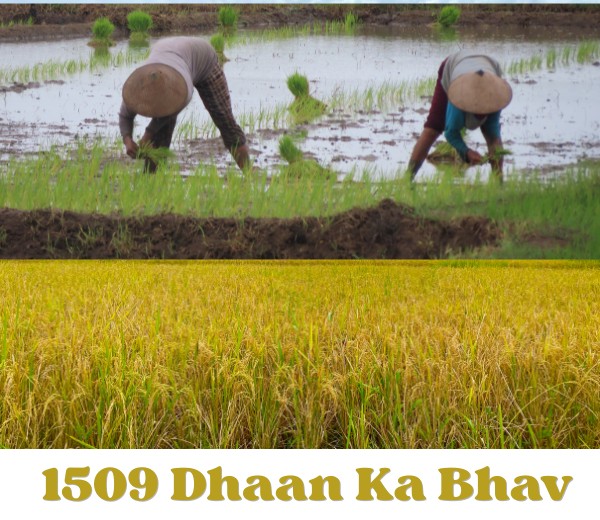
This 1509 dhaan crop description and what affects its mandi bhav covers everything a serious seller needs: agronomy, grain quality benchmarks, and the market forces that push prices up or down each season. 1509 Dhaan is a widely cultivated and traded basmati paddy variety across North India's APMC mandis, yet most farmers selling it have only a rough idea of why the rate posted at one mandi on a Tuesday morning differs from what their neighbour received at a different yard the same week. Understanding 1509 as a variety, its agronomic strengths, its grain quality benchmarks, and what market forces move its mandi bhav (market price) are two separate things. Both matter equally when you are deciding whether to sell today, store for a few weeks, or drive to a different mandi entirely. This guide covers both. First, a clear crop profile so you know exactly what you are growing and why buyers value it. Second, a practical breakdown of the six main factors that push 1509 Dhaan mandi bhav up or down from one season to the next. Before you load your fasal (harvest) onto a trolley, check today's live 1509 Dhaan rates across multiple APMC yards on KhetiKisaan . It takes two minutes, and checking multiple mandis can help you find better rates on the day you sell. Parameter Detail Variety name Pusa Basmati 1509 (PB 1509) Maturity duration 115, 120 days Average yield 4.25, 5.0 t/ha (up to 6.5 t/ha under optimal conditions) Grain type Extra-long slender basmati Primary growing states Punjab, Haryana, western Uttar Pradesh Key export markets Saudi Arabia, Iraq, Iran, UAE, Yemen 1509 Dhaan crop description: what makes it stand out among basmati varieties 1509 Dhaan is an early-maturing, semi-dwarf basmati developed to address two problems that older basmati varieties carried: long growing duration and high water consumption. Its early-maturity and lower water requirement have made it attractive in areas where groundwater is stressed, and it has since become a dominant kharif crop across Punjab, Haryana, and western Uttar Pradesh for very practical reasons. Plant characteristics and maturity window The plant stands at roughly 95, 100 cm, shorter than traditional basmati varieties, with a sturdy stem that resists lodging even in wind and rain. The non-shattering habit means grain loss at harvest is minimal. The critical commercial advantage is its 115-day maturity cycle, which makes it approximately 30 days earlier than Pusa Basmati 1121. That one month of difference is not a minor detail. It frees the field for the rabi wheat sowing window, which directly protects a farmer's annual income from two separate crops rather than one. Water and input efficiency Early harvest allows farmers to save 3, 6 irrigations per crop cycle. In states like Punjab and Haryana where groundwater depletion is a serious long-term concern, this reduction in water use is financially significant. Fewer irrigations mean lower electricity or diesel costs, less wear on pump sets, and a smaller per-acre input bill. For small and marginal kisaans (farmers) managing 2, 5 acres, these savings accumulate meaningfully across a season. Yield potential under field conditions Under typical field conditions, expect 4.25, 5.0 t/ha. With proper water management, timely transplanting, and balanced nutrition, yields of 5.0, 6.0 t/ha are achievable. Demonstration plots have shown up to 6.5 t/ha, but that figure reflects controlled conditions. Plan your input budget around the 4.5, 5.0 t/ha range as a realistic working benchmark, and treat anything above that as a bonus. Grain quality traits that matter at the mandi Grain quality is the most variable factor between two 1509 lots offered on the same day in the same mandi. Two farmers can grow the same variety on adjacent fields and fetch prices that differ by ₹100, ₹200/quintal purely because of quality differences visible to the buyer during bidding, and larger differentials are possible in competitive markets where aroma or moisture problems are evident. Knowing what buyers actually look for gives you control over a significant part of your price realisation. Grain dimensions and cooking characteristics 1509 Dhaan produces an extra-long slender grain with a raw kernel length of approximately 8.0, 8.4 mm. After cooking, the grain elongates to around 18, 19 mm, nearly doubling in length. This roughly 2× elongation ratio is the trait that basmati exporters specifically verify before placing an order. Buyers from Saudi Arabia, Iraq, and the UAE are paying for this characteristic appearance and texture; if your lot does not deliver it consistently, the price offered will reflect that. Aroma and amylose content 1509 Dhaan carries the classic basmati aroma that is non-negotiable for export buyers. Intermediate amylose content of around 21% produces non-sticky, soft, separate grains after cooking, precisely the texture that Middle East consumers pay a premium for. Aroma is not just a marketing term; it is a verifiable quality attribute that millers and exporters assess at the time of purchase, and lots that have lost aroma through poor harvesting or post-harvest handling trade at a clear discount. Where quality can deteriorate in the field Harvesting 1509 Dhaan late, particularly when temperatures are still high, degrades aroma and increases the tendency of grains to break during milling. Both outcomes directly reduce the price a farmer will see at auction. The quality that leaves your field is essentially the ceiling on what a buyer will offer; you cannot recover at the mandi what was lost in the field or during transport. Where 1509 Basmati is grown and why it dominates North India The core cultivation belt for 1509 Dhaan spans Punjab, Haryana, and western Uttar Pradesh. These states combine basmati-growing tradition, favourable agro-climatic conditions, specifically hot days and cool nights during the grain-filling stage, and a mature APMC mandi infrastructure capable of handling large paddy volumes in a compressed harvest window. The primary cultivation belt Mandis in Taraori, Gohana, Karnal, Amritsar, and Sri Ganganagar handle significant 1509 Dhaan volumes each season. The price signals that emerge from major Punjab and Haryana APMC yards during peak arrival weeks tend to anchor the rate expectations at smaller mandis across the region. A strong or weak week at Amritsar or Taraori ripples outward quickly. Why farmers in this belt prefer 1509 Dhaan over older varieties The shift from PB 1121 to 1509 Dhaan on many farms in the region was driven by clear, practical advantages: earlier harvest protecting the rabi wheat window, lower per-crop water use, and competitive yield. These are not marginal benefits. The earlier harvest alone can determine whether a farmer completes wheat sowing on time, which affects the next season's income. This is also why 1509 Dhaan arrivals at mandis are highly concentrated into a short October, November window, a factor that has direct consequences for mandi bhav as explained in the next section. How mandi arrivals and harvest timing shape 1509 Dhaan mandi bhav When large volumes of 1509 Dhaan arrive in a short window, supply outpaces buyer capacity and rates fall. When arrivals thin out, prices tend to recover. This is not a theory; it is a pattern that repeats with predictable regularity every kharif season, and farmers who understand it can make more deliberate decisions about when to sell. The harvest window problem Because 1509 Dhaan matures in 115 days and most farmers in a region sow around the same time, arrivals at APMC mandis peak sharply in October and remain heavy through early November before dropping substantially in December and falling to very low levels by January. This concentrated supply is a predictable annual price pressure point. Buyers at the mandi know it is coming; informed farmers should plan for it too. How storage timing changes realisation Farmers who can store dry, clean 1509 Dhaan paddy for 4, 8 weeks past peak arrival often see meaningfully higher rates as mandi supply eases. Well-stored, low-moisture lots can earn a premium of ₹100, ₹200/quintal over combine-harvested lots sold immediately at harvest. However, incorrect storage, high moisture content, poor ventilation, damp godowns, leads to quality loss that wipes out any price gain from waiting. Storage only works as a price strategy if the paddy you are storing is already in good condition when it goes in. Export demand and international rice prices: what affects 1509 Dhaan mandi bhav most Export demand is the strongest driver of 1509 Dhaan mandi bhav. Because basmati is not a government-procured crop, private exporters and traders set prices based on what overseas buyers are willing to pay. This is a fundamental difference from wheat or common paddy, where MSP procurement creates a price floor. For 1509 Dhaan, the floor is set by the market, not the government. How the export chain connects to your mandi rate The price chain works like this: buyers in Saudi Arabia, UAE, Iraq, Iran, and Yemen place orders with Indian exporters. Those exporters buy processed rice from millers. Millers buy raw paddy from traders. Traders bid at the APMC mandi. When export orders strengthen, the bids at your local mandi go up because millers need to procure. When export demand weakens or shipments face delays, surplus stock reaches the mandi and rates soften. Your mandi rate on any given morning is, in part, a reflection of what a buyer in Riyadh or Baghdad was willing to pay last week. The export policy factor Government decisions on rice export restrictions and changes to the MEP (Minimum Export Price) create sharp, sudden moves in 1509 Dhaan mandi bhav, sometimes within days of a policy announcement. The price history of recent seasons illustrates this clearly. The government removed the MEP on basmati rice exports, which provided support to prices by making Indian basmati more competitive globally. Tracking these policy changes is not optional for a serious 1509 Dhaan seller; they are among the most powerful paddy price drivers available. Grain quality at auction: how moisture, breakage, and aroma affect your 1509 Dhaan rate Two lots of 1509 Dhaan arriving at the same mandi on the same day can fetch a difference of ₹100, ₹200/quintal, with larger gaps possible in strong-quality markets, purely because of quality factors that are visible and measurable at the time of bidding. The buyer at the auction is making rapid assessments on moisture, grain integrity, and aroma. Your preparation before reaching the mandi determines which quality band your lot falls into. Moisture content: the baseline test every buyer runs The standard acceptable moisture limit for paddy at APMC auctions in Punjab and Haryana is 17% maximum for procurement acceptance. Lots above this threshold face direct discounts or outright rejection because millers factor in drying costs before they can process the paddy. Use a moisture metre before transport and resist the temptation to rush paddy to the mandi immediately after combine harvesting, when moisture levels are often still elevated. A few days of proper field drying or sun drying can meaningfully improve your price band. Broken grain percentage and aroma retention Combine harvesting increases broken content compared to manual harvesting, and a high broken percentage directly reduces milling recovery, which is what a miller is ultimately paying for. Lots harvested and handled carefully, with lower breakage, can fetch ₹100, ₹200/quintal more than typical combine-harvested lots. Aroma loss from delayed or heat-stressed harvesting pulls prices down further. The quality-band framework at the mandi is straightforward: best-priced lots have low moisture, low breakage, and strong aroma; discounted lots have the opposite combination. Knowing this before harvest lets you make better decisions about harvest timing and post-harvest handling. How to compare APMC mandi rates before selling your 1509 Dhaan A farmer in Haryana or Punjab often sells at the nearest mandi by default, even when a more distant yard is offering higher rates on the same morning. The barrier is not the distance, it is the information gap. Without knowing what other yards are paying, the default is always the familiar option, even when it costs money. Why mandi rate today for 1509 Dhaan varies across APMC yards on the same day Several factors cause price differences between mandis on the same morning. Arrival volume at each yard varies. Active exporter presence differs, some mandis have more exporter-linked commission agents on a given day than others. Local competition among arhatiyas (commission agents) affects bidding intensity. The quality composition of that day's aggregate lot also plays a role. The result is that ₹100, ₹200/quintal differences between nearby APMC yards are not unusual during peak arrival weeks. Using KhetiKisaan to check live 1509 Dhaan rates before loading KhetiKisaan publishes live 1509 Dhaan mandi rates to help farmers compare what multiple APMC yards are paying before making a selling decision. Before loading your trolley, check the rates across multiple mandis on KhetiKisaan, identify which APMC yard is paying the highest price for 1509 Dhaan that day, and make your decision with real information rather than guesswork. That one step, done consistently, is one of the simplest ways to improve annual income from 1509 Dhaan cultivation without changing anything about how you grow the crop. Make 1509 Dhaan work harder for your income This 1509 dhaan crop description and what affects its mandi bhav comes down to one practical point: growing a strong variety is only half the equation. 1509 Dhaan is early maturing, water-efficient, and capable of producing top-grade basmati grain that commands export premiums. But the mandi bhav you receive on any given day is shaped by factors outside your field, export demand from the Middle East, basmati 1509 arrivals and rates at your APMC yard that week, policy changes in Delhi, and the quality your lot presents at the time of bidding. Understanding these paddy price drivers gives a real commercial edge. Knowing when not to sell is as valuable as knowing when to sell. Before loading your 1509 Dhaan onto a trolley, check today's live mandi rate today for 1509 on KhetiKisaan , compare what multiple APMC yards are paying that morning, and sell where the rate justifies the effort. The information is available; using it consistently is what separates informed selling from guesswork.
Factor Detail Crop season Rabi (sown Oct, Nov, harvested Mar, Apr) Key growing states Punjab, Haryana, UP, MP, Rajasthan Top varieties HD-2967, PBW-343, DBW-187, WH-542, Sharbati, Lokvan Key quality check Moisture % (max 12%), test weight, damage % Live rate tool KhetiKisaan APMC listings, North India Gehun (wheat) is India's most widely grown Rabi fasal, and its gehun mandi bhav is not a random number. It is driven by a set of identifiable forces that any kisaan can learn to read with a little practice. This guide covers the full picture: what kind of crop gehun is, which varieties command premium prices at the mandi floor, and the exact factors that push wheat mandi rates up or down from one week to the next. Understanding these forces is the difference between accepting the first bid that comes your way and walking into the mandi with the confidence to negotiate. KhetiKisaan publishes live APMC auction rates across key markets in North India, so farmers can check today's gehun mandi bhav before deciding which mandi to send their fasal to. That real-time price awareness, combined with a solid understanding of what drives gehun mandi rates, is exactly the combination that improves your realisation per quintal over a full season. 1. Gehun in India: growing regions, the Rabi cycle, and production scale India's position in global wheat production India is the world's second-largest wheat producer, crossing 120 million tonnes of annual output in 2025-26 according to the Ministry of Agriculture's third advance estimate. This scale gives the government significant leverage through procurement policy. It also means that even modest production shortfalls tend to move gehun mandi bhav noticeably across North India's APMC yards. The top five producing states are Uttar Pradesh (35.87 million tonnes), Madhya Pradesh (26.44 million tonnes), Punjab (17.07 million tonnes), Rajasthan (12.15 million tonnes), and Haryana (11.64 million tonnes). These five states essentially define the national wheat economy and, in turn, the gehu price in India at any given point in the Rabi marketing season. How the Rabi harvest cycle shapes arrival pressure The sowing window runs from October to mid-November, and the harvest window falls between March and April. This creates a predictable flood of aavak (arrivals) into mandis each April, and that annual surge is the single biggest short-term pressure on bhav. Prices typically soften in April and May as supply peaks, then firm up between October and February when stocks thin out. A farmer who internalises this seasonal rhythm before making a sell-or-hold decision is already thinking more strategically than most. The pattern repeats every year; the only variable is how sharp the price swing is in a particular season. 2. Major gehun varieties and how variety choice affects gehun mandi bhav Bread wheat varieties: HD-2967, PBW-343, DBW-187, WH-542, and popular regional types The dominant commercial varieties in North India are all bread wheat types, and each has a distinct profile that buyers recognise. HD-2967 is widely adapted across the Indo-Gangetic plains, valued for its consistent yield, rust resistance, and bold amber grain that millers prefer for atta (flour) and chapati. PBW-343 is a staple in Punjab and Haryana farming because of its lodging resistance and tolerance to waterlogging, qualities that matter in canal-irrigated zones. DBW-187 and WH-542 are gaining ground for their strong rust resistance profiles and the bold, well-filled kernels that attract competitive bids on the mandi floor. Sharbati wheat, grown primarily in Madhya Pradesh, commands a notable premium in speciality flour markets for its sweetness and thin bran. Lokvan, popular in parts of Rajasthan and UP, is valued for its high yield and is commonly traded in open APMC markets. Flour mills pay close attention to variety because grain type directly affects flour extraction and chapati quality. Bold amber grain from HD-2967 or DBW-187 typically receives better bids than shrivelled or pale lots from the same mandi session. A kisaan who knows which variety they are selling can communicate that clearly to buyers rather than letting it be buried in a generic lot. This small shift in how you present your fasal can genuinely change the price offered. Durum wheat and niche varieties: a separate price market Durum wheat varieties like PDW-233 serve a completely different buyer segment: semolina (suji or rava) manufacturers, pasta producers, and vermicelli makers. These buyers are mainly concentrated in central and peninsular India. In North India mandis, the dominant trade is in bread wheat, which means a farmer bringing durum through the general wheat aavak channel risks being undervalued because buyers there are not set up to price durum correctly. If you grow durum, seek out specialised processors or direct buyer contacts rather than routing through the standard APMC bread wheat pipeline. 3. Quality parameters that determine your price per quintal at the mandi The three checks that buyers do first: moisture, test weight, and damage Mandi buyers and FCI procurement agents apply a consistent grading checklist before quoting a price, and the first three checks happen quickly and visibly. Moisture content is the most immediate factor: FCI procurement specifications set the acceptable limit at 12%, and grain above that threshold either receives a price deduction or faces outright rejection. Lots between 12% and 14% moisture are typically accepted but at a reduced price, while anything above 14% is turned away. Dry your grain properly before loading the trolley; this single step protects against the most common source of mandi deductions. Test weight, sometimes called hectolitre weight, reflects how well-filled the grain is. Shrivelled or light grain receives a discount because milling yield drops when kernel density is low. Damaged, sprouted, or broken grain is the third major deduction trigger. Even a small percentage of visually damaged kernels can pull an entire lot into a lower grade, affecting the price the buyer offers for the whole consignment. A clean, dry, uniform lot invites less argument at the mandi and typically earns a better opening bid. Grain size, colour, and protein: what millers look for beyond the mandi floor Mills buying directly or through traders go one step further than the basic mandi checklist. They assess grain colour (bold amber is preferred over dull or pale grain), kernel uniformity, and protein content, which is critical for gluten strength in atta. These parameters matter less during a standard APMC floor transaction but become very significant when you are negotiating directly with a flour mill or an exporter. Understanding these criteria gives any farmer a clear agenda for post-harvest handling: dry the grain to below 12% moisture, clean the lot to remove foreign matter (kankad, stones, straw), and segregate visibly damaged or shrivelled kernels before the fasal reaches the mandi. These steps require effort but are consistently associated with better bids from buyers. 4. MSP announcements and FCI procurement: the gehun mandi bhav floor every kisaan must know How the Minimum Support Price for gehun is set and what it means practically The Cabinet Committee on Economic Affairs (CCEA) announces the Minimum Support Price for wheat each year before the Rabi sowing season, providing a reference point that guides private traders' and millers' bids. These annual declarations act as a directional benchmark, helping farmers plan their production costs and income expectations ahead of sowing. The MSP functions as a price floor in practice: when FCI and state agencies are actively buying, private traders and millers tend to keep their bids at or slightly above MSP because they are competing with government procurement for the same grain. During active procurement windows, the MSP is not just a policy number, it is the baseline around which the entire mandi negotiation happens. What happens when FCI procurement slows or stops early This is the nuance most farmers miss, and it matters enormously. For the 2025-26 Rabi season, FCI procured approximately 29.7 million tonnes against an original target of 31.2 million tonnes, falling short of target. When FCI meets its procurement quota or when government godowns are full, official buying stops. Without that price floor, private traders quickly test lower bids. In seasons where FCI procurement is below target, often because quality norms are not met or storage capacity is constrained, mandi bhav can slip below MSP in open trade, particularly for lots with high moisture or visible damage. Knowing whether FCI procurement is currently active, slowing, or closed is one of the most important signals to track before deciding when to sell your gehun. 5. Mandi arrivals, mill demand, and the daily push and pull on gehun mandi rates How daily arrival volume moves gehun mandi rates in real time Arrivals (aavak) are the most sensitive short-term driver of wheat mandi bhav. When large volumes of freshly harvested wheat hit the mandi on the same day, buyers have more choice and less urgency, so bids soften. On days when arrivals are thin, because farmers are still harvesting, transport is disrupted, or competing mandis are drawing stock away, buyers compete harder and rates firm up. The table below captures this push-and-pull clearly: Market condition Effect on mandi bhav High aavak, high stock levels Bhav weakens Low aavak, falling stock levels Bhav firms up Strong mill buying demand Bhav rises Active MSP/FCI procurement Bhav stays supported FCI procurement closed or limited Bhav can fall below MSP A farmer who checks today's arrival data for two or three nearby mandis before loading a trolley is already ahead of one who simply goes to the nearest yard out of habit. Platforms that aggregate live APMC data across markets make this comparison straightforward and free. Mill demand cycles and the seasonal rhythm of private buying Flour mills, from small atta chakki operators to large roller flour mills, have relatively predictable buying patterns. They buy aggressively in May and June to build stocks for the lean months, and again in October before the new Rabi season begins. When mill demand is high and FCI procurement is simultaneously active, gehun mandi bhav often tests above MSP. When both are quiet, prices ease. Understanding this overlap between government buying and mill procurement cycles helps you choose not just which mandi to sell in, but which month. Timing your sale to coincide with an active mill-buying window, especially if you have storage capacity, can improve your munafa (profit) per quintal in a way that is entirely within a farmer's control. 6. Global wheat supply, domestic weather, and pest pressure: the forces outside your control How global supply shocks reach Indian gehun mandi bhav India does not operate in isolation from the global wheat market. When major wheat-exporting countries face crop shortfalls, international prices rise, and Indian exporters find overseas buyers willing to pay a premium. That export demand pulls grain out of the domestic supply chain, tightening stocks and pushing wheat mandi rates upward. This dynamic is worth watching closely in 2026-27: USDA forecasts show US wheat production falling to approximately 1,531 to 1,536 million bushels in 2026-27. This is the lowest level since 1970-71, driven by lower harvested area and drought-reduced yields. A tighter global supply position generally supports Indian wheat export competitiveness, which filters back into domestic mandi rates. Conversely, a bumper global crop with aggressive export offers from competing countries can suppress Indian wheat prices, particularly for export-quality lots. Unseasonal rain, heat stress, and pest damage: how weather events hit bhav from two sides A late-season hailstorm or unseasonal rain in March can damage standing wheat, reducing both yield and grain quality simultaneously. Lower overall production creates scarcity, which tends to support headline mandi bhav. But the quality damage, shrivelled grain, high moisture, sprouted kernels, simultaneously earns price deductions for the affected farmer's lot. A weather event can therefore raise the market price while reducing the actual realisation per quintal for farmers in the affected belt. The headline bhav and your personal realisation are not the same number if your lot carries quality damage. Pest pressure works similarly. Weevil (ghun) infestation during storage reduces usable grain quality and invites mandi deductions even when the broader market is firm. Stored wheat that is not properly dried and treated can lose significant value between harvest and sale, especially if the holding period stretches beyond two or three months without proper fumigation. This is a preventable loss that basic post-harvest care eliminates entirely. 7. Storage decisions: calculating whether to sell at harvest or hold your gehun The cost of holding: godown charges, moisture risk, and the price premium you need Many farmers hold wheat expecting prices to rise between May and October. That logic is often sound in principle, but the numbers must work on paper before you commit. CWC storage tariffs have historically been cited at around ₹9.86 per quintal per month (based on approximately ₹4.93 per 50-kg bag per month); actual rates vary by facility and are revised periodically, so confirm the current schedule with your nearest CWC or SWC office before calculating. Private warehousing rates vary considerably by state, facility quality, and services offered, some reports show them broadly comparable to CWC rates while others differ significantly. Add to the storage cost the interest cost of delayed income and the real risk of quality deterioration if grain is stored above 12% moisture. The break-even calculation is straightforward: the expected price rise must exceed storage cost plus quality loss plus the opportunity cost of waiting. If it does not, selling at harvest is the rational choice, not a failure of nerve. Practical steps to improve your gehun's price before you reach the mandi Grading and cleaning your lot before sale is consistently associated with better bids at the mandi floor. These steps do not require expensive equipment, they require attention and a little time before loading. The practical checklist is short: Dry the grain to below 12% moisture before bagging or loading. Remove foreign matter: kankad (pebbles), stones, straw, and chaff reduce your lot's visual appeal and invite deductions. Segregate visibly damaged, shrivelled, or sprouted kernels from the main lot before reaching the mandi. If selling a large quantity, consider splitting the consignment across two mandis on the same day to compare competitive bids before committing the full volume. Post-harvest cleaning and grading are recognised as reliable ways to strengthen your position at the mandi. Farmers who present a clean, uniform lot give buyers less reason to discount and more incentive to bid competitively. 8. How to track live gehun mandi bhav and choose the right APMC yard Why mandi-wise price comparison matters more than most farmers realise On any given day, the wheat mandi bhav in Sri Ganganagar and the rate at a mandi 80 kilometres away can differ meaningfully, mandi price spread data from North India's APMC network regularly shows inter-market variation of ₹50 to ₹150 per quintal on the same day, reflecting local demand, local stock levels, and which private buyers and mills are active. A farmer who sells without checking this spread is effectively leaving money on the table. Consider a ₹100 per quintal gap across a 50-quintal lot: that is ₹5,000 in lost realisation, more than enough to cover transport costs to the better-paying mandi with profit to spare. This price variation is not a one-off anomaly. It occurs regularly across North India's APMC network and consistently favours farmers who check gehun mandi rates before they travel rather than those who commit to the nearest yard out of convenience. Using KhetiKisaan's live APMC listings to time your sale and choose your mandi KhetiKisaan publishes live gehun mandi bhav sourced from ground-level contacts at APMC auction yards during live bol-chaal (bidding) across key markets in Rajasthan, Haryana, and Punjab, including major centres like Sri Ganganagar and Nohar. These rates reflect actual transaction prices on the floor that day rather than delayed official averages. A farmer planning to sell can use KhetiKisaan to check today's wheat mandi rates across multiple APMC yards, identify which mandi is offering the strongest price per quintal, and make an informed decision about whether current rates justify selling or holding for another week. That kind of targeted, real-time information converts a passive seller into a strategic one. The platform also covers quality benchmarks, seasonal guides, and government scheme updates, so the information needed for a better mandi decision is available in one place. The bottom line on wheat crop and what affects gehun mandi bhav Two practical lessons emerge from this guide. Gehun is not a uniform commodity: variety, quality, and season each affect your final price per quintal, and understanding these differences gives you a stronger position at the mandi than simply arriving with a trolley and hoping for a fair bid. And gehun mandi bhav is not random, it moves in response to MSP policy, FCI procurement activity, daily aavak volumes, mill demand cycles, global supply signals, and weather events. A kisaan who understands these drivers negotiates from knowledge rather than guesswork. Checking live gehun mandi bhav on KhetiKisaan before each sale is a practical, zero-cost habit that can improve your returns meaningfully over a full Rabi season. The price intelligence is there; using it is simply a matter of making it part of your pre-sale routine. Check today's wheat mandi rates on KhetiKisaan and see which APMC yard is offering the best price for your fasal right now. Today Gehun Mandi Bhav in India Today Gehun Mandi Bhav in India shows the latest price of wheat in different mandis. Gehun is a main crop in India and is used daily in homes and food work. It is known as one of the most important crops for farmers. Gehun is a Rabi crop. It is planted in October-November when the climate gets cool. The crop is very productive in a cool climate and requires warm sunlight when ready to harvest. The crop also grows better with a little rain at this time of winter. Gehun gives good results in well-drained loamy soil. Roti, bread, biscuits and other food products are made out of wheat. It is also used by flour mills and food companies. The remaining straw post-harvest is known as bhusa and it is served to animals. Key Factors Affecting Gehun Mandi Bhav Clean and shiny grains get a better price Bold and heavy grains are preferred Low moisture is important for storage MSP affects market price Demand in mandi changes rates Today Gehun Mandi Bhav in India depends on grain quality and demand. Farmers check Gehun Mandi Bhav in India daily to know the right selling time. You can also follow Today Gehun Mandi Bhav in India to stay updated and get better value for your crop.
Barley, called jau in Hindi and jou in parts of Rajasthan, is a Rabi crop harvested between March and April. Rajasthan, Haryana, and Madhya Pradesh account for the bulk of India's barley belt, and the crop serves both human food use and industrial applications including malt brewing and animal feed. That dual demand base is one reason jau prices have stayed firmer than many farmers expected this season. Many kisaans are now asking whether jou gives better returns than gehun (wheat) this season. The honest answer depends on three things: the current mandi rate at your nearest yard, your actual input cost per quintal produced, and which type of buyer is active near you. KhetiKisaan tracks live APMC auction prices for jou, wheat, sarso, and other Rabi crops in one place, sourced from ground-level contacts at major mandi yards across North India. It is the fastest way to get a reliable barley market update before you make any selling decision. What is today's jou mandi rate and how do you read it? Jou, or Barley, is often celebrated as the "Warrior Crop" of the desert because it thrives in harsh conditions where even wheat struggles. In North India, particularly across Rajasthan and Haryana, it is a key Rabi (winter) crop that farmers rely on for its low input costs and high resilience against salt and heat. The Resilience of Jou What makes Jou unique is its extreme adaptability. It is far more salt-tolerant than most cereals, allowing it to grow in marginal or alkaline soils where other crops wouldn't survive. Sowing window: Best planted between October and November. Water-wise: Requires significantly less irrigation than wheat, making it a more sustainable choice in areas with receding groundwater. Climate: Enjoys cool winter breezes but matures rapidly as the sun strengthens in March, usually reaching harvest faster than wheat. A Multi-Purpose Revenue Stream For a farmer, Jou isn't just a grain; it's a versatile asset with three major market paths: The Brewing Industry: High-quality "Malting Barley" is in massive demand by breweries and distilleries. In 2026, companies like AB InBev are actively expanding procurement directly from farmers in Rajasthan and Haryana. Health & Nutrition: Known for its high fibre (beta-glucan) and cooling properties, Jou is used for sattu, flour and health drinks. It's a staple for those looking to manage cholesterol and blood sugar. Livestock Support: The straw (bhusa) of Jou is softer and highly palatable for cattle, making it a valuable fodder during the dry summer months. Why two mandis quote different jou bhav on the same day Most of the mandi-to-mandi price difference comes down to three variables: moisture content of the arriving lot, grade quality in terms of foreign matter and damaged grain, and how many active buyers are present at that mandi on that particular day. A yard near a malt processing unit or a large feed compound will typically attract more buyers, creating bidding competition that pushes the final bol-chaal (auction) rate higher than a remote mandi with fewer buyers present at the yard. A lot meeting Grade I standards, moisture at or below 12% and low defects, consistently commands a premium over lower-grade arrivals even within the same mandi yard. Grade II and III lots, with higher moisture or more shrivelled grain, may clear at a meaningful discount to the headline rate; the exact reduction varies by mandi, season, and buyer competition on the day. Checking rates across multiple mandis before hauling the crop helps you decide whether selling locally is smarter or whether a short transport investment to a better-paying yard is worth it. KhetiKisaan's mandi-wise listings let you make that comparison before loading the trolley. What is driving jou bhav higher right now? Brewery and feed industry demand: the real price engine The biggest consistent buyer for quality barley in India is the malt brewing industry, which needs barley meeting specific protein and germination standards. This segment alone accounts for roughly 20 to 25% of total national barley production, and because it cannot easily substitute other grains, its demand keeps a firm price floor active even when general mandi arrivals are running high. When brewery procurement cycles open, buyers become aggressive at the yard level, and you see this directly in live auction rates. Animal feed manufacturers and ethanol plants act as strong secondary buyers, absorbing lower-grade lots that malt units reject. This means even non-malt-quality jau finds buyers at a reasonable rate rather than going unsold. When brewery procurement overlaps with feed-industry buying in the same arrival window, competition among buyers pushes barley mandi rates up noticeably across multiple yards simultaneously. Tight supply from reduced sowing and weather stress According to Ministry of Agriculture data, barley sowing area has declined over recent seasons, cutting total production and keeping available stocks lean at mandi level. This supply tightening is not a local issue alone. It reflects a wider shift as farmers in some regions have moved toward other Rabi crops, leaving the total lot pool smaller than in previous years. Unseasonal heat during the grain-filling stage reduces both yield and grain quality, further tightening arrivals at major mandis and increasing the share of lower-grade lots. Low carry-over stocks from the previous season mean buyers are active early in the arrival period rather than waiting for prices to soften. That early buyer activity is part of why rates have stayed supported this season instead of the typical post-harvest dip that kisaans often dread. Jau vs. wheat: which Rabi crop pays more per acre? Price, MSP, and gross income comparison The government MSP for barley for Rabi Marketing Season 2025, 26 is ₹1,980 per quintal, compared to wheat's MSP of ₹2,425 per quintal, a difference of ₹445 per quintal in support price. However, current open-market jou bhav is trading above its own MSP in most Rajasthan mandis, which means quality jau is fetching prices comparable to or approaching wheat's MSP level in the private market this season. Net income per acre is the more useful figure for any farmer, not just the headline sale price. Multiply your yield per acre by the mandi rate you actually receive, then subtract your total input cost. That net figure is what you compare between crops, not just the per-quintal rate. Where barley has a clear edge over wheat Barley requires only 2 to 3 irrigations through its growing cycle, while wheat in North Indian conditions typically needs 4 to 6. In water-scarce districts of Rajasthan and Haryana, where each irrigation involves real cost in terms of electricity, diesel, or canal water charges, saving 2 to 3 watering cycles is a meaningful margin advantage. For a farmer where irrigation is expensive or unreliable, those savings can close the MSP gap between the two crops on a net basis. Barley also tolerates saline soil and moderate drought conditions better than wheat, which means it performs on land where wheat would under-deliver in yield and quality. The honest catch: wheat has stronger government procurement backing through FCI and state agencies, giving a reliable MSP floor. Barley farmers are more dependent on private buyers, malt companies, and feed mills, which adds price uncertainty. If you are growing jau and have no malt-industry buyer nearby, check KhetiKisaan to identify which mandis are seeing active malt procurement before harvest so you can plan your transport route in advance. How to improve your actual net realisation per quintal Quality and moisture standards that directly affect your price The 12% moisture threshold is the single most important number to remember before bringing jau to the mandi. Lots at or below 12% receive the full quoted rate. Lots between 12% and 14% are accepted at a discount because the buyer must bear drying, storage, and spoilage risk. Anything above 14% moisture is rejected outright at most mandis, meaning you take the crop back and bear the transport cost for nothing. Proper sun-drying before arriving at the mandi, combined with basic cleaning to remove foreign matter and shrivelled grains, can shift a lot from a discounted grade to a full-price Grade I lot. The premium you gain varies by mandi and season, but the improvement requires no additional input cost beyond time and effort. Grade I barley also attracts malt-industry buyers who sometimes pay above the general mandi auction rate for specification-grade lots, effectively creating a premium market within the same mandi yard. Mandi deductions to calculate before you sell The gross patti (sale receipt) at the mandi is not what lands in your hand. Standard deductions include arhat (the commission agent's fee, typically 1.5 to 2% of gross sale value), the mandi market fee or cess set by the state APMC, and labour charges covering hamali, loading, unloading, and tulai (weighing). These charges vary considerably by mandi and state-level levy structure, some mandis trim realisation by a modest amount per quintal while others apply charges that run to several hundred rupees per quintal, so understanding the deduction structure at your target yard before you arrive is essential. Check the full deduction structure at your target mandi before you arrive with the crop, not after you have already parked the trolley. Different mandis in the same state can have meaningfully different total levy structures, and the mandi that quotes the highest gross rate may not always deliver the highest net realisation once all cuts are applied. KhetiKisaan's mandi-wise rate listings let you compare across nearby options so you can calculate net return rather than just looking at the headline price. Check today's jou bhav on KhetiKisaan To sum up, today's jou bhav across Rajasthan mandis spans a wide window, from around ₹1,830 at Jaipur Rural to ₹2,670 at Bhilwara for top-grade lots, driven by industrial demand, tighter supply, and mandi-level buyer competition. Moisture management and knowing your deductions are the two levers most directly in your control. For a live jau ka bhav barley market update with mandi-wise listings, visit KhetiKisaan before you load the trolley and decide where to sell.
Quick Facts: Chana at a Glance Crop type Rabi pulse (winter season) Botanical types Desi (small, dark, rough coat) and Kabuli (large, beige, smooth coat) Major producing states Madhya Pradesh, Maharashtra, Rajasthan, Gujarat, Karnataka Sowing window October (second half) to mid-November Harvest window February to March Average yield 15, 20 quintals per hectare under good management This chana crop description explains what affects chana mandi bhav, and why that knowledge matters more than simply knowing today's rate. Chana (chickpea) is India's single most important pulse crop, yet chana mandi bhav can move by several hundred rupees per quintal within the same season with no obvious trigger for the farmer standing at the auction floor. That movement is not random. It follows a logic built from arrivals, carryover stocks, dal-mill procurement cycles, import duty decisions, and the quality grade your lot receives the moment a trader inspects it. Many farmers sell at the wrong time because they track the price but not the reasons behind it. Knowing that chana bhav is low in March is useful; knowing why it is low in March, and what conditions would push it higher by June, is what turns a routine sale into a profitable one. KhetiKisaan monitors chana mandi bhav from APMC yards across Rajasthan and Haryana, with data sourced from ground contacts who attend live bol-chaal (bidding) sessions. This article uses that market intelligence as its backbone to walk you through both sides of the chana price equation: the crop itself and the market forces that value it. Chana's place in India's pulse economy Why chickpea is India's most important pulse crop Chana accounts for roughly 40, 45% of India's total pulse production by area and volume (per Ministry of Agriculture estimates), making it the dominant pulse by a wide margin. It is the primary protein source for hundreds of millions of vegetarian households, the main raw material for dal mills producing chana dal and besan (gram flour), and a meaningful export commodity. Any significant shift in chana production ripples through food prices, dal-mill margins, and rural incomes simultaneously. Major producing states and their regional weight Madhya Pradesh leads national production with approximately 26, 30% of output, followed by Maharashtra (20, 25%), Rajasthan (18, 20%), Gujarat (5, 11%), and Karnataka (5, 8%). Together, the top five states account for over 80% of national production. Within Rajasthan, districts such as Barmer, Jodhpur, Nagaur, and Bikaner are significant contributors, and their harvest timing and quality directly influence mandi rates in Sri Ganganagar, Nohar, Kota, and Jaipur, the mandis that North Indian dal mills and traders watch closely during the rabi arrival season. Rabi cycle and its connection to the pulse market outlook Chana is an exclusively rabi crop. Its entire annual supply arrives in one harvest window, unlike crops such as moong or urad that have both kharif and zaid cycles. This single-harvest reality is what makes arrival timing so powerful as a chana mandi bhav driver. When all of the season's supply hits mandis in a six-to-eight-week window, the price pressure is concentrated and sharp. Farmers who understand this seasonal pattern can plan their selling strategy well in advance rather than reacting to the rate board on the day they arrive at the mandi. Desi chana vs kabuli chana: varieties, traits, and market preference Desi chana: the dominant type in Indian mandis Desi chana has small to medium seeds, a brown to dark colour, angular shape, and a rough seed coat. It is the type found in the overwhelming majority of mandi arrivals across India. Widely grown varieties include JG 11, which offers wilt resistance and early maturity; DCP 92-3, known for high yield and disease resistance; and Atal (IPC 2007-28), which carries strong resistance to wilt, dry root rot, and collar rot with medium brown seeds. Desi chana is the primary raw material for chana dal splitting and besan milling, so dal-mill demand is almost always for the desi type. Kabuli chana: premium positioning and export demand Kabuli chana has large, round, beige or cream-coloured seeds with a smooth seed coat. Varieties like IPCK 2013-163 (Madhav) and JKG-1 are grown where better moisture management and higher input levels are feasible. Kabuli commands a higher price per quintal in most mandis because of export demand, snack processing (chole, hummus), and table use. It is also slightly more demanding in terms of soil preparation and moisture management than desi, so the price premium must be weighed against the higher production risk for kabuli before choosing which type to grow. How variety choice affects the price you get at the mandi Buyers and dal mills quote different rates for desi and kabuli on the same day in the same APMC yard. The grade assigned to your lot depends on seed size, colour uniformity, moisture content, and variety purity. A farmer who arrives with a uniform, clean, bold lot of a known variety gets a meaningfully better bid than one with a mixed, high-moisture lot of the same type. Knowing which variety the dominant buyers in your local mandi prefer is one of the simplest and most actionable steps a farmer can take before even sowing the crop. The chana crop calendar: from sowing window to mandi arrival Optimal sowing dates and soil requirements Sow desi chana in the second half of October for rainfed areas. Under irrigation, sowing can extend into the first half of November. Kabuli follows the same general window. Sowing after mid-November is risky because the crop misses the optimal cool temperatures during flowering, which directly reduces pod set and seed weight. Chana performs best on well-drained sandy loam or loam soils. Waterlogged, saline, heavy clay, or alkaline soils reduce both yield and seed quality, and no amount of good agronomy can fully compensate for a fundamentally unsuitable soil. Crop duration and key growth stages to watch Desi chana matures in 95, 105 days; kabuli takes 100, 110 days. The stages that matter most for quality are flowering and pod filling. Heat stress or moisture stress during these stages reduces seed weight and causes shrivelling, which directly lowers the mandi grade the lot receives. A farmer who monitors the crop during January and February, when these stages typically occur in North India, can take timely protective measures to safeguard the final grade. Harvest timing and what it means for chana mandi bhav Harvest falls in February and March across major producing states. This is when bulk arrivals from Rajasthan, Madhya Pradesh, and Maharashtra hit mandis like Jaipur, Indore, and Akola simultaneously. The concentrated supply is the primary reason chana mandi bhav drops sharply in the March, April window every year. Average yields under good management are 15, 20 quintals per hectare for both desi and kabuli types. Under rainfed, lower-input conditions, yields can fall to 5, 8 quintals per hectare, which affects both farm income and the total supply the market receives that season. Agronomic and climatic factors that affect chana yield and quality Soil drainage and residual moisture: the most critical variables Poor drainage is the single biggest yield killer for chana. Waterlogged roots cannot fix nitrogen effectively, and wet soil conditions accelerate root rot and collar rot, leading to plant death before the crop reaches pod-filling stage. Residual soil moisture from the kharif season should be moderate, enough to support germination and early establishment, but not so high that the root zone stays saturated. Heavy black cotton soils hold too much water and are generally unsuitable for chana unless raised beds or ridges are used to improve drainage. How unseasonal rain and late frost damage the crop Unexpected rain after December damages the chana crop in two ways. First, it promotes excessive vegetative growth at the expense of pod development. Second, higher humidity creates ideal conditions for Ascochyta blight, a fungal disease that can spread rapidly through a standing crop and damage seeds visibly, reducing their mandi grade. Late frost during pod filling in January and February, a real risk in North Indian districts, can shrivel seeds and reduce both weight and appearance. A frost-affected lot may still meet MSP norms but will get a lower trader bid at the mandi. Pest and disease pressure and its effect on mandi price Pod borer (Helicoverpa armigera) is the most economically damaging pest for chana. It attacks pods directly, reducing seed count and causing visible damage that traders discount heavily at the time of grading. Fusarium wilt is the most important soil-borne disease, capable of wiping out large portions of a field in affected areas. Damaged, shrivelled, or bored seeds receive lower grades, fetch lower rates per quintal, and take longer to move in the mandi. Wilt-resistant varieties like JG 11 significantly reduce this risk, but they must be sown on time to express their advantage fully. How chana arrivals and carryover stocks push mandi bhav up or down The seasonal arrival pattern and its effect on chana mandi bhav Chana follows a predictable supply curve each year. From June to October, arrivals are very low because the new crop is still months away and only old-season stocks held by traders or dal mills are available. In March and April, arrivals surge as the new rabi harvest floods mandis across multiple states simultaneously, and chana mandi bhav typically bottoms out. As arrivals taper off in May and June, prices begin to recover. Farmers who can store clean, dry chana for 60, 90 days after harvest often capture a better chana mandi price than those who sell at the mandi gate immediately after threshing, though this advantage can be reduced if a large NAFED buffer release or a duty-free import window is announced during the storage period. Carryover stocks and stockist activity When traders, dal mills, or government agencies hold large carryover stocks from the previous season, fresh arrivals face extra competition in the market. Stockists in major trading centres like Indore often release old kabuli or desi lots precisely when new-crop prices show a sharp upward move, capping any strong rally. On the other side, when carryover is thin and the new crop arrives late due to sowing delays or weather disruptions, chana mandi bhav can rise significantly even before harvest is complete. Watching stockist activity, chana arrivals and stocks across key yards, is as important as watching arrival volumes alone. Using arrival data to make smarter selling decisions Tracking arrival direction across multiple mandis is more useful than tracking a single mandi's price. KhetiKisaan aggregates daily chana mandi bhav from APMC yards across Rajasthan and Haryana, including Sri Ganganagar, Nohar, Kota, Bikaner, and others, with ground contacts attending live bol-chaal sessions. Before loading a tractor and heading to the nearest mandi, comparing rates across two or three yards can help you avoid underselling losses on a large consignment. Dal-mill demand and quality grades as chana mandi bhav drivers How dal-mill procurement cycles create demand surges Dal mills are the largest buyers of desi chana in Indian mandis. They do not buy steadily throughout the year; they buy in concentrated batches when their raw material stocks run low, creating demand surges that push chana mandi price up in a short window. Festival months like Navratri and Ramzan, the wedding season from November to February, and government nutritional procurement for mid-day meal schemes all typically increase chana dal offtake. A farmer who times a sale to coincide with a mill procurement window generally gets a better rate than one selling in a slack period. Watching when mandis report heavier buyer presence is a practical signal of procurement activity. Quality grades in APMC mandis and how they are assessed Traders and mill buyers grade chana on the spot using a set of parameters: moisture content, seed size and uniformity, foreign matter, broken and damaged seeds, and colour or skin integrity. The grading thresholds used by mandis and e-NAM platforms are broadly consistent: moisture up to 10% qualifies for the top range, 10, 12% for the mid range, and 12, 16% for the lower range. Foreign matter tolerance drops sharply as grade rises. Dal-mill procurement specifications are typically stricter, capping moisture at 12%, foreign matter at 0.5%, and weevilled grains at 1%. Bold, clean, uniform lots typically attract a premium over average lots even on the same day in the same mandi. Post-harvest cleaning, thorough drying to below 12% moisture, and storage in jute bags in well-ventilated godowns are not optional steps, they are the most direct route to the top price band and generally recover more than they cost in better bids. Government policy, MSP revisions, and import controls: the biggest chana mandi bhav movers MSP as a price floor and how procurement works The government announces the MSP for chana before the sowing season so farmers have a reference point when deciding whether to plant. When mandi prices fall at or near MSP, agencies like NAFED and NCCF are mandated to procure from farmers, removing physical supply from the market and preventing a price collapse. However, MSP only functions as a real floor when procurement is operationally active, not merely announced. In some states and seasons, procurement operations are slow to start or have limited reach, and price bulletins from past rabi seasons have documented open-market rates falling to or below MSP levels during peak arrivals. Do not assume the mandi rate will automatically protect you at MSP; check whether active procurement is running in your district before making a selling decision. Import duty and duty-free import decisions India periodically allows duty-free or low-duty chana imports when domestic prices rise sharply. The primary suppliers are Australia and Tanzania. When cheaper imported chana enters the market, dal mills shift to the import and domestic chana mandi bhav faces direct downward pressure. India reimposed a 10% import duty on desi chana effective 1 April 2026, ending the duty-free regime that had been in place since May 2025. Before that reversal, the duty-free window had kept a lid on local prices for nearly a year. A change in import duty can move chana mandi price by hundreds of rupees per quintal within days of an announcement, which is why tracking policy news is as important as tracking mandi arrival data. Buffer stock releases and stock-holding limits NAFED maintains a buffer stock of chana procured during MSP operations. When mandi prices rise sharply above MSP, NAFED releases buffer stock into the market, increasing supply and cooling prices. This mechanism prevents runaway price spikes but also caps the upside for farmers holding stocks in anticipation of a price rally. Stock-holding limits imposed on traders and stockists serve a similar function: they reduce speculative hoarding and help stabilise mandi rates during periods of tight supply. For a farmer trying to plan when to sell stored chana, the key takeaway is simple: track government policy announcements as carefully as you track mandi arrivals. An import duty decision or a NAFED stock release can invalidate a price forecast built on arrivals data alone. Two things that decide your chana income Every rupee you earn from chana comes down to two things: the quality of the lot you bring to the mandi and the timing of when you sell it. Quality is built in the field, from variety selection and sowing date to drainage management, pest control, and post-harvest drying and cleaning. Timing is built on market intelligence: chana arrivals and stocks, carryover, dal-mill procurement cycles, MSP procurement status, and import policy. The two are inseparable. A clean, bold lot of well-dried desi chana will still fetch a poor price if you sell it at peak arrival in March into a market flooded with new-season supply and cheap imports. The farmers who consistently do better at the mandi are the ones who treat market information as seriously as they treat agronomic information. They know their variety's strengths. They clean and dry their fasal (crop) before transport. They compare chana mandi bhav across yards before committing to a buyer. KhetiKisaan exists to make that last step easier, with daily chana mandi bhav from Rajasthan and Haryana APMC yards sourced from the auction floor itself. Check the platform before your next sale and use the price direction, not just the day's rate, to make your decision.
Parameter Detail Crop type Short-duration warm-season pulse (Vigna radiata) Seasons Kharif (June, July sowing), Zaid/Summer (February, March sowing) Maturity 60, 75 days for most commercial varieties Average yield (rainfed kharif) 6, 10 quintals per hectare Average yield (irrigated zaid) 12, 15 quintals per hectare Main producing states Rajasthan (~40, 46%), Madhya Pradesh (~14, 25%), Maharashtra, Karnataka, Bihar, Gujarat Key price drivers Monsoon arrival volumes, MSP enforcement, export demand, quality grade, NCDEX futures signals Major Rajasthan mandi centres Nohar, Sri Ganganagar, Hanumangarh Moong (green gram) is one of the few pulse crops in India that gives a kisaan two genuine chances to earn in a single year. Its short 60, 75-day cycle slots neatly into both the kharif rotation after monsoon onset and the zaid (summer) window before the heat sets in. Understanding moong crop characteristics and what affects moong mandi bhav, the price you actually receive at the auction yard, is valuable whether you grow it, trade it, or advise farmers on when to sell. Moong mandi bhav is not simply a function of how much you grew. It responds to monsoon timing, government procurement activity, export demand, and quality at harvest. These factors interact with national arrival patterns across half a dozen producing states simultaneously. A farmer in Nohar who understands the key drivers behind moong mandi bhav is in a fundamentally different position than one who simply loads his trolley and hopes for a good rate on the day. This article covers the crop's agronomic characteristics, the two sowing calendars, quality parameters that split premium from commodity-grade lots, and the institutional factors that move moong prices up or down independent of what happens in your own field. Read this once carefully and you will have a working framework you can apply every season. What kind of crop is moong, and why do farmers depend on it Moong is a warm-season dal crop that performs in both rainfed and lightly irrigated conditions. It fixes atmospheric nitrogen into the soil for the next fasal and matures fast enough to fit between two main crops without competing with them. For a kisaan in Rajasthan or Haryana managing sandy-loam to loamy soils, those three traits together make moong a workable choice that other pulses simply cannot match on duration alone. The crop's sensitivity to waterlogging is worth flagging right away. Moong does not tolerate standing water, and heavy continuous rain during flowering and podding causes serious pod damage that shows up later as discoloured, shrivelled grain at the mandi. Understanding this vulnerability is not just agronomy, it is directly connected to the price you will receive. Damaged grain fetches a meaningfully lower rate per quintal, so the field decision to harvest quickly after rain exposure has a direct rupee value attached to it. Agronomic traits that suit North India's conditions Moong grows best at temperatures between 25°C and 32°C, which is exactly the range that kharif and summer seasons in Rajasthan and Haryana provide. Kharif sowing should be completed by 15 July at the latest; sowing beyond this window reduces the growing period before temperatures drop, compresses yield potential, and shifts your harvest later into a period when arrivals from other states are already flooding the mandi. For zaid, sowing by end of February or early March is non-negotiable because the crop needs to mature before peak summer heat and pre-monsoon humidity arrive. Why moong fits multiple cropping systems Because moong matures in roughly 65 days, it can be inserted as a catch crop between wheat (rabi) and the next kharif sowing without leaving the zameen (land) idle for more than a few weeks. The nitrogen it fixes reduces fertiliser cost for the following fasal, a concrete economic benefit that a moong-wheat rotation delivers even in a year when moong prices are average. The fact that moong arrives from two different seasons, zaid harvest in May, June and kharif harvest in September, October, is itself a price factor that traders track closely, because two separate supply pulses hit the mandi at different times of the year. Major varieties and the sowing calendar farmers should know The variety you choose affects both your yield and your selling window. In North India, the widely grown commercial varieties are Pusa Vishal, PDM 139, Pant Moong-5, Virat, and HUM 16. According to ICAR and state agricultural university extension literature, Pusa Vishal and PDM 139 are popular in Rajasthan and Haryana for their 60, 65-day duration and reasonable tolerance of kharif conditions. HUM 16 and Virat are commonly preferred for their seed size and bright grain colour, which matters at the mandi because larger, uniform green grain fetches better rates from dal millers and export buyers. On variety duration: a shorter-duration variety harvests earlier, which means you can potentially reach the mandi before the main arrival pressure from neighbouring states builds up. In seasons where competing state arrivals compress into a tight window, that timing advantage is worth more than a marginal yield difference between varieties, as seen in years when Madhya Pradesh arrivals flood Rajasthan mandis in the third week of October. Kharif vs zaid: which season delivers better market timing Zaid moong, harvested in May, June, reaches the mandi before the main kharif flush from Rajasthan, Madhya Pradesh, and Maharashtra arrives in September, October. When domestic stocks are low in the lean months before the kharif crop, zaid moong often commands firmer prices simply because supply is limited and mill demand is consistent. The trade-off is clear: zaid requires confirmed irrigation access, and yield targets of 12, 15 quintals per hectare are only achievable with proper water management. Kharif moong, while lower in irrigation cost, arrives during the highest supply period of the year when multiple states harvest simultaneously, which typically softens mandi rates unless procurement or export demand absorbs the surplus. Key producing states and mandi centres to watch Rajasthan contributes roughly 40, 46% of India's total moong production (as reported in Directorate of Pulses Development data across recent seasons), making it the dominant state by a large margin. Madhya Pradesh follows at 14, 25%, with Maharashtra and Karnataka adding meaningful volumes. For a farmer in Nohar or Sri Ganganagar, the mandi bhav in your local market is not determined only by what your neighbours are bringing in. It responds to what is arriving in Bhind, Morena, and Neemuch in Madhya Pradesh at the same time. Tracking arrivals across these competing zones matters as much as watching local weather. Nutritional value and why processors and exporters want moong Moong carries roughly 24, 26% protein content, is highly digestible, and is embedded in Indian diets across every region as dal, sprouts, and processed food ingredients. That consistent year-round demand from households, dal mills, and sprout producers creates a price floor that prevents the kind of seasonal collapse that some other kharif crops experience after harvest. Mill demand does not disappear in October just because arrivals rise sharply; it continues steadily, which cushions the price impact of heavy arrival periods. The export market adds another demand layer. India is among the top global exporters of green gram (mung bean), shipping to the UAE, Singapore, Canada, Malaysia, Bangladesh, Sri Lanka, and Nepal. When export enquiries are strong, surplus domestic arrivals find an exit route and prices hold up better than the domestic supply picture alone would suggest. Conversely, if the government restricts exports or global buyers shift to other origins, that external absorber closes and domestic mandi prices feel the pressure. Why quality moong fetches a premium over commodity-grade lots Processors and export agents do not buy on arrival volume alone; they buy on specification. Large, uniform, bright green grain with moisture below 10, 12% and minimal broken or foreign matter is what they need for dal milling recovery and export grading. Lots that fall short of these standards are discounted sharply because the buyer absorbs the cost of cleaning, drying, or re-grading. Based on mandi price-differential patterns for premium versus commodity-grade lots, the gap can run to several hundred rupees per quintal, enough to make post-harvest handling effort financially worthwhile on even a modest holding. Export demand as a sustained price support mechanism When export demand is running strong and the government has not imposed minimum export price restrictions or duty barriers, domestic mandi bhav benefits because a share of every state's production moves out of the country instead of competing for mill buyers domestically. Policy signals around export promotion or restriction move market sentiment quickly, often within days of announcement, which is why monitoring agricultural trade news matters as much as watching daily arrival figures. How monsoon timing and arrival volumes affect moong mandi bhav Moong mandi bhav is, at its core, a supply-demand number. In any kharif season, monsoon timing is the single largest variable that determines how much moong reaches the mandi, when it arrives, and what condition it is in. A late or uneven monsoon delays sowing beyond the ideal mid-July window, compresses yield potential, and often shifts harvest from multiple states into a shorter, concentrated window, creating downward price pressure when all that grain reaches the mandi at once. The relationship between sowing acreage and price is direct. When erratic monsoon conditions in Rajasthan, Karnataka, and Maharashtra reduce sowing acreage by around 10, 11%, total kharif arrivals fall proportionately. Lower arrivals mean tighter supply at the mandi, which firms up prices. Farmers who understand this pattern can watch June, July sowing progress reports as a forward indicator of what September, October mandi rates are likely to do. The sowing-to-arrival chain: why delayed rains shift your selling window Moong varieties used in North India take roughly 60, 75 days from sowing to harvest. A monsoon that arrives two to three weeks late does not just reduce yield; it pushes every farmer's harvest into the same compressed window, concentrating arrivals in a shorter period and amplifying price volatility. Instead of a gradual build-up of supply over four to five weeks, the mandi sees a sharp surge for two to three weeks, which drives rates down temporarily before supply normalises. If arrivals will be compressed in a particular season, selling earlier in the arrival window rather than at mid-peak makes a concrete difference to your rate per quintal. Excess rain at flowering and podding: a hidden yield and quality risk Even when monsoon timing is satisfactory, continuous heavy rain during the flowering and podding stage damages pods and increases the proportion of discoloured, immature, and damaged grain in the harvest. This is a less-discussed risk that directly affects the price category your lot falls into at the mandi. Farmers who recognise this risk during the season can move faster after harvest: quick sun-drying to reduce moisture, prompt threshing before grain quality degrades further, and early mandi entry before damaged grain develops the visible discolouration that buyers penalise. MSP, government procurement and import-export policy: the biggest institutional price movers The announced MSP for moong in Kharif Marketing Season 2026, 27 is ₹8,780 per quintal, as notified by the Government of India. That number matters as a benchmark, but it functions as a real price floor only when state agencies or NAFED are actively procuring in your area without caps on quantity. The distinction between the announced MSP and effective procurement is one that many kisaans learn the hard way. In seasons where procurement is capped, at 25% of a farmer's production in some reported Madhya Pradesh operations, the remaining crop reaches the open mandi regardless. When multiple states' surplus hits the mandi simultaneously without a procurement safety valve, prices can fall well below the MSP figure on paper. The announced price and the price you actually receive are two different numbers unless the procurement infrastructure around you is operational and uncapped. When MSP protects you and when it doesn't MSP protects you when there is an active procurement camp within a reasonable distance, when the procuring agency has sufficient purchase authorisation, and when you can get your lot graded and verified quickly. When procurement is absent, announced late, or capped at low quantities, the MSP offers no real protection against open-market price declines. Before harvest, the actionable question to ask is not "what is the MSP?" but "which agency is procuring in my district this season, and when do camps open?" Buffer stock releases work in the opposite direction. When NAFED offloads stored moong into the market at subsidised rates, it adds effective supply without adding fresh production, which caps the price upside even when mandi arrivals are moderate. Import liberalisation has a similar dampening effect: cheaper imports of yellow pea or moong from other origins erode domestic prices within weeks of a duty relaxation announcement. When both mechanisms operate together, even a moderate arrival season can see prices stall well below what the supply picture alone would predict. Export demand and import restriction: the policy levers that move moong mandi bhav fast Government decisions on export promotion, minimum export price, and import duty move moong mandi rates faster than almost any other factor. Removing export duties or relaxing minimum export prices can tighten domestic supply and push rates up within days, as buyers anticipate reduced domestic availability. Conversely, an import duty cut or a duty-free import window suppresses local prices within weeks of announcement. Policy signals of this kind can shift your selling decision by several hundred rupees per quintal with very little warning, making agricultural trade news a daily priority alongside arrival figures. Quality at harvest: the grading factors that make or break your rate per quintal At the mandi, two lots of moong from the same field can receive meaningfully different prices depending entirely on post-harvest handling. The grading parameters that buyers apply consistently are moisture content, foreign matter, broken and damaged grains, and grain colour. Getting these right before you load your trolley is one of the highest-return investments of time a farmer can make after harvest. Moisture is the strongest single price-deduction driver. High-moisture moong above 12% moves into a lower quality band and is discounted sharply because the buyer absorbs the drying cost and spoilage risk. Foreign matter, soil, stones, weed seeds, is penalised because it reduces the usable quantity the buyer actually receives per quintal. Broken and shrivelled grains lower the recovery rate for the dal miller, which directly reduces what they will pay for your lot. Moisture, foreign matter and broken grains: the three parameters to get right Achievable targets for a market-ready lot, consistent with NCDEX contract specifications and common trade grade norms, are: moisture below 10, 12%, foreign matter under 1%, and broken or damaged grains below 3% for premium-grade pricing. These are achievable with proper threshing, winnowing, sieving, and two to three days of sun-drying after harvest. The effort required to reduce moisture from 14, 15% down to below 12% is relatively small; the price gain per quintal for that effort is not. How colour and grain size affect your moong mandi bhav Bright, uniform green colour and large, consistent grain size attract processor and export premiums above the standard mandi rate. Discolouration from excess rain at harvest, poor drying, or delayed threshing can drop an otherwise good lot into commodity-grade pricing despite adequate protein content. Timely harvest at roughly 80% pod maturity protects both yield quantity and grain quality simultaneously. Harvesting too late, after pods have begun to shatter, increases losses; harvesting before pods have dried adequately raises drying cost and increases the risk of discolouration during storage. NCDEX futures and what national price signals tell the market NCDEX moong futures contracts are traded in 5-metric-tonne lots, quoted per 100 kg, with a tick size of ₹1 per 100 kg. The last trading day is the 20th of the contract expiry month, and the delivery basis location is Ex-Merta City. These are details that matter for traders who hedge on the exchange, but even for a farmer or commission agent (arhatiya) who never trades a futures contract, the NCDEX futures price is a useful forward signal worth checking regularly. When futures prices are running at a significant premium to current spot mandi rates, the market is signalling an expectation that supply will tighten ahead. That signal often reflects anticipated export orders, procurement news, or below-normal arrival projections that professional traders are pricing in before the effect reaches ground-level mandis. For example, if the near-month futures contract is trading ₹400, 500 above the Nohar spot rate, it suggests the market foresees tighter availability, the kind of signal worth cross-referencing with sowing area data before you decide whether to hold or sell. When futures trade at or below current spot, the market is pricing in rising arrivals or softening demand. How to read bullish and bearish futures signals as a non-trader A straightforward rule for the farmer or trader who watches futures without trading them: if NCDEX moong futures are trading at a meaningful premium to your local mandi bhav, holding stock in proper dry storage may be worth considering, provided your holding cost is low and grain quality is well within moisture limits. If futures are flat or declining while local arrivals are rising, selling early in the arrival window is generally the lower-risk choice. Waiting for a price recovery during a bearish futures period, with mounting holding costs and quality risk, rarely works in the farmer's favour. When futures and mandi prices diverge: what that tells you Divergence between NCDEX futures and local mandi spot rates is a signal to investigate, not to ignore. If futures are elevated while local prices lag, the market may be pricing in an expected export order, a procurement announcement, or a policy change that has not yet affected ground-level mandis. If local prices are elevated while futures are subdued, it may reflect a temporary local supply disruption rather than a genuine national tightening. Both cases point to the same response: check recent news on MSP procurement announcements, export policy, and buffer stock releases before making your selling decision. Concrete steps to protect your moong income and act on price signals in real time All the market intelligence in this article only has value if you can translate it into a selling decision on a specific day at a specific mandi. Three decisions do most of the work: timing your sale around arrival patterns, maintaining quality through proper post-harvest handling, and tracking live moong mandi bhav to compare markets before you commit. On timing: zaid moong sold in May, June typically faces less arrival competition than kharif moong sold in September, October. For kharif, holding your lot for four to six weeks after peak arrivals, if storage is dry and grain quality is within moisture limits, frequently yields a better rate as seasonal supply pressure eases and stocks in dal mills start to thin out. Selling at the exact peak of arrivals simply because the crop is ready and the trolley is available is the most common timing mistake that costs farmers real money per quintal. Timing, storage and grading: three decisions that move your rate On timing: sell before the arrival peak or well after it, not during it. A two-week wait after the heaviest arrival days can recover ₹150, 300 per quintal in a normal season. On storage: basic dry, covered storage with proper ventilation costs very little for a four-to-six week hold period. The question to ask is whether the expected price gain exceeds the holding cost and quality risk. On grading: winnow, sieve, and sun-dry your lot to target moisture below 12% and foreign matter below 1% before mandi entry. A single day of proper cleaning effort can shift your lot from commodity pricing into the premium bracket that dal millers and exporters actively compete for. Tracking live moong mandi bhav on KhetiKisaan All the price-signal awareness in this article depends on one thing: accurate, timely rate information from the mandis that matter to you. KhetiKisaan publishes real-time moong mandi bhav across key Rajasthan mandis, including Nohar and Sri Ganganagar, with rates sourced from on-ground contacts who are physically present at live APMC auctions during the bol-chaal (bidding). These rates reflect what buyers are actually paying on that day's auction floor, not delayed government feeds or estimated averages. If moong arrivals are rising in Nohar and the rate is softening faster than in Sri Ganganagar, that live comparison alone tells you something about where to take your lot and whether to wait another day. Check live moong mandi bhav on KhetiKisaan before you load your trolley. Moong crop description and moong mandi bhav: key takeaways for farmers and traders Moong's short duration, dual-season flexibility, and consistent processor demand give it a structural advantage among kharif pulses, but the price you receive is shaped by factors well beyond your field boundary. Monsoon timing, arrival volumes from competing states, MSP procurement reach, export policy, and your lot's quality at grading collectively determine whether you sell at the top or the bottom of the day's rate range. Understanding the moong crop description and what affects moong mandi bhav is not an academic exercise; it is the difference between a reactive sell and a timed, informed decision. Use KhetiKisaan's live mandi rates, monitor sowing progress reports from June onwards, and invest one day of post-harvest effort in quality preparation, these on-the-ground steps consistently move the needle on what you receive per quintal. Green Gram Mandi Price Green Gram Mandi Price helps farmers see the latest moong rates in mandis. Moong, also called green gram, is a short-term crop. It is grown in many parts of India and has good demand in the market. Moong can be grown in two seasons. It is sown from June to July in Kharif and from March to April in summer. It grows well in warm climatic conditions. It requires less water and thrives more in sandy soils or loamy soils. Moong is good for the soil. It enhances the strength of the land and aids the growth of the preceding crop to enhance more. It is also grown alongside other crops such as maize and millet by farmers. The plant may be utilized as fodder after harvest. Moong is used in daily food. It is eaten as dal, sprouts, and flour. It is in demand in local and export markets, so farmers get good selling options. Key Factors Affecting Green Gram Mandi Price Clean grains get a better price Low moisture is better Demand in mandi changes rates Short crop time gives fast return Good quality gives a higher price Green Gram Mandi price changes based on quality and demand. Farmers check the Green Gram Mandi price daily to choose the right time to sell and get better value.
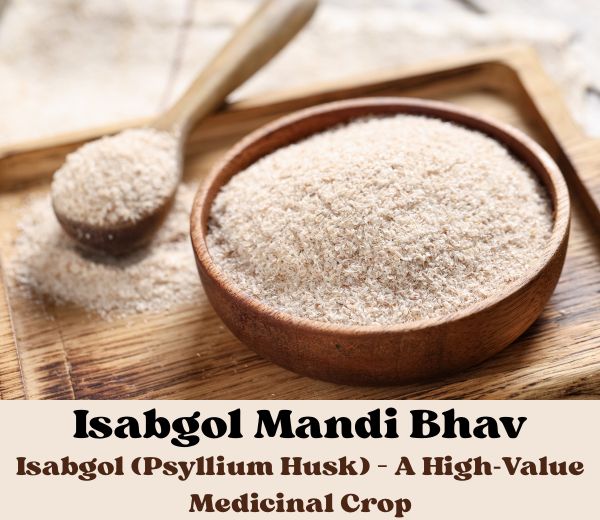
Crop type Rabi (cool-season annual), Plantago ovata Sowing month First fortnight of November (optimal) Harvest month February to March (110, 130 days after sowing) Main producing states Rajasthan (Barmer, Jalore, Jaisalmer, Bikaner), Gujarat Typical mandi bhav range ₹9,000, ₹14,500 per quintal (normal supply); up to ₹23,000+ per quintal (tight supply) India's global export share Over 80% of world psyllium husk supply No MSP Price is market-determined; no government support price exists for isabgol Most kisaans know isabgol (Plantago ovata) as a digestive crop, but that framing undersells it considerably. This guide covers isabgol crop details and how mandi bhav is affected by farming factors such as harvest timing, grade, and export demand. Isabgol is India's most dominant agricultural export in the nutraceutical space, the primary raw material for pharmaceutical psyllium husk sold across the United States, Europe, and the Middle East, and one of the very few rabi crops where a single quality decision at harvest can swing your mandi bhav by ₹1,000 to ₹2,000 per quintal on the same day in the same yard. This is a crop where agronomic discipline translates directly into rupees. India supplies over 80% of global psyllium husk demand, and Rajasthan is the engine of that dominance. What makes isabgol bhav behaviour so distinct from other rabi crops is the direct pipeline between your field and an international pharma buyer in Germany or a nutraceutical manufacturer in the United States. When their procurement calendars shift, Rajasthan mandi rates respond within weeks. Understanding that chain gives you a genuine advantage over a farmer who simply watches daily prices without knowing why they move. The full picture works like this: farming decisions from sowing week to harvest moisture shape the grade your crop receives, and supply arrivals, export demand, and processor buying then convert that grade into an actual bhav at the mandi gate. Platforms like KhetiKisaan track live isabgol mandi bhav across APMC yards in Barmer, Jalore, Bhinmal, and Nokha, and we will return to exactly how to use that information before you load your fasal for transport. Why isabgol is one of India's most strategically important rabi crops India cultivated approximately 4.5 lakh hectares of isabgol in 2022, 23, producing 4.32 lakh metric tonnes. This makes India the world's largest producer and exporter of psyllium husk by a substantial margin. This is not a regional speciality crop; it is a foreign-exchange earner with documented export revenue of US$330.9 million in FY 2023 alone, with approximately 50,250 tonnes shipped in that year. Industry estimates put India's 2026 export volume on a continued growth trajectory, with 2024 figures already reaching approximately 62 million kg, reflecting sustained global demand. The reason for such strong demand lies in what Plantago ovata's seed husk actually does. The outer coating of the isabgol seed swells dramatically on contact with water, forming a gel used in pharmaceutical laxatives, dietary fibre supplements, and food products. Pharmaceutical buyers require a swelling index of at minimum 40 mL per gram, while some higher-purity pharma lots demand 45, 50 mL per gram. Food-grade husk typically sits at 30, 40 mL per gram. This grading system is the reason two bags of isabgol from the same village can fetch very different prices in the same mandi on the same morning, a core part of understanding isabgol crop details and how mandi bhav is affected. Growing regions: where isabgol thrives in India Rajasthan accounts for the bulk of national production, with Barmer, Jalore, Jaisalmer, and Bikaner as the dominant districts. These arid, sandy-loam belts suit isabgol's agronomic requirements precisely: low humidity, cool winters, and excellent drainage match what the crop needs at every stage. Sandy-loam soils with a pH of 7, 8 and good internal drainage are particularly favoured; waterlogged or heavy clay soils are unsuitable and rarely attempted. Gujarat has also expanded significantly, with cultivated area growing from 13,303 hectares in 2022, 23 to over 31,000 hectares by 2024, driven by similar agro-climatic suitability in its northern districts. Export significance and its direct link to isabgol mandi bhav Because India supplies over 80% of global psyllium demand, a shift in export bookings creates an immediate, measurable effect on domestic arrivals. When exporters receive strong forward orders from the US or Europe, they pull stock from mandis faster, which tightens availability and pushes bhav upward. The largest buyers of Indian isabgol are the United States, Germany, and Italy, followed by the UK, Canada, France, Spain, and Japan. A pharmaceutical procurement decision in any of these markets can ripple back to the Bhinmal or Barmer mandi within a matter of weeks. How isabgol mandi bhav is shaped by sowing decisions and variety choice The foundation of isabgol mandi bhav is set in the field, not at the auction yard. The cultivar you choose and the week you sow determine yield potential, husk swelling factor, and ultimately which price grade your crop will command at auction. Getting these two decisions right costs nothing extra and has the most direct impact on munafa (profit) of any single farming choice. Optimal sowing window and the cost of getting it wrong The first fortnight of November is the optimal sowing window for Rajasthan and Gujarat. Sowing before late October risks warm-temperature stress during early growth stages. Sowing after mid-November shortens the vegetative period, which reduces both yield and husk swelling capacity. Even a two-week delay can depress the husk index below the threshold that processors and pharma buyers require for premium-grade classification. In a market with no government MSP, that quality downgrade goes straight to your price. Popular varieties and what they mean for grade and bhav Improved varieties such as RI 89, UI-124, Pusa Utkarsh, and Arka Kartik consistently outperform local seed on husk purity, swelling capacity, and disease resistance. UI-124 in particular responds well to balanced NPK application of 45 kg N plus 30 kg P₂O₅ plus 20 kg K₂O per hectare, producing measurably higher-grade output. A higher husk swelling index, which is what buyers are paying for, typically commands a premium of several hundred to over a thousand rupees per quintal in active mandis compared to ordinary-grade lots. The cost of purchasing improved seed is marginal relative to the price gain at auction. Agronomic practices that separate premium husk from ordinary lots Quality at the mandi is built during the growing season. Processors and commission agents at APMC yards in Bhinmal, Barmer, and Jalore can distinguish a well-managed lot from a poorly managed one within minutes of visual and physical inspection. Farmers who follow recommended packages consistently receive higher quotes. This is not merely anecdotal, it is the direct result of superior husk index and lower contamination in well-grown crops. Line sowing, seed rate, and stand establishment Line sowing at approximately 15 cm row spacing is strongly preferred over broadcasting. It improves air circulation, reduces fungal pressure, and makes weeding manageable. The recommended seed rate for improved varieties is around 5, 8 kg per hectare. Farmers using local seed at excessive rates often end up with overcrowded, disease-prone stands that reduce both yield and husk quality. Overcrowded crops also create humidity pockets that increase post-harvest moisture problems, which translates directly into mandi discounts. Fertilisation, FYM, and irrigation management The most productive package in Rajasthan trials combines 10 tonnes of well-decomposed FYM per hectare with 30 kg N and 25, 30 kg P₂O₅, supplemented with PSB and Azotobacter biofertilisers. Irrigation timing is equally critical. Isabgol requires light irrigation at sowing, then again around 30 days and 70 days after sowing. Waterlogging, even briefly, stunts growth and increases susceptibility to root diseases that destroy husk quality. Damaged or diseased husk is automatically downgraded at the mandi, sometimes by an entire price tier. How isabgol mandi bhav is affected by harvest timing, moisture, and shattering Once the crop reaches maturity, typically 110, 130 days after sowing in February or March, every additional day in the field increases shattering risk and moisture variability. These post-field variables are among the most direct and immediate drivers of the price your crop receives at auction. Many farmers who manage agronomy well lose margin at this final stage. How harvest timing connects to mandi price Isabgol spikes should be harvested when they turn uniformly brown and dry. Harvesting in the early morning, when dew slightly reduces shattering loss, is the widely recommended practice across Rajasthan. Unseasonal rain events in late February to early March, in Barmer, Jalore, and Bikaner, caused standing crops to develop excess moisture and harvested lots to turn black in the field. Both outcomes reduce husk grade and carry direct mandi penalties. Moisture content and grade classification Most processors and exporters require isabgol seed with moisture content below 8, 10%. Lots arriving above this threshold are discounted immediately because damp husk is prone to aflatoxin and bacterial degradation during storage and transit. Even a 1, 2% moisture difference can shift a lot from Grade A to Grade B. In active markets, that grade difference is worth ₹1,000, ₹2,000 per quintal at the farm gate. Post-harvest drying under shade before transport to the mandi is not optional; it is a price protection measure. Shattering losses and their indirect effect on isabgol mandi bhav When a significant share of the Barmer or Jalore crop shatters due to delayed harvest or adverse weather, total arrivals at mandis fall. Lower arrivals alongside steady buyer demand create a supply-shock that can trigger sharp mandi rate increases in a short period. Shattering is therefore not just a yield loss for an individual farmer; it influences the market for everyone selling in that season. How arrivals and export activity drive isabgol bhav at the mandi Supply-side dynamics are the most immediate driver of isabgol mandi bhav on any given day. The price at Bhinmal, Phalodi, or Nokha is essentially a live signal of how much stock is arriving versus how aggressively processors and exporters are purchasing. Understanding this relationship helps you read the market rather than simply react to it. Seasonal arrival patterns and isabgol price behaviour When fresh-crop arrivals peak in March and April, prices typically soften as market supply rises. By contrast, in tighter supply periods, bhav firms quickly. In one period at Bhinmal, monthly average prices reflected reduced stock from the previous season combined with active export buying (discussed in detail in the shattering section above). Later, major Rajasthan mandis including Phalodi, Bhinmal, Bajju and Rani traded within a range reflecting normalised supply conditions. The typical cost of production for a small farmer in Rajasthan leaves a meaningful margin. However, even modest price differences on a 50-quintal lot can amount to a significant sum. Export bookings and processor inventory as price levers Strong export bookings pull stock out of domestic mandis faster. When processors simultaneously hold low inventories, they compete with export buyers for the same lots and bid prices up quickly. When processors are already stocked and export demand is quiet, buying slows and bhav weakens. Rival producing countries such as Iran and Afghanistan influence sentiment in global markets but rarely disrupt Indian domestic pricing significantly, because India's share of global supply is so dominant that a poor Iranian crop mainly reinforces Indian export demand rather than creating domestic price volatility on its own. Global psyllium husk demand: the external force that sets your price ceiling The pharma and nutraceutical sectors in the United States, Europe, and the Middle East are the ultimate buyers for Indian isabgol. Their procurement calendars and ingredient sourcing decisions set the demand ceiling that filters back through exporters and processors all the way to Rajasthan mandis. Farmers who understand this link can interpret isabgol mandi bhav signals more accurately than those who only watch local arrival volumes. Pharma demand and its preference for premium grades Pharmaceutical-grade psyllium husk requires a swelling index of at least 40 mL per gram, plus tight purity and moisture certification. When pharma demand strengthens, it creates a two-tier market: premium lots are bid up sharply, while ordinary-grade stock remains subdued. Farmers with well-managed crops, certified improved varieties, and careful post-harvest moisture control are best positioned to capture this premium. The difference between selling into pharma-grade demand versus food-grade demand can be several hundred to over a thousand rupees per quintal for the same quantity. How global supply sentiment reaches local mandis If a major importing country tightens food safety standards, or a competing Iranian crop fails, Indian exporters receive stronger forward orders. Those orders translate into earlier and more aggressive buying at APMC yards in Barmer, Jalore, and Nokha. The chain is straightforward: international demand shifts, exporter behaviour changes, processor procurement accelerates, and isabgol mandi bhav responds within days to weeks. This is the reason keeping track of export market news is as relevant to your selling decision as watching local arrival volumes at the nearest mandi. How to check live isabgol mandi bhav and sell at the right time Knowing the agronomic and market factors that influence isabgol crop details and how mandi bhav is affected is only half the equation. The other half is having access to live, verified mandi rates across multiple APMC yards so you can decide exactly when and where to sell your fasal. Without current price data across mandis, you are negotiating blind. Why comparing multiple mandis before selling matters Isabgol prices vary meaningfully between mandis on the same day. Bhinmal in Jalore district, Bajju in Bikaner, and Rani in Rajasthan can quote different rates based on local arrival volumes, buyer presence, and quality mix. A farmer who accepts the first quote at the first mandi without comparing can leave a significant amount per quintal on the table. The transport cost of going to a second mandi is often far less than the per-quintal price difference between yards. Using KhetiKisaan to cross-check live APMC rates KhetiKisaan provides live isabgol mandi bhav data sourced from on-ground contacts who are physically present at APMC auctions during active bol-chaal (bidding). This means the rates reflect actual transaction prices rather than delayed government feeds or estimated averages. Before loading your isabgol for transport, checking KhetiKisaan's mandi-wise listings for Barmer, Jalore, Nokha, and Bhinmal takes minutes and gives you a clear picture of which yard is quoting the strongest price on that day. Commercial traders and arhatiyas (commission agents) already use this kind of real-time cross-mandi intelligence routinely; there is no reason small and marginal kisaans should be without it. Storage versus immediate selling: a quick framework If arrivals are heavy and bhav is soft relative to your production cost of approximately ₹5,100, ₹5,200 per quintal, short-term storage in dry, cool conditions with moisture kept below 10% is a viable option. Isabgol stores reasonably well under proper conditions, and waiting out a temporary supply glut can recover meaningful margin. However, if export demand signals are strong and processor buying is active in mandis, waiting can cost you the price window. The live rate data on KhetiKisaan helps you make this call based on current market information rather than mandi rumour. Final takeaway: your isabgol crop decisions determine your mandi bhav Isabgol mandi bhav is not random. It is the outcome of a chain of decisions that starts with sowing week and variety selection, runs through fertilisation, irrigation, and pest management, and ends at the mandi gate with moisture level and arrival timing. Every link in that chain either adds to or subtracts from the price you receive. A farmer who sows on time with improved seed, manages irrigation carefully, harvests at the right moment, and dries the crop properly before transport has done everything possible to claim a premium-grade price at auction. The part of the equation you cannot control, export demand, processor inventory levels, and seasonal arrival volumes, can still be monitored. Tracking live isabgol mandi bhav across multiple APMC yards before you sell is the single most practical step a kisaan can take to protect margin on the market-facing side. Before you decide where and when to sell your next isabgol lot, visit KhetiKisaan to check verified, real-time rates from the mandis closest to you. That one cross-check, done consistently, is how experienced growers and traders stay ahead of the market.
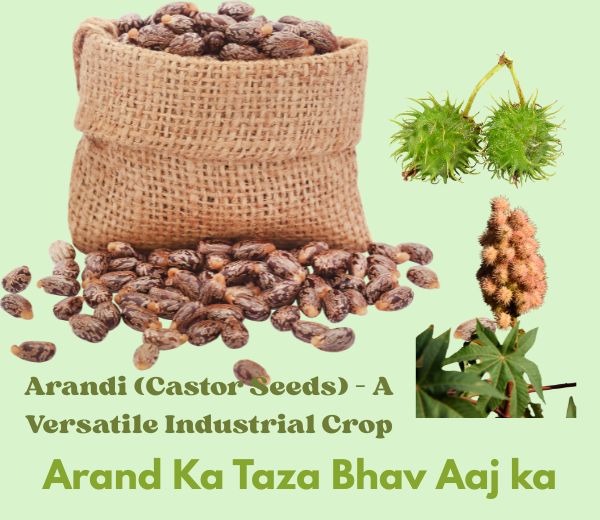
Quick Facts: Arandi (Castor Seed) Crop Castor seed (Ricinus communis) | Local name: Arandi Key producing states Gujarat, Rajasthan, Andhra Pradesh Oil content High (non-edible oilseed) Major end-uses Lubricants, cosmetics, biofuel Exchange NCDEX (National Commodity & Derivatives Exchange) Price unit ₹ per quintal The gap between what you get at your local APMC yard and what the exchange is signalling is significant, and every arandi grower should understand it before deciding when and where to sell. This article gives you a current mandi snapshot, explains what is actually driving castor seed prices right now, and helps you make a confident sell-or-store decision. For live arandi mandi rates updated from APMC auction yards, check KhetiKisaan before you head to the market. Do not rely on word-of-mouth rates from the day before. What arandi (castor seed) is and why India grows it Castor seed is a Kharif oilseed crop with exceptionally high oil content, making it one of the most commercially valuable non-edible oilseeds in India. Gujarat leads production and contributes roughly 80% of the country's total output, followed by Rajasthan and Andhra Pradesh. Sowing happens from July to August, with harvest running from November through February. That timing directly shapes the post-harvest price dynamics discussed below. Unlike edible oils such as groundnut or mustard, castor oil does not compete in the kitchen. It goes straight into industrial supply chains, driven by ricinoleic acid, a fatty acid found at high concentrations nowhere else in nature. This makes arandi ke daam (castor prices) far less correlated with edible oil cycles than most farmers assume. When groundnut or sarso (mustard) prices fall because of excess edible oil supply, arandi prices are often unaffected, industrial buyers still need it, and there is no substitute for certain applications. Today's castor seed rates across major Rajasthan mandis Many price aggregators pull data from delayed government feeds or estimated averages, not from the actual bol-chaal (live bidding) happening at the yard. KhetiKisaan publishes mandi rates sourced from APMC auction yards, check the platform for today's castor seed mandi rates before you decide which yard to take your crop to. For an independent cross-check, Agmarknet and your state APMC portal are reliable government sources. What actually moves castor seed prices: industrial demand explained Three important downstream sectors drive demand for arandi, and understanding them tells you when prices are likely to firm up. None of these sectors is influenced by domestic edible oil cycles, which is what makes castor seed particularly resilient during periods of general oilseed weakness. Lubricant and hydraulic fluids: Castor oil's high viscosity and thermal stability make it the preferred base oil for aviation and high-performance industrial lubricants. Global aerospace and automotive demand lifts offtake directly. Cosmetics and pharmaceuticals: Ricinoleic acid goes into lipsticks, skin creams, and laxative formulations. This segment absorbs a consistent portion of refined castor oil throughout the year. Biofuel and green chemistry: Castor-based biodiesel and bio-plastics are gaining ground as sustainability regulations tighten in Europe and the US, creating an emerging, fast-growing demand channel. India is the dominant global supplier of castor oil, and international orders from Europe, the US, and China translate directly into domestic price pressure. When export enquiries pick up, typically in Q4 of the calendar year, traders at Gujarat and Rajasthan mandis compete for available stock, which pushes arandi bhav higher. Watching seasonal export activity is therefore one of the more reliable signals for timing a sale. What the NCDEX gap means for you When exchange quotes for castor seed sit above the rates available at your local mandi, the difference reflects factors such as basis risk, storage charges and the premium for certified-grade deliverables on the exchange. This spread is not a sum you can immediately realise at the yard but rather an indicator of how processors and traders expect supply and demand to evolve. You cannot directly pocket the futures premium at the mandi; instead, view a wide gap as a potential signal to hold stock if you have clean storage and sufficient liquidity. Conversely, if storage conditions are uncertain or cash flow is tight, selling at the best current mandi rate may be the safer option. Best time to sell arandi after harvest: a practical guide Seasonal data from Rajasthan mandis suggests that castor seed prices tend to be firmer during the November, January harvest period than many farmers expect. The sharper weakness typically arrives later: April has historically been the softest month, with prices often slipping as stored stocks come to market. The latest data broadly supports this, February posted a +1.89% gain and March climbed +2.57%, confirming that holding beyond the initial harvest rush can improve realisations. Farmers who sold at November harvest lows left real money on the table compared to those who stored even briefly. That said, mandi-by-mandi variation is real, so check current avak levels at your target yard before deciding. Storing makes economic sense if three conditions are met: moisture in your stored seed is below a safe threshold (consult your state agricultural extension office or warehouse receipt guidelines for the approved castor seed standard), you have working capital for 6, 10 weeks, and NCDEX futures still show a meaningful premium over physical rates. If any of those conditions are missing, poor storage, cash pressure, or a narrowing futures spread, selling promptly at the best available mandi rate is the safer call. Before your next trip to the mandi, check current castor seed rates on KhetiKisaan so you walk in knowing the actual going rate and can negotiate with confidence. The key takeaway before you sell Arandi bhav in major Rajasthan mandis has recently ranged between ₹5,700 and ₹6,448 per quintal, with NCDEX futures pointing to firmer prices ahead. Industrial demand from lubricant, cosmetic, and biofuel sectors provides a structurally resilient demand base for castor prices. This crop is not going out of fashion. The post-harvest dip is real, but seasonal data consistently shows that the February, April window tends to reward patient sellers who have proper storage in place. Before your next visit to the mandi, check live arandi mandi rates on KhetiKisaan to know the actual transaction prices being paid right now, not yesterday's headlines. Knowing your rate before you arrive puts you in a far stronger negotiating position.
Quick Facts: Tarameera (Taramira) Oilseed Crop name Tarameera (Eruca sativa), also known as taramira, rocket seed, or jamba Oil content Approximately 25, 30% (27.8% typical) Key growing state Rajasthan (principal state; concentrated in Hanumangarh, Sri Ganganagar, and Nagaur districts) Moisture limit for best grade Not more than 6% Official MSP Not covered under current government MSP notifications Tarameera bhav (market price) is not listed on every price platform, which is exactly why growers of this niche rabi oilseed often end up selling blind. Unlike sarso, which gets daily coverage across every agri-news channel, price data for this crop is scattered, inconsistent, and hard to verify. During the 2025, 26 rabi season, rates across Rajasthan mandis ranged from ₹4,200 to ₹5,460 per quintal depending on the market, the quality presented at auction, and weekly arrival pressure. This article gives you a mandi-wise price snapshot from the last rabi season, a six-month trend read, a clear explanation of why tarameera holds its own against sarso, quality grading clarity, and a practical guide on when to sell for maximum returns. For verified, ground-level tarameera bhav before you head to the mandi, check KhetiKisaan's live price listings. Key Features of Tarameera Tarameera (Eruca sativa), also known as taramira or rocket seed, is a short-duration rabi oilseed with an average oil content of 22, 30%. It thrives in arid and semi-arid regions, matures in 85, 100 days, and requires minimal irrigation. The seed has a distinctive pungent flavour due to high erucic-acid levels and is rich in essential fatty acids and antioxidants. Agronomic Benefits Tarameera is well suited to light soils and contributes to crop rotation by breaking pest and disease cycles in mustard and chickpea systems. Its deep root system improves soil structure and increases water infiltration. Low seed rate (4, 5 kg/ha) and tolerance to frost and drought reduce input costs, while rapid canopy closure suppresses weeds naturally. Importance of Tarameera As a niche oilseed, tarameera offers farmers a valuable alternative when mainstream mustards face surplus pressure. Its concentrated cultivation in Rajasthan, Haryana and Uttar Pradesh helps stabilise farm incomes. Nutritionally, its oil is prized for cooking and salad dressings, and its seedcake is a high-protein livestock feed. Moreover, the crop's low water requirement aligns with sustainable agriculture and climate-smart farming practices. Uses of Tarameera Oil extracted from tarameera seeds is used in culinary applications, especially in North Indian cuisine, and in the manufacture of margarine and condiments. Industrially, its erucic-acid-rich oil serves as a lubricant and in the production of biopolymers. The crushed cake is employed as organic manure or animal feed. Young leaves of the plant are occasionally harvested for use in salads and traditional herbal remedies. Why tarameera holds its own against sarso in the mandi Tarameera commands a competitive price for two reinforcing reasons. First, its seed oil content of roughly 27.8% (with some varieties reaching 30%) is broadly comparable to sarso, and its pungent oil has distinct uses in edible oil markets across North India. Second, total market arrivals remain far smaller than mustard. This supply-side scarcity is what keeps the crop's rates competitive even in years when sarso softens under surplus pressure. Sarso seed typically carries 30, 35% oil content, giving it a slight technical edge. But sarso is also cultivated across millions of hectares nationally, meaning any good production year pushes national supply sharply higher and drags prices down. Tarameera's cultivation is concentrated mainly in Rajasthan's Hanumangarh, Sri Ganganagar, and Nagaur districts, keeping arrivals at a manageable level. As a result, tarameera rates tend to be more stable during bumper sarso years, a meaningful advantage for farmers who grow both crops. For a kisan with both sarso and tarameera to sell after rabi harvest, understanding this price-stability differential is commercially useful. In the 2025, 26 season, when sarso prices came under pressure, some tarameera mandis in Rajasthan remained above ₹5,000 per quintal. Knowing which fasal to send first can add thousands of rupees to your total seasonal income. What decides the actual rate you get at the auction Three things determine your tarameera mandi rate. The first is the official quality grade your crop falls into. The second is moisture content, it must be under 6% for best grade. The third is the complete absence of Argemone seed contamination: under standard mandi inspection practice, presence of Argemone seeds renders a lot unacceptable and subject to rejection or penalty. Buyers assess these points visually during bol-chaal (bidding), so the grade your lot is assigned effectively determines where in the price range you land. Grade Foreign Matter Max Dead/Damaged Seeds Max Unripe Seeds Max Admixture Max Special 2.0% 3.0% 2.0% 10.0% Standard 4.0% 5.0% 4.0% 15.0% General 6.0% 8.0% 8.0% 20.0% Better grades typically fetch a meaningful premium over lower ones, varying by mandi and auction date, the price spread seen across live auction data suggests the difference between General and Standard grade can run to several hundred rupees per quintal. Three practical steps before bringing your crop to the market can make a real difference. First, dry the grain to under 6% moisture: as a recommended post-harvest practice, spreading the crop on a tarpaulin in direct sun for 2, 3 days before loading works well in most conditions. Second, clean the lot using a basic thresher or sieve to bring foreign matter below 2%, which targets Special grade. Third, store tarameera separately from other oilseeds to prevent admixture that automatically lowers your grade. The right time to sell your tarameera for maximum returns Sell in the post-Holi window, mid-March to mid-April, when arrivals begin to thin after the initial harvest rush. Selling in the first two weeks after harvest, when every kisan is bringing crop to the auction yard simultaneously, locks you into the lowest rates of the season. Farmers who stored their crop for just 3, 5 weeks after harvest and waited for arrival pressure to ease recovered to rates around ₹5,300 per quintal by early March. That is a gain of ₹400, ₹900 per quintal purely from timing, with no change in quality. Combined with proper drying and cleaning to achieve Special grade, the combined impact on your total returns per quintal is substantial. Because tarameera is a niche oilseed, many generic price aggregators do not publish timely quotes for it, where they do, data is often delayed. Check current tarameera bhav on KhetiKisaan before loading your tractor so you can compare Jaipur against Sumerpur and your local market to pick the best destination. This 10-minute habit before every trip to sell is one of the most straightforward ways to protect your price. Tarameera bhav: check live rates before you go to the mandi Tarameera bhav can shift meaningfully from one mandi to the next and from one week to the next, the 2025, 26 season showed a swing of over ₹1,200 per quintal between the February low and the Jaipur peak. Knowing your rate before you leave home is not optional; it is the difference between a good season and a missed opportunity. Check live tarameera bhav on KhetiKisaan before every trip to the auction yard and use the mandi comparison to route your crop where it will earn the most.
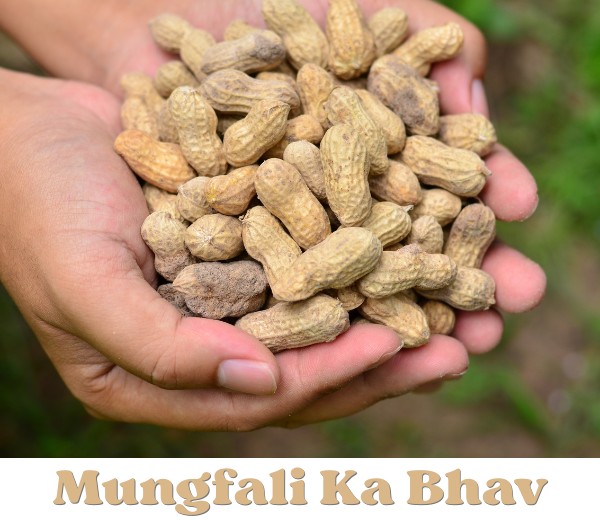
Picture this: it's early morning in Rajasthan, and a kisaan is loading his freshly harvested mungfali onto a tractor-trolley. The pods look clean, the shelling percentage feels good, and the crop has dried well. But as he ties down the last gunny bag, the same question forms in his mind that forms in every groundnut farmer's mind at this moment: what price will the APMC yard quote today? That question contains two separate problems. The first is a crop problem: does this farmer understand his mungfali well enough to have protected its oil content, moisture, and grade through cultivation and post-harvest handling? The second is a market problem: does he know which forces are moving the mungfali mandi bhav today, and is he heading to the right yard? This mungfali crop description and what affects mungfali mandi bhav, covering varieties, quality parameters, and all nine market drivers, is what this guide addresses directly. Before leaving the farm, spending five minutes on KhetiKisaan to check live groundnut mandi rates across multiple APMC centres can make a difference of hundreds of rupees per quintal. Platforms like KhetiKisaan source their prices from on-ground contacts physically present at live auction sessions, so you get actual transaction rates rather than yesterday's government feed. But market intelligence only works when you also understand what is driving those rates. That is what this guide is for. Crop type: Annual oilseed legume (Fabaceae family) Botanical name: Arachis hypogaea L. Primary season: Kharif (sown June, July, harvested October, November) Key producing states: Gujarat, Rajasthan, Andhra Pradesh, Karnataka, Tamil Nadu, Maharashtra Average oil content: 45%, 52% depending on variety Acceptable moisture for sale: 7%, 8% maximum (specific limits vary by buyer and end use) Official aflatoxin limit (India): 30 ppb Mungfali crop description: plant structure, types, and growth stages Mungfali ( Arachis hypogaea ) is an annual oilseed legume belonging to the Fabaceae family. It is self-pollinated, bushy to spreading in habit, and stands about 30, 50 cm tall. The plant has compound leaves with four leaflets and distinctive yellow flowers with red veins. What makes mungfali completely unlike most other crops is how its pods are formed. Plant structure and the underground pod habit After the yellow flower is fertilised, a structure called the gynophore (locally called the "peg") elongates downward and pushes into the soil. The pod then develops underground. This geocarpic, or bhumi-garbhi, fruiting process is what defines groundnut agronomy. Because pod formation happens below the surface, good soil tilth and adequate calcium availability near the root zone are critical for well-filled pods. Compacted or calcium-deficient soil produces hollow, unfilled pods (chitta), which directly reduces the shelling percentage and the price you receive at the mandi. Bunch, semi-spreading, and spreading varieties grown across India Indian agronomy groups mungfali varieties by growth habit into three practical categories. Bunch types like TMV-7, Jyoti, BG-1, and BG-2 are erect and compact. Semi-spreading types include TMV-6, TMV-8, Chitra, and T-64. Spreading types such as M-13, M-35, Amber, and Chandra have a wider canopy and longer roots. Bunch and semi-spreading types mature earlier, around 100, 105 days, which makes them suitable for areas with a shorter growing window or where a second crop needs to follow. Spreading types require 125, 135 days and are generally better suited to longer, uninterrupted Kharif seasons. Growth stages from sowing to harvest Knowing the four key stages helps farmers plan irrigation, top-dressing, and harvest scheduling with precision. The sequence is as follows: Vegetative stage: 25, 35 days after sowing Flowering and pegging: 35, 50 days after sowing Pod formation: 50, 75 days after sowing Pod development: 75, 90 days after sowing, running through to maturity Each stage has specific water and nutrient requirements. The pegging stage is arguably the most critical single window to watch: missing irrigation here causes peg failure and reduces effective pod count, while water stress during pod development produces shrivelled kernels with lower oil content. Both outcomes hurt your mandi price directly. Where mungfali is grown in India and why location shapes its market value Groundnut is not a uniformly grown crop across India. The state where mungfali is produced influences its variety, oil content, buyer profile, and ultimately the rate it commands in the mandi. A buyer sourcing bold-kernel groundnut for export has different requirements from an oil miller looking for high-oil-content pods for crushing, and location largely determines which buyer type you are selling to. Major producing states and their agro-climatic zones Gujarat is India's dominant groundnut producer, with approximately 15.45 lakh hectares under cultivation in 2025, 26, concentrated in the Saurashtra region on red laterite and sandy loam soils. Andhra Pradesh and Karnataka grow mungfali on red soils in their respective dryland belts, producing varieties favoured by both oil millers and export shellers. Tamil Nadu contributes significantly from its interior districts. Rajasthan and Maharashtra grow groundnut on sandy loam and black cotton soils respectively, adding to the Kharif supply. Soil type matters to traders because it directly influences pod maturity, shelling percentage, and oil content, all parameters evaluated during APMC bol-chaal (bidding). Kharif, Rabi, and Zaid cultivation windows Season Sowing window Harvest window Key states Kharif June, July October, February Gujarat, Rajasthan, AP, Karnataka, Tamil Nadu, Maharashtra Rabi October, November February, March Andhra Pradesh, Karnataka (irrigated pockets) Zaid/Summer February, March May, June Limited irrigated area; state-wise seasonal calendars vary These harvest windows directly create the arrival cycles you see at mandis. The Kharif harvest arrival surge, concentrated between October and December across major states, typically produces the season's price trough. Farmers who understand this pattern and plan storage accordingly are in a much stronger position. Agronomic practices that protect pod quality and yield A farmer who arrives at the APMC yard with high-oil, well-filled, clean-grade mungfali will always command a better price than one with poor-grade produce. The quality difference starts in the field. The practices that matter most are covered below, beginning with soil preparation and fertiliser management. Soil preparation, sowing window, and fertiliser management Sandy loam to loamy soils with good drainage suit groundnut best. Prepare a fine, well-tilled seedbed because the pegs need to penetrate the soil easily for pod formation. The sowing window is critical: late sowing means the crop faces heat stress during pod filling, which reduces oil content and raises disease pressure. For fertiliser, the balance that matters most for pod quality is adequate phosphorus for root development and calcium near the surface for proper pod filling. Calcium deficiency is the primary cause of unfilled, hollow pods (chitta). At the time of pegging, gypsum application, with rates typically recommended around 200, 250 kg per acre in many groundnut-growing states, is a widely cited practice for improving shelling percentage; consult your state extension bulletin for the recommendation specific to your district. Irrigation at the right growth stage Water stress during flowering and pod filling causes the sharpest yield and quality losses. The three most sensitive irrigation windows are pre-sowing (for uniform germination), at flowering and pegging (35, 50 days), and during pod development (75, 90 days). Missing irrigation at pegging causes peg failure; missing it at pod development produces shrivelled pods with lower oil content and poor shelling percentage. In rainfed areas, conservation furrows and mulching with crop residue can buffer moisture between rains. These are not just agronomy tips: every percentage point of oil content you protect in the field is money recovered at the mandi. Quality parameters that set your price at the mandi Mungfali mandi bhav is not determined solely by weight. Traders and oil millers evaluate each lot on several mungfali quality parameters before making their bid. Understanding these parameters helps you take corrective action before you reach the APMC yard, not after. Oil content and shelling percentage as the primary price anchors Oil content is the single most important parameter for buyers who crush mungfali for groundnut oil. Indian groundnut varieties typically range from 45% to 52% oil content, with improved varieties like GJG-31 testing around 48%, 50%. Oil millers prefer lots at 50% or above because higher oil recovery reduces their input cost per litre of oil. Shelling percentage is the second lever: a higher ratio of usable kernel to total pod weight means more recoverable product per quintal purchased, so it directly affects what traders bid. A lot with 72% shelling percentage will attract a better price than a comparable lot at 65%, all else being equal. Moisture limits and aflatoxin contamination risk The acceptable moisture limit for marketable groundnut in Indian mandis is generally in the range of 7%, 8%, though premium buyers and export channels often require levels towards the lower end, and recommended limits can vary by end use. High-moisture lots attract discounts because buyers factor in drying cost, storage risk, and weight loss during drying. The more serious issue is aflatoxin: a fungal toxin produced by Aspergillus species that develops in improperly dried or stored groundnut. India's official limit for groundnut is 30 ppb, but export buyers and branded food processors often demand levels well below 10 ppb. Aflatoxin-positive lots face rejection or steep price cuts with no negotiation. Prevention is straightforward: harvest on time, field-dry properly, and store in clean, ventilated conditions. Post-harvest handling before heading to the APMC yard A substantial share of avoidable price loss for mungfali occurs post-harvest rather than in the field. The quality you protect through good agronomy can be undone quickly by poor drying, incorrect storage, or sloppy grading. Follow these steps to arrive at the mandi with produce that commands the best available rate. Drying and storage to prevent quality deterioration After digging, invert the plants in windrows with pods facing upward and allow field curing for 2, 3 days. Then strip the pods and sun-dry in a thin layer until moisture drops to 7%, 8%. This typically takes 7, 10 days depending on weather conditions and ambient humidity. Do not heap wet pods, heaping creates internal heat and moisture that accelerates mould growth and aflatoxin contamination within days. Store dried pods in polythene-lined gunny bags on wooden pallets or a raised platform, away from direct floor contact. Keep the storage area well-ventilated and protected from rodents. Avoid mixing lots from different harvest dates or different moisture levels, as inconsistency is penalised during trader assessment. Grading and cleaning for better price realisation Remove foreign matter, soil clumps, shrivelled pods, immature pods, and visibly damaged produce before presenting at the mandi. At most APMC yards, mungfali is assessed visually during bol-chaal bidding. A clean, uniform lot with no debris creates a stronger opening bid from traders. This is not a minor detail: the initial impression a lot creates influences the competitive dynamic among bidders. In organised farmer clusters in Gujarat and parts of Rajasthan, pre-graded and cleaned lots have attracted premiums from exporters and aggregators who value consistency. That same approach is available to any farmer willing to spend an extra half-day on sorting before loading. Nine forces that actually move mungfali mandi bhav Groundnut price trends are not random. They respond to identifiable supply, demand, and policy signals. Understanding these nine oilseed market factors gives you the ability to make an informed decision: sell now, wait 60 days, or look for a different mandi. Supply-side forces: monsoon, domestic yield, and arrival surge Monsoon performance in Gujarat, Andhra Pradesh, and Rajasthan is the single most powerful supply-side driver of groundnut prices nationally. A weak monsoon reduces crop size, tightens supply, and firms prices. A bumper crop year increases arrivals sharply and can push mandi rates below MSP levels. The second supply factor is crop quality: a season with significant disease damage, aflatoxin contamination, or poor shelling percentage reduces effective usable supply even when the gross harvest looks large, which can support prices despite high arrivals. The third supply factor is the post-harvest arrival surge. In the four to six weeks after the Kharif harvest, most farmers bring mungfali to the mandi simultaneously because they need immediate cash or lack storage. This concentrated selling typically creates a seasonal price trough, a pattern that recurs most years but can be moderated by strong crushing demand or government procurement activity. Farmers who can store for 60, 90 days after harvest consistently realise better rates, often ₹300, ₹600 per quintal more, once the arrival pressure eases and oil mills begin restocking. Demand-side forces: crushing cycles, edible-oil imports, and export pull Crushing demand from oil mills is the dominant buyer force at most groundnut mandis. When edible oil prices are firm, oil millers can afford to pay more for raw mungfali and still maintain their margin on groundnut oil sales. When cheaper imported edible oils, particularly palm oil and soybean oil, flood the domestic market, oil millers face compressed margins and reduce their buying price for raw groundnut. This import-price transmission is one of the most powerful and most misunderstood drivers of mungfali bhav. The relationship works clearly in both directions: when global palm oil prices rise, imports become expensive, domestic crushing becomes more competitive, and millers bid more aggressively for mungfali. When palm oil is cheap, imports substitute for domestic crushing, and buying pressure at the mandi weakens. Export demand for groundnut kernels, primarily for confectionery, snack processing, and peanut butter in international markets, adds another demand layer. In strong export years, premium bold-kernel lots can trade significantly above the local base price, particularly from mandis in Gujarat's Saurashtra region. Policy and trader behaviour: MSP, stocking cycles, and global price signals The government's MSP for groundnut, set at ₹7,517 per quintal for 2026, 27, creates a psychological and practical floor in mandis. When open-market prices slide near the MSP, farmers hold back and government procurement agencies may activate Price Support Scheme (PSS) buying. This reduces selling pressure and stabilises rates. Farmers should register with the relevant state agency at the start of the season so they are eligible for MSP procurement if needed. Trader and oil-mill stocking cycles create shorter-term price rhythms. When mills anticipate higher prices ahead, they build inventory aggressively, creating demand spikes at mandis. When they are over-stocked, buying cools and prices soften even if the overall supply situation has not changed. Finally, global peanut prices, influenced by production from China, Argentina, and the USA, affect India's export competitiveness and feed back into domestic mandi rates in a lagged but measurable way. When Indian groundnut is competitively priced for export, traders divert procurement to exporters, reducing local mandi supply and supporting rates. Mungfali mandi bhav: how to check groundnut mandi rates and decide when to sell Understanding what drives mungfali mandi bhav is only useful if you can access real-time price data to act on it. Knowing that oil mill demand is strong in your region does not help if you do not know which mandi is actually offering the best rate today. Why mandi-wise price comparison matters before selling Groundnut prices vary significantly across APMC yards, sometimes by ₹200, ₹500 per quintal between nearby mandis on the same day. This variation reflects local buyer competition, the quality profile of arrivals at each yard, and trader appetite at that specific session. A farmer who checks only the nearest mandi without comparing nearby yards is regularly leaving real money on the table. On a 50-quintal lot, even a ₹300 per quintal difference amounts to ₹15,000, a figure that justifies spending five minutes on research before loading the trolley. Using KhetiKisaan to monitor real-time mungfali mandi bhav KhetiKisaan publishes daily mungfali mandi bhav sourced from on-ground contacts who are physically present at live APMC auction sessions across multiple mandis. The prices reflect actual transaction rates from the day's bol-chaal, not delayed government aggregates or estimated averages. Before heading to the APMC yard, check the groundnut mandi rates across relevant centres on KhetiKisaan. The listings show mandi-wise prices per quintal in plain Hindi-English format, so you can immediately identify which yard is running a tezi (bullish) session and which is softer that day. The inter-mandi spread on any given day makes comparison genuinely worthwhile. KhetiKisaan also covers Rajasthan mandis including Sri Ganganagar and Nohar, giving farmers in North India's Kharif belt the same groundnut price trends visibility that traders and large processors have always had access to. Final takeaway: mungfali crop description and what affects mungfali mandi bhav Mungfali is one of India's most commercially significant oilseed crops. Every decision a farmer makes, from variety selection and sowing date to post-harvest drying and choice of APMC yard, connects directly to the price received. The two halves of this article are not separate topics; they are the same topic. Better agronomy protects oil content. Better post-harvest handling protects moisture and grade. Better market intelligence protects the price you receive for the quality you have worked to produce. The nine factors driving mungfali mandi bhav are now visible to you: monsoon performance, arrival surge timing, crop quality, crushing demand, edible-oil import prices, export demand, MSP policy, trader stocking cycles, and global peanut price signals. No single factor operates alone, but knowing the pattern helps you recognise the conditions under which holding stock makes sense versus selling immediately. This mungfali crop description and what affects mungfali mandi bhav comes down to one practical conclusion: a groundnut farmer who monitors his quality parameters from field to storage and checks daily groundnut mandi rates on KhetiKisaan before selling is operating with the same information advantage that traders and large processors have always had. That gap is now closable. Use it. Mungfali Bhav Aaj Ka Mungfali Bhav Aaj Ka assists farmers in knowing the recent groundnut prices in various mandis. Groundnut/mungfali is a significant oilseed crop in India. It is cultivated in numerous regions and utilized in oil and food. Mungfali is mainly a Kharif crop and is sown from June to July. It is also grown in summer from January to February where water is available. The crop grows well in warm weather and needs good sunlight. It gives better yield in sandy or sandy loam soil. Heavy soil is not suitable as the pods grow inside the soil. Mungfali has a special growth where the pods develop under the soil after flowering. Farmers can find it helpful due to its ability to enrich the soil. The plants and leaves are utilized after harvest as animal feed. Mungfali is in good demand because it is used by oil mills and in food products. Export demand also affects the market price. Key Factors Affecting Mungfali Bhav Dry and clean pods get a better price Low moisture is important Good shell quality gives a higher rate Bright and clean produce is preferred Demand in the market affects rates The changes are based on quality and demand. Farmers check Mungfali Bhav Aaj Ka daily to know the right time to sell and get better value for their crop.
Rajasthan is the home of India's methi dana (fenugreek seed) trade, and today's methi bhav is moving in a wide band depending on which mandi you approach and what grade you bring. Understanding what drives this crop's price will help you sell smarter, here is what those numbers actually mean. Sowing time: November, December Harvesting time: February, March Major producing states: Rajasthan, Gujarat, Haryana, Madhya Pradesh Import, export: India is one of the world's leading exporters of fenugreek seeds, shipping mainly to the Middle East, North Africa and Southeast Asia; imports are negligible. Scientific name: Trigonella foenum-graecum Methi dana basics: why Rajasthan dominates India's fenugreek market What makes methi a high-demand Rabi crop Methi dana is the dried seed of the fenugreek plant (Trigonella foenum-graecum), and it is not the same product as fresh methi leaf (methi patti) sold in vegetable markets. Rajasthan, especially Nagaur, Jodhpur, and Barmer districts, produces the bulk of India's fenugreek seed output. Methi dana commands ₹4,000, ₹8,400/quintal in mandi auctions, while fresh methi leaves fetch only ₹1,200, ₹1,500/quintal. This distinction matters because market reports sometimes mix both forms, which can seriously mislead you when comparing prices across sources. Why methi travels from mandi to global spice shelves India is among the world's leading fenugreek exporters, shipping an estimated 35,000, 50,000 metric tonnes annually to key markets including the United States, Canada, Saudi Arabia, the United Kingdom, Japan, and Bangladesh (based on broadly reported trade data; for authoritative figures, refer to APEDA or Spice Board export statistics). That export demand is what keeps Rajasthan mandi arrivals active and pushes fenugreek seed mandi prices well beyond domestic consumption levels. Domestic processors form the second buyer segment: masala brands, food ingredient firms, and reportedly pharmaceutical processors, all of whom procure steadily through the year from Rajasthan's key APMC centres. Today's methi mandi rates across Rajasthan and what the numbers tell you Mandi-by-mandi price snapshot for today The spread between Baran and Jaipur is not random. It reflects distance from export hubs, lot size, and buyer competition intensity at the bol-chaal (live auction bidding). Your nearest mandi is not always your best-paying mandi. If transport costs allow, checking rates at two or three mandis before loading your trolley is worth doing, even a ₹300, ₹500/quintal difference in posted rate can outweigh the extra transport if your lot is large enough. Grade and quality: the ₹2,000, ₹4,000 gap that directly hits your returns "Best" grade methi dana, bold seed, low moisture, clean lot, has traded as high as ₹8,400/quintal at Chhotisadri in Rajasthan, while common "Other" grade lots sit at ₹4,400, ₹4,650/quintal. That is a differential of ₹2,000, ₹4,000 per quintal for the same crop. Key grading factors include seed boldness, moisture content (Special grade requires below 9%), and foreign matter percentage. Cleaning and sun-drying your lot before the auction directly lifts your methi per quintal rate at the bidding stage. This is not extra effort; it is direct munafa (profit). Who buys methi and when do prices typically peak after harvest Two buyer segments, two very different timelines Spice exporters move fast. They bulk-buy immediately post-harvest (March, April) to fulfil forward contracts with overseas buyers, creating the first price surge of the season. Domestic processors, masala brands and food ingredient companies, are steadier buyers who step in more aggressively from May onwards when exporter buying slows. Knowing which buyer type is active at your local mandi on a given day tells you whether the bol-chaal will be competitive or sluggish, and whether holding your lot another week makes financial sense. When methi aaj ke bhav tend to peak: the seasonal pattern Methi prices typically follow a post-harvest dip in March, April when arrivals flood the mandi, then recover through May, June as stock tightens. Rajasthan mandi data indicates prices in the range of ₹4,850/quintal in mid-March rising towards ₹6,740/quintal by late May, note these are indicative datapoints from different seasons that illustrate the general seasonal curve rather than a single continuous series. Farmers who store clean, dry lots in gunny bags in a cool, ventilated space can often capture ₹500, ₹1,500/quintal more than those who sell immediately after harvest. The trade-off is storage cost (an industry estimate of roughly ₹50, ₹80/quintal per month) and moisture risk; tracking live methi mandi rates daily during any hold period is not optional, it is the job. How to check live methi bhav and decide whether to sell today Why live rates matter more than week-old averages Methi dana prices can swing ₹200, ₹500/quintal within a single week based on arrival volume, export tender deadlines, and currency shifts affecting the rupee-dollar export price. A stale rate from a newspaper or a weekly bulletin won't tell you what today's bol-chaal settled at in Nagaur or Jodhpur. KhetiKisaan tracks live methi bhav across Rajasthan's key APMC yards and aims to surface actual transaction rates rather than delayed averages, giving you a more timely picture than a weekly government-feed report. That difference can mean hundreds of rupees per quintal in your pocket. A simple sell vs hold framework for kisaans Use this three-step check before deciding to sell or hold your methi dana lot: Checktoday's methi dana mandi rateon KhetiKisaan for your nearest two mandis and compare them side by side before making any call. Calculate your storage cost per month at approximately ₹50, ₹80/quintal and multiply by the number of weeks you plan to hold. If the current rate is within ₹300/quintal of the seasonal high for your mandi (verify againstAgmarknet or KhetiKisaan'shistorical series), selling now is rational. If rates are still below that band and arrivals remain heavy, holding a clean, dry lot for 4, 6 weeks is worth evaluating carefully. Visit KhetiKisaan daily during peak arrival season to track whether your mandi's methi rate is rising, flat, or slipping. Making a sell decision on yesterday's bhav is how kisaans leave money on the zameen (ground). Conclusion: methi bhav, should you sell today? Today's methi bhav varies significantly across mandis, with premium rates available for best-grade lots. Where you sit within that spectrum depends on your mandi choice, your lot's grade, and how closely you are tracking the market. Track live methi bhav daily to decide when to sell; check your mandi rates on KhetiKisaan now and stop leaving money on the zameen.
Soyabean bhav is one of the most misleading numbers in Indian agriculture, and the reason is straightforward: two mandis in the same state can quote widely different rates on the exact same day, in some documented cases, several hundred rupees per quintal apart. A farmer who checks a stale average and drives to the wrong mandi can lose that difference before the bol-chaal (auction bidding) even begins. That lost munafa (profit) adds up fast at ten or twenty quintals. KhetiKisaan reports that its soyabean mandi rates come from on-ground contacts present at APMC auction yards during live bidding, not from delayed government feeds or estimated averages. They reflect what processors and traders actually paid that morning. This article gives you two things: a clear picture of soyabean's market position as a crop, and a practical guide to finding the verified soyabean bhav for your specific mandi before you decide to sell. Soyabean as a kharif oilseed: why processors keep bidding every season Soyabean is India's largest domestically produced edible oilseed by volume. Madhya Pradesh is the largest producing state and a major price-setting region, Indore and Dewas mandis function as price-discovery centres for the entire country. Maharashtra's Vidarbha region, through mandis like Latur, Akola, Nagpur, and Karanja, adds significant supply. Rajasthan's Kota and Bundi mandis serve farmers in the Hadauti belt and contribute meaningfully to aggregate arrivals. What makes soyabean different from a crop like wheat is its crushing chain. Every tonne of soyabean that enters a solvent extraction plant produces two outputs: soya oil for edible use and de-oiled cake (DOC) for poultry and cattle feed. Because both products are in demand year-round, oil mills do not shut down between seasons. According to industry estimates from SOPA, national crushing volumes have been running at approximately 9.5 lakh tonnes per month, which means processor demand is essentially constant. This structural, year-round demand helps support prices and often contributes to a floor above MSP in many seasons. Why does a farmer in Vidarbha get a different rate than one in Malwa, even on the same day? Three factors drive the gap: local mandi arrival volumes, distance to crushing plants, and mandi infrastructure quality. Each of these pulls in different directions depending on the season. A yard with high processor competition and good road connectivity will tend to quote more per quintal than a smaller, remoter yard, observed mandi comparisons suggest the difference can run to several hundred rupees, though the exact spread varies by day and lot quality. Today's soyabean mandi bhav: what different mandis are quoting Today's soyabean rate per quintal ranges widely. Never rely on a state-level average. Check your specific mandi's soyabean bhav on the day you plan to sell. KhetiKisaan's mandi-wise listings provide per-quintal rates for individual APMC yards, sourced from contacts at the live auction. Select your state, pick your mandi, and get the number that reflects what buyers actually paid that morning. Quality is the other variable that shifts your rate at the bol-chaal. APMC buyers check moisture content, split bean percentage, and colour at the weighment stage. The acceptable moisture standard is typically 12% to 13%. Lots arriving at 14% to 16% moisture face a discount of ₹300 to ₹800 per quintal applied at the auction, a band documented in APMC trade practice. Dry your stock adequately before bringing it to the mandi. Bringing moisture down to 12% or below is the single most controllable quality step before the auction, and it directly protects your per-quintal realisation. What is driving the soyabean bhav this season The MSP baseline, the volume of fasal (crop) arrivals at major mandis, and whether processor procurement is active or waiting on the sidelines, these are the three forces shaping soyabean prices right now. Understanding each one helps you time your sale more confidently. The government-declared MSP for soyabean kharif 2026-27 is ₹5,708 per quintal, up ₹380 from last season. Treat MSP as the safety net, not the target: in active market seasons, competitive mandis trade above it. This season, the government sanctioned 18,700 tonnes of procurement under the Price Support Scheme (PSS) for Maharashtra, and prices in that state firmed up ahead of that intervention, showing that even the announcement of PSS activity can shift sentiment before actual procurement begins. On the arrivals side, national monthly soyabean arrivals have been in the 3.9 to 5.5 lakh tonne range. When farmers hold back stock in anticipation of better rates, mandi arrivals thin out and prices firm up. When a seasonal post-harvest flush hits in October and November, prices typically soften as supply outpaces crushing demand, a pattern visible in historical mandi arrival data for those months. Watching weekly arrival trends at your nearest major mandi is as important as watching the price itself. A firming soyabean bhav on low arrivals is a signal worth taking seriously. How global oilseed signals reach your local auction yard For reference, CME November 2026 soybean futures are currently trading around 1,247 US cents per bushel. When CME futures move up by 2% to 3%, Indore and Latur mandis tend to reflect a firming bias within three to five trading sessions, so this number matters to your sell decision even if you never trade futures yourself. China recorded 13.55 million tonnes of soybean imports in June 2026, tightening global supply sentiment and keeping international benchmark prices elevated. India is not a major soyabean exporter, but global price cues still influence domestic processor procurement. When international soya oil and DOC prices rise, Indian oil mills can afford to pay more at the APMC gate. Conversely, a sharp fall in CME futures often precedes local mandi softness within a week. The NCDEX soyabean spot market is currently reflecting prices around ₹6,109/quintal, providing another benchmark for tracking domestic processor expectations. There are periods, however, when global cues become less useful: peak domestic harvest arrivals, rupee depreciation, or sudden changes in government import policy on soya oil. During these phases, local arrival volumes and MSP-based PSS procurement become the dominant price anchors. Checking KhetiKisaan's daily mandi bhav during these periods gives a more grounded read than tracking CME alone. Conclusion: check live soyabean bhav before you sell Soyabean bhav varies significantly by mandi, lot quality, and the day's arrival volumes, a state average will rarely tell you what your yard is actually paying. Before you load your stock and head to the mandi, check the current soyabean price today for your specific APMC on KhetiKisaan. Getting the right per-quintal rate on the right day is the most direct lever you have on your seasonal munafa. Soyabean Mandi Bhav Today Soyabean Mandi Bhav today helps farmers to verify the current prices of soyabean in various mandis. Soyabean is a significant crop that is cultivated in states such as Madhya Pradesh, Maharashtra and Rajasthan. It is utilized in oil as well as food; this is why it is a crop of great value to the farmers. Soyabean is a Kharif crop and starts to be planted in June or July when the monsoon season begins. It thrives in hot and damp climates. During flowering, the crop requires heavy rain and dry weather when the pods are fully developed. Soyabean is also useful in enhancing the soil because it replenishes the land with nutrients. Soyabean is highly demanded due to the fact that it is used to produce cooking oil. The resulting cake, which has oil removed, is fed to cows and poultry. It is also a material for food preparation, such as soya chunks and milk. Key Factors Affecting Soyabean Mandi Bhav Clean and yellow seeds get a better price Low moisture gives a higher rate Rain damage can reduce quality Demand in the market affects price Global market also impacts rates Soyabean Mandi Bhav today depends on seed quality and demand. Farmers check Soyabean Mandi Bhav today daily to decide the right time to sell. Tracking Soyabean Mandi Bhav Today helps in getting better value in the mandi.
Makka (maize) is a versatile Kharif cereal grown for food, feed and industrial purposes. Its resilient nature allows cultivation across diverse agro-climatic zones, making it a staple for both smallholder and commercial farmers. Sowing time: June, July (with the onset of the monsoon) Harvesting time: September, October Key producing states: Andhra Pradesh, Karnataka, Bihar, Rajasthan Main buyers: Poultry feed mills, ethanol distilleries, starch processors Makka bhav (maize mandi rates) today span a wide band, from as low as ₹1,200 per quintal in Punjab to over ₹3,000 in the North-East. This gap is not about crop quality alone. It reflects local supply levels, proximity to feed mills, and how active ethanol buyers are in that region. Many farmers report making significantly better selling decisions when they check rates before loading their makka for transport, rather than driving straight to the nearest mandi and hoping for a good price. At KhetiKisaan, we track these rates daily from ground-level contacts who are physically present at live APMC auctions, so you get the actual bol-chaal rate, not a delayed average. Check today's makka bhav on KhetiKisaan. Today's Makka Mandi Rates Across Major States The table below (in last) shows current wholesale APMC auction rates for maize across India. These are not retail prices, they reflect what commission agents are paying at the mandi yard today. Rates sourced from KhetiKisaan ground-level contacts. The ₹1,000-plus gap between Punjab and states such as Rajasthan or Gujarat reflects local supply-demand imbalances, not differences in crop quality. Punjab's maize production is limited compared to its paddy and wheat volumes, and local feed mill demand in that corridor is weaker. Note that even the better-performing states, Uttar Pradesh at ₹2,106 and Rajasthan at ₹2,250, remain meaningfully below the MSP per quintal, so the benchmark retains its relevance as a holding signal. Manipur and Nagaland show outlier rates because local supply is severely constrained by geography, not because those mandis represent a viable selling opportunity for North Indian farmers. What Pushes Makka Prices Up or Down Poultry Feed Demand: the Biggest Daily Buyer of Maize Maize is the largest raw material in poultry feed formulations, typically making up 60, 65% of a broiler diet, and poultry feed demand is one of the strongest daily price signals in makka mandi rates. When broiler placements rise, feed mills increase procurement quickly, and mandi prices firm up within days. Seasonal patterns matter here: demand typically strengthens ahead of festival periods, creating predictable price pulses. Gujarat, Andhra Pradesh, and Haryana are all major poultry belts, and farmers in these corridors often see stronger local makka demand during those windows. Ethanol Blending Policy and Industrial Offtake India's Ethanol Blending Programme (EBP) has converted maize from a pure food-and-feed crop into an industrial commodity with a meaningful price floor in certain pockets. Distilleries in Terai mandis such as Rudrapur were procuring maize in the ₹1,840, ₹2,000 per quintal range during the 2025, 26 procurement season, supporting rates in those regions. Whenever sugarcane supply tightens and distilleries pivot to maize as a feedstock, procurement volumes rise sharply and local makka bhav responds upward. Roughly 6.8 million tonnes of maize was procured for the ethanol programme in 2025, 26, a volume large enough to move spot prices in active procurement zones. Import-Export Dynamics and Their Effect on Local Rates Domestic maize prices are sensitive to both import duty changes and global corn price signals. The government has used a Tariff Rate Quota (TRQ) mechanism in the past, allowing up to 5 lakh tonnes of imports at a concessional 15% duty to cool domestic feed costs. When such a window opens, wholesale rates face downward pressure. Conversely, a global corn price spike can create export opportunities that pull Indian prices higher. Tracking these policy signals alongside your local makka bhav is part of making a well-timed selling decision. How to Convert Mandi Rates and Compare Nearby Markets Quick Formula: ₹ per Quintal to ₹ per Kg and Packaging Units The conversion is straightforward: ₹ per kg = ₹ per quintal divided by 100. For a 50 kg bag, use the shortcut: ₹ per quintal divided by 2. Here is a quick reference: Mandi Rate (₹/quintal) ₹ per kg 50 kg bag (₹) 100 kg bag (₹) ₹1,000 ₹10.00 ₹500 ₹1,000 ₹2,500 ₹25.00 ₹1,250 ₹2,500 ₹5,000 ₹50.00 ₹2,500 ₹5,000 Worked example using today's Rajasthan rate: ₹2,250 per quintal = ₹22.50 per kg = ₹1,125 for a 50 kg bag. Commission agents know these numbers by heart. Calculating them before you reach the mandi puts you on equal footing during bol-chaal (the bidding process). Checking Nearby APMC Yards Before Loading Your Tractor Check rates in at least two or three nearby mandis before committing to transport. A difference of ₹50, ₹100 per quintal between two mandis 30 km apart adds up to ₹2,500, ₹5,000 on a 5-tonne load. That is a meaningful difference on any fasal. Checking the makka mandi bhav the morning before you leave is a simple habit that pays for itself every time. Should You Sell Your Makka Now or Wait? Reading Arrivals as a Price Signal When arrivals at a mandi spike post-harvest, prices soften because supply outpaces buyer capacity. Low arrivals typically mean firmer rates. Agmarknet arrival data points to active supply, which is putting moderate downward pressure on rates in several states. Many farmers who stagger their sale over two to three weeks after harvest commonly report realising better average prices than those who rush to the mandi with everyone else right after threshing, because peak-harvest arrivals dilute buyer competition at the gate. Using Live Makka Bhav Data to Time Your Sale KhetiKisaan tracks daily maize mandi rates using ground-level contacts who are physically present at APMC auctions during live bidding sessions. The numbers on the platform reflect actual transaction rates, not delayed government feeds or estimated averages. If your local rate is ₹150, ₹200 below MSP and arrivals are high, it may be worth waiting a week before selling. If rates are rising and you have storage costs, selling sooner makes more sense. Check today's makka bhav on KhetiKisaan. Makka bhav today ranges widely across states, driven by poultry feed demand, ethanol blending policy, and import duty signals. Before you load your makka and head to the mandi, check current rates in at least two nearby APMC yards, compare them against the ₹2,410 per quintal MSP benchmark, and factor in your transport cost. Staying informed on daily maize mandi rates, rather than harvesting and hoping, is what turns a good fasal into a genuinely profitable one. Bookmark KhetiKisaan for daily makka bhav updates and make every quintal count. Today Makka Mandi Rates in India Today Makka Mandi rates in India help farmers check the latest maize prices in different mandis. Makka, also called maize or corn, is an important crop in India. It is used for food as well as in many industries. Makka is mainly grown in the Kharif season. It is sown from June to July. It is also planted in Rabi in some regions between October and November. The crop has normal growth at temperatures of 21॰Celsius to 27॰Celsius. It requires good soil, which is well drained. Water is not supposed to remain in the field as it will destroy the crop. Makka has strong demand in the market. A large part of the crop is used as feed for poultry and animals. It is also applied to produce starch, oil and others. It is used in daily life in roti, popcorn, and sweet corn. Key Factors Affecting Makka Mandi Rates Demand from poultry feed affects price Use in industry changes rates Good quality crop gets a better price Proper drying improves value Market demand changes daily rates Today Makka Mandi rates in India change based on demand and crop quality. Farmers check today Makka Mandi rates in India daily to know the right time to sell and get better value for their crop.
Top producing states: Madhya Pradesh, Rajasthan, Gujarat, Maharashtra Sowing period: October, November (Rabi crop) Harvesting period: February, April Same crop, same day, same country, and the garlic price in one mandi can be several times what another is offering. That gap is real, and it costs kisaans (farmers) thousands of rupees per truckload. Indore's Choithram market is currently receiving 40,000 to 60,000 bags daily, which is driving rates down under supply pressure. Meanwhile, Rajasthan mandis are averaging over ₹10,000 per quintal for the same fasal. If you don't know today's lahsun mandi rate before you load your tractor, you're making a blind decision that could cost you more than the transport itself. This article covers today's garlic prices across major APMC yards, explains what drives those sharp price swings, and tells you exactly how to check the current rate each morning. KhetiKisaan tracks these rates daily so farmers are never going in blind. What makes lahsun a high-value commercial crop Garlic is a rabi crop sown between October and November and harvested from February to April across most of India. Madhya Pradesh contributes the largest share of national production, with major growing districts in Mandsaur, Neemuch, Ratlam, Ujjain, and Indore. Rajasthan, Gujarat, Maharashtra, and Uttar Pradesh round out the primary growing belt. Three quality grades dominate the mandi: desi, Riyavan silver, and G-2 export grade. The grade you bring to auction directly determines your price; G-2 export quality commands a significant premium over standard desi lots. Demand from food processing, FMCG companies, and restaurant supply chains keeps this crop commercially attractive throughout the year. India exported 36,971 tonnes of garlic in the April, January 2025, 26 period, with Bangladesh, the UAE, Malaysia, and Bhutan as the top buyers. Today's lahsun bhav across major APMC mandis Today's garlic mandi rate (also written as lasun bhav or lahsun ka bhav) ranges from approximately ₹5,000 per quintal in high-arrival MP mandis to ₹20,000+ per quintal in Rajasthan and other markets. The variation is primarily driven by local arrival volumes and crop quality. Note: Mandi prices fluctuate daily based on arrivals and quality. The figures above reflect the latest available data. Always verify current rates before transporting your crop. MP's state average sits around ₹5,098 to ₹11,001 per quintal depending on the mandi, while Rajasthan's average is approximately ₹10,437 per quintal and Maharashtra averages around ₹7,909 per quintal. Transporting to a higher-priced mandi makes sense only when the price premium exceeds your transport cost plus commission. Three forces that move garlic prices sharply Lahsun mandi rates swing sharply because arrival volumes, withheld stocks, and export demand often pull in opposite directions at the same time. Understanding these forces helps you decide whether to sell today or hold. Arrival volumes: When MP mandis receive 70,000 to 75,000 sacks daily and Indore alone gets 40,000 to 60,000 bags, prices drop fast. Indore, Mandsaur, Ratlam, and Narsinghgarh are currently in a high-arrival phase, which is keeping rates under pressure in that belt. The post-harvest glut from April to June regularly pushes prices to seasonal lows; the October to December lean period can see rates double. Withheld stocks: Saurashtra farmers are currently releasing less than 10% of their harvested crop to open mandis. That inventory can re-enter the market suddenly, pushing rates down within days. Cold storage holding costs and market sentiment determine when this stock releases, so a sudden flood of supply can shift your local bhav overnight. Export demand and import policy: India's crackdown on illegal Chinese garlic imports has supported domestic lahsun bhav. Strong buying from the UAE, Bangladesh, and Bhutan lifts prices when international demand is active. Any change to import duties, trade quotas, or bilateral agreements can move the domestic mandi rate rapidly, sometimes within a matter of days. Farmgate vs mandi wholesale: what the gap means for you Farmers in producing belts typically receive ₹4,000 to ₹6,000 per quintal at farmgate, while the same garlic sells at ₹5,000 to ₹15,000+ per quintal in major APMC mandis. In MP, where farmgate and mandi rates are close, arhatiya (commission agent) charges and mandi cess eat into most of the difference. In Rajasthan, the gap is large enough that transporting your crop is clearly worthwhile. Before making the decision, factor in all deductions: transport cost, mandi commission (which varies by state and APMC, often a few percent of sale value), and state cess. If the net realisation from a distant mandi beats your local rate after these deductions, move the crop. If not, selling locally or waiting for a price uptick in your nearest mandi is the smarter call. How to check lahsun ka bhav daily before going to the mandi Check the current garlic mandi rate online before you load your crop. A 30-second price check can prevent you from arriving at a mandi offering ₹3,000 less per quintal than one 20 km away. When reading any rate listing, note the grade (desi, Riyavan, or G-2), whether the figure shown is the modal price or the maximum, and the day's arrival volume, these three details tell you how reliable that number actually is. Where to find today's lahsun bhav KhetiKisaan publishes daily lahsun mandi rates sourced from contacts present at live APMC bol-chaal (auction bidding) across major mandis. The platform covers mandi-wise listings across Rajasthan, Haryana, Madhya Pradesh, and other major garlic-growing states. Check KhetiKisaan each morning before transporting your lahsun to compare today's rates across the nearest mandis. Prices vary by day, by quality grade, and by mandi. Yesterday's rate is not today's rate. Lahsun Mandi Rate Today Lahsun Mandi Rate today assists farmers in verifying the new prices of garlic in various mandis. Garlic (also called lahsun) is a highly valued crop. It is cultivated in states such as Rajasthan, Madhya Pradesh, and Gujarat. It is used in everyday cooking, and its demand is observed to be high in the market. Lahsun is grown as a Rabi crop. It is usually planted between October and November. It prefers a cool climate and requires time to develop its bulbs in soil. It needs well-drained clay-based soil, which is often moist. The field must not contain water, which can destroy the crop and make the bulbs rot. The crop is harvested when the leaves are seen turning yellow and starting to dry. Lahsun is also a cash crop since it yields well. It has strong demand in export markets and is also used in medicine. One big advantage is that it can be stored for 6 to 8 months if kept in a dry and airy place. This helps farmers sell at the right time. Key Factors Affecting Lahsun Mandi Rate Bigger bulbs get a higher price Clean and white skin is preferred Proper drying improves quality Different varieties have different rates Good storage keeps value stable Manage News & Events Lahsun Mandi Rate today depends on bulb size and quality. Farmers check Lahsun Mandi Rate today daily to decide the right time to sell and get better value in the mandi.
Dhaniya bhav (coriander price) is holding firm across major Rajasthan mandis right now, and the reasons are worth understanding before you decide to sell your stock. This article gives you the current coriander rates picture for Ramganj, Kota, and Jodhpur, explains what is driving prices up, and helps you decide whether to hold or sell your sabut dhaniya. Before you load your trolley and drive to the mandi, check live dhaniya mandi rates on KhetiKisaan from your phone. Knowing the rate before you arrive saves fuel, avoids bad-timing losses, and gives you negotiating power at the gate. What dhaniya is and why dhaniya bhav moves so sharply Sabut dhaniya vs hara dhaniya: two very different markets There are two distinct dhaniya markets in India, and they behave very differently. Sabut dhaniya (dried coriander seeds) is the commodity traded in bulk at APMC mandis and on NCDEX futures; this is what most farmers in Rajasthan, Madhya Pradesh, and Gujarat produce for commercial sale. Hara dhaniya (fresh green coriander leaves) is a perishable sold at local vegetable markets and reacts to entirely different demand cycles, hara dhaniya rates are driven by seasonal kitchen demand, not by export buying or futures spreads. This article is about sabut dhaniya, the crop that earns you the big mandi income. The main producing districts for sabut dhaniya are Kota, Baran, and Jhalawar in Rajasthan; Guna and Vidisha in MP; and Unjha in Gujarat, which is one of the country's largest wholesale hubs for coriander. When Unjha sneezes, every mandi in Rajasthan catches a cold; that is how central it is to national price discovery. Why coriander price reacts faster than most other spice crops Coriander seeds price reacts sharply to three factors that often move together: rabi acreage, monsoon-season carry-over demand, and spice exporter buying cycles. India is one of the world's largest producers and exporters of coriander seeds, so any domestic supply tightness quickly prompts international buyers to accelerate their orders. Because the crop is grown across a relatively compact rabi window and storage outside cold facilities degrades quality, even a modest acreage shortfall can translate into a disproportionately large price swing at the mandi within a single season. That is precisely the pattern visible in the market right now. Today's dhaniya bhav in Rajasthan mandis Ramganj Mandi is one of Rajasthan's largest and most influential coriander markets. What clears at Ramganj by 10 AM sets the tone for district-level trades across the state. The rates below are indicative of the current session; verify live auction prices on KhetiKisaan before travelling. Note: Kota and Jodhpur APMC rates are updated session to session. Check live dhania aaj ka bhav on KhetiKisaan 's mandi pages for the most current figures before you travel. Mandi rates can move ₹200, ₹500/quintal in a single session, so timing matters. Grade quality also matters significantly: Eagle-grade dhaniya can command a sizeable premium over common grade at the same mandi on the same day, sometimes well above ₹1,000/quintal, so always declare your grade accurately at the auction. What NCDEX dhaniya futures are telling you When the futures price sits significantly above your local spot mandi rate, it signals that the market expects prices to stay firm or rise further. A spread of ₹500/quintal or more between the NCDEX rate and your local mandi rate is a practical signal that holding stock in proper storage may be worth considering. What's pushing dhaniya bhav up right now Tighter supply: lower sowing and weather damage Rabi 2025-26 coriander acreage in Rajasthan and MP fell by approximately 10, 12% compared to the previous season, directly reducing the harvestable crop volume. (State agriculture department estimates, Rabi 2025-26) On top of this, heatwave conditions during the maturation phase lowered seed quality and weight in parts of Rajasthan, while heavy rainfall disrupted supply chains out of Nashik, a secondary growing zone. The combined effect is that daily arrivals at Ramganj and major Kota mandis are running below seasonal norms, keeping warehouse and cold storage stocks tight across the board. Export pull from Middle East and Southeast Asia Indian coriander seeds are in active demand from Malaysia, UAE, Saudi Arabia, and Nepal. India exported 52,006 tonnes worth USD 67.33 million in the first ten months of 2025-26 (April 2025, January 2026), with April, September 2025 (H1 2025-26) volumes up 11% year-on-year. (Source: APEDA export data, 2025-26) When export orders are strong, large spice processors and exporters enter the mandi competitively, bidding up coriander wholesale price and absorbing stock that would otherwise cap rates. This external demand functions as a price floor: even when domestic consumption softens slightly, export buyers step in and keep dhaniya bhav supported. Hold or sell your dhaniya stock: reading the signals correctly Clear signals that now is the right time to sell Consider selling your stock if you see any of these conditions. Spot mandi rates are near or above the NCDEX futures level, meaning the forward premium has collapsed. Fresh arrivals are building up rapidly at Unjha (Gujarat), signalling new crop is entering the system. Your storage is non-climate-controlled and quality erosion is becoming a real cost, quality loss in uncontrolled storage rarely shows up in farmer calculations until it is too late and the buyer knocks off ₹500, ₹800/quintal at weighment. When holding makes financial sense If the NCDEX futures price trades meaningfully above your local spot rate, a spread of ₹500/quintal or more, holding for 30, 45 days in proper cold storage is financially justified. The current supply tightness driven by lower acreage will not reverse quickly: new crop is months away. Export buying cycles also tend to intensify in October, November ahead of festive demand in key international markets, which historically lifts sabut dhaniya rates further. Set your price target before you store, not after. Farmers who wait for the absolute peak usually miss it. Final take: dhaniya bhav is strong, but act on a plan Dhaniya bhav is elevated and fundamentally supported right now, but the window for premium prices depends on when new arrivals build momentum and whether export demand holds through October. Farmers with reliable cold storage and comfortable holding margins should consider waiting till October; those with storage constraints should take advantage of current coriander rates rather than gambling on a further rise. Use the NCDEX spread and daily arrival data on KhetiKisaan to make that call with numbers, not guesswork. Prices can move ₹200, ₹500/quintal in a single session, and one well-timed decision can add thousands of rupees to your final income from the fasal. Checking dhania aaj ka bhav on KhetiKisaan before you reach the mandi gate is the simplest, most accessible advantage available to every kisaan today, use it every time.
Baajra bhav, the live mandi price farmers check before taking their crop to market, is the single most important number before auction day. Bajra (also written baajra; pearl millet) is North India's primary kharif dryland crop, and large numbers of kisaans in Rajasthan and Haryana grow it on rain-fed zameen. Yet many farmers load their tractor and drive to the nearest yard without checking a single rate first. That habit costs real money: in our current dataset, certain mandis show a spread of up to approximately ₹830 per quintal on the same crop, for instance, Bhusawar Bair quoting as low as ₹1,800/quintal against Chaksu's high of ₹2,631/quintal. Farmers checking live baajra bhav on KhetiKisaan before leaving their farm are already avoiding this trap. Current bajra bhav across Rajasthan and Haryana mandis Rajasthan APMC rates today Rajasthan holds the most active bajra mandi arrivals this kharif season. The table below shows the latest verified rates from major APMC yards (figures from our mandi-rate snapshot; rates are updated daily during kharif arrivals). Arrival volume directly shapes the rate you see on auction day. Jaipur Grain's 106-quintal arrival pushed rates into the ₹2,150, ₹2,230 band as bidding became more competitive. One detail worth noting: moti bajra (bold-grade) often trades ₹100, ₹200/quintal above standard hybrid lots within the same mandi, so grade matters as much as mandi selection. Haryana mandi rates and what to expect Haryana's key bajra districts (Hisar, Bhiwani, Fatehabad, and Mahendragarh) run active APMC yards during the kharif arrival window. Current Haryana rates average around ₹1,925/quintal, with Hisar yards quoting ₹1,900, ₹2,015/quintal and Mahendragarh sitting at the lower end near ₹1,872/quintal. Haryana rates track Rajasthan broadly but can diverge sharply based on local arrivals and buyer demand from feed mills. Check KhetiKisaan for updated Haryana baajra bhav each morning, rates shift quickly during peak arrivals, and a one-day delay in information can mean selling at yesterday's dip. How today's bajra price compares with MSP The MSP vs mandi rate gap farmers must know The Government of India has set the MSP for bajra at ₹2,900/quintal for kharif 2026-27, an increase of ₹125 over the previous season. The current Rajasthan state average of ₹2,310/quintal sits well below that level, meaning most farmers selling today are receiving less than the government's support price. The gap is not uniform across mandis: Chaksu at ₹2,631/quintal is considerably closer to MSP than Bhusawar Bair at ₹1,800, ₹2,000/quintal. The practical implication is clear, your mandi choice can swing your realised price by ₹400, ₹600 per quintal on the same lot of bajra. Why are Rajasthan prices below MSP? Three factors dominate: bumper kharif output generating heavy arrivals, weak private trade demand unable to absorb supply quickly, and delayed or insufficient government MSP procurement in several mandis. If the mandi rate on offer is below ₹2,900/quintal, farmers are advised to contact their state government's procurement agency to check eligibility and procurement availability, rather than automatically accepting a lower private trader's bid. Not every farmer knows this option exists, and knowing it is a direct financial protection. Grade-wise price differentials and why they matter At APMC auction (bol-chaal bidding), buyers assess moisture and impurity levels visually before placing their bids. Here is what different bajra grades typically fetch in current market conditions: Bold/moti bajra: ₹2,350, ₹3,000+/quintal; often meets or exceeds recent MSP benchmarks Hybrid: ₹1,775, ₹2,785/quintal; mid-range, heavily influenced by moisture content and cleaning Deshi/local: ₹1,500, ₹2,200/quintal; lowest-priced, still in demand from local flour mills A clean, sun-dried lot of bajra often fetches ₹100, ₹200/quintal more at auction than an uncleaned one in many markets, indicative figures that vary by mandi and arrival volumes. This is one of the few quality improvements a farmer can make before reaching the mandi gate. Which mandis are offering top bajra rates this season Best-performing APMCs for bajra this kharif season Chaksu stands out as the highest-paying mandi in the current Rajasthan dataset, with rates touching ₹2,631/quintal. Bassi (Bold at ₹2,280/quintal) and Jaipur Grain (₹2,230/quintal) are reliable mid-tier options with consistent arrival volumes and steady commercial buyer presence. Urban-adjacent mandis like Jaipur and Bassi attract feed mill buyers and cattle-feed manufacturers, which keeps bidding competitive through the season. Farmers in southern Rajasthan should weigh travel cost against the rate differential before choosing a mandi. A ₹150/quintal premium at a distant yard may not cover diesel, labour, and transit time. For example, a 50 km trip on a loaded tractor can easily consume ₹300, ₹400 in diesel alone, more than a modest rate differential will recover. Run the numbers before you load the tractor, not after you arrive. How to check live baajra bhav before heading out KhetiKisaan publishes mandi-wise bajra rates sourced from on-ground contacts at APMC yards during live auction and updates them daily during the kharif arrival season, covering major Rajasthan and Haryana mandis. A brief check across three nearby mandis on KhetiKisaan before leaving the farm can help you identify the best-paying yard, not just the nearest one, and takes only a few minutes. Five practical steps to get a better bajra price at the mandi Before you leave the farm Check today's baajra bhav the morning of auction. Compare at least three nearby mandis on KhetiKisaan before loading your tractor. Even a small rate difference across mandis adds up significantly over a full season's output. Clean and dry your crop lot. As noted above, buyers at bol-chaal bidding assess moisture and impurity levels visually within seconds. A well-cleaned, sun-dried lot signals quality immediately and can reduce deductions at the weighing stage by an estimated ₹100, ₹200/quintal in many markets. Know today's MSP before you go. The current MSP is ₹2,900/quintal for kharif 2026-27. If the mandi rate on offer is below this, contact your state's government procurement agency to check eligibility rather than automatically accepting a lower private bid. At the mandi Arrive early with a full load. Mandis receiving large arrivals early in the day tend to have more competitive bidding. Smaller or late-arriving lots attract fewer buyers, and the rate you get reflects that reduced competition. Compare multiple arhatiya (commission agent) bids before committing. You are not obligated to accept the first offer. Walking the auction floor and hearing multiple bids takes an extra 30 minutes but can yield ₹50, ₹150/quintal more on the same lot. The bottom line on today's baajra bhav Current bajra mandi rates in Rajasthan range from ₹1,800 to ₹2,631/quintal across our dataset, with the state average sitting at ₹2,310, well below the 2026-27 MSP of ₹2,900/quintal. The gap is real, but it is not fixed. The right mandi choice, a clean and dry lot, and an informed MSP comparison can push your realised price significantly higher than what many farmers accept by default. The single habit that separates a farmer who sells well from one who does not: checking baajra bhav before heading to the mandi, not after arriving. Bookmark KhetiKisaan and make it the first thing you open on auction morning, verified rates from live APMC auctions, published daily, no guesswork.