










Blog Listing

 Sep 23, 2026
 by Pankaj Sihag
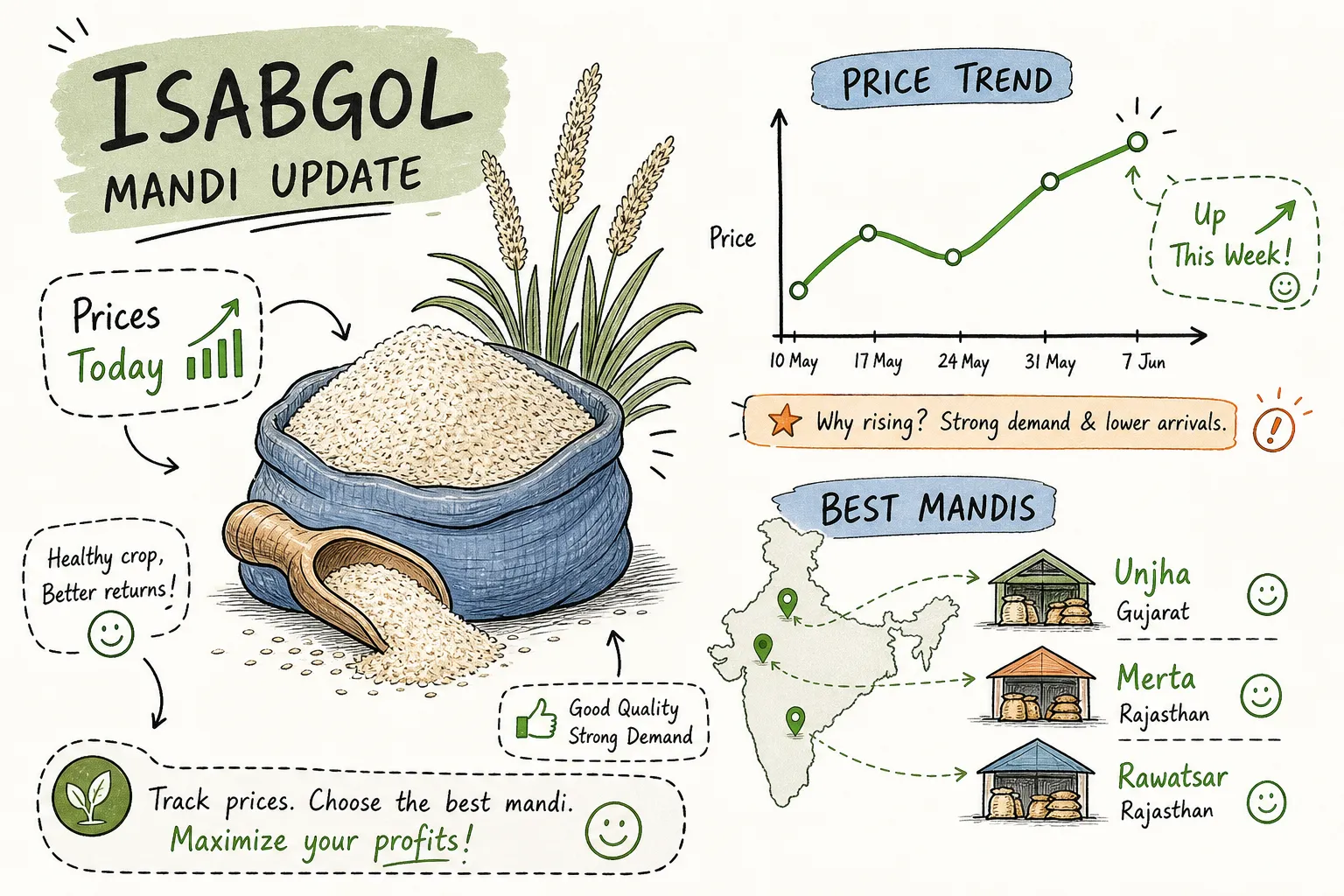
Isabgol Mandi Bhav Today: Prices, Trends and Best Mandis
Isabgol mandi bhav in Rajasthan is currently ranging between ₹11,000 and ₹13,500 per quintal (psyllium husk / ispaghula), with meaningful variation depending on the mandi and the grade you bring to auction. Unjha in Gujarat recorded rates as high as ₹14,675 per quintal on 22 September 2026, confirming that the top end of this market is very much alive for quality lots. This is not a unif...
 Continue Reading
Sep 23, 2026
by Pankaj Sihag
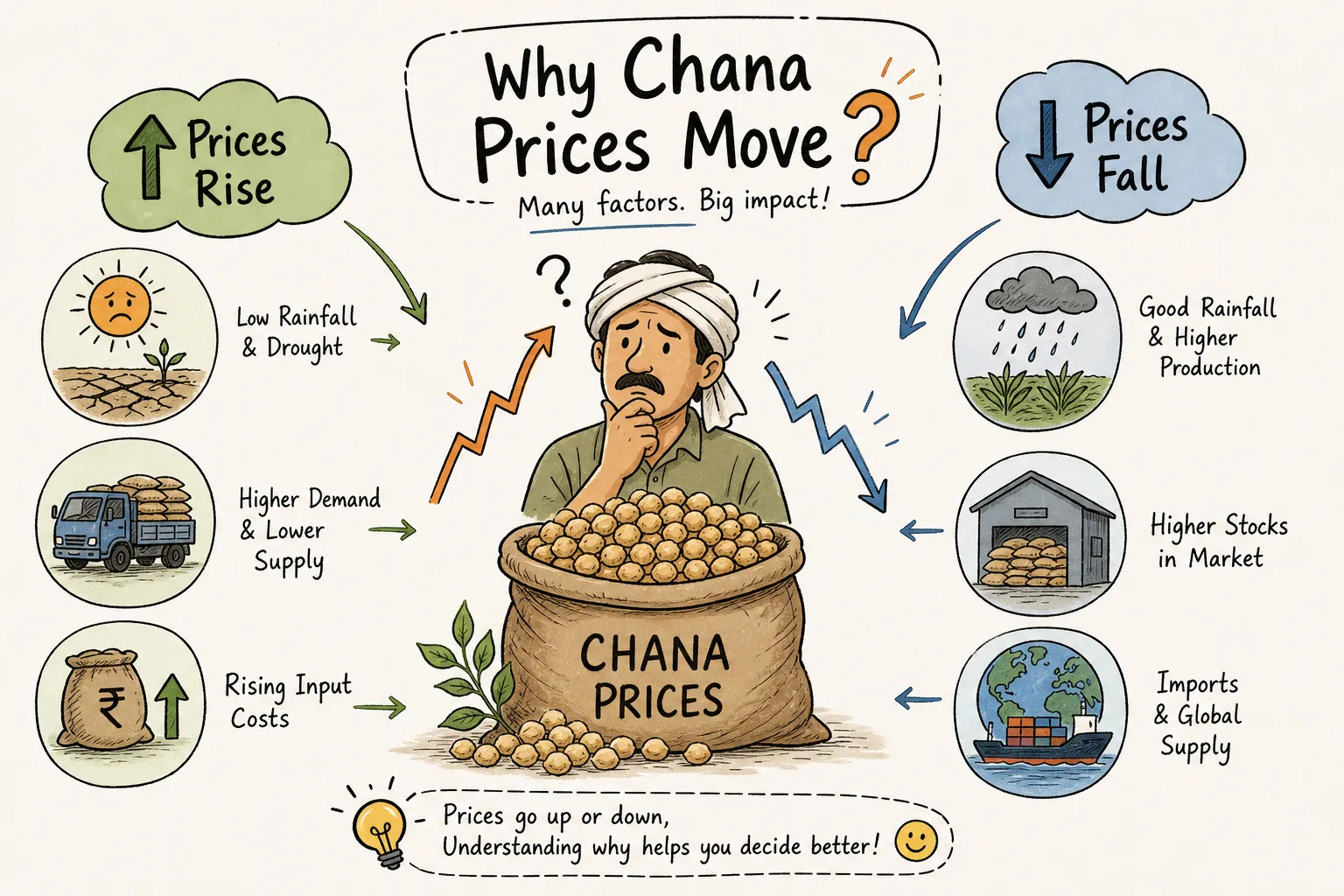
Why chana prices are rising or falling this season
Why is chana price increasing or decreasing in India this season? Desi chana is trading at ₹5,800 to ₹6,000 per quintal in most mandis right now, and kabuli chana has touched ₹7,700 per quintal at some Madhya Pradesh markets. Yet a kisan in Rajasthan was accepting ₹5,054 per quintal just a few months ago in April 2026. That swing of nearly ₹1,000 per quintal did not happen by accident. S...
Sep 22, 2026
by Pankaj Sihag
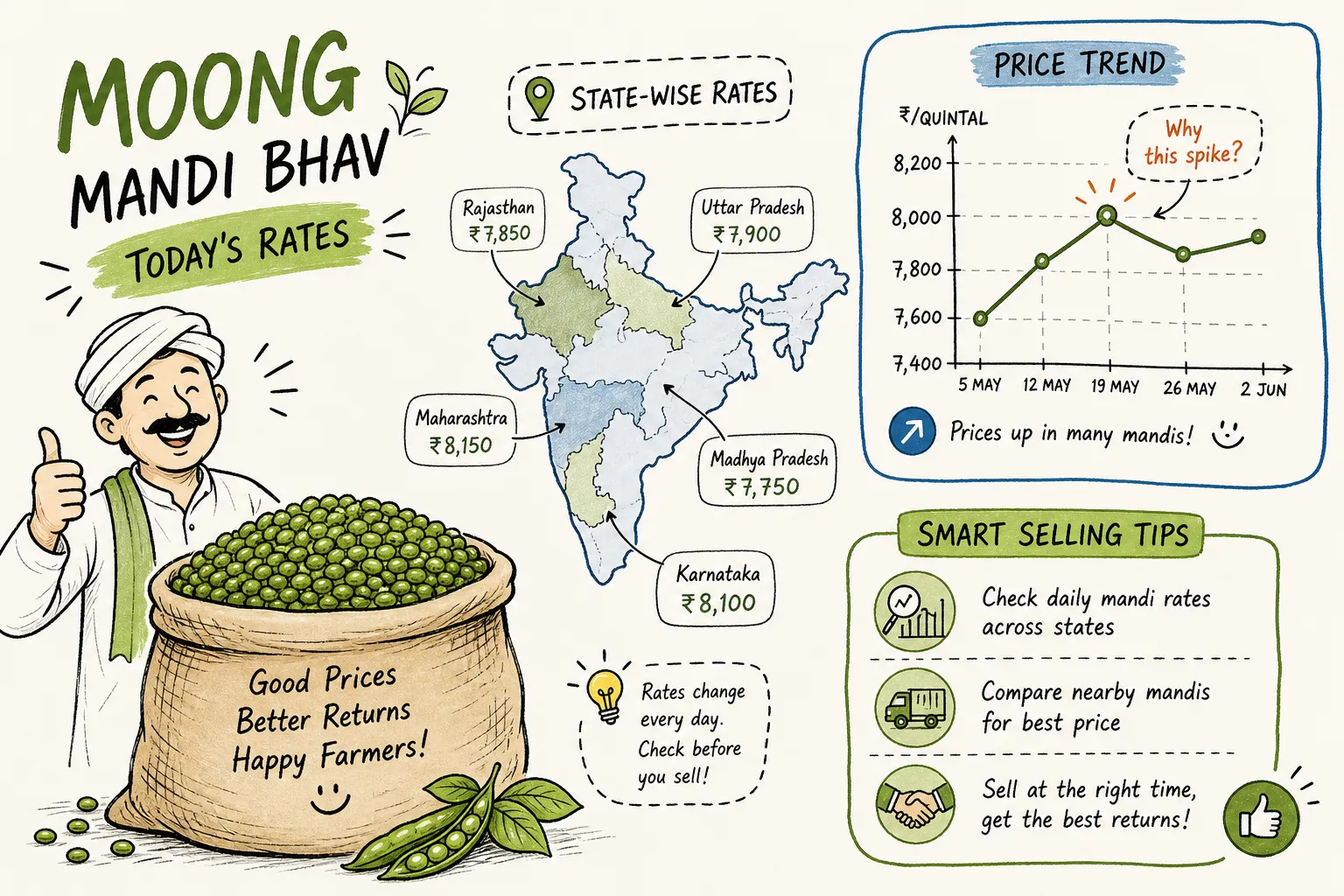
Moong Mandi Bhav Today: State-wise Rates and Selling Tips
Knowing the moong mandi bhav today at nearby APMCs is the first step to a better decision. Many APMC mandi rates for green gram (moong) are currently trading below the government's Minimum Support Price (MSP), though a 16.6% rally in Rajasthan over the past 30 days has brought some relief to kisaans. Whether you are sitting on a fresh Kharif harvest or weighing storage against sellin...

Sep 22, 2026
by Pankaj Sihag
Kisan Credit Card Scheme: Complete Guide for Farmers
Many kisaans (farmers) across India continue to borrow from sahukaars (moneylenders) at high interest rates, even though a government-backed credit facility exists that can bring the cost of Kisan Rin (agricultural credit) down to just 4% per annum. Lack of awareness is widely cited as a key reason farmers miss out, many simply do not realise they qualify. That facility is the Kisan Cred...
Sep 19, 2026
by Pankaj Sihag
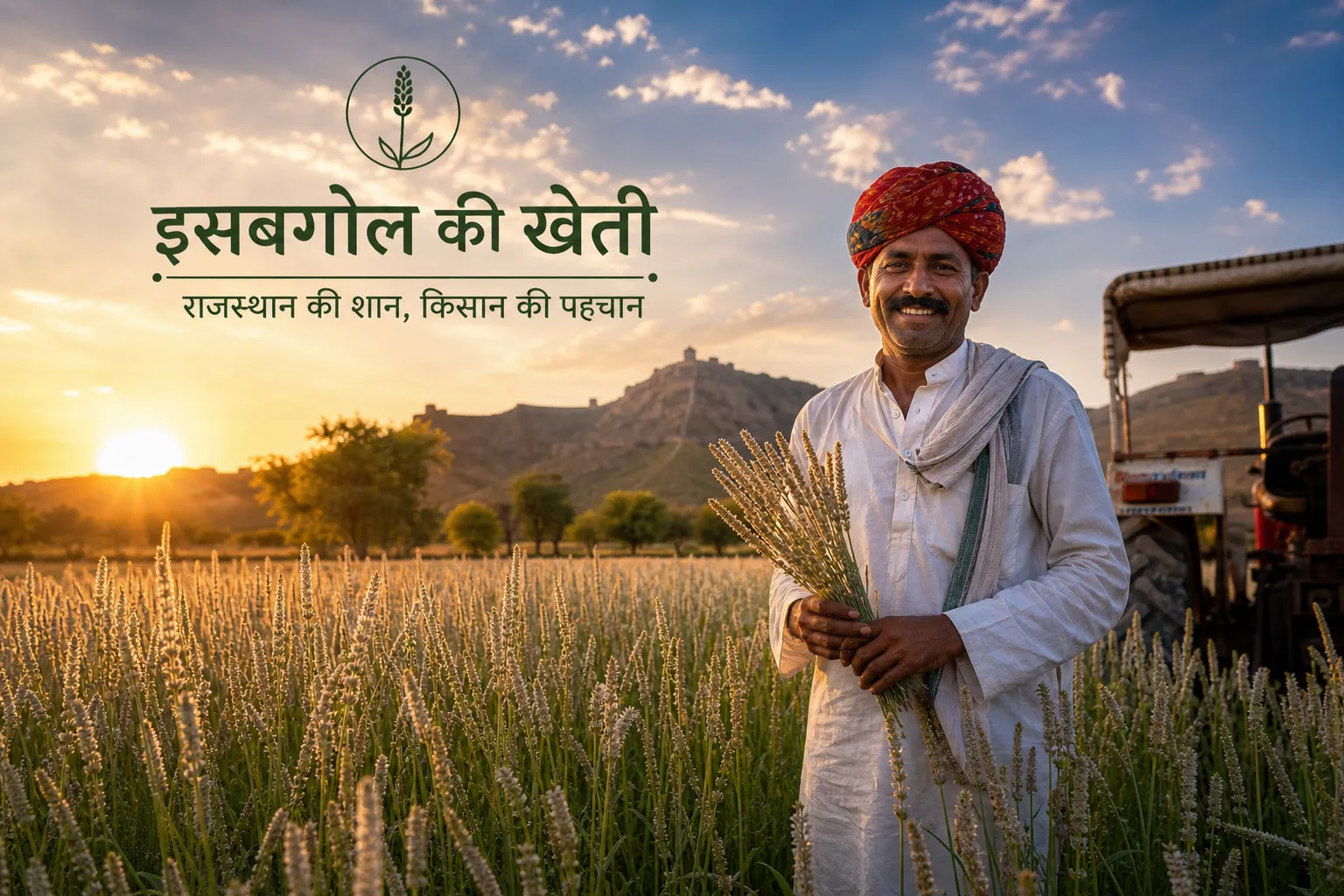
Isabgol ki kheti: Complete guide for farmers
Isabgol ki kheti is one of the highest-value rabi fasals (winter crops) a Rajasthan farmer can grow, yet most small kisaans still treat it as an afterthought planted on leftover land with leftover effort. That approach leaves serious money on the table. Isabgol (psyllium husk, botanically known as Plantago ovata) commands current mandi bhav (market rates) ranging from ₹12,000 to ₹18,000...
Sep 19, 2026
by Pankaj Sihag
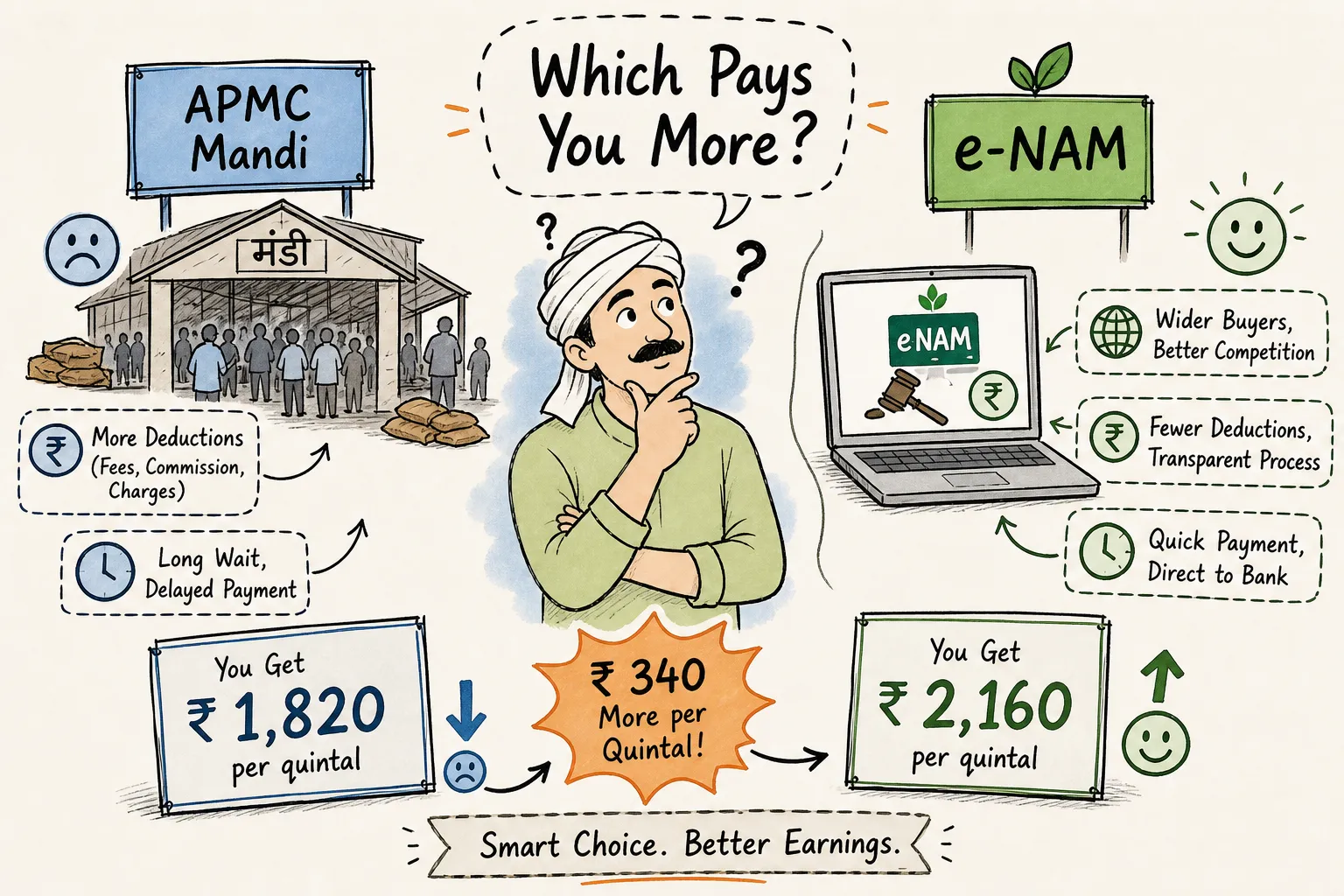
APMC mandi vs e-NAM: which pays you more per quintal?
e-NAM is active in 1,656 mandis across 23 states and 4 Union Territories Rajasthan leads all states in e-NAM trading volume: 66.09 lakh metric tonnes in FY 2024, 25 Cumulative trade on e-NAM has crossed ₹4.84 lakh crore since launch Studies document 5% to 34% higher price realisation in e-NAM-integrated mandis Farmer registration on e-NAM is completely free When decidin...

Sep 17, 2026
by Pankaj Sihag
Crop Insurance Online for Rajasthan Farmers: PMFBY Guide
Scheme Pradhan Mantri Fasal Bima Yojana (PMFBY) Official portal pmfby.gov.in Who can apply Loanee, non-loanee, sharecropper (bataidaar), and tenant farmers Farmer premium 2% for Kharif · 1.5% for Rabi · 5% for commercial/horticultural crops Kharif 2026 cut-off 31 July 2026...
Sep 14, 2026
by Pankaj Sihag
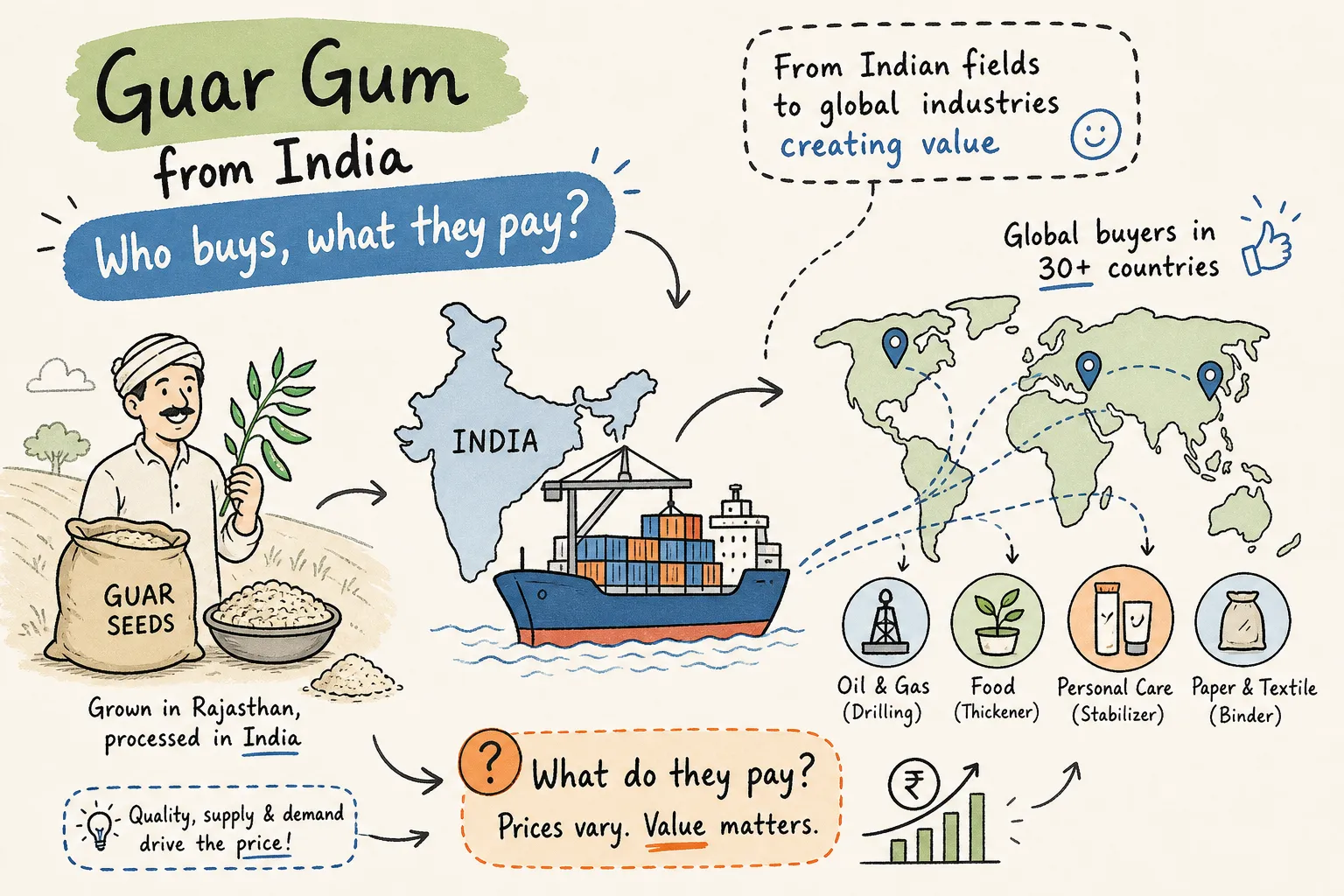
Guar gum exports from India: who buys, what they pay
Guar gum export from India reached over 4.74 lakh metric tonnes in FY25, earning more than USD 550 million in foreign exchange. That figure belongs to a crop grown largely on dry, rocky soil in Rajasthan's Barmer, Bikaner, and Nagaur districts, the same crop a kisaan there may call simply "gwar." Today, that gwar is pressurising oil wells in Texas, thickening yoghurt on sup...
Sep 14, 2026
by Pankaj Sihag
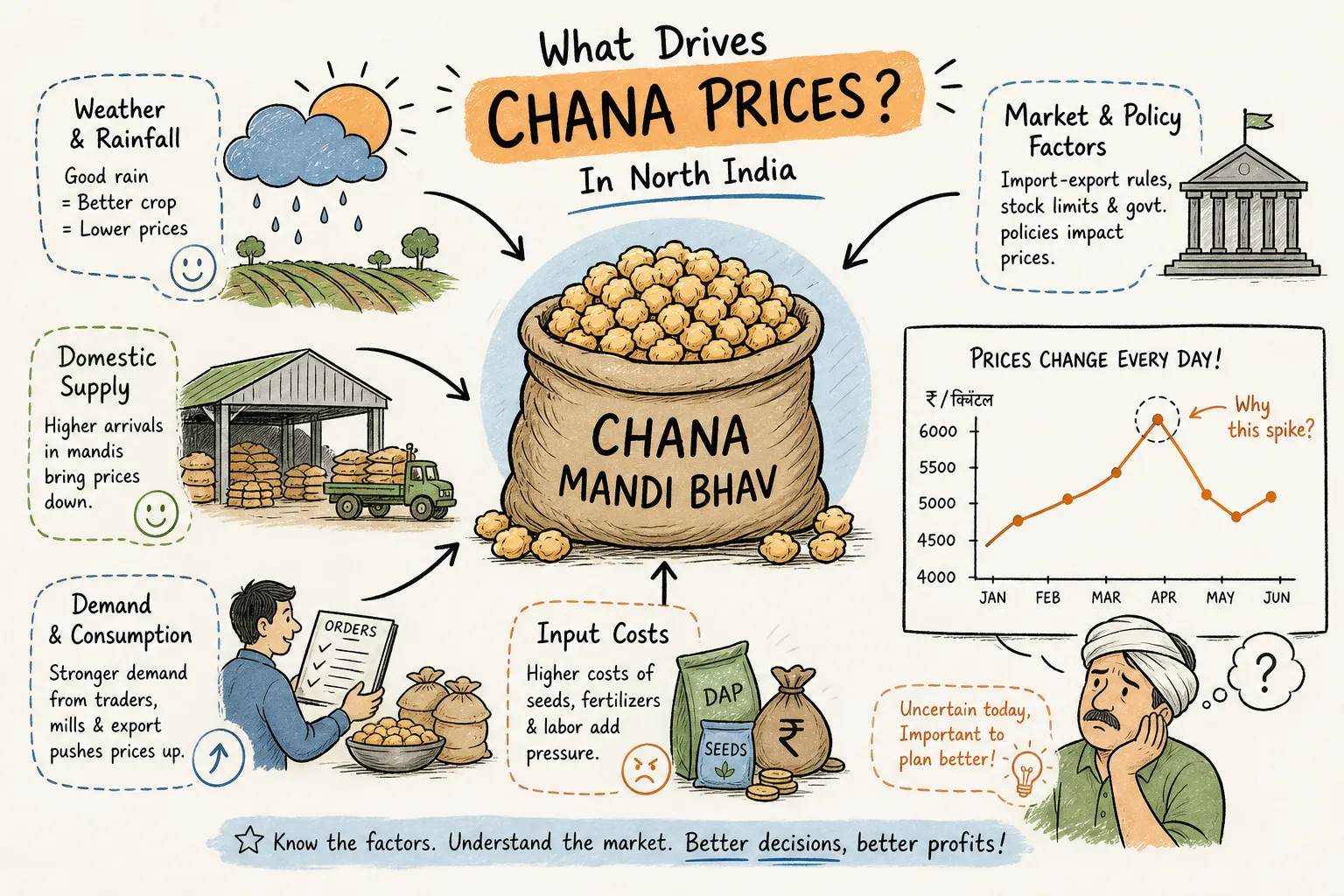
Chana Mandi Bhav: What Drives Prices in North India
Factor Key Detail Crop type Rabi pulse; sown October, November; harvested February, March Peak mandi arrivals March, April; prices typically at seasonal lows during this window MSP for 2026-27 rabi season ₹5,875 per quintal (up ₹225 from 2025-26 season) Futures correlation with spot NCDEX...

Sep 12, 2026
by Pankaj Sihag
Narma vs Desi Cotton: Which Gives More Profit Per Acre?
Which cotton variety gives better profit, narma or desi cotton? Every kharif season, cotton growers in Rajasthan and Haryana face exactly this question: plant narma (Bt hybrid upland cotton) or stick with desi kapas? The instinct is to chase narma's higher raw yield. But yield per acre is only one piece of the profit equation, and chasing it without running the full numbers has cost...

Sep 12, 2026
by Pankaj Sihag
eNAM Farmer Registration: A Complete Guide for India
eNAM full form National Agriculture Market Registration cost Completely free for farmers APMC verification time 2 to 5 working days (varies by mandi) Key documents needed Aadhaar, bank passbook, land records, email ID Platform access enam.gov.in or the official eNAM mobile app (Android)...

Sep 11, 2026
by Pankaj Sihag
Online mandi vs local APMC: where do farmers earn more?
Every harvest season, kisaans (farmers) across Rajasthan, Haryana, and Punjab face the same decision: online mandi vs local APMC, which channel delivers more munafa (profit) per quintal after all deductions? The local APMC mandi is familiar. You know the arthiya (commission agent), you know the weighing shed, and you know roughly what to expect. But e-NAM promises wider competition, more...

Sep 11, 2026
by Pankaj Sihag
How Much Fibre Is in Isabgol and Why It Matters for Farmers Too
Most people reach for isabgol (psyllium husk) when their digestion needs help, but very few stop to ask what actually makes it work. The fibre in isabgol is the answer: roughly 4 grams packed into a single teaspoon, and close to 80 grams in every 100 grams of the dry husk. That is not just a health statistic; it is the reason isabgol commands strong prices at APMC mandis across Rajasthan...

Sep 10, 2026
by Pankaj Sihag
When to sell wheat after harvest to maximise price
Harvest window (Rajasthan & MP) Late March to mid-April Harvest window (Punjab) Mid-April to early May Harvest window (Haryana) Mid-April to late April Harvest window (UP) Early April to late April Price bottom April, when mandi arrivals peak across North India Mild recovery wind...
Sep 10, 2026
by Pankaj Sihag
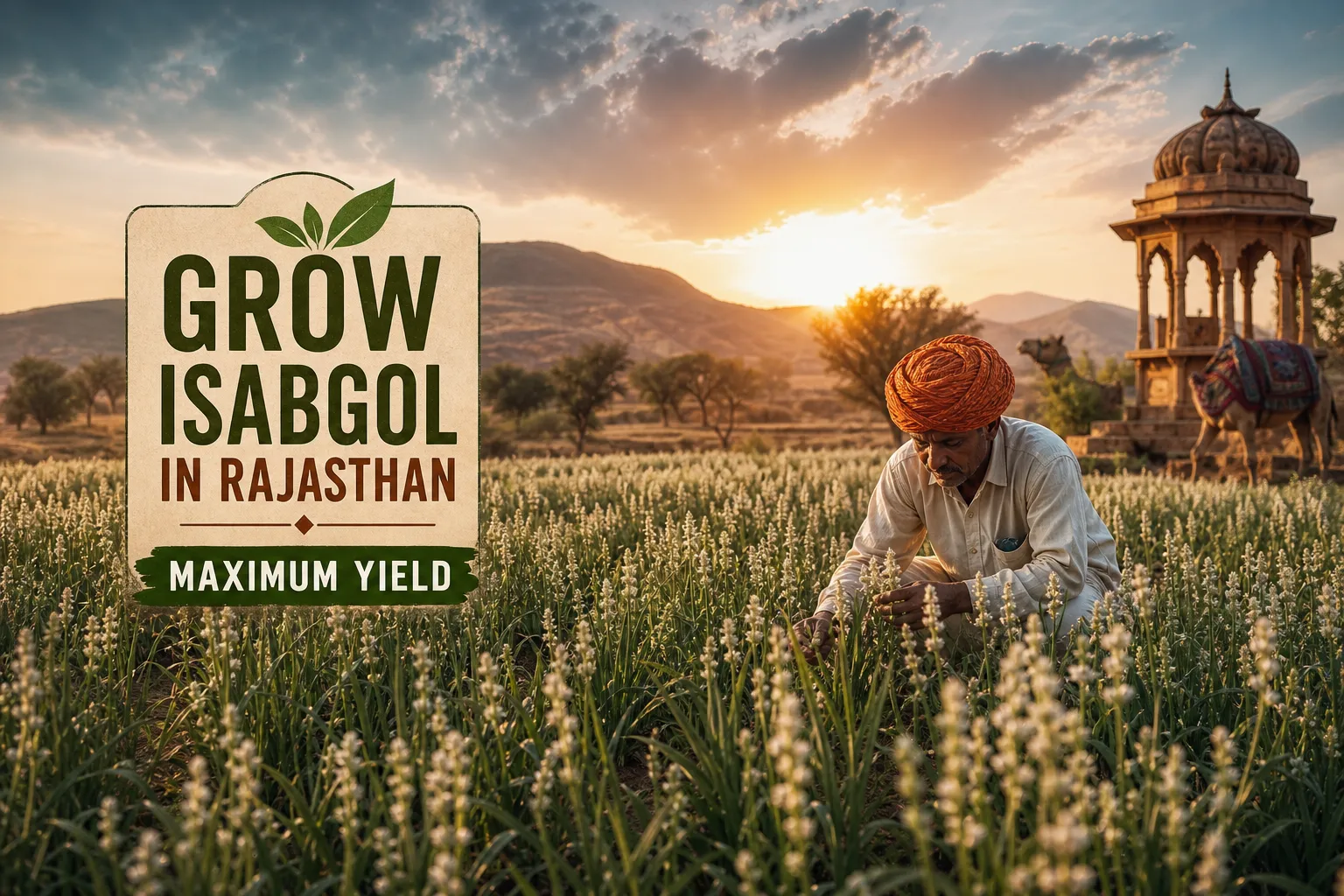
How to Grow Isabgol in Rajasthan for Maximum Yield
Learning how to grow isabgol crop in Rajasthan for maximum yield is one of the most valuable agronomic decisions a rabi-season farmer can make. Isabgol (psyllium husk, botanically Plantago ovata) is among the most profitable winter crops available in the state. Kisaans who ask us at KhetiKisaan about high-value winter alternatives consistently return to isabgol, and for good reason. Raja...
Sep 10, 2026
by Pankaj Sihag
How Soyabean Quality and Moisture Affect Mandi Rate
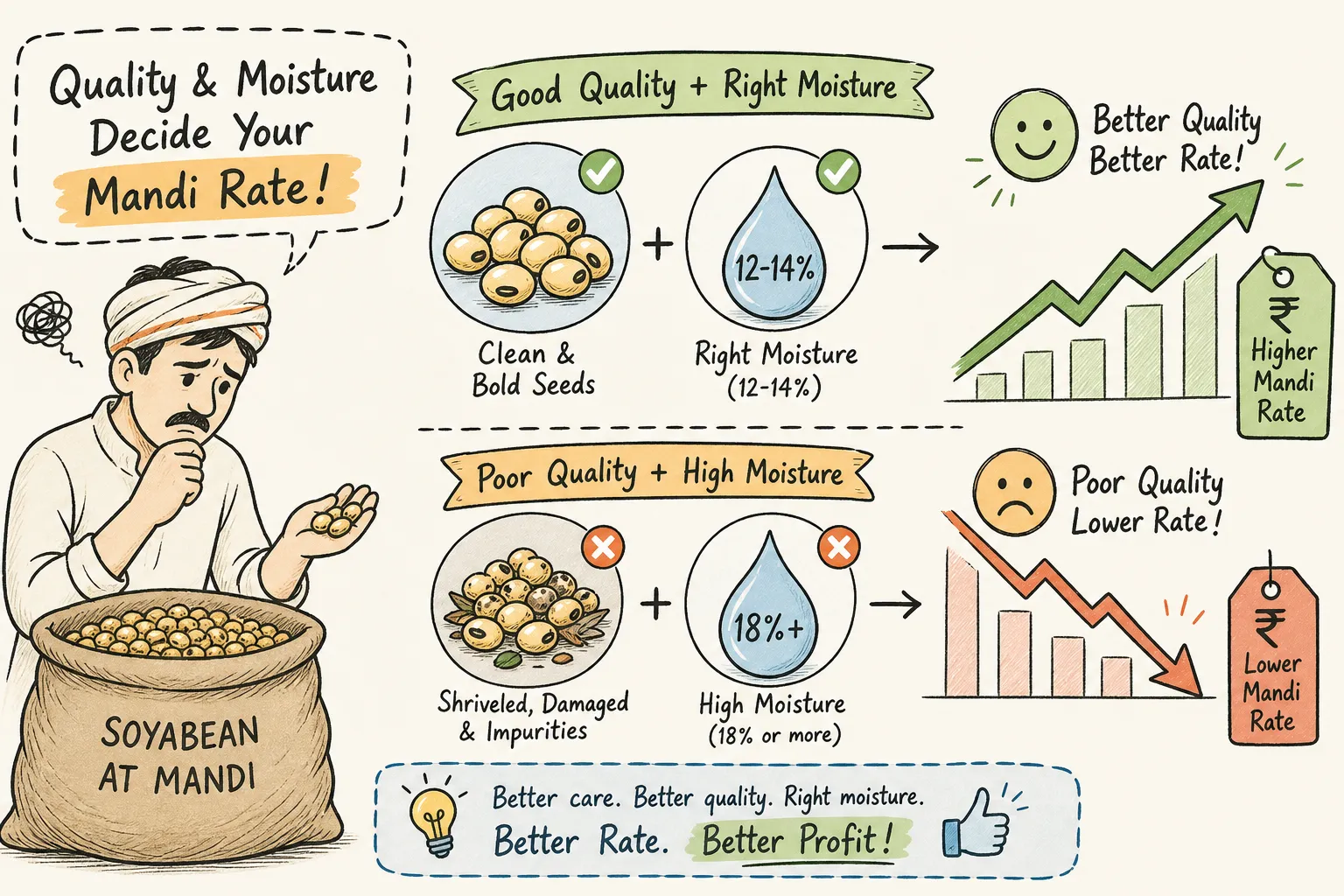
Picture this: you have spent four months growing your soyabean crop, harvested it on time, and loaded your trolley before sunrise to reach the APMC mandi by 8 AM. The arhatiya walks over, takes a handful of grain, rubs it between his fingers, and before the bol-chaal (bidding) even opens, announces a deduction. Moisture too high. Foreign matter above acceptable limit. Your expected price...
Sep 09, 2026
by Pankaj Sihag
Lahsun Mandi Rate Today: Understanding Daily Garlic Price Changes
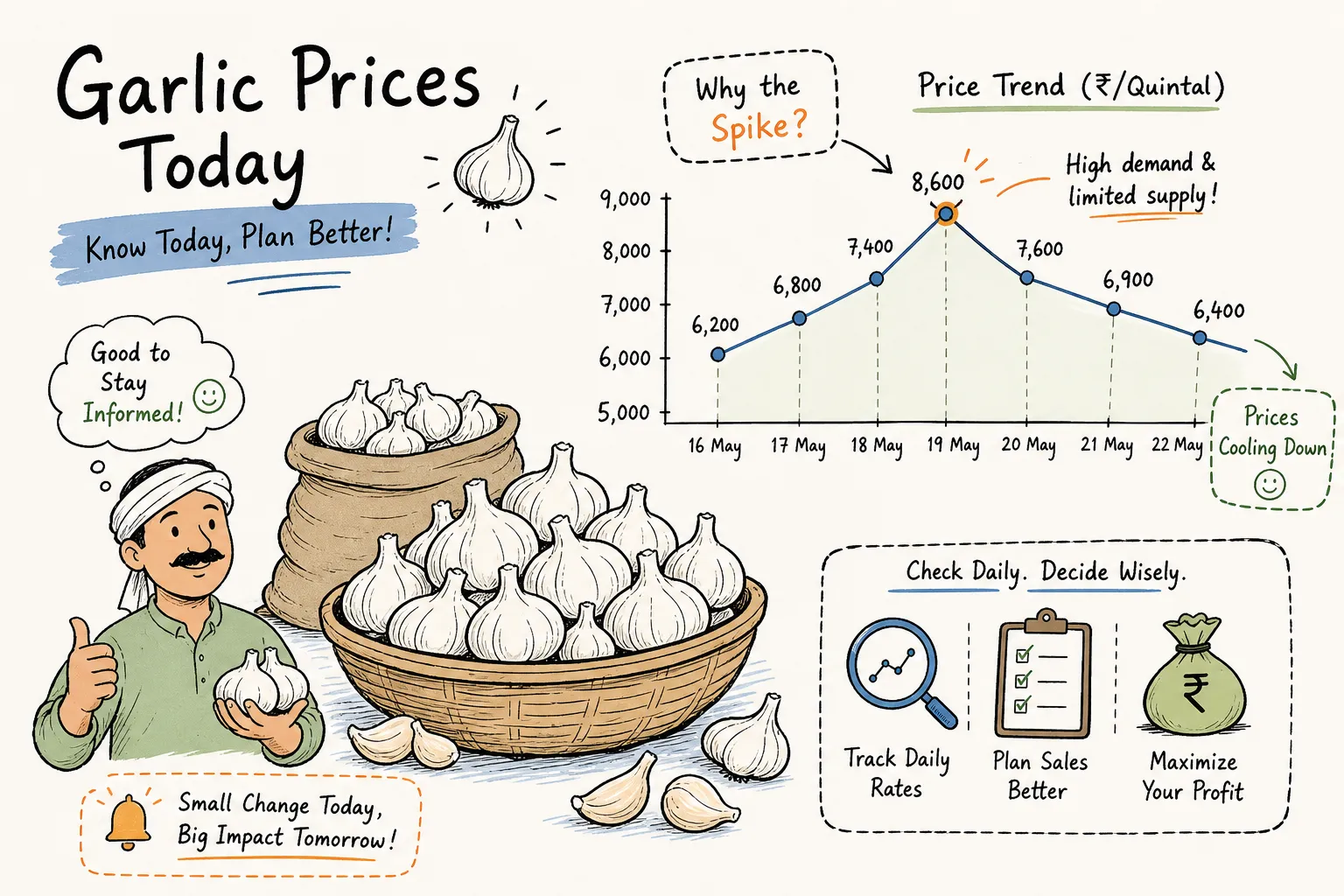
Check the lahsun mandi rate today before you load your trolley, garlic rates change at every morning auction based on that day's arrivals and buyer demand. The difference between a profitable trip to the mandi and a regrettable one is often just knowing the right bhav in advance. Many lahsun growers use KhetiKisaan to check live garlic mandi price today each morning and decide whethe...
Sep 08, 2026
by Pankaj Sihag
Best Time to Sow Isabgol in Gujarat and Rajasthan
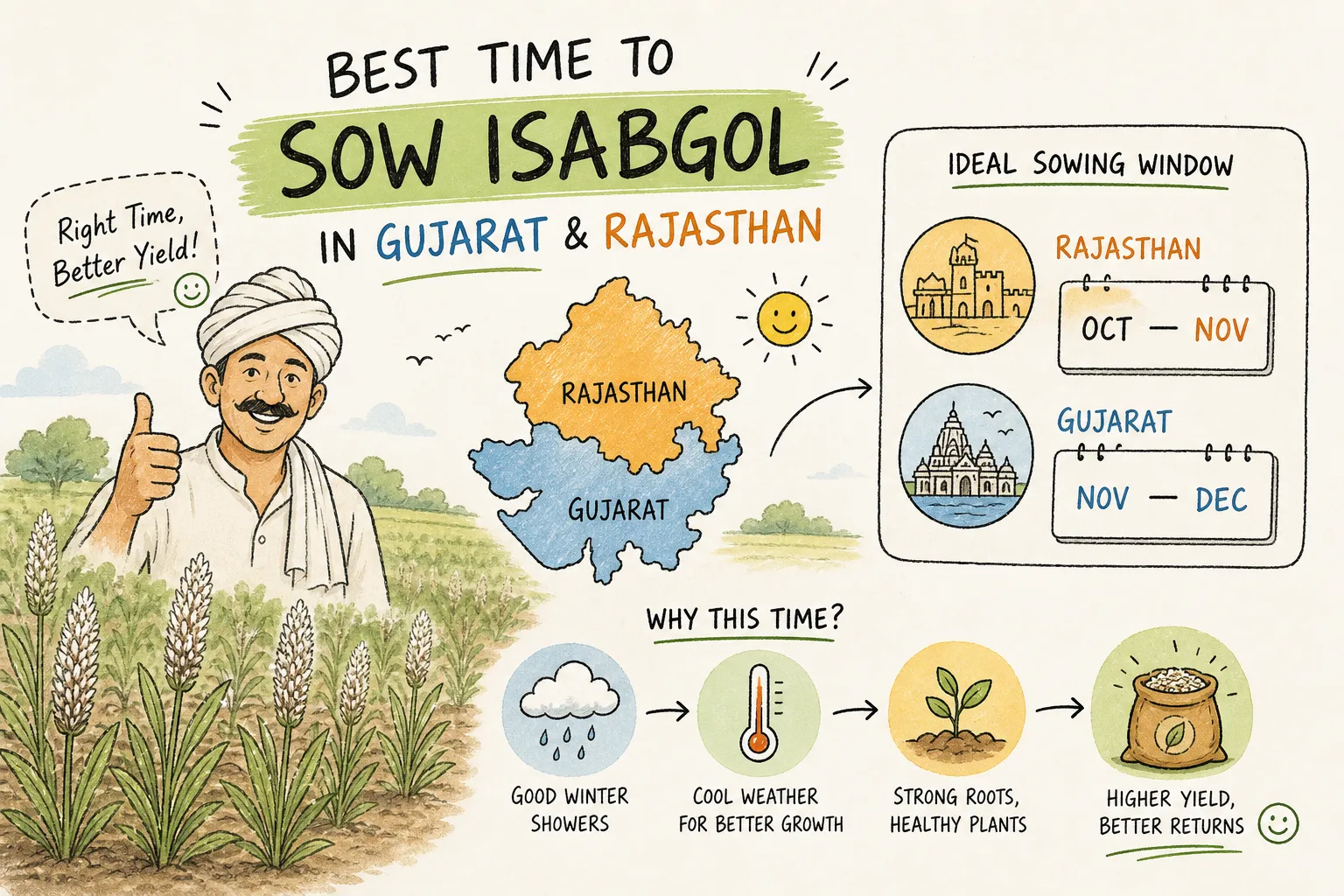
What is the best time to sow isabgol in Gujarat and Rajasthan? The answer is November, with the core optimum window falling between the first and third weeks of November across most growing districts. That said, both states have distinct agro-climatic zones, so "November" is not a blanket answer for every farmer. The right window in Banaskantha looks slightly different from Bik...
Sep 08, 2026
by Pankaj Sihag
Isabgol: Complete Guide to India's Most Valuable Medicinal Crop
Botanical name Plantago ovata Crop type Rabi medicinal crop Top growing states Rajasthan, Gujarat India's global share ~85% of world psyllium husk supply Main uses Digestive health, cholesterol management, pharmaceutical ingredient Common forms Psyllium husk powder, capsules,...
Sep 08, 2026
by Pankaj Sihag
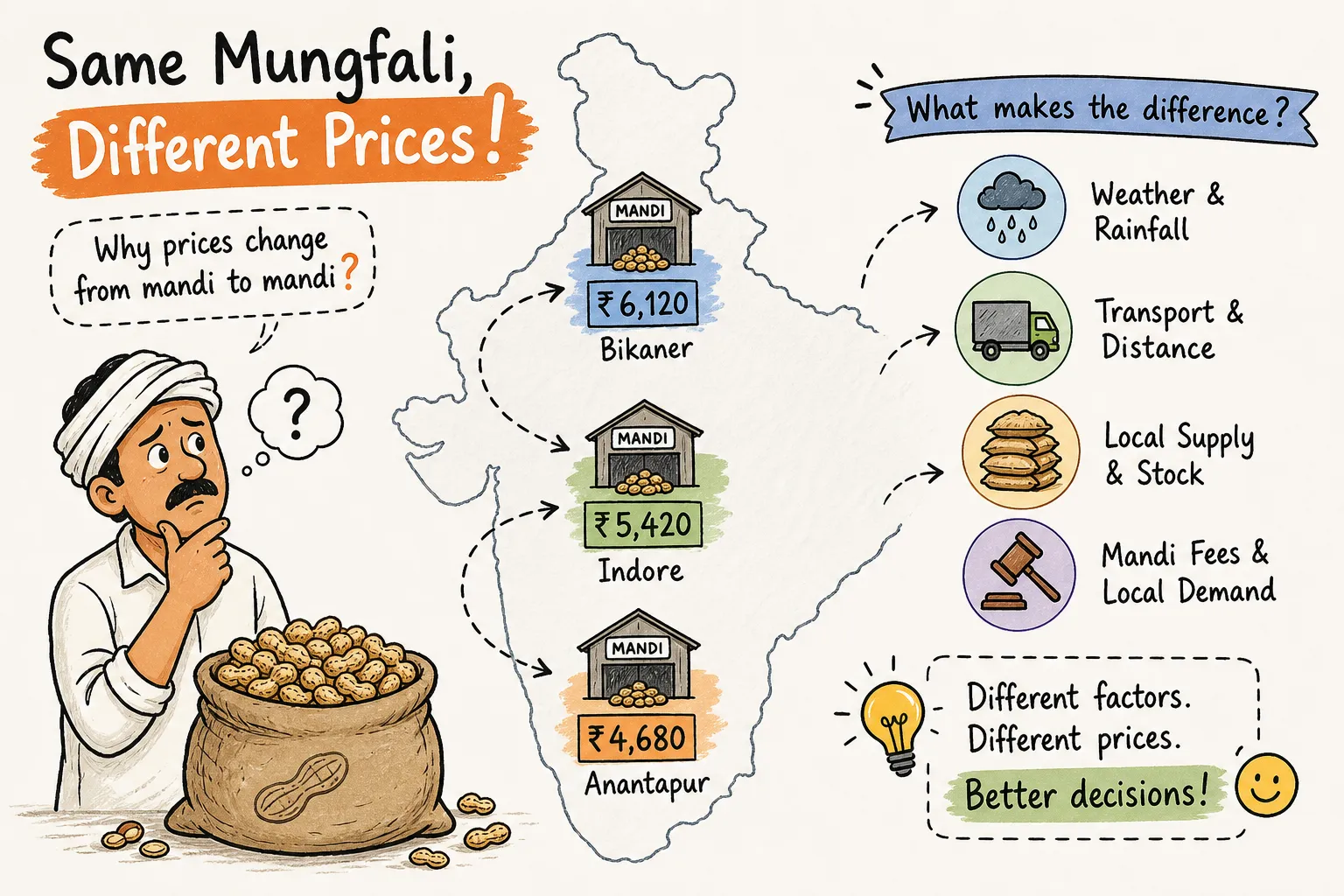
Why Mungfali Prices Differ Across Indian Mandi's
Two farmers from neighbouring villages load their mungfali (groundnut) onto trucks on the same October morning. Same kharif season, same district, roughly the same crop. One reaches his nearby mandi and gets ₹5,200 per quintal. The other travels to a different APMC and walks away with ₹6,800 per quintal. That ₹1,600 gap on a single day, multiplied across 50 quintals, means one farmer ear...
Sep 08, 2026
by Pankaj Sihag
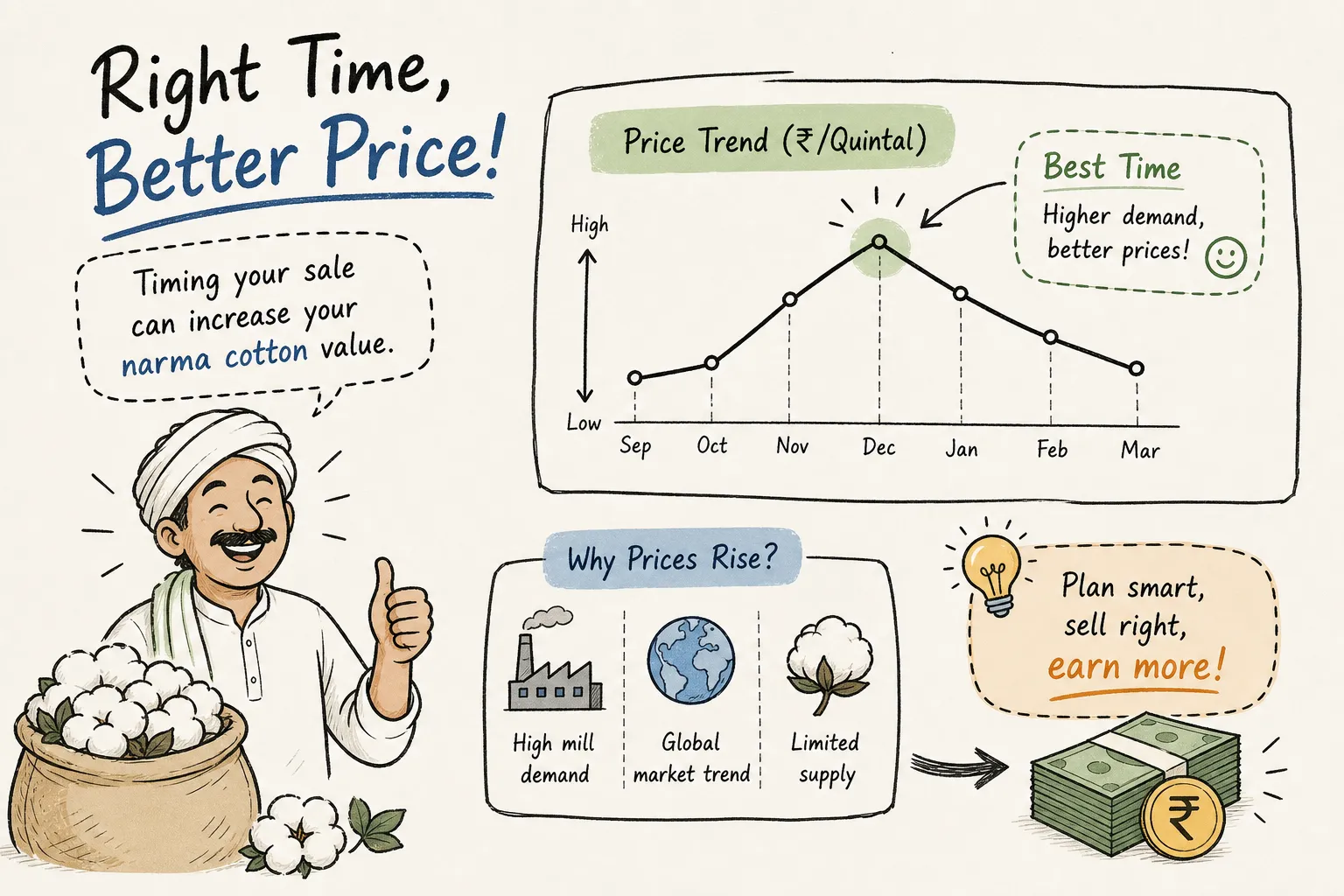
Best Time to Sell Narma Cotton for Maximum Price in India
Knowing the best time to sell narma can add thousands of rupees per quintal to your seasonal revenue, yet many narma growers sell at the worst possible time: right after harvest, in October or November, when every other farmer in the region is doing exactly the same thing. Large volumes hit the mandi simultaneously, traders have all the bargaining power, and you end up accepting whatever...
Sep 07, 2026
by Pankaj Sihag
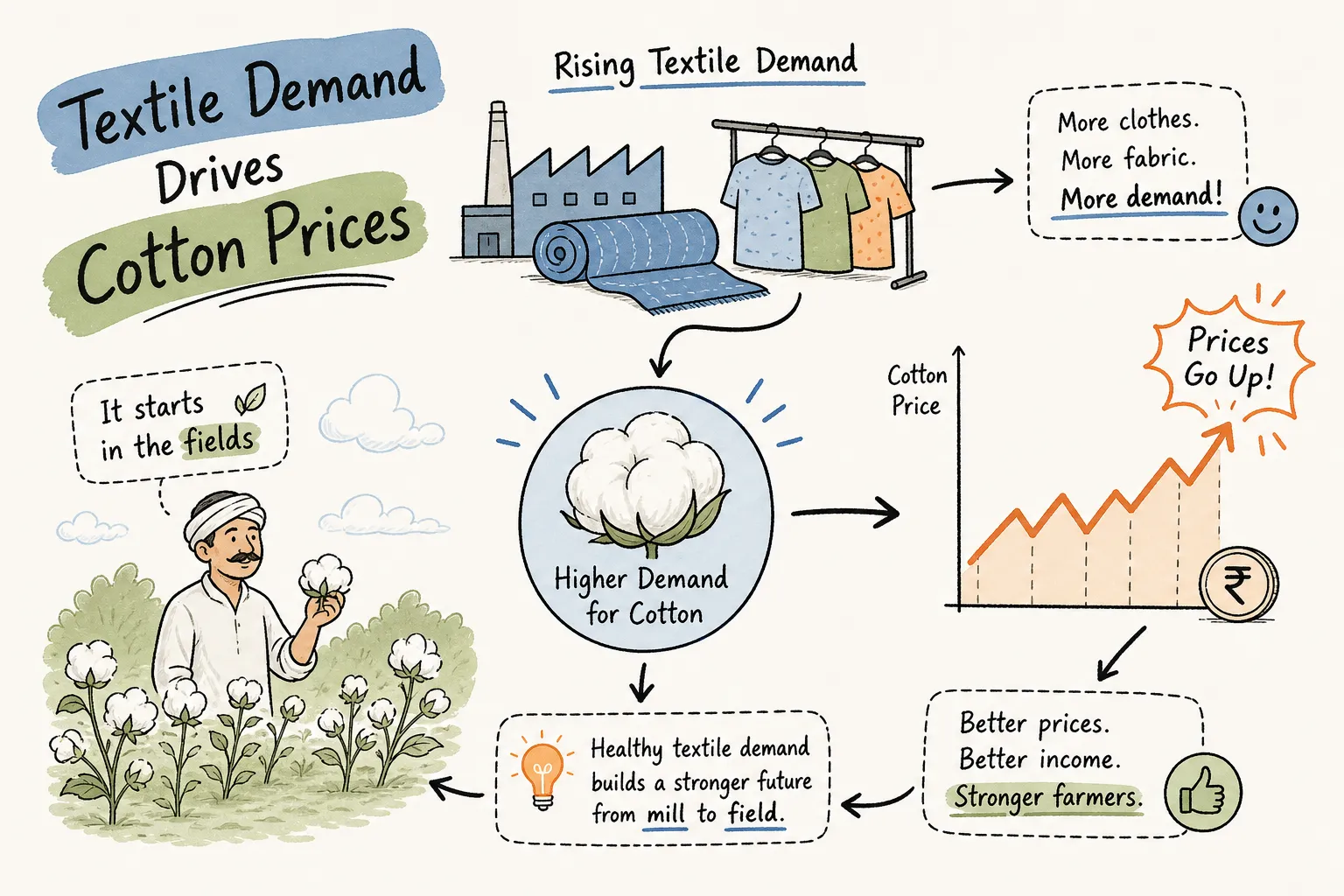
How Textile Industry Demand Influences Cotton Prices in India
Today's Cotton Rate Snapshot National weighted average ₹67.89/kg | ₹6,789/quintal (rounded) Gujarat average (62 mandis) ₹7,431/quintal Candy rate (356 kg) ₹55,500 NCDEX 29mm Cotton spot ₹33,376.50 (▼0.19%) MSP 2026-27 (medium staple kapas) ₹8,267/quintal (effective 1 Oct...
Sep 07, 2026
by Pankaj Sihag
Isabgol cultivation guide for Rajasthan and Gujarat farmers
Crop type Rabi (winter season) Key growing states Rajasthan, Gujarat Sowing window Mid-November to mid-December Expected seed yield 8, 12 quintals per hectare Expected husk yield Approx. 3, 4 quintals per hectare (≈25, 30% of seed weight) Primary use Psyllium husk for pharm...
Sep 04, 2026
by Pankaj Sihag
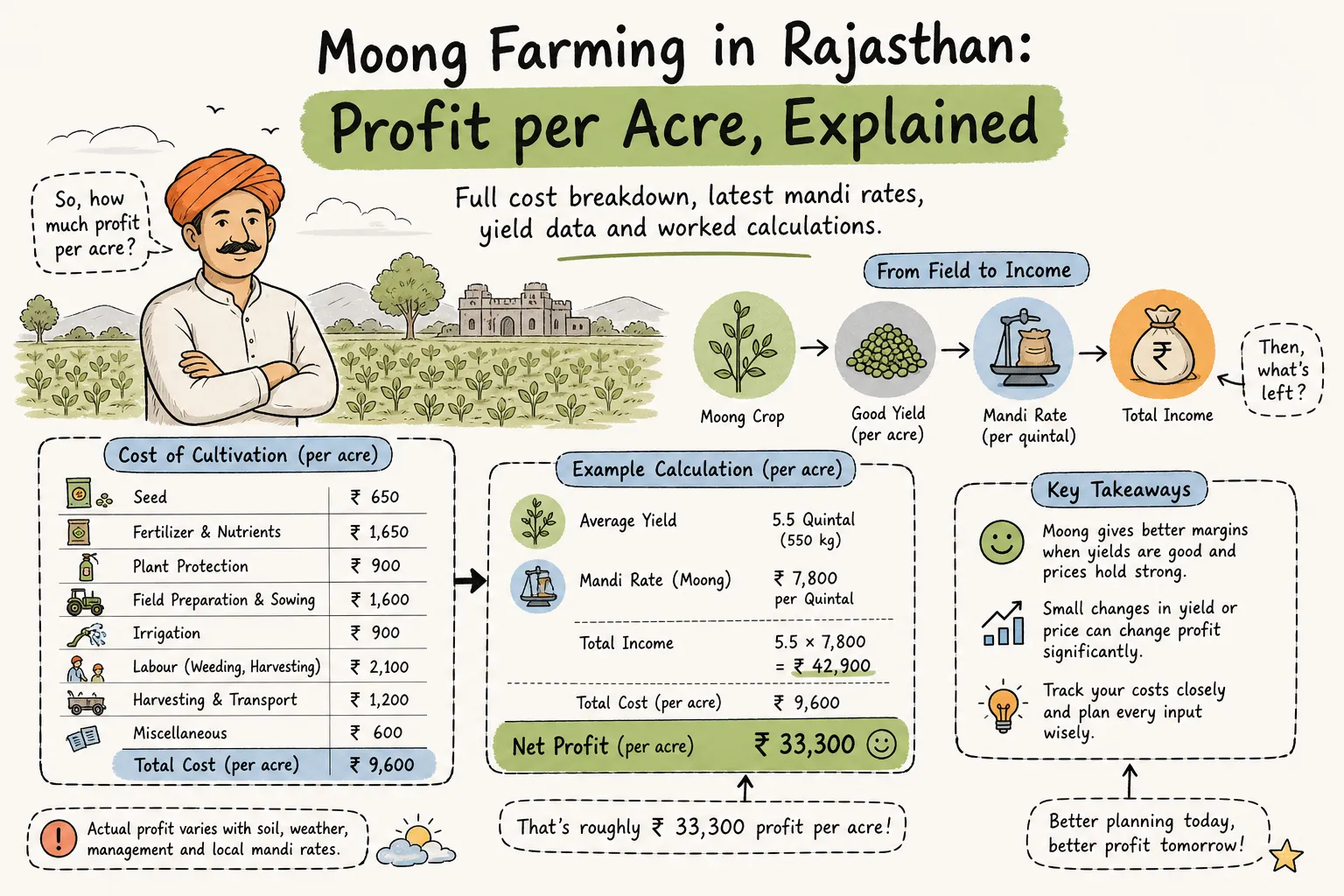
Moong Farming in Rajasthan: Profit per Acre Breakdown
Quick Facts: How much profit can a farmer make per acre from moong cultivation in Rajasthan Typical moong yield per acre in Rajasthan by season: approximately 1.2 quintal/acre (rainfed kharif) to 6.1, 7.3 quintal/acre (zaid/summer irrigated) Typical cultivation cost per acre: ₹12,000 to ₹16,000 for an irrigated crop Current mandi bhav (market price): ₹5,500 to ₹8,400 per quinta...