








Lahsun
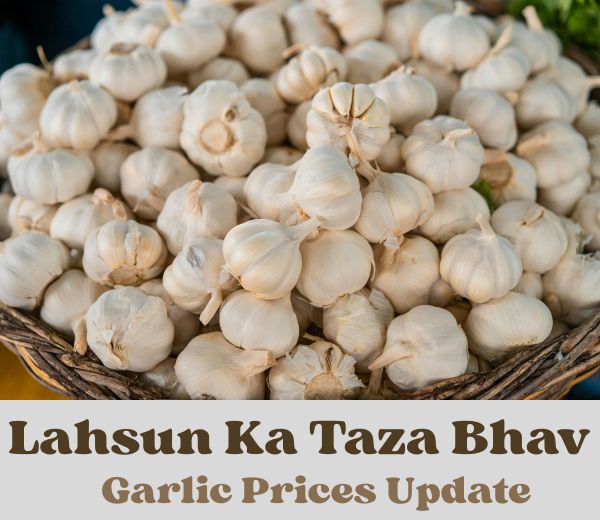
Lahsun: All Prices Are in Quintal
Description
- Top producing states: Madhya Pradesh, Rajasthan, Gujarat, Maharashtra
- Sowing period: October, November (Rabi crop)
- Harvesting period: February, April
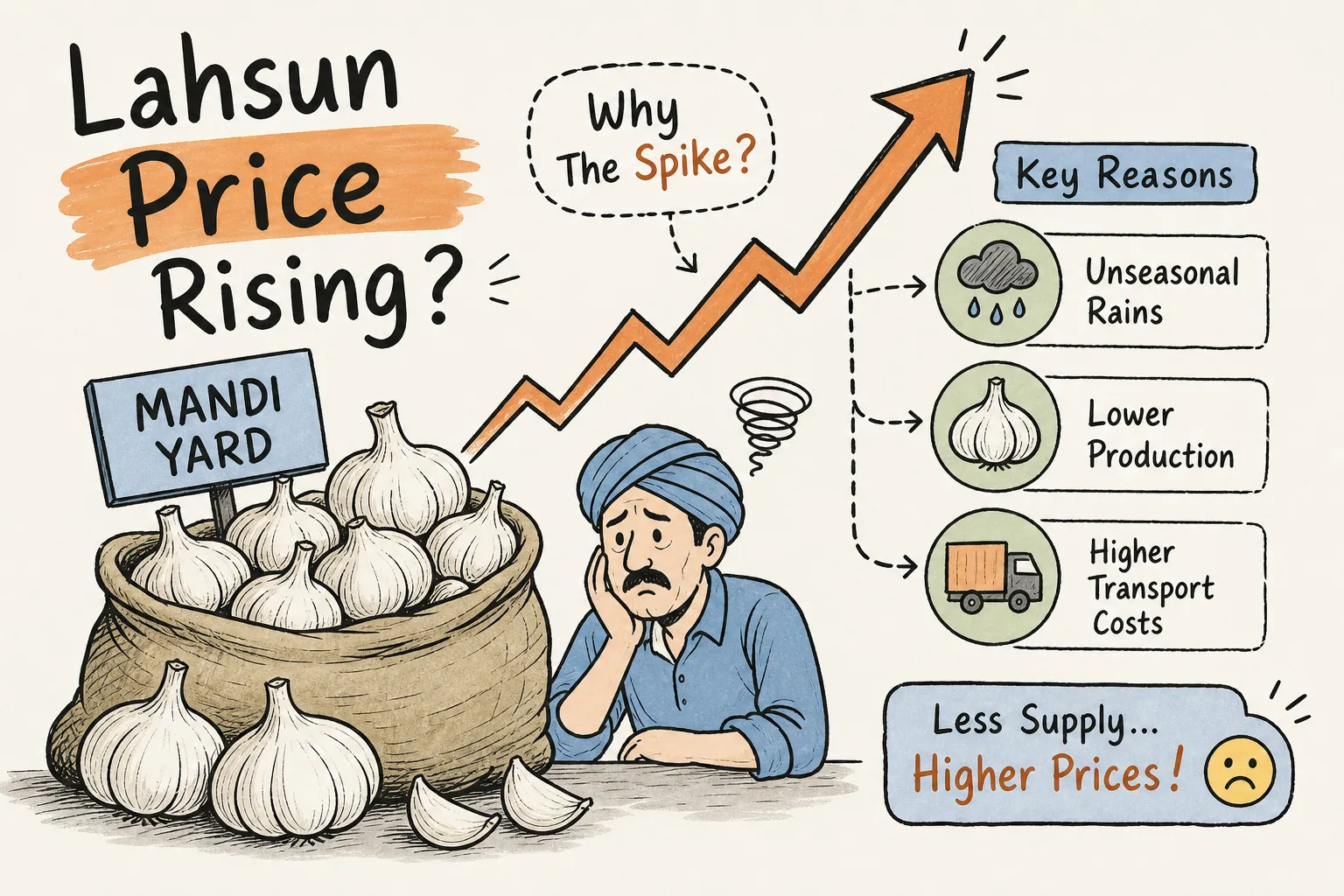
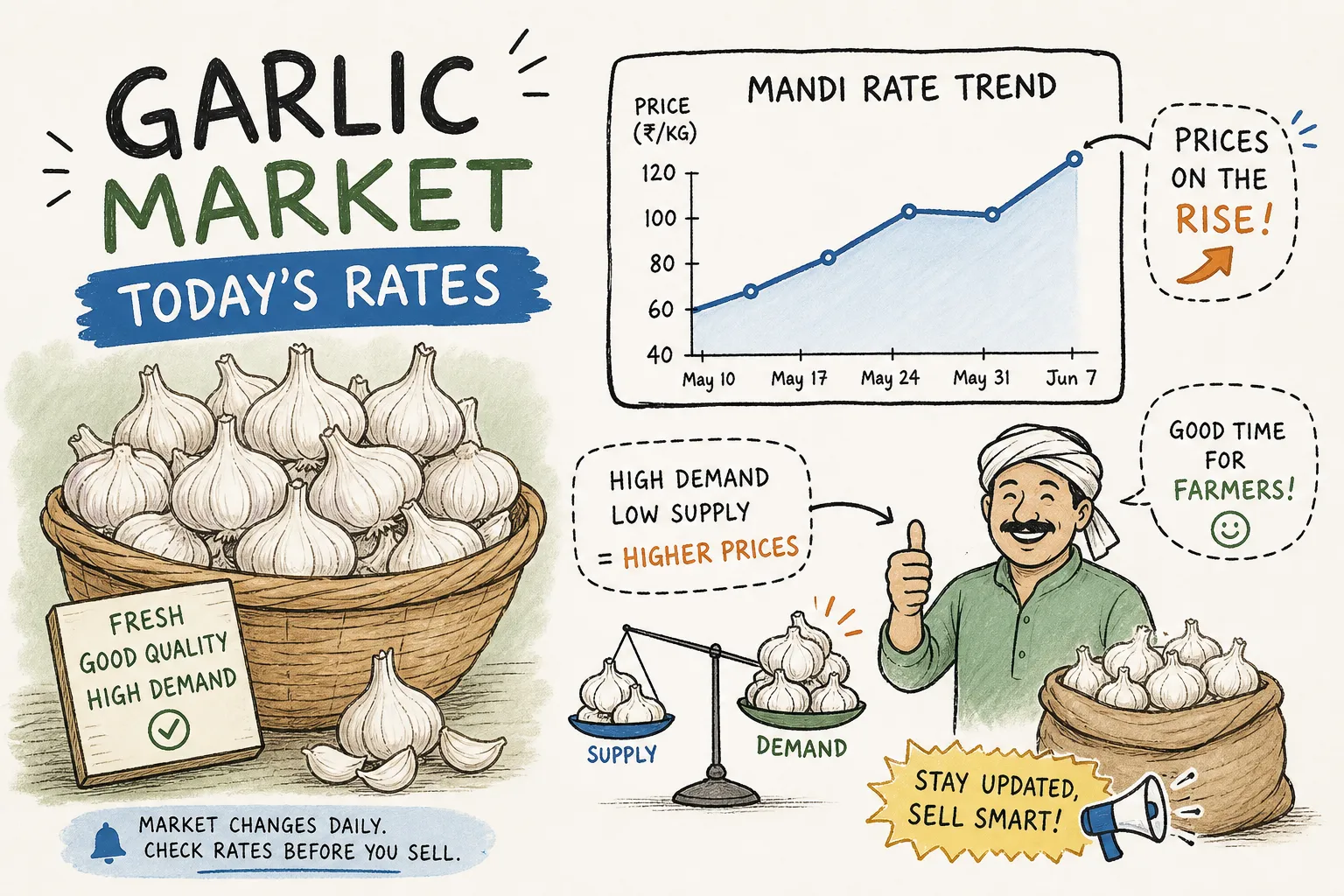
Same crop, same day, same country, and the garlic price in one mandi can be several times what another is offering. That gap is real, and it costs kisaans (farmers) thousands of rupees per truckload. Indore's Choithram market is currently receiving 40,000 to 60,000 bags daily, which is driving rates down under supply pressure. Meanwhile, Rajasthan mandis are averaging over ₹10,000 per quintal for the same fasal. If you don't know today's lahsun mandi rate before you load your tractor, you're making a blind decision that could cost you more than the transport itself.
This article covers today's garlic prices across major APMC yards, explains what drives those sharp price swings, and tells you exactly how to check the current rate each morning. KhetiKisaan tracks these rates daily so farmers are never going in blind.
What makes lahsun a high-value commercial crop
Garlic is a rabi crop sown between October and November and harvested from February to April across most of India. Madhya Pradesh contributes the largest share of national production, with major growing districts in Mandsaur, Neemuch, Ratlam, Ujjain, and Indore. Rajasthan, Gujarat, Maharashtra, and Uttar Pradesh round out the primary growing belt.
Three quality grades dominate the mandi: desi, Riyavan silver, and G-2 export grade. The grade you bring to auction directly determines your price; G-2 export quality commands a significant premium over standard desi lots. Demand from food processing, FMCG companies, and restaurant supply chains keeps this crop commercially attractive throughout the year. India exported 36,971 tonnes of garlic in the April, January 2025, 26 period, with Bangladesh, the UAE, Malaysia, and Bhutan as the top buyers.
Today's lahsun bhav across major APMC mandis
Today's garlic mandi rate (also written as lasun bhav or lahsun ka bhav) ranges from approximately ₹5,000 per quintal in high-arrival MP mandis to ₹20,000+ per quintal in Rajasthan and other markets. The variation is primarily driven by local arrival volumes and crop quality.
MP's state average sits around ₹5,098 to ₹11,001 per quintal depending on the mandi, while Rajasthan's average is approximately ₹10,437 per quintal and Maharashtra averages around ₹7,909 per quintal. Transporting to a higher-priced mandi makes sense only when the price premium exceeds your transport cost plus commission.
Three forces that move garlic prices sharply
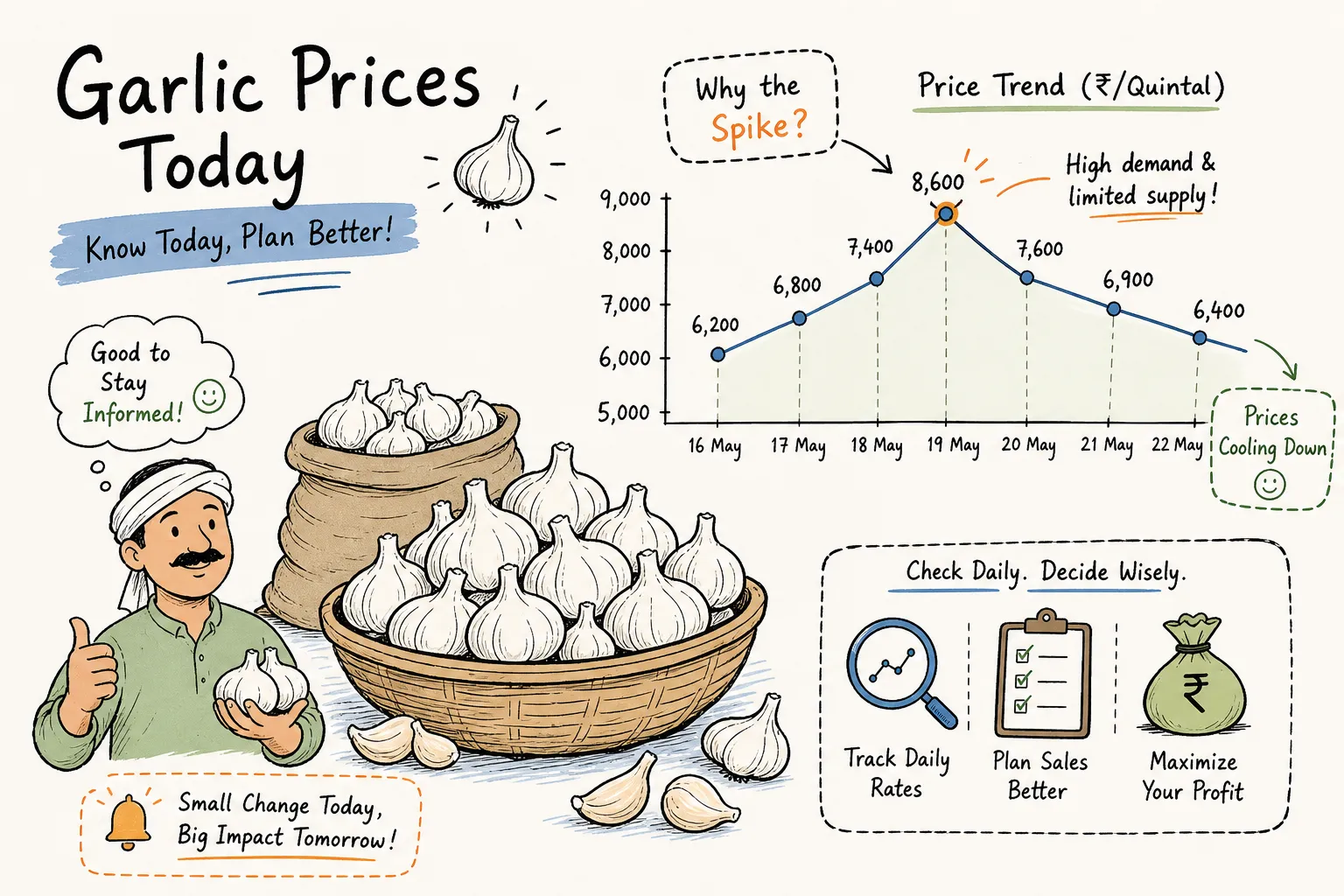
Lahsun mandi rates swing sharply because arrival volumes, withheld stocks, and export demand often pull in opposite directions at the same time. Understanding these forces helps you decide whether to sell today or hold.
Arrival volumes: When MP mandis receive 70,000 to 75,000 sacks daily and Indore alone gets 40,000 to 60,000 bags, prices drop fast. Indore, Mandsaur, Ratlam, and Narsinghgarh are currently in a high-arrival phase, which is keeping rates under pressure in that belt. The post-harvest glut from April to June regularly pushes prices to seasonal lows; the October to December lean period can see rates double.
Withheld stocks: Saurashtra farmers are currently releasing less than 10% of their harvested crop to open mandis. That inventory can re-enter the market suddenly, pushing rates down within days. Cold storage holding costs and market sentiment determine when this stock releases, so a sudden flood of supply can shift your local bhav overnight.
Export demand and import policy: India's crackdown on illegal Chinese garlic imports has supported domestic lahsun bhav. Strong buying from the UAE, Bangladesh, and Bhutan lifts prices when international demand is active. Any change to import duties, trade quotas, or bilateral agreements can move the domestic mandi rate rapidly, sometimes within a matter of days.
Farmgate vs mandi wholesale: what the gap means for you
Farmers in producing belts typically receive ₹4,000 to ₹6,000 per quintal at farmgate, while the same garlic sells at ₹5,000 to ₹15,000+ per quintal in major APMC mandis. In MP, where farmgate and mandi rates are close, arhatiya (commission agent) charges and mandi cess eat into most of the difference. In Rajasthan, the gap is large enough that transporting your crop is clearly worthwhile.
Before making the decision, factor in all deductions: transport cost, mandi commission (which varies by state and APMC, often a few percent of sale value), and state cess. If the net realisation from a distant mandi beats your local rate after these deductions, move the crop. If not, selling locally or waiting for a price uptick in your nearest mandi is the smarter call.
How to check lahsun ka bhav daily before going to the mandi
Check the current garlic mandi rate online before you load your crop. A 30-second price check can prevent you from arriving at a mandi offering ₹3,000 less per quintal than one 20 km away. When reading any rate listing, note the grade (desi, Riyavan, or G-2), whether the figure shown is the modal price or the maximum, and the day's arrival volume, these three details tell you how reliable that number actually is.
Where to find today's lahsun bhav
KhetiKisaan publishes daily lahsun mandi rates sourced from contacts present at live APMC bol-chaal (auction bidding) across major mandis. The platform covers mandi-wise listings across Rajasthan, Haryana, Madhya Pradesh, and other major garlic-growing states. Check KhetiKisaan each morning before transporting your lahsun to compare today's rates across the nearest mandis. Prices vary by day, by quality grade, and by mandi. Yesterday's rate is not today's rate.
Lahsun Mandi Rate Today
Lahsun Mandi Rate today assists farmers in verifying the new prices of garlic in various mandis. Garlic (also called lahsun) is a highly valued crop. It is cultivated in states such as Rajasthan, Madhya Pradesh, and Gujarat. It is used in everyday cooking, and its demand is observed to be high in the market.
Lahsun is grown as a Rabi crop. It is usually planted between October and November. It prefers a cool climate and requires time to develop its bulbs in soil. It needs well-drained clay-based soil, which is often moist. The field must not contain water, which can destroy the crop and make the bulbs rot. The crop is harvested when the leaves are seen turning yellow and starting to dry.
Lahsun is also a cash crop since it yields well. It has strong demand in export markets and is also used in medicine. One big advantage is that it can be stored for 6 to 8 months if kept in a dry and airy place. This helps farmers sell at the right time.
Key Factors Affecting Lahsun Mandi Rate
- Bigger bulbs get a higher price
- Clean and white skin is preferred
- Proper drying improves quality
- Different varieties have different rates
- Good storage keeps value stable
Lahsun Mandi Rate today depends on bulb size and quality. Farmers check Lahsun Mandi Rate today daily to decide the right time to sell and get better value in the mandi.
| Mandi | Price | Date |
|---|---|---|
| Neemuch MP | 19,800.00/- | 02 Oct, 2026 |
| Mandsaur MP | 18,060.00/- | 02 Oct, 2026 |
| Ujjain MP | 17,230.00/- | 01 Oct, 2026 |
| Ratlam MP | 17,812.00/- | 01 Oct, 2026 |
| Kota | 16,001.00/- | 02 Oct, 2026 |
| Ramganjmandi | 17,230.00/- | 01 Oct, 2026 |
| Baran | 17,200.00/- | 01 Oct, 2026 |
| Narsinghpur MP | 18,000.00/- | 01 Oct, 2026 |
| Kalapipal MP | 18,050.00/- | 01 Oct, 2026 |
| Shamgarh MP | 16,400.00/- | 01 Oct, 2026 |
| Nimbahera | 17,800.00/- | 01 Oct, 2026 |
| Bari MP | 18,050.00/- | 01 Oct, 2026 |
| Jaora MP | 18,050.00/- | 01 Oct, 2026 |
| Khanpur | 17,800.00/- | 03 Oct, 2026 |
| Bhadra | 13,750.00/- | 03 Oct, 2026 |
| DabliRathan | 9,000.00/- | 03 Oct, 2026 |
| Chhabra | 18,000.00/- | 03 Oct, 2026 |
| Bhilwara | 19,700.00/- | 02 Oct, 2026 |
| Bayana | 10,200.00/- | 01 Oct, 2026 |
| Pratapgarh | 15,000.00/- | 02 Oct, 2026 |
| Chhotisadri | 21,570.00/- | 02 Oct, 2026 |
| Palitana GJ | 16,012.00/- | 01 Oct, 2026 |

 Oct 02, 2026
 by
by