










Arandi

Arandi: All Prices are in Quintal
Description
| Quick Facts: Arandi (Castor Seed) | |
|---|---|
| Crop | Castor seed (Ricinus communis) | Local name: Arandi |
| Key producing states | Gujarat, Rajasthan, Andhra Pradesh |
| Oil content | High (non-edible oilseed) |
| Major end-uses | Lubricants, cosmetics, biofuel |
| Exchange | NCDEX (National Commodity & Derivatives Exchange) |
| Price unit | ₹ per quintal |
The gap between what you get at your local APMC yard and what the exchange is signalling is significant, and every arandi grower should understand it before deciding when and where to sell. This article gives you a current mandi snapshot, explains what is actually driving castor seed prices right now, and helps you make a confident sell-or-store decision. For live arandi mandi rates updated from APMC auction yards, check KhetiKisaan before you head to the market. Do not rely on word-of-mouth rates from the day before.
What arandi (castor seed) is and why India grows it
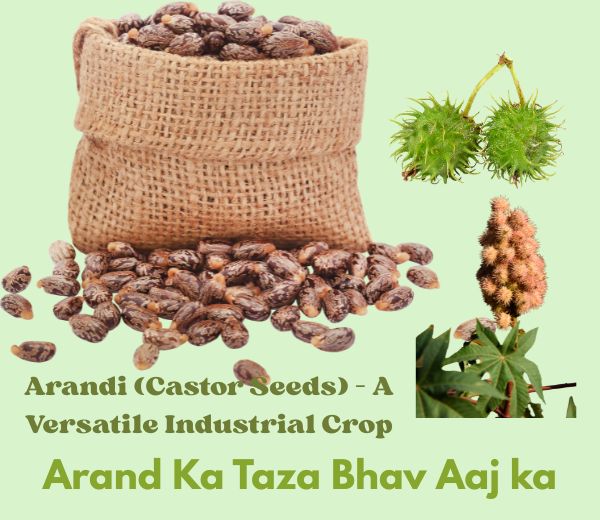
Castor seed is a Kharif oilseed crop with exceptionally high oil content, making it one of the most commercially valuable non-edible oilseeds in India. Gujarat leads production and contributes roughly 80% of the country's total output, followed by Rajasthan and Andhra Pradesh. Sowing happens from July to August, with harvest running from November through February. That timing directly shapes the post-harvest price dynamics discussed below.
Unlike edible oils such as groundnut or mustard, castor oil does not compete in the kitchen. It goes straight into industrial supply chains, driven by ricinoleic acid, a fatty acid found at high concentrations nowhere else in nature. This makes arandi ke daam (castor prices) far less correlated with edible oil cycles than most farmers assume. When groundnut or sarso (mustard) prices fall because of excess edible oil supply, arandi prices are often unaffected, industrial buyers still need it, and there is no substitute for certain applications.
Today's castor seed rates across major Rajasthan mandis
Many price aggregators pull data from delayed government feeds or estimated averages, not from the actual bol-chaal (live bidding) happening at the yard. KhetiKisaan publishes mandi rates sourced from APMC auction yards, check the platform for today's castor seed mandi rates before you decide which yard to take your crop to. For an independent cross-check, Agmarknet and your state APMC portal are reliable government sources.
What actually moves castor seed prices: industrial demand explained
Three important downstream sectors drive demand for arandi, and understanding them tells you when prices are likely to firm up. None of these sectors is influenced by domestic edible oil cycles, which is what makes castor seed particularly resilient during periods of general oilseed weakness.
- Lubricant and hydraulic fluids: Castor oil's high viscosity and thermal stability make it the preferred base oil for aviation and high-performance industrial lubricants. Global aerospace and automotive demand lifts offtake directly.
- Cosmetics and pharmaceuticals: Ricinoleic acid goes into lipsticks, skin creams, and laxative formulations. This segment absorbs a consistent portion of refined castor oil throughout the year.
- Biofuel and green chemistry: Castor-based biodiesel and bio-plastics are gaining ground as sustainability regulations tighten in Europe and the US, creating an emerging, fast-growing demand channel.
India is the dominant global supplier of castor oil, and international orders from Europe, the US, and China translate directly into domestic price pressure. When export enquiries pick up, typically in Q4 of the calendar year, traders at Gujarat and Rajasthan mandis compete for available stock, which pushes arandi bhav higher. Watching seasonal export activity is therefore one of the more reliable signals for timing a sale.
What the NCDEX gap means for you
When exchange quotes for castor seed sit above the rates available at your local mandi, the difference reflects factors such as basis risk, storage charges and the premium for certified-grade deliverables on the exchange. This spread is not a sum you can immediately realise at the yard but rather an indicator of how processors and traders expect supply and demand to evolve.
You cannot directly pocket the futures premium at the mandi; instead, view a wide gap as a potential signal to hold stock if you have clean storage and sufficient liquidity. Conversely, if storage conditions are uncertain or cash flow is tight, selling at the best current mandi rate may be the safer option.
Best time to sell arandi after harvest: a practical guide
Seasonal data from Rajasthan mandis suggests that castor seed prices tend to be firmer during the November, January harvest period than many farmers expect. The sharper weakness typically arrives later: April has historically been the softest month, with prices often slipping as stored stocks come to market. The latest data broadly supports this, February posted a +1.89% gain and March climbed +2.57%, confirming that holding beyond the initial harvest rush can improve realisations. Farmers who sold at November harvest lows left real money on the table compared to those who stored even briefly. That said, mandi-by-mandi variation is real, so check current avak levels at your target yard before deciding.
Storing makes economic sense if three conditions are met: moisture in your stored seed is below a safe threshold (consult your state agricultural extension office or warehouse receipt guidelines for the approved castor seed standard), you have working capital for 6, 10 weeks, and NCDEX futures still show a meaningful premium over physical rates. If any of those conditions are missing, poor storage, cash pressure, or a narrowing futures spread, selling promptly at the best available mandi rate is the safer call. Before your next trip to the mandi, check current castor seed rates on KhetiKisaan so you walk in knowing the actual going rate and can negotiate with confidence.
The key takeaway before you sell
Arandi bhav in major Rajasthan mandis has recently ranged between ₹5,700 and ₹6,448 per quintal, with NCDEX futures pointing to firmer prices ahead. Industrial demand from lubricant, cosmetic, and biofuel sectors provides a structurally resilient demand base for castor prices. This crop is not going out of fashion. The post-harvest dip is real, but seasonal data consistently shows that the February, April window tends to reward patient sellers who have proper storage in place.
Before your next visit to the mandi, check live arandi mandi rates on KhetiKisaan to know the actual transaction prices being paid right now, not yesterday's headlines. Knowing your rate before you arrive puts you in a far stronger negotiating position.
| Mandi | Price | Date |
|---|---|---|
| Nohar | 7,625.00/- | 02 Oct, 2026 |
| Rawastar | 6,154.00/- | 03 Oct, 2026 |
| Ellenabad | 7,200.00/- | 02 Oct, 2026 |
| Bikaner | 6,103.00/- | 02 Oct, 2026 |
| Sri Ganganagar | 7,225.00/- | 02 Oct, 2026 |
| RaisinghNagar | 6,155.00/- | 02 Oct, 2026 |
| Goluwala | 6,210.00/- | 02 Oct, 2026 |
| Osian | 6,800.00/- | 01 Oct, 2026 |
| Sri Karanpur | 7,250.00/- | 03 Oct, 2026 |
| Bhagat ki Kothi | 5,850.00/- | 03 Oct, 2026 |
| Viramgam GJ | 7,350.00/- | 03 Oct, 2026 |
| Gondal GJ | 7,400.00/- | 03 Oct, 2026 |
| Upleta GJ | 7,552.00/- | 03 Oct, 2026 |
| Taleja GJ | 6,815.00/- | 03 Oct, 2026 |
FAQ's
Related Blogs
 Sep 28, 2026
 by Pankaj Sihag