








Gehun

Gehun: All Prices Are in Quintal
Description
| Factor | Detail |
|---|---|
| Crop season | Rabi (sown Oct, Nov, harvested Mar, Apr) |
| Key growing states | Punjab, Haryana, UP, MP, Rajasthan |
| Top varieties | HD-2967, PBW-343, DBW-187, WH-542, Sharbati, Lokvan |
| Key quality check | Moisture % (max 12%), test weight, damage % |
| Live rate tool | KhetiKisaan APMC listings, North India |
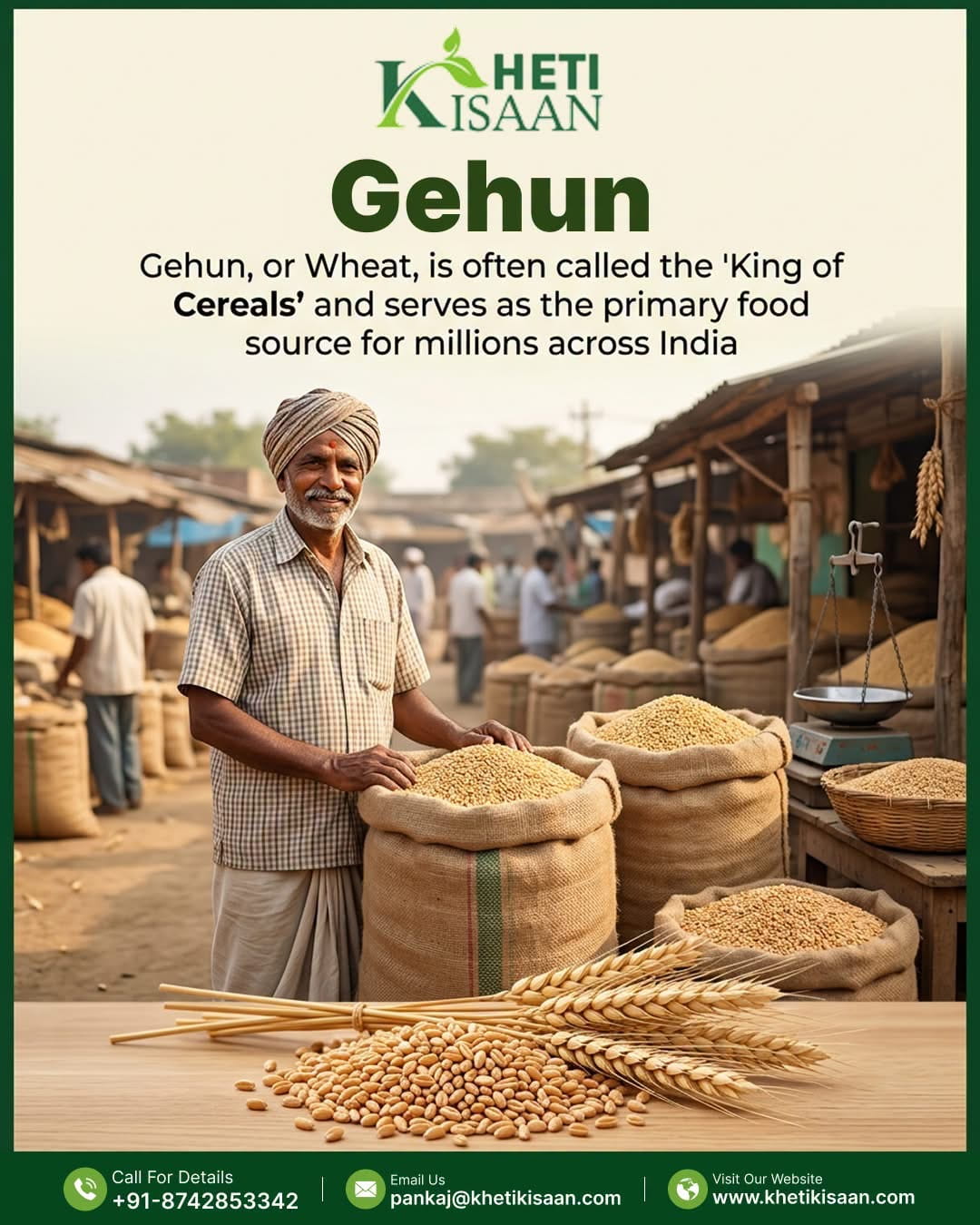
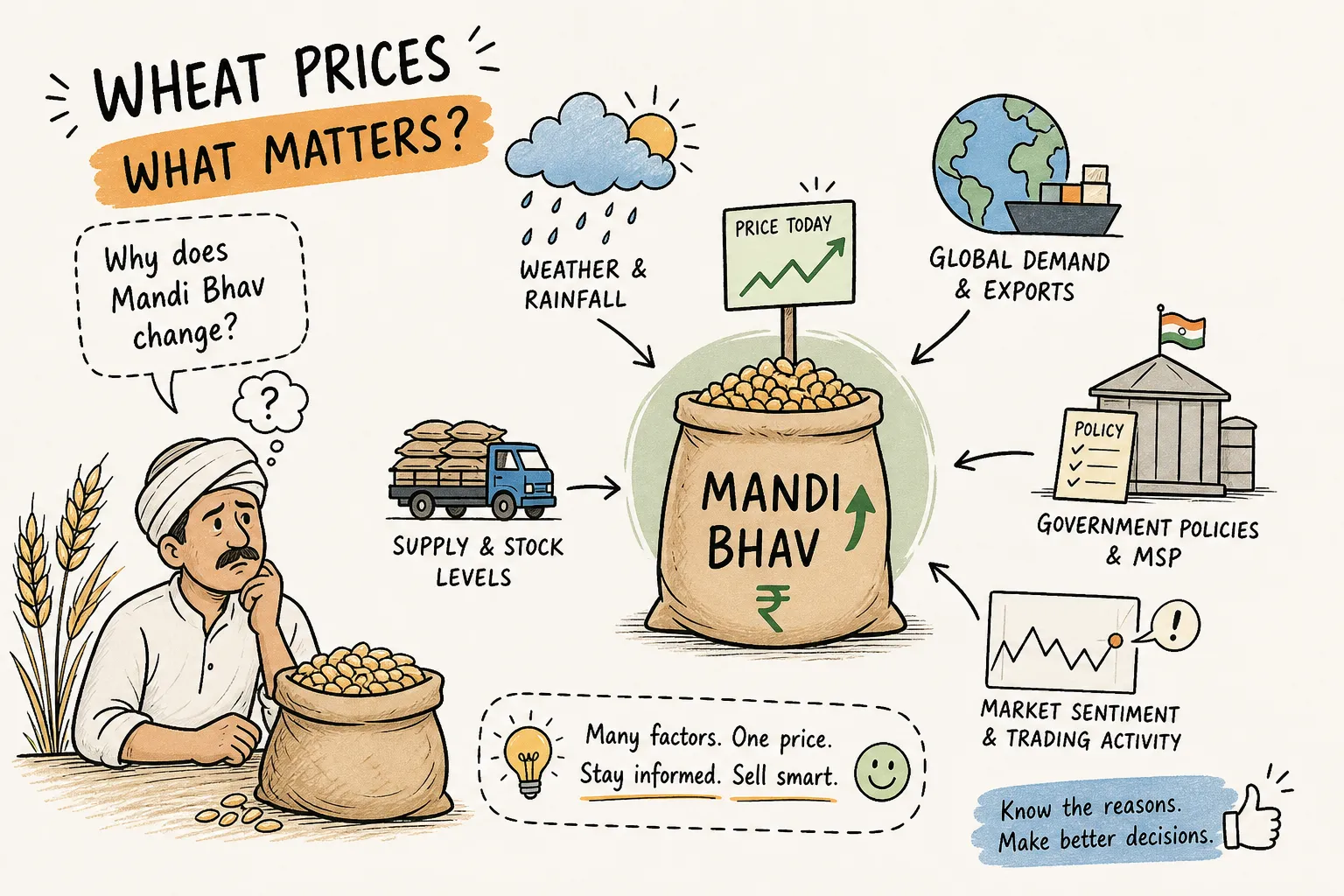
Gehun (wheat) is India's most widely grown Rabi fasal, and its gehun mandi bhav is not a random number. It is driven by a set of identifiable forces that any kisaan can learn to read with a little practice. This guide covers the full picture: what kind of crop gehun is, which varieties command premium prices at the mandi floor, and the exact factors that push wheat mandi rates up or down from one week to the next. Understanding these forces is the difference between accepting the first bid that comes your way and walking into the mandi with the confidence to negotiate.
KhetiKisaan publishes live APMC auction rates across key markets in North India, so farmers can check today's gehun mandi bhav before deciding which mandi to send their fasal to. That real-time price awareness, combined with a solid understanding of what drives gehun mandi rates, is exactly the combination that improves your realisation per quintal over a full season.
1. Gehun in India: growing regions, the Rabi cycle, and production scale
India's position in global wheat production
India is the world's second-largest wheat producer, crossing 120 million tonnes of annual output in 2025-26 according to the Ministry of Agriculture's third advance estimate. This scale gives the government significant leverage through procurement policy. It also means that even modest production shortfalls tend to move gehun mandi bhav noticeably across North India's APMC yards. The top five producing states are Uttar Pradesh (35.87 million tonnes), Madhya Pradesh (26.44 million tonnes), Punjab (17.07 million tonnes), Rajasthan (12.15 million tonnes), and Haryana (11.64 million tonnes). These five states essentially define the national wheat economy and, in turn, the gehu price in India at any given point in the Rabi marketing season.
How the Rabi harvest cycle shapes arrival pressure
The sowing window runs from October to mid-November, and the harvest window falls between March and April. This creates a predictable flood of aavak (arrivals) into mandis each April, and that annual surge is the single biggest short-term pressure on bhav. Prices typically soften in April and May as supply peaks, then firm up between October and February when stocks thin out. A farmer who internalises this seasonal rhythm before making a sell-or-hold decision is already thinking more strategically than most. The pattern repeats every year; the only variable is how sharp the price swing is in a particular season.
2. Major gehun varieties and how variety choice affects gehun mandi bhav
Bread wheat varieties: HD-2967, PBW-343, DBW-187, WH-542, and popular regional types
The dominant commercial varieties in North India are all bread wheat types, and each has a distinct profile that buyers recognise. HD-2967 is widely adapted across the Indo-Gangetic plains, valued for its consistent yield, rust resistance, and bold amber grain that millers prefer for atta (flour) and chapati. PBW-343 is a staple in Punjab and Haryana farming because of its lodging resistance and tolerance to waterlogging, qualities that matter in canal-irrigated zones. DBW-187 and WH-542 are gaining ground for their strong rust resistance profiles and the bold, well-filled kernels that attract competitive bids on the mandi floor. Sharbati wheat, grown primarily in Madhya Pradesh, commands a notable premium in speciality flour markets for its sweetness and thin bran. Lokvan, popular in parts of Rajasthan and UP, is valued for its high yield and is commonly traded in open APMC markets.
Flour mills pay close attention to variety because grain type directly affects flour extraction and chapati quality. Bold amber grain from HD-2967 or DBW-187 typically receives better bids than shrivelled or pale lots from the same mandi session. A kisaan who knows which variety they are selling can communicate that clearly to buyers rather than letting it be buried in a generic lot. This small shift in how you present your fasal can genuinely change the price offered.
Durum wheat and niche varieties: a separate price market
Durum wheat varieties like PDW-233 serve a completely different buyer segment: semolina (suji or rava) manufacturers, pasta producers, and vermicelli makers. These buyers are mainly concentrated in central and peninsular India. In North India mandis, the dominant trade is in bread wheat, which means a farmer bringing durum through the general wheat aavak channel risks being undervalued because buyers there are not set up to price durum correctly. If you grow durum, seek out specialised processors or direct buyer contacts rather than routing through the standard APMC bread wheat pipeline.
3. Quality parameters that determine your price per quintal at the mandi
The three checks that buyers do first: moisture, test weight, and damage
Mandi buyers and FCI procurement agents apply a consistent grading checklist before quoting a price, and the first three checks happen quickly and visibly. Moisture content is the most immediate factor: FCI procurement specifications set the acceptable limit at 12%, and grain above that threshold either receives a price deduction or faces outright rejection. Lots between 12% and 14% moisture are typically accepted but at a reduced price, while anything above 14% is turned away. Dry your grain properly before loading the trolley; this single step protects against the most common source of mandi deductions.
Test weight, sometimes called hectolitre weight, reflects how well-filled the grain is. Shrivelled or light grain receives a discount because milling yield drops when kernel density is low. Damaged, sprouted, or broken grain is the third major deduction trigger. Even a small percentage of visually damaged kernels can pull an entire lot into a lower grade, affecting the price the buyer offers for the whole consignment. A clean, dry, uniform lot invites less argument at the mandi and typically earns a better opening bid.
Grain size, colour, and protein: what millers look for beyond the mandi floor
Mills buying directly or through traders go one step further than the basic mandi checklist. They assess grain colour (bold amber is preferred over dull or pale grain), kernel uniformity, and protein content, which is critical for gluten strength in atta. These parameters matter less during a standard APMC floor transaction but become very significant when you are negotiating directly with a flour mill or an exporter. Understanding these criteria gives any farmer a clear agenda for post-harvest handling: dry the grain to below 12% moisture, clean the lot to remove foreign matter (kankad, stones, straw), and segregate visibly damaged or shrivelled kernels before the fasal reaches the mandi. These steps require effort but are consistently associated with better bids from buyers.
4. MSP announcements and FCI procurement: the gehun mandi bhav floor every kisaan must know
How the Minimum Support Price for gehun is set and what it means practically
The Cabinet Committee on Economic Affairs (CCEA) announces the Minimum Support Price for wheat each year before the Rabi sowing season, providing a reference point that guides private traders' and millers' bids. These annual declarations act as a directional benchmark, helping farmers plan their production costs and income expectations ahead of sowing.
The MSP functions as a price floor in practice: when FCI and state agencies are actively buying, private traders and millers tend to keep their bids at or slightly above MSP because they are competing with government procurement for the same grain. During active procurement windows, the MSP is not just a policy number, it is the baseline around which the entire mandi negotiation happens.
What happens when FCI procurement slows or stops early
This is the nuance most farmers miss, and it matters enormously. For the 2025-26 Rabi season, FCI procured approximately 29.7 million tonnes against an original target of 31.2 million tonnes, falling short of target. When FCI meets its procurement quota or when government godowns are full, official buying stops. Without that price floor, private traders quickly test lower bids. In seasons where FCI procurement is below target, often because quality norms are not met or storage capacity is constrained, mandi bhav can slip below MSP in open trade, particularly for lots with high moisture or visible damage. Knowing whether FCI procurement is currently active, slowing, or closed is one of the most important signals to track before deciding when to sell your gehun.
5. Mandi arrivals, mill demand, and the daily push and pull on gehun mandi rates
How daily arrival volume moves gehun mandi rates in real time
Arrivals (aavak) are the most sensitive short-term driver of wheat mandi bhav. When large volumes of freshly harvested wheat hit the mandi on the same day, buyers have more choice and less urgency, so bids soften. On days when arrivals are thin, because farmers are still harvesting, transport is disrupted, or competing mandis are drawing stock away, buyers compete harder and rates firm up. The table below captures this push-and-pull clearly:
| Market condition | Effect on mandi bhav |
|---|---|
| High aavak, high stock levels | Bhav weakens |
| Low aavak, falling stock levels | Bhav firms up |
| Strong mill buying demand | Bhav rises |
| Active MSP/FCI procurement | Bhav stays supported |
| FCI procurement closed or limited | Bhav can fall below MSP |
A farmer who checks today's arrival data for two or three nearby mandis before loading a trolley is already ahead of one who simply goes to the nearest yard out of habit. Platforms that aggregate live APMC data across markets make this comparison straightforward and free.
Mill demand cycles and the seasonal rhythm of private buying
Flour mills, from small atta chakki operators to large roller flour mills, have relatively predictable buying patterns. They buy aggressively in May and June to build stocks for the lean months, and again in October before the new Rabi season begins. When mill demand is high and FCI procurement is simultaneously active, gehun mandi bhav often tests above MSP. When both are quiet, prices ease. Understanding this overlap between government buying and mill procurement cycles helps you choose not just which mandi to sell in, but which month. Timing your sale to coincide with an active mill-buying window, especially if you have storage capacity, can improve your munafa (profit) per quintal in a way that is entirely within a farmer's control.
6. Global wheat supply, domestic weather, and pest pressure: the forces outside your control
How global supply shocks reach Indian gehun mandi bhav
India does not operate in isolation from the global wheat market. When major wheat-exporting countries face crop shortfalls, international prices rise, and Indian exporters find overseas buyers willing to pay a premium. That export demand pulls grain out of the domestic supply chain, tightening stocks and pushing wheat mandi rates upward. This dynamic is worth watching closely in 2026-27: USDA forecasts show US wheat production falling to approximately 1,531 to 1,536 million bushels in 2026-27. This is the lowest level since 1970-71, driven by lower harvested area and drought-reduced yields. A tighter global supply position generally supports Indian wheat export competitiveness, which filters back into domestic mandi rates. Conversely, a bumper global crop with aggressive export offers from competing countries can suppress Indian wheat prices, particularly for export-quality lots.
Unseasonal rain, heat stress, and pest damage: how weather events hit bhav from two sides
A late-season hailstorm or unseasonal rain in March can damage standing wheat, reducing both yield and grain quality simultaneously. Lower overall production creates scarcity, which tends to support headline mandi bhav. But the quality damage, shrivelled grain, high moisture, sprouted kernels, simultaneously earns price deductions for the affected farmer's lot. A weather event can therefore raise the market price while reducing the actual realisation per quintal for farmers in the affected belt. The headline bhav and your personal realisation are not the same number if your lot carries quality damage.
Pest pressure works similarly. Weevil (ghun) infestation during storage reduces usable grain quality and invites mandi deductions even when the broader market is firm. Stored wheat that is not properly dried and treated can lose significant value between harvest and sale, especially if the holding period stretches beyond two or three months without proper fumigation. This is a preventable loss that basic post-harvest care eliminates entirely.
7. Storage decisions: calculating whether to sell at harvest or hold your gehun
The cost of holding: godown charges, moisture risk, and the price premium you need
Many farmers hold wheat expecting prices to rise between May and October. That logic is often sound in principle, but the numbers must work on paper before you commit. CWC storage tariffs have historically been cited at around ₹9.86 per quintal per month (based on approximately ₹4.93 per 50-kg bag per month); actual rates vary by facility and are revised periodically, so confirm the current schedule with your nearest CWC or SWC office before calculating. Private warehousing rates vary considerably by state, facility quality, and services offered, some reports show them broadly comparable to CWC rates while others differ significantly. Add to the storage cost the interest cost of delayed income and the real risk of quality deterioration if grain is stored above 12% moisture. The break-even calculation is straightforward: the expected price rise must exceed storage cost plus quality loss plus the opportunity cost of waiting. If it does not, selling at harvest is the rational choice, not a failure of nerve.
Practical steps to improve your gehun's price before you reach the mandi
Grading and cleaning your lot before sale is consistently associated with better bids at the mandi floor. These steps do not require expensive equipment, they require attention and a little time before loading. The practical checklist is short:
- Dry the grain to below 12% moisture before bagging or loading.
- Remove foreign matter: kankad (pebbles), stones, straw, and chaff reduce your lot's visual appeal and invite deductions.
- Segregate visibly damaged, shrivelled, or sprouted kernels from the main lot before reaching the mandi.
- If selling a large quantity, consider splitting the consignment across two mandis on the same day to compare competitive bids before committing the full volume.
Post-harvest cleaning and grading are recognised as reliable ways to strengthen your position at the mandi. Farmers who present a clean, uniform lot give buyers less reason to discount and more incentive to bid competitively.
8. How to track live gehun mandi bhav and choose the right APMC yard
Why mandi-wise price comparison matters more than most farmers realise
On any given day, the wheat mandi bhav in Sri Ganganagar and the rate at a mandi 80 kilometres away can differ meaningfully, mandi price spread data from North India's APMC network regularly shows inter-market variation of ₹50 to ₹150 per quintal on the same day, reflecting local demand, local stock levels, and which private buyers and mills are active. A farmer who sells without checking this spread is effectively leaving money on the table. Consider a ₹100 per quintal gap across a 50-quintal lot: that is ₹5,000 in lost realisation, more than enough to cover transport costs to the better-paying mandi with profit to spare.
This price variation is not a one-off anomaly. It occurs regularly across North India's APMC network and consistently favours farmers who check gehun mandi rates before they travel rather than those who commit to the nearest yard out of convenience.
Using KhetiKisaan's live APMC listings to time your sale and choose your mandi
KhetiKisaan publishes live gehun mandi bhav sourced from ground-level contacts at APMC auction yards during live bol-chaal (bidding) across key markets in Rajasthan, Haryana, and Punjab, including major centres like Sri Ganganagar and Nohar. These rates reflect actual transaction prices on the floor that day rather than delayed official averages.
A farmer planning to sell can use KhetiKisaan to check today's wheat mandi rates across multiple APMC yards, identify which mandi is offering the strongest price per quintal, and make an informed decision about whether current rates justify selling or holding for another week. That kind of targeted, real-time information converts a passive seller into a strategic one. The platform also covers quality benchmarks, seasonal guides, and government scheme updates, so the information needed for a better mandi decision is available in one place.
The bottom line on wheat crop and what affects gehun mandi bhav
Two practical lessons emerge from this guide. Gehun is not a uniform commodity: variety, quality, and season each affect your final price per quintal, and understanding these differences gives you a stronger position at the mandi than simply arriving with a trolley and hoping for a fair bid. And gehun mandi bhav is not random, it moves in response to MSP policy, FCI procurement activity, daily aavak volumes, mill demand cycles, global supply signals, and weather events. A kisaan who understands these drivers negotiates from knowledge rather than guesswork.
Checking live gehun mandi bhav on KhetiKisaan before each sale is a practical, zero-cost habit that can improve your returns meaningfully over a full Rabi season. The price intelligence is there; using it is simply a matter of making it part of your pre-sale routine. Check today's wheat mandi rates on KhetiKisaan and see which APMC yard is offering the best price for your fasal right now.
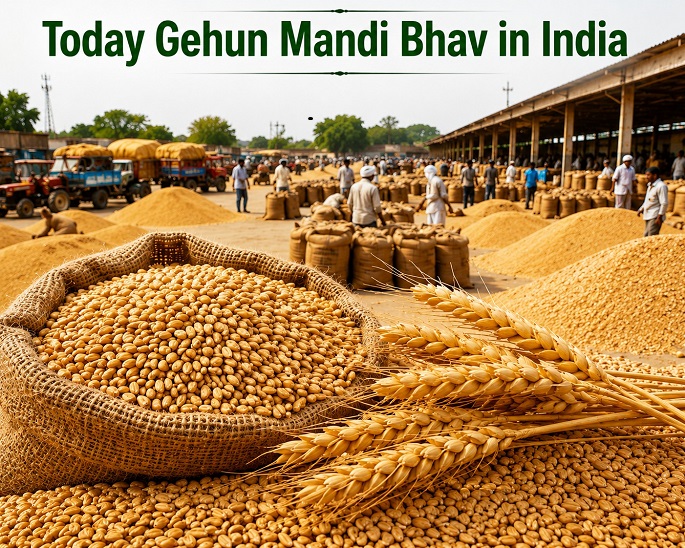
Today Gehun Mandi Bhav in India
Today Gehun Mandi Bhav in India shows the latest price of wheat in different mandis. Gehun is a main crop in India and is used daily in homes and food work. It is known as one of the most important crops for farmers.
Gehun is a Rabi crop. It is planted in October-November when the climate gets cool. The crop is very productive in a cool climate and requires warm sunlight when ready to harvest. The crop also grows better with a little rain at this time of winter. Gehun gives good results in well-drained loamy soil.
Roti, bread, biscuits and other food products are made out of wheat. It is also used by flour mills and food companies. The remaining straw post-harvest is known as bhusa and it is served to animals.
Key Factors Affecting Gehun Mandi Bhav
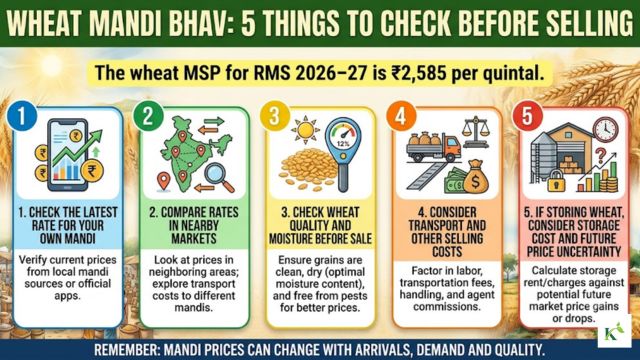
- Clean and shiny grains get a better price
- Bold and heavy grains are preferred
- Low moisture is important for storage
- MSP affects market price
- Demand in mandi changes rates
Today Gehun Mandi Bhav in India depends on grain quality and demand. Farmers check Gehun Mandi Bhav in India daily to know the right selling time. You can also follow Today Gehun Mandi Bhav in India to stay updated and get better value for your crop.
| Mandi | Price | Date |
|---|---|---|
| Nohar | 2,755.00/- | 02 Oct, 2026 |
| Kota | 2,852.00/- | 02 Oct, 2026 |
| Rawastar | 2,670.00/- | 02 Oct, 2026 |
| Sri Ganganagar | 2,870.00/- | 02 Oct, 2026 |
| Goluwala | 2,685.00/- | 02 Oct, 2026 |
| Pillibanga | 2,700.00/- | 02 Oct, 2026 |
| Sirsa | 2,760.00/- | 02 Oct, 2026 |
| Ellenabad | 2,750.00/- | 02 Oct, 2026 |
| Bikaner | 3,300.00/- | 02 Oct, 2026 |
| Rawla | 2,700.00/- | 02 Oct, 2026 |
| Aadampur | 2,700.00/- | 02 Oct, 2026 |
| Bhattu | 2,700.00/- | 02 Oct, 2026 |
| Ghadsana | 2,700.00/- | 02 Oct, 2026 |
| Hanumangarh | 2,700.00/- | 02 Oct, 2026 |
| Sangaria | 2,640.00/- | 02 Oct, 2026 |
| Siwani | 2,785.00/- | 02 Oct, 2026 |
| Jaitsar | 2,650.00/- | 02 Oct, 2026 |
| Rajgarh (Sadulpur) | 2,650.00/- | 02 Oct, 2026 |
| Deoli | 2,750.00/- | 02 Oct, 2026 |
| RaisinghNagar | 2,800.00/- | 02 Oct, 2026 |
| Abohar | 2,678.00/- | 02 Oct, 2026 |
| Neemuch MP | 3,084.00/- | 02 Oct, 2026 |
| Mandsaur MP | 2,851.00/- | 02 Oct, 2026 |
| Indore MP | 2,900.00/- | 01 Oct, 2026 |
| Ujjain MP | 2,971.00/- | 01 Oct, 2026 |
| Ratlam MP | 2,900.00/- | 01 Oct, 2026 |
| Sardarshahar | 2,755.00/- | 01 Oct, 2026 |
| Padampur | 2,700.00/- | 01 Oct, 2026 |
| Arjunsar | 2,605.00/- | 01 Oct, 2026 |
| Pipariya MP | 2,670.00/- | 01 Oct, 2026 |
| Kareli MP | 2,646.00/- | 01 Oct, 2026 |
| Ramganjmandi | 3,000.00/- | 01 Oct, 2026 |
| Baran | 2,700.00/- | 01 Oct, 2026 |
| Beawar | 2,705.00/- | 01 Oct, 2026 |
| Bundi | 2,605.00/- | 01 Oct, 2026 |
| Sadulsahar | 2,752.00/- | 01 Oct, 2026 |
| Phalodi | 3,000.00/- | 02 Oct, 2026 |
| Narsinghpur MP | 2,703.00/- | 01 Oct, 2026 |
| Khandwa MP | 2,755.00/- | 01 Oct, 2026 |
| Niwai | 2,750.00/- | 01 Oct, 2026 |
| Kawai | 2,750.00/- | 01 Oct, 2026 |
| Kalapipal MP | 2,752.00/- | 01 Oct, 2026 |
| Shamgarh MP | 2,671.00/- | 01 Oct, 2026 |
| Sikanagaon MP | 2,755.00/- | 01 Oct, 2026 |
| GanjBasoda MP | 2,900.00/- | 01 Oct, 2026 |
| Khargone MP | 2,755.00/- | 01 Oct, 2026 |
| Anoopgarh | 2,710.00/- | 02 Oct, 2026 |
| Betul MP | 2,700.00/- | 01 Oct, 2026 |
| Dhamnod MP | 2,600.00/- | 01 Oct, 2026 |
| Chaksu | 2,700.00/- | 01 Oct, 2026 |
| Nimbahera | 2,952.00/- | 01 Oct, 2026 |
| Timarni MP | 2,703.00/- | 01 Oct, 2026 |
| Harda MP | 2,755.00/- | 01 Oct, 2026 |
| Charkhi Dadri | 2,700.00/- | 01 Oct, 2026 |
| Udaypura | 2,605.00/- | 01 Oct, 2026 |
| Guna | 5,500.00/- | 01 Oct, 2026 |
| Osian | 2,755.00/- | 01 Oct, 2026 |
| Kekadi | 2,755.00/- | 01 Oct, 2026 |
| Malpura | 2,755.00/- | 01 Oct, 2026 |
| Khair UP | 2,750.00/- | 01 Oct, 2026 |
| Rajkot GJ | 2,752.00/- | 01 Oct, 2026 |
| Dahod GJ | 2,800.00/- | 01 Oct, 2026 |
| Bari MP | 2,752.00/- | 01 Oct, 2026 |
| Sironj MP | 2,703.00/- | 01 Oct, 2026 |
| Sheopur MP | 2,705.00/- | 01 Oct, 2026 |
| Daloda MP | 2,600.00/- | 03 Oct, 2026 |
| Khanpur | 2,689.00/- | 03 Oct, 2026 |
| Sri Vijaynagar | 2,525.00/- | 03 Oct, 2026 |
| Banapura MP | 2,755.00/- | 03 Oct, 2026 |
| Gajsinghpur | 2,755.00/- | 03 Oct, 2026 |
| Kesarisinghpur | 2,575.00/- | 03 Oct, 2026 |
| Suratgarh | 2,605.00/- | 03 Oct, 2026 |
| Sri Karanpur | 2,600.00/- | 03 Oct, 2026 |
| Bhadra | 2,800.00/- | 03 Oct, 2026 |
| DabliRathan | 2,640.00/- | 03 Oct, 2026 |
| Kawai Salpura | 2,646.00/- | 03 Oct, 2026 |
| Atru | 2,605.00/- | 03 Oct, 2026 |
| Chhabra | 2,760.00/- | 03 Oct, 2026 |
| NaharGarh | 2,700.00/- | 03 Oct, 2026 |
| Anta | 2,525.00/- | 03 Oct, 2026 |
| Samraniyan | 2,755.00/- | 01 Oct, 2026 |
| Khajuwala | 2,755.00/- | 01 Oct, 2026 |
| Lunkaransar | 2,700.00/- | 01 Oct, 2026 |
| Sri Dungargarh | 2,800.00/- | 02 Oct, 2026 |
| Pugal Road | 2,451.00/- | 01 Oct, 2026 |
| Tonk | 2,658.00/- | 01 Oct, 2026 |
| Uniyara | 2,650.00/- | 01 Oct, 2026 |
| Dooni | 2,650.00/- | 01 Oct, 2026 |
| Todaraisingh | 2,500.00/- | 01 Oct, 2026 |
| Alwar | 2,654.00/- | 02 Oct, 2026 |
| Laxmangarh | 2,650.00/- | 02 Oct, 2026 |
| Barodamev | 2,700.00/- | 01 Oct, 2026 |
| Chomu | 2,750.00/- | 02 Oct, 2026 |
| Bagru | 2,605.00/- | 01 Oct, 2026 |
| Kishangarh | 2,600.00/- | 02 Oct, 2026 |
| Bassi | 2,600.00/- | 01 Oct, 2026 |
| Dausa | 2,752.00/- | 02 Oct, 2026 |
| Lalsot | 2,678.00/- | 01 Oct, 2026 |
| Bandikui | 2,700.00/- | 01 Oct, 2026 |
| Mandawar | 2,568.00/- | 01 Oct, 2026 |
| Bhawani Mandi | 2,520.00/- | 02 Oct, 2026 |
| Jhalarapatan | 2,605.00/- | 01 Oct, 2026 |
| iklera | 2,605.00/- | 01 Oct, 2026 |
| itawa | 2,605.00/- | 01 Oct, 2026 |
| Bhilwara | 2,680.00/- | 02 Oct, 2026 |
| Barisadri | 2,750.00/- | 01 Oct, 2026 |
| Sujangarh | 2,525.00/- | 02 Oct, 2026 |
| Jhunjhunu | 2,520.00/- | 02 Oct, 2026 |
| Bharatpur | 2,600.00/- | 02 Oct, 2026 |
| Bayana | 2,650.00/- | 01 Oct, 2026 |
| Dei | 2,605.00/- | 01 Oct, 2026 |
| Jayal | 2,480.00/- | 01 Oct, 2026 |
| Madanganj | 2,605.00/- | 01 Oct, 2026 |
| Bhagat ki Kothi | 3,000.00/- | 01 Oct, 2026 |
| Khairthal | 2,650.00/- | 01 Oct, 2026 |
| Pratapgarh | 2,850.00/- | 02 Oct, 2026 |
| Chhotisadri | 2,906.00/- | 02 Oct, 2026 |
| Viramgam GJ | 2,750.00/- | 01 Oct, 2026 |
| Gondal GJ | 2,807.00/- | 01 Oct, 2026 |
| Upleta GJ | 2,750.00/- | 01 Oct, 2026 |
| Mahuva GJ | 2,811.00/- | 01 Oct, 2026 |
| Palitana GJ | 2,750.00/- | 01 Oct, 2026 |
| Taleja GJ | 2,880.00/- | 01 Oct, 2026 |
FAQ's
Related Blogs

 Sep 10, 2026
 by Pankaj Sihag
Sep 03, 2026
by Pankaj Sihag
Aug 27, 2026
by Pankaj Sihag
Aug 26, 2026
by Pankaj Sihag