










Methi
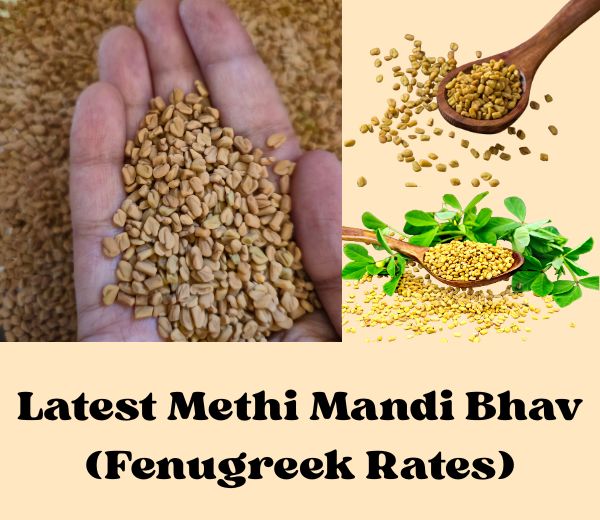
Methi: All Prices are in Quintal
Description
Rajasthan is the home of India's methi dana (fenugreek seed) trade, and today's methi bhav is moving in a wide band depending on which mandi you approach and what grade you bring. Understanding what drives this crop's price will help you sell smarter, here is what those numbers actually mean.
- Sowing time: November, December
- Harvesting time: February, March
- Major producing states: Rajasthan, Gujarat, Haryana, Madhya Pradesh
- Import, export: India is one of the world's leading exporters of fenugreek seeds, shipping mainly to the Middle East, North Africa and Southeast Asia; imports are negligible.
- Scientific name: Trigonella foenum-graecum
Methi dana basics: why Rajasthan dominates India's fenugreek market
What makes methi a high-demand Rabi crop
Methi dana is the dried seed of the fenugreek plant (Trigonella foenum-graecum), and it is not the same product as fresh methi leaf (methi patti) sold in vegetable markets. Rajasthan, especially Nagaur, Jodhpur, and Barmer districts, produces the bulk of India's fenugreek seed output. Methi dana commands ₹4,000, ₹8,400/quintal in mandi auctions, while fresh methi leaves fetch only ₹1,200, ₹1,500/quintal. This distinction matters because market reports sometimes mix both forms, which can seriously mislead you when comparing prices across sources.
Why methi travels from mandi to global spice shelves
India is among the world's leading fenugreek exporters, shipping an estimated 35,000, 50,000 metric tonnes annually to key markets including the United States, Canada, Saudi Arabia, the United Kingdom, Japan, and Bangladesh (based on broadly reported trade data; for authoritative figures, refer to APEDA or Spice Board export statistics). That export demand is what keeps Rajasthan mandi arrivals active and pushes fenugreek seed mandi prices well beyond domestic consumption levels. Domestic processors form the second buyer segment: masala brands, food ingredient firms, and reportedly pharmaceutical processors, all of whom procure steadily through the year from Rajasthan's key APMC centres.
Today's methi mandi rates across Rajasthan and what the numbers tell you
Mandi-by-mandi price snapshot for today
The spread between Baran and Jaipur is not random. It reflects distance from export hubs, lot size, and buyer competition intensity at the bol-chaal (live auction bidding). Your nearest mandi is not always your best-paying mandi. If transport costs allow, checking rates at two or three mandis before loading your trolley is worth doing, even a ₹300, ₹500/quintal difference in posted rate can outweigh the extra transport if your lot is large enough.
Grade and quality: the ₹2,000, ₹4,000 gap that directly hits your returns
"Best" grade methi dana, bold seed, low moisture, clean lot, has traded as high as ₹8,400/quintal at Chhotisadri in Rajasthan, while common "Other" grade lots sit at ₹4,400, ₹4,650/quintal. That is a differential of ₹2,000, ₹4,000 per quintal for the same crop. Key grading factors include seed boldness, moisture content (Special grade requires below 9%), and foreign matter percentage. Cleaning and sun-drying your lot before the auction directly lifts your methi per quintal rate at the bidding stage. This is not extra effort; it is direct munafa (profit).
Who buys methi and when do prices typically peak after harvest
Two buyer segments, two very different timelines
Spice exporters move fast. They bulk-buy immediately post-harvest (March, April) to fulfil forward contracts with overseas buyers, creating the first price surge of the season. Domestic processors, masala brands and food ingredient companies, are steadier buyers who step in more aggressively from May onwards when exporter buying slows. Knowing which buyer type is active at your local mandi on a given day tells you whether the bol-chaal will be competitive or sluggish, and whether holding your lot another week makes financial sense.
When methi aaj ke bhav tend to peak: the seasonal pattern
Methi prices typically follow a post-harvest dip in March, April when arrivals flood the mandi, then recover through May, June as stock tightens. Rajasthan mandi data indicates prices in the range of ₹4,850/quintal in mid-March rising towards ₹6,740/quintal by late May, note these are indicative datapoints from different seasons that illustrate the general seasonal curve rather than a single continuous series. Farmers who store clean, dry lots in gunny bags in a cool, ventilated space can often capture ₹500, ₹1,500/quintal more than those who sell immediately after harvest. The trade-off is storage cost (an industry estimate of roughly ₹50, ₹80/quintal per month) and moisture risk; tracking live methi mandi rates daily during any hold period is not optional, it is the job.
How to check live methi bhav and decide whether to sell today
Why live rates matter more than week-old averages
Methi dana prices can swing ₹200, ₹500/quintal within a single week based on arrival volume, export tender deadlines, and currency shifts affecting the rupee-dollar export price. A stale rate from a newspaper or a weekly bulletin won't tell you what today's bol-chaal settled at in Nagaur or Jodhpur. KhetiKisaan tracks live methi bhav across Rajasthan's key APMC yards and aims to surface actual transaction rates rather than delayed averages, giving you a more timely picture than a weekly government-feed report. That difference can mean hundreds of rupees per quintal in your pocket.
A simple sell vs hold framework for kisaans
Use this three-step check before deciding to sell or hold your methi dana lot:
- Checktoday's methi dana mandi rateon KhetiKisaan for your nearest two mandis and compare them side by side before making any call.
- Calculate your storage cost per month at approximately ₹50, ₹80/quintal and multiply by the number of weeks you plan to hold.
- If the current rate is within ₹300/quintal of the seasonal high for your mandi (verify againstAgmarknet or KhetiKisaan'shistorical series), selling now is rational. If rates are still below that band and arrivals remain heavy, holding a clean, dry lot for 4, 6 weeks is worth evaluating carefully.
Visit KhetiKisaan daily during peak arrival season to track whether your mandi's methi rate is rising, flat, or slipping. Making a sell decision on yesterday's bhav is how kisaans leave money on the zameen (ground).
Conclusion: methi bhav, should you sell today?
Today's methi bhav varies significantly across mandis, with premium rates available for best-grade lots. Where you sit within that spectrum depends on your mandi choice, your lot's grade, and how closely you are tracking the market. Track live methi bhav daily to decide when to sell; check your mandi rates on KhetiKisaan now and stop leaving money on the zameen.
| Mandi | Price | Date |
|---|---|---|
| Nohar | 6,600.00/- | 02 Oct, 2026 |
| Siwani | 6,250.00/- | 02 Oct, 2026 |
| Bikaner | 6,650.00/- | 02 Oct, 2026 |
| Nagaur | 6,200.00/- | 02 Oct, 2026 |
| Neemuch MP | 7,752.00/- | 02 Oct, 2026 |
| Mandsaur MP | 6,806.00/- | 02 Oct, 2026 |
| Ujjain MP | 5,350.00/- | 01 Oct, 2026 |
| Kota | 6,135.00/- | 02 Oct, 2026 |
| Sardarshahar | 6,504.00/- | 01 Oct, 2026 |
| Ramganjmandi | 5,900.00/- | 01 Oct, 2026 |
| Baran | 6,303.00/- | 01 Oct, 2026 |
| Phalodi | 6,755.00/- | 01 Oct, 2026 |
| Shamgarh MP | 6,225.00/- | 01 Oct, 2026 |
| Ratlam MP | 6,701.00/- | 01 Oct, 2026 |
| Nimbahera | 7,200.00/- | 01 Oct, 2026 |
| Osian | 6,341.00/- | 01 Oct, 2026 |
| Rajkot GJ | 5,950.00/- | 01 Oct, 2026 |
| Bari MP | 6,154.00/- | 01 Oct, 2026 |
| Jaora MP | 7,705.00/- | 01 Oct, 2026 |
| Daloda MP | 6,222.00/- | 01 Oct, 2026 |
| Bhattu | 6,500.00/- | 02 Oct, 2026 |
| Rawastar | 6,225.00/- | 02 Oct, 2026 |
| Aadampur | 6,200.00/- | 02 Oct, 2026 |
| Pugal Road | 5,906.00/- | 01 Oct, 2026 |
| Bhawani Mandi | 6,200.00/- | 02 Oct, 2026 |
| Jhalarapatan | 6,300.00/- | 01 Oct, 2026 |
| Khanpur | 6,155.00/- | 01 Oct, 2026 |
| itawa | 6,205.00/- | 01 Oct, 2026 |
| Barisadri | 5,800.00/- | 01 Oct, 2026 |
| Bundi | 6,406.00/- | 01 Oct, 2026 |
| Madanganj | 5,700.00/- | 01 Oct, 2026 |
| Jodhpur | 6,400.00/- | 02 Oct, 2026 |
| Bhagat ki Kothi | 5,400.00/- | 01 Oct, 2026 |
| Pratapgarh | 6,200.00/- | 02 Oct, 2026 |
| Chhotisadri | 6,455.00/- | 02 Oct, 2026 |
| Gondal GJ | 7,008.00/- | 01 Oct, 2026 |
| Upleta GJ | 5,650.00/- | 01 Oct, 2026 |
| Palitana GJ | 6,406.00/- | 01 Oct, 2026 |
| Sri Dungargarh | 6,400.00/- | 02 Oct, 2026 |