










Narma

Narma: All Prices are in Quintal
Description
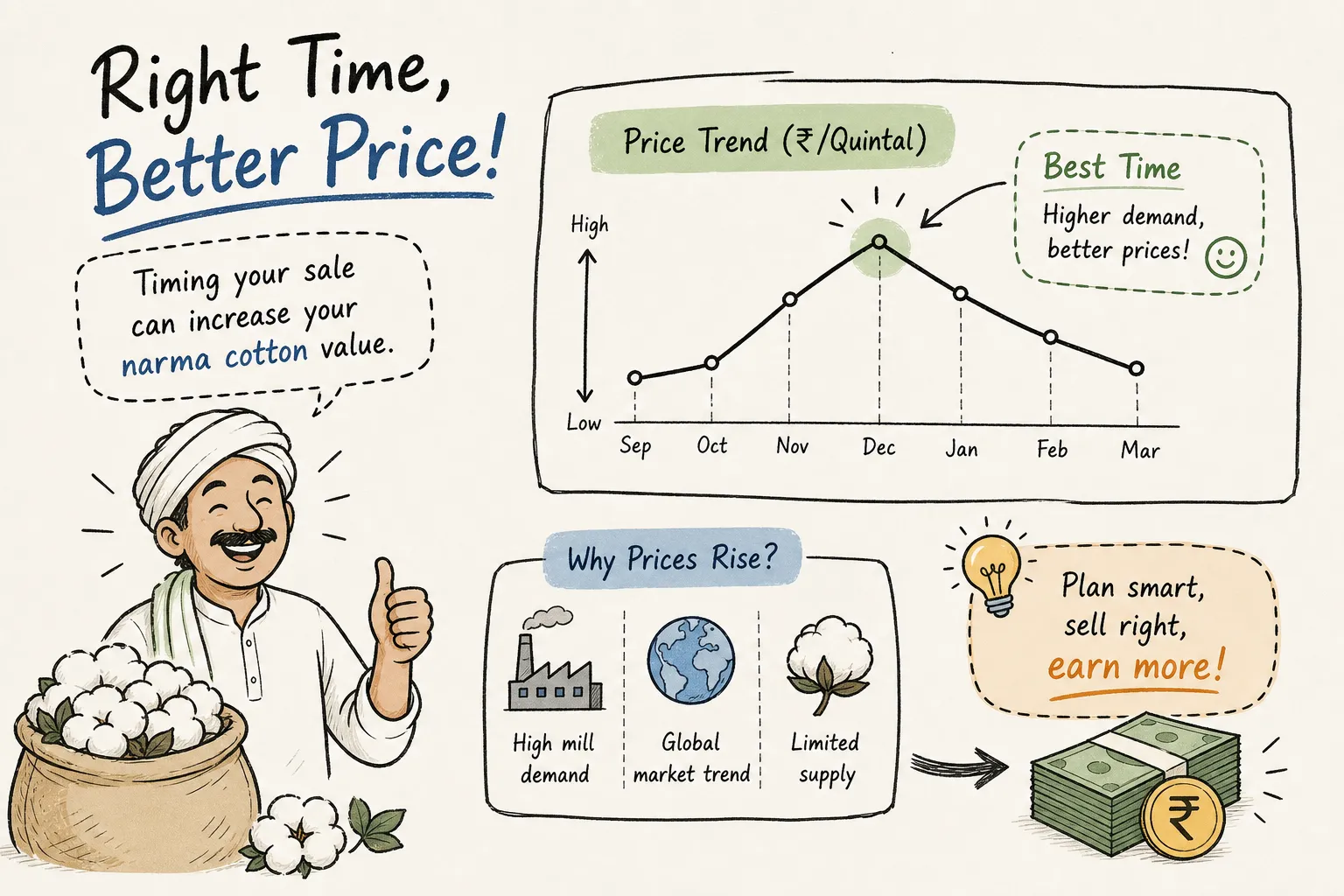
Picture this: you are a narma grower in Hanumangarh. Your tractor is loaded, the cotton is packed, and you need to decide right now whether to head to the mandi or hold for another day. That decision hinges entirely on the narma ka bhav, the cotton rate, at that yard this morning, and whether nearby mandis like Pillibanga or Ellenabad are quoting better.
The difference is not trivial. Selling a 50-quintal lot at ₹8,600 per quintal versus ₹8,400 puts ₹10,000 more in your pocket from a single morning's decision. Narma cotton prices shift every auction day, and mandi-to-mandi gaps of ₹100, ₹200 per quintal are common on the same day, enough to matter significantly across a full season's harvest.
KhetiKisaan publishes live narma ka bhav sourced directly from contacts physically present at APMC auction yards each morning, and many North Indian cotton growers check it before they load their carts. This article covers what moves the daily cotton rate, how the APMC auction works, which mandis are quoting the best prices, how to convert between candy and quintal, and where to get verified data every day without delay.
What actually moves narma cotton rates at the mandi
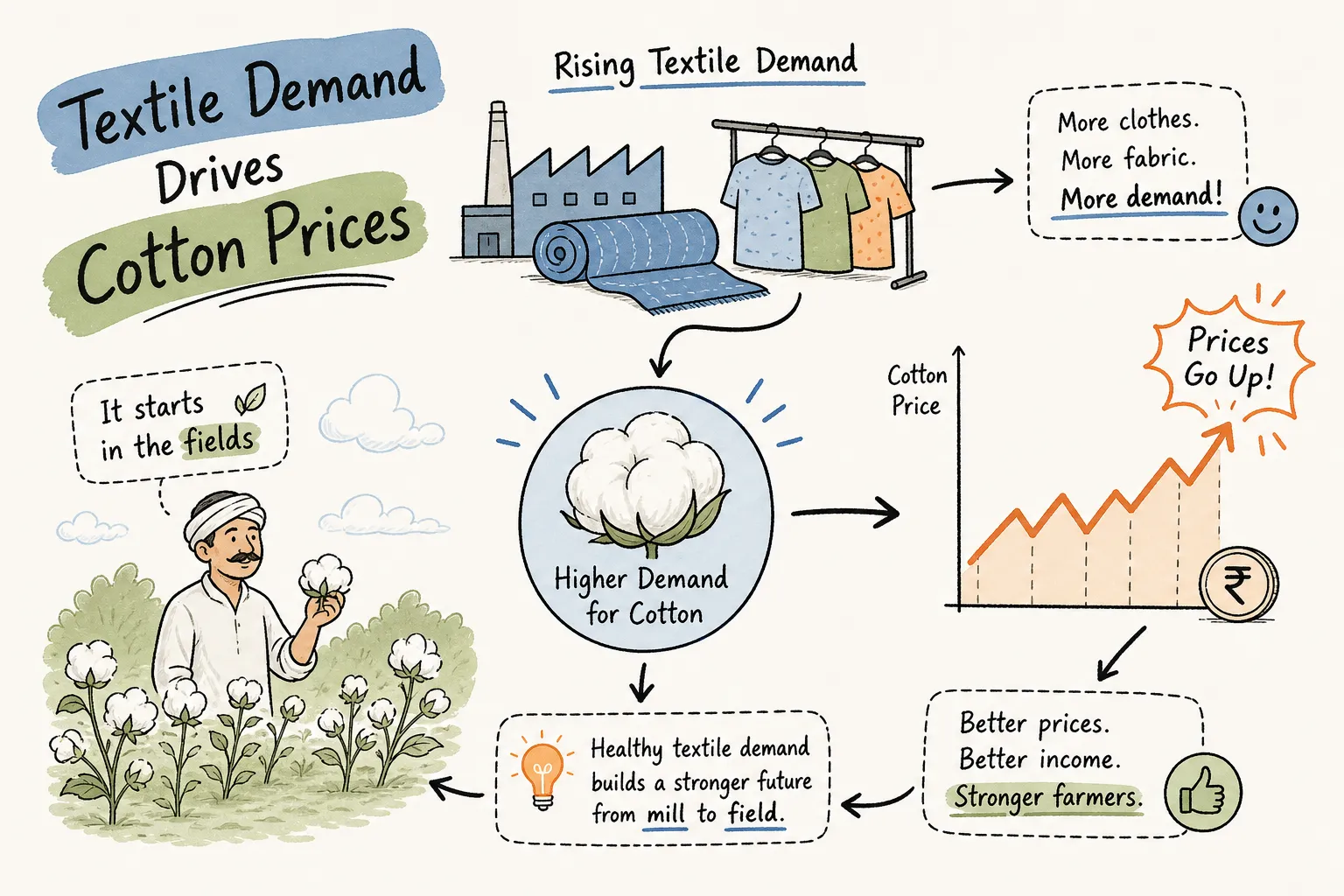
Narma cotton prices on any given day are shaped by three forces acting together: the physical quality of the cotton arriving at the yard, the national MSP floor set by the government, and the demand signals coming from textile mills and exporters. Understanding all three helps you decide not just where to sell, but when.
Quality is the most direct price lever
Gin recovery is the percentage of usable fibre extracted from seed cotton at the ginning mill. The standard benchmark in Indian cotton markets is around 34%, as referenced by CIRCOT (Central Institute for Research on Cotton Technology). When your narma delivers gin recovery above this level, buyers bid more because they extract more fibre per quintal purchased, though there is no single industry-wide published cutoff that formally defines a "premium" grade. Staple length and moisture content complete the quality picture: damp or short-staple kapas consistently receives lower bids at the bol-chaal auction because it costs the buyer more to process and yields less finished product.
MSP and mill demand set the market ceiling and floor
The government sets a Minimum Support Price (MSP) for cotton each Kharif season as a safety net for farmers. For Kharif 2026-27, the Cabinet-approved MSP stands at ₹8,267 per quintal for medium staple and ₹8,667 per quintal for long staple narma cotton.
When textile mills face low yarn inventory or export orders surge, the cotton rate pulls above MSP. When imports rise or demand softens, rates settle back toward that floor. Knowing where your local mandi rate sits relative to MSP tells you whether the market is offering a genuine premium or barely clearing the minimum.
How APMC auctions price your kapas cotton
At every APMC mandi, narma cotton is priced through a live oral auction called bol-chaal, where licensed traders bid against each other for each lot. The highest bid wins, and that number becomes the day's cotton rate for that quality. The entire process is fast, transparent, and happens before most people finish their morning chai.
The bol-chaal process, step by step
When you arrive at the mandi, your lot is weighed and inspected visually by traders before bidding begins. Multiple licensed buyers call out competing bids; the commission agent, known as the arhatiya, facilitates the process. Trading happens in the early morning hours, and each lot is typically cleared quickly, often in only a few minutes per lot, though this can vary by yard and arrival volume. The quality inspection at this stage is where grade differences directly translate into real rupee gaps: two lots arriving the same morning can fetch materially different prices if one is cleaner and drier than the other.
Mandi fees and your actual take-home per quintal
The narma ka bhav quoted in mandi reports is the gross auction price, not what you receive in hand. In Haryana mandis, standard deductions include a market fee of around 2% and an arhatiya commission of around 2.5%, as per the Haryana APMC fee schedule. Rajasthan mandis carry a total levy of approximately 3.6%, per the Rajasthan APMC notification. Knowing these charges before you choose a mandi lets you compare net realisations fairly, rather than comparing headline rates that do not account for deductions.
Why a ₹100, ₹200 gap exists between mandis on the same day
Local buyer competition, the volume of cotton arriving at a given yard that morning, and proximity to ginning mills all create micro-level price differences within the same region. A mandi with more active buyers and fewer arrivals will typically bid higher than a neighbouring yard facing heavier supply pressure. Moisture content and pick quality compound this further: cleaner, drier cotton arriving at one market fetches a measurably better rate than comparable cotton at another yard the same day. This is exactly why tracking narma mandi rates across multiple yards before you load your cart matters so much.
Candy to quintal: the conversion every narma seller must know
In Indian cotton markets, 1 candy equals approximately 356 kg, or 3.56 quintals. To convert a per-candy price to per quintal, divide by 3.56. To go the other way, multiply your per-quintal rate by 3.56. Some mandis and ginners still quote ginned lint cotton in candy, so knowing this formula is non-negotiable.
The simple calculation with a real example
Ginners who deal in processed lint sometimes quote prices on a per-candy basis. To illustrate: if a ginner quotes a ginned lint candy rate of ₹1,97,580, that works out to approximately ₹55,500 per quintal of ginned lint (₹1,97,580 ÷ 3.56). Note that these are ginned lint figures, not seed cotton rates. Seed cotton (narma ka bhav per quintal at the mandi) and ginned lint prices operate on entirely different scales. If a ginner quotes you a candy price, run this conversion and confirm whether they mean seed cotton or ginned lint before assuming it is a comparable deal. A few seconds of arithmetic can stop a costly misreading.
How quality grade shifts what you get per candy
Grade differences at the auction have a direct impact on your earnings. Keeping your kapas dry, clean, and free of contamination before you arrive at the mandi directly protects your price every season, even a small downgrade at the bol-chaal can translate into a meaningful rupee loss when multiplied across a full candy's weight.
How to check live narma ka bhav before you sell each morning
The fastest and most reliable way to check kapas bhav aaj (today's cotton price) is through a platform that has someone physically present at the APMC yard during the live auction. A portal pulling delayed government feeds hours after trading closes gives you yesterday's market dressed up as today's news.
Why government portals lag behind real auction prices
Official platforms like Agmarknet update rates with a delay that can stretch from a few hours to an entire trading day. By the time those numbers appear on your screen, the morning auction is already concluded. A farmer acting on yesterday's rate in today's market is negotiating blind: you may drive to a mandi expecting ₹8,600 only to find the yard settled at ₹8,400 several hours earlier.
Where KhetiKisaan fits into your daily selling decision
KhetiKisaan publishes narma cotton prices from on-ground contacts who attend live APMC auctions across Rajasthan, Haryana, and Madhya Pradesh each morning. The rates reflect actual bol-chaal bids from that morning's auction, covering key mandis including Sri Ganganagar, Nohar, Hanumangarh, Sirsa, and Ellenabad. Checking the latest narma ka bhav on KhetiKisaan before you load your tractor gives you a realistic price target and tells you which mandi is worth the extra distance that day.
Bottom line: know your narma ka bhav before you move
Narma cotton prices are not a single fixed number. They vary by mandi, by quality, and by the day's buyer competition at each yard. These three things, understanding what drives the rate, knowing the candy-quintal conversion, and checking live mandi data every morning before you sell, together add real money across a full season.
Bookmark KhetiKisaan for your daily narma ka bhav check. The few minutes you spend tracking the market each morning can easily return thousands of rupees more per lot, without changing a single thing about your farming.
Narma Mandi Bhav Today
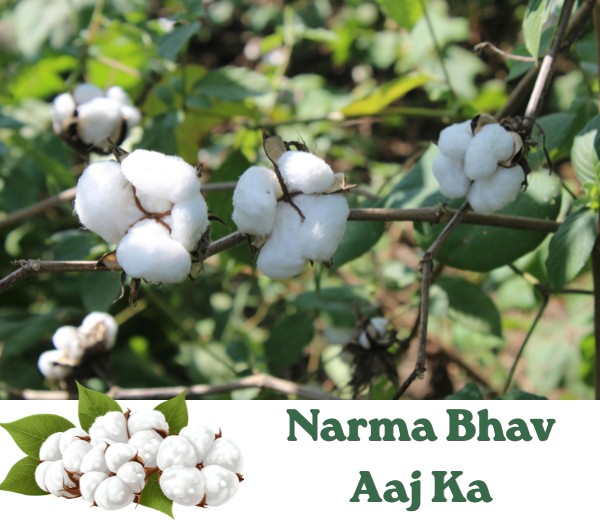
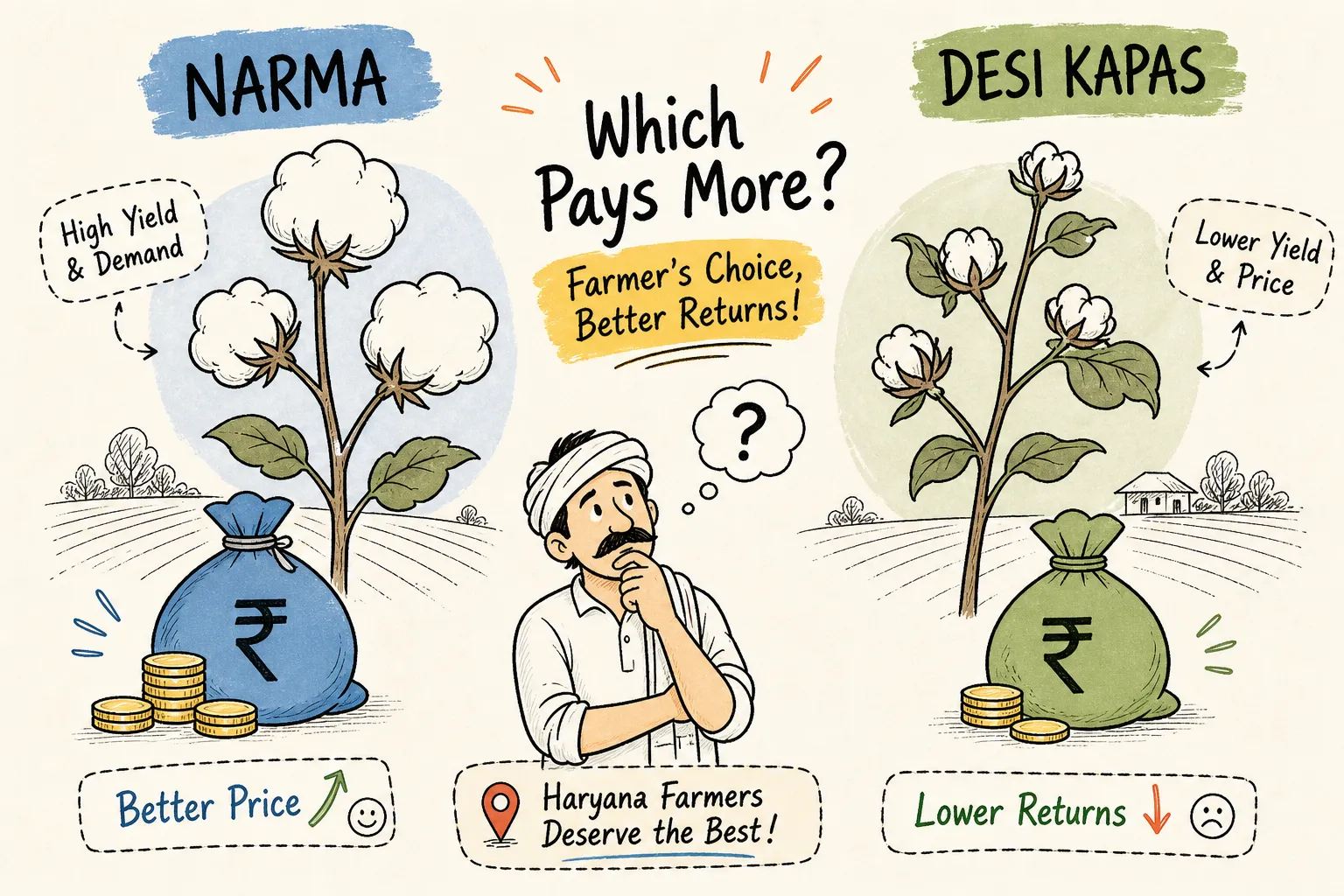
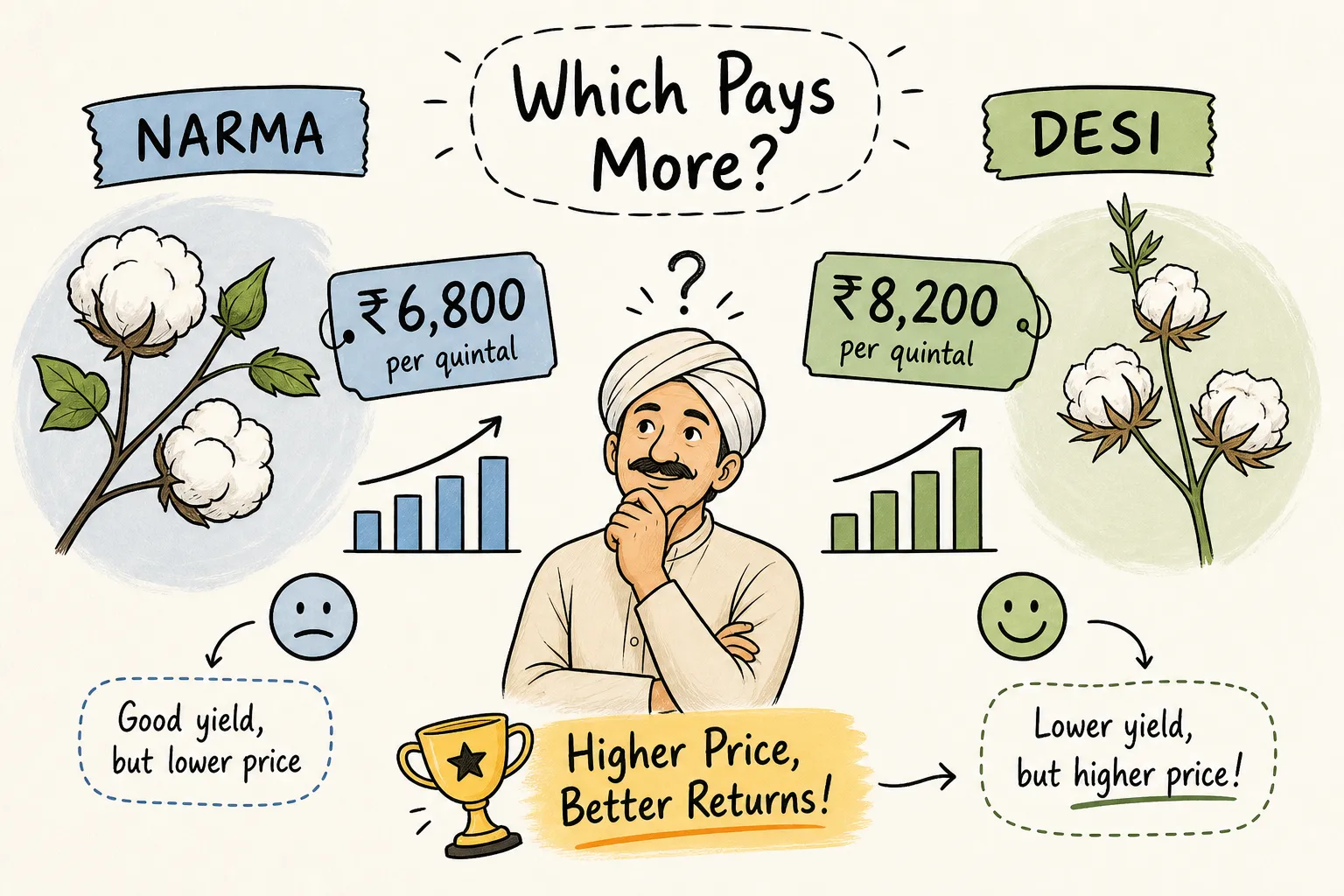
Narma Mandi Bhav today helps farmers check the latest cotton rates in different mandis. Narma or American cotton, is a long-fiber cotton crop. It is cultivated primarily in Rajasthan, Haryana and Punjab, where it finds application in the textile industry.
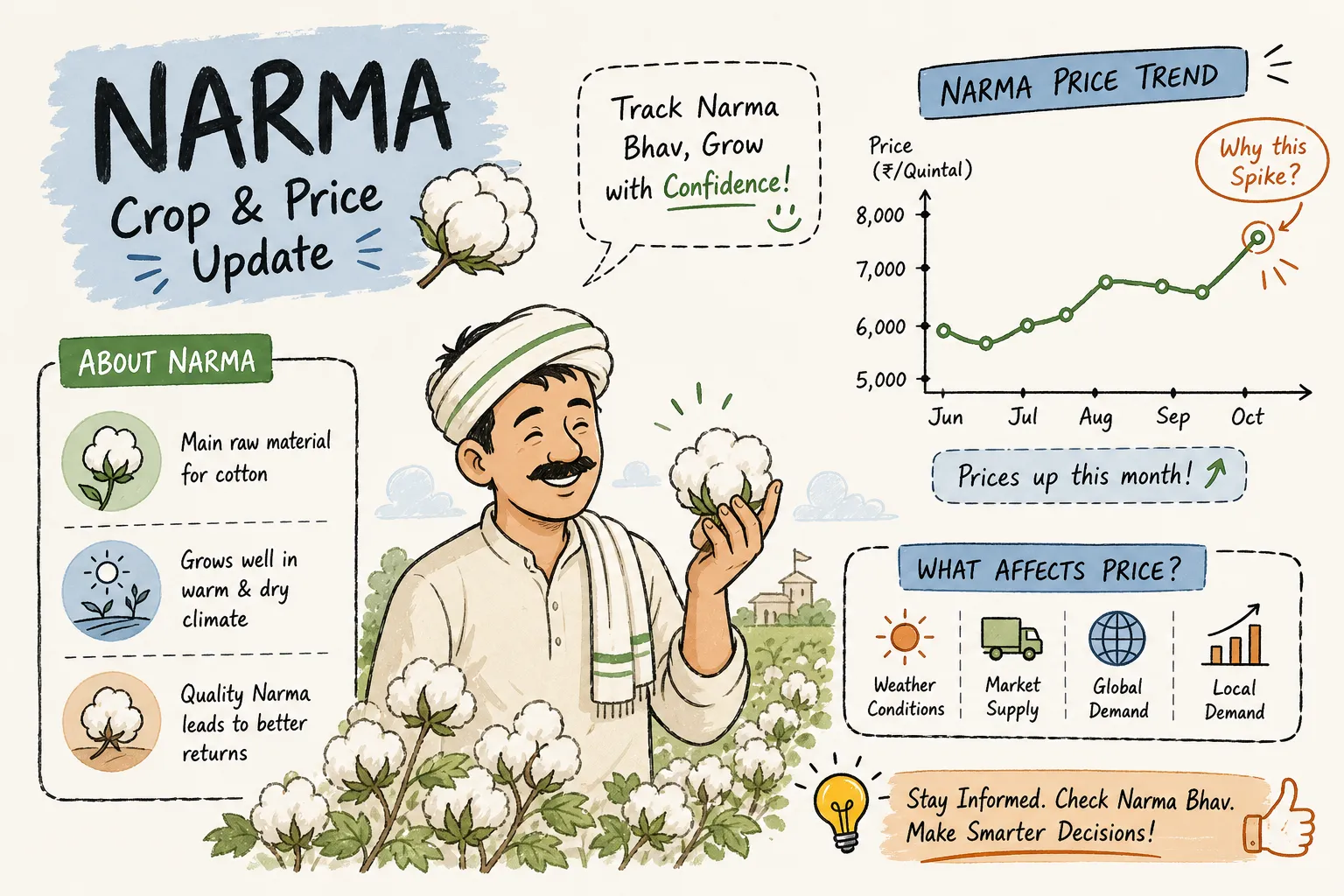
Narma is a Kharif crop. It is sown from mid-April to May. Early sowing is better in some areas so the crop can be ready before winter frost. It grows well in warm weather and needs full sunlight when the cotton opens. The crop gives good results in deep alluvial soil or sandy loam soil. Good drainage is important because the crop does not handle waterlogging.
Narma is in high demand because of its strong and fine fiber. Mills use it to produce fine cloth and products that are of export quality. Bt cotton is also cultivated by many farmers because of the protection offered against pests such as bollworms. Oil and cattle feed are obtained after harvest using seeds.
Key Factors Affecting Narma Mandi Bhav
- First picking gets a better price
- Low moisture gives a higher rate
- Clean and white cotton is preferred
- Global demand affects price
- Quality of cotton changes rates
Narma Mandi Bhav today depends on quality and demand. Farmers check cotton prices in India daily to decide the right time to sell and get better value.
| Mandi | Price | Date |
|---|---|---|
| Pillibanga | 8,900.00/- | 25 Sep, 2026 |
| Sirsa | 8,665.00/- | 25 Sep, 2026 |
| Ellenabad | 8,770.00/- | 25 Sep, 2026 |
| Aadampur | 8,893.00/- | 25 Sep, 2026 |
| Rawastar | 8,731.00/- | 25 Sep, 2026 |
| Sri Ganganagar | 8,880.00/- | 24 Sep, 2026 |
| Hanumangarh | 8,700.00/- | 25 Sep, 2026 |
| Sangaria | 8,700.00/- | 25 Sep, 2026 |
| Siwani | 8,869.00/- | 25 Sep, 2026 |
| Khargone MP | 8,851.00/- | 25 Sep, 2026 |
| Dhamnod MP | 8,830.00/- | 25 Sep, 2026 |
| Charkhi Dadri | 8,901.00/- | 25 Sep, 2026 |
| Daloda MP | 8,790.00/- | 24 Sep, 2026 |
| Goluwala | 8,821.00/- | 25 Sep, 2026 |
| Sardarshahar | 9,000.00/- | 25 Sep, 2026 |
| Bhattu | 8,821.00/- | 25 Sep, 2026 |
| Abohar | 8,883.00/- | 25 Sep, 2026 |
| RaisinghNagar | 8,800.00/- | 25 Sep, 2026 |
| Anoopgarh | 8,883.00/- | 25 Sep, 2026 |
| Sri Vijaynagar | 8,545.00/- | 25 Sep, 2026 |
| Padampur | 8,950.00/- | 25 Sep, 2026 |
| Bhadra | 8,900.00/- | 25 Sep, 2026 |
| DabliRathan | 8,450.00/- | 25 Sep, 2026 |
| Alwar | 7,750.00/- | 25 Sep, 2026 |
| Laxmangarh | 8,150.00/- | 25 Sep, 2026 |
| Barodamev | 8,000.00/- | 25 Sep, 2026 |
| Jaitsar | 8,740.00/- | 25 Sep, 2026 |
| Suratgarh | 8,800.00/- | 25 Sep, 2026 |
FAQ's
Related Blogs

 Sep 12, 2026
 by Pankaj Sihag
Sep 02, 2026
by Pankaj Sihag
Aug 27, 2026
by Pankaj Sihag


Apr 11, 2026
by Pankaj Sihag
Apr 08, 2026
by Pankaj Sihag