










Jou
Jou: All Prices Are in Quintal
Description
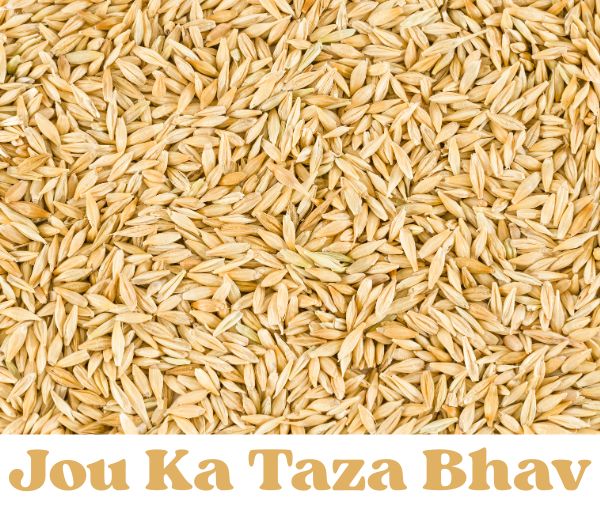
Barley, called jau in Hindi and jou in parts of Rajasthan, is a Rabi crop harvested between March and April. Rajasthan, Haryana, and Madhya Pradesh account for the bulk of India's barley belt, and the crop serves both human food use and industrial applications including malt brewing and animal feed. That dual demand base is one reason jau prices have stayed firmer than many farmers expected this season.
Many kisaans are now asking whether jou gives better returns than gehun (wheat) this season. The honest answer depends on three things: the current mandi rate at your nearest yard, your actual input cost per quintal produced, and which type of buyer is active near you. KhetiKisaan tracks live APMC auction prices for jou, wheat, sarso, and other Rabi crops in one place, sourced from ground-level contacts at major mandi yards across North India. It is the fastest way to get a reliable barley market update before you make any selling decision.
What is today's jou mandi rate and how do you read it?
Jou, or Barley, is often celebrated as the "Warrior Crop" of the desert because it thrives in harsh conditions where even wheat struggles. In North India, particularly across Rajasthan and Haryana, it is a key Rabi (winter) crop that farmers rely on for its low input costs and high resilience against salt and heat.
The Resilience of Jou
What makes Jou unique is its extreme adaptability. It is far more salt-tolerant than most cereals, allowing it to grow in marginal or alkaline soils where other crops wouldn't survive.
- Sowing window: Best planted between October and November.
- Water-wise: Requires significantly less irrigation than wheat, making it a more sustainable choice in areas with receding groundwater.
- Climate: Enjoys cool winter breezes but matures rapidly as the sun strengthens in March, usually reaching harvest faster than wheat.
A Multi-Purpose Revenue Stream
For a farmer, Jou isn't just a grain; it's a versatile asset with three major market paths:
- The Brewing Industry: High-quality "Malting Barley" is in massive demand by breweries and distilleries. In 2026, companies like AB InBev are actively expanding procurement directly from farmers in Rajasthan and Haryana.
- Health & Nutrition: Known for its high fibre (beta-glucan) and cooling properties, Jou is used for sattu, flour and health drinks. It's a staple for those looking to manage cholesterol and blood sugar.
- Livestock Support: The straw (bhusa) of Jou is softer and highly palatable for cattle, making it a valuable fodder during the dry summer months.
Why two mandis quote different jou bhav on the same day
Most of the mandi-to-mandi price difference comes down to three variables: moisture content of the arriving lot, grade quality in terms of foreign matter and damaged grain, and how many active buyers are present at that mandi on that particular day. A yard near a malt processing unit or a large feed compound will typically attract more buyers, creating bidding competition that pushes the final bol-chaal (auction) rate higher than a remote mandi with fewer buyers present at the yard.
A lot meeting Grade I standards, moisture at or below 12% and low defects, consistently commands a premium over lower-grade arrivals even within the same mandi yard. Grade II and III lots, with higher moisture or more shrivelled grain, may clear at a meaningful discount to the headline rate; the exact reduction varies by mandi, season, and buyer competition on the day. Checking rates across multiple mandis before hauling the crop helps you decide whether selling locally is smarter or whether a short transport investment to a better-paying yard is worth it. KhetiKisaan's mandi-wise listings let you make that comparison before loading the trolley.
What is driving jou bhav higher right now?
Brewery and feed industry demand: the real price engine
The biggest consistent buyer for quality barley in India is the malt brewing industry, which needs barley meeting specific protein and germination standards. This segment alone accounts for roughly 20 to 25% of total national barley production, and because it cannot easily substitute other grains, its demand keeps a firm price floor active even when general mandi arrivals are running high. When brewery procurement cycles open, buyers become aggressive at the yard level, and you see this directly in live auction rates.
Animal feed manufacturers and ethanol plants act as strong secondary buyers, absorbing lower-grade lots that malt units reject. This means even non-malt-quality jau finds buyers at a reasonable rate rather than going unsold. When brewery procurement overlaps with feed-industry buying in the same arrival window, competition among buyers pushes barley mandi rates up noticeably across multiple yards simultaneously.
Tight supply from reduced sowing and weather stress
According to Ministry of Agriculture data, barley sowing area has declined over recent seasons, cutting total production and keeping available stocks lean at mandi level. This supply tightening is not a local issue alone. It reflects a wider shift as farmers in some regions have moved toward other Rabi crops, leaving the total lot pool smaller than in previous years.
Unseasonal heat during the grain-filling stage reduces both yield and grain quality, further tightening arrivals at major mandis and increasing the share of lower-grade lots. Low carry-over stocks from the previous season mean buyers are active early in the arrival period rather than waiting for prices to soften. That early buyer activity is part of why rates have stayed supported this season instead of the typical post-harvest dip that kisaans often dread.
Jau vs. wheat: which Rabi crop pays more per acre?
Price, MSP, and gross income comparison
The government MSP for barley for Rabi Marketing Season 2025, 26 is ₹1,980 per quintal, compared to wheat's MSP of ₹2,425 per quintal, a difference of ₹445 per quintal in support price. However, current open-market jou bhav is trading above its own MSP in most Rajasthan mandis, which means quality jau is fetching prices comparable to or approaching wheat's MSP level in the private market this season.
Net income per acre is the more useful figure for any farmer, not just the headline sale price. Multiply your yield per acre by the mandi rate you actually receive, then subtract your total input cost. That net figure is what you compare between crops, not just the per-quintal rate.
Where barley has a clear edge over wheat
Barley requires only 2 to 3 irrigations through its growing cycle, while wheat in North Indian conditions typically needs 4 to 6. In water-scarce districts of Rajasthan and Haryana, where each irrigation involves real cost in terms of electricity, diesel, or canal water charges, saving 2 to 3 watering cycles is a meaningful margin advantage. For a farmer where irrigation is expensive or unreliable, those savings can close the MSP gap between the two crops on a net basis.
Barley also tolerates saline soil and moderate drought conditions better than wheat, which means it performs on land where wheat would under-deliver in yield and quality. The honest catch: wheat has stronger government procurement backing through FCI and state agencies, giving a reliable MSP floor. Barley farmers are more dependent on private buyers, malt companies, and feed mills, which adds price uncertainty. If you are growing jau and have no malt-industry buyer nearby, check KhetiKisaan to identify which mandis are seeing active malt procurement before harvest so you can plan your transport route in advance.
How to improve your actual net realisation per quintal
Quality and moisture standards that directly affect your price
The 12% moisture threshold is the single most important number to remember before bringing jau to the mandi. Lots at or below 12% receive the full quoted rate. Lots between 12% and 14% are accepted at a discount because the buyer must bear drying, storage, and spoilage risk. Anything above 14% moisture is rejected outright at most mandis, meaning you take the crop back and bear the transport cost for nothing.
Proper sun-drying before arriving at the mandi, combined with basic cleaning to remove foreign matter and shrivelled grains, can shift a lot from a discounted grade to a full-price Grade I lot. The premium you gain varies by mandi and season, but the improvement requires no additional input cost beyond time and effort. Grade I barley also attracts malt-industry buyers who sometimes pay above the general mandi auction rate for specification-grade lots, effectively creating a premium market within the same mandi yard.
Mandi deductions to calculate before you sell
The gross patti (sale receipt) at the mandi is not what lands in your hand. Standard deductions include arhat (the commission agent's fee, typically 1.5 to 2% of gross sale value), the mandi market fee or cess set by the state APMC, and labour charges covering hamali, loading, unloading, and tulai (weighing). These charges vary considerably by mandi and state-level levy structure, some mandis trim realisation by a modest amount per quintal while others apply charges that run to several hundred rupees per quintal, so understanding the deduction structure at your target yard before you arrive is essential.
Check the full deduction structure at your target mandi before you arrive with the crop, not after you have already parked the trolley. Different mandis in the same state can have meaningfully different total levy structures, and the mandi that quotes the highest gross rate may not always deliver the highest net realisation once all cuts are applied. KhetiKisaan's mandi-wise rate listings let you compare across nearby options so you can calculate net return rather than just looking at the headline price.
Check today's jou bhav on KhetiKisaan
To sum up, today's jou bhav across Rajasthan mandis spans a wide window, from around ₹1,830 at Jaipur Rural to ₹2,670 at Bhilwara for top-grade lots, driven by industrial demand, tighter supply, and mandi-level buyer competition. Moisture management and knowing your deductions are the two levers most directly in your control. For a live jau ka bhav barley market update with mandi-wise listings, visit KhetiKisaan before you load the trolley and decide where to sell.
| Mandi | Price | Date |
|---|---|---|
| Sirsa | 2,400.00/- | 02 Oct, 2026 |
| Rawla | 2,480.00/- | 02 Oct, 2026 |
| Rawastar | 2,450.00/- | 02 Oct, 2026 |
| Sri Ganganagar | 2,500.00/- | 02 Oct, 2026 |
| Nohar | 2,455.00/- | 02 Oct, 2026 |
| Pillibanga | 2,320.00/- | 02 Oct, 2026 |
| Ellenabad | 2,487.00/- | 02 Oct, 2026 |
| Aadampur | 2,450.00/- | 02 Oct, 2026 |
| Bikaner | 2,480.00/- | 02 Oct, 2026 |
| Ghadsana | 2,400.00/- | 02 Oct, 2026 |
| Hanumangarh | 2,450.00/- | 02 Oct, 2026 |
| Siwani | 2,900.00/- | 02 Oct, 2026 |
| Sangaria | 2,320.00/- | 02 Oct, 2026 |
| Jaitsar | 2,450.00/- | 02 Oct, 2026 |
| Rajgarh (Sadulpur) | 2,500.00/- | 02 Oct, 2026 |
| Deoli | 2,525.00/- | 02 Oct, 2026 |
| RaisinghNagar | 2,152.00/- | 02 Oct, 2026 |
| Mandsaur MP | 2,750.00/- | 02 Oct, 2026 |
| Kota | 2,646.00/- | 02 Oct, 2026 |
| Sardarshahar | 2,605.00/- | 01 Oct, 2026 |
| Padampur | 2,455.00/- | 01 Oct, 2026 |
| Arjunsar | 2,256.00/- | 01 Oct, 2026 |
| Beawar | 2,201.00/- | 01 Oct, 2026 |
| Bundi | 2,502.00/- | 01 Oct, 2026 |
| Sadulsahar | 2,485.00/- | 01 Oct, 2026 |
| Phalodi | 2,300.00/- | 01 Oct, 2026 |
| Abohar | 2,300.00/- | 02 Oct, 2026 |
| Niwai | 2,300.00/- | 01 Oct, 2026 |
| Goluwala | 2,400.00/- | 02 Oct, 2026 |
| Anoopgarh | 2,450.00/- | 02 Oct, 2026 |
| Chaksu | 2,455.00/- | 01 Oct, 2026 |
| Bhattu | 2,450.00/- | 02 Oct, 2026 |
| Neemuch MP | 2,751.00/- | 02 Oct, 2026 |
| Nimbahera | 2,487.00/- | 01 Oct, 2026 |
| Charkhi Dadri | 2,500.00/- | 01 Oct, 2026 |
| Kekadi | 2,455.00/- | 01 Oct, 2026 |
| Malpura | 2,480.00/- | 01 Oct, 2026 |
| Sri Vijaynagar | 2,450.00/- | 01 Oct, 2026 |
| Gajsinghpur | 2,325.00/- | 01 Oct, 2026 |
| Kesarisinghpur | 2,204.00/- | 01 Oct, 2026 |
| Suratgarh | 2,300.00/- | 01 Oct, 2026 |
| Sri Karanpur | 2,284.00/- | 01 Oct, 2026 |
| Bhadra | 2,150.00/- | 01 Oct, 2026 |
| DabliRathan | 2,200.00/- | 01 Oct, 2026 |
| NaharGarh | 2,250.00/- | 01 Oct, 2026 |
| Samraniyan | 2,200.00/- | 01 Oct, 2026 |
| Khajuwala | 2,200.00/- | 01 Oct, 2026 |
| Lunkaransar | 2,450.00/- | 01 Oct, 2026 |
| Sri Dungargarh | 2,155.00/- | 02 Oct, 2026 |
| Pugal Road | 2,250.00/- | 01 Oct, 2026 |
| Tonk | 2,705.00/- | 01 Oct, 2026 |
| Uniyara | 2,451.00/- | 01 Oct, 2026 |
| Dooni | 2,650.00/- | 01 Oct, 2026 |
| Todaraisingh | 2,605.00/- | 01 Oct, 2026 |
| Alwar | 2,300.00/- | 02 Oct, 2026 |
| Chomu | 2,650.00/- | 02 Oct, 2026 |
| Bagru | 2,300.00/- | 01 Oct, 2026 |
| Kishangarh | 2,204.00/- | 02 Oct, 2026 |
| Bassi | 2,500.00/- | 01 Oct, 2026 |
| Dausa | 2,500.00/- | 02 Oct, 2026 |
| Lalsot | 2,050.00/- | 01 Oct, 2026 |
| Bandikui | 2,520.00/- | 01 Oct, 2026 |
| Mandawar | 1,975.00/- | 01 Oct, 2026 |
| itawa | 2,305.00/- | 01 Oct, 2026 |
| Bhilwara | 2,480.00/- | 02 Oct, 2026 |
| Barisadri | 2,605.00/- | 01 Oct, 2026 |
| Sujangarh | 2,400.00/- | 02 Oct, 2026 |
| Jhunjhunu | 2,480.00/- | 02 Oct, 2026 |
| Bharatpur | 2,200.00/- | 02 Oct, 2026 |
| Dei | 2,525.00/- | 01 Oct, 2026 |
| Madanganj | 2,750.00/- | 01 Oct, 2026 |
| Bhagat ki Kothi | 2,700.00/- | 01 Oct, 2026 |
| Khairthal | 2,305.00/- | 01 Oct, 2026 |
| Pratapgarh | 2,851.00/- | 02 Oct, 2026 |
| Chhotisadri | 2,805.00/- | 02 Oct, 2026 |