










Mungfali
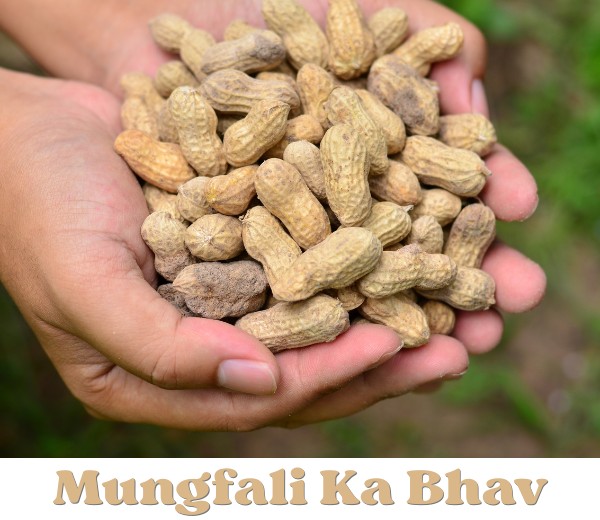
Mungfali: All Prices are in Quintal
Description
Picture this: it's early morning in Rajasthan, and a kisaan is loading his freshly harvested mungfali onto a tractor-trolley. The pods look clean, the shelling percentage feels good, and the crop has dried well. But as he ties down the last gunny bag, the same question forms in his mind that forms in every groundnut farmer's mind at this moment: what price will the APMC yard quote today?
That question contains two separate problems. The first is a crop problem: does this farmer understand his mungfali well enough to have protected its oil content, moisture, and grade through cultivation and post-harvest handling? The second is a market problem: does he know which forces are moving the mungfali mandi bhav today, and is he heading to the right yard? This mungfali crop description and what affects mungfali mandi bhav, covering varieties, quality parameters, and all nine market drivers, is what this guide addresses directly.
Before leaving the farm, spending five minutes on KhetiKisaan to check live groundnut mandi rates across multiple APMC centres can make a difference of hundreds of rupees per quintal. Platforms like KhetiKisaan source their prices from on-ground contacts physically present at live auction sessions, so you get actual transaction rates rather than yesterday's government feed. But market intelligence only works when you also understand what is driving those rates. That is what this guide is for.
- Crop type: Annual oilseed legume (Fabaceae family)
- Botanical name: Arachis hypogaea L.
- Primary season: Kharif (sown June, July, harvested October, November)
- Key producing states: Gujarat, Rajasthan, Andhra Pradesh, Karnataka, Tamil Nadu, Maharashtra
- Average oil content: 45%, 52% depending on variety
- Acceptable moisture for sale: 7%, 8% maximum (specific limits vary by buyer and end use)
- Official aflatoxin limit (India): 30 ppb
Mungfali crop description: plant structure, types, and growth stages
Mungfali ( Arachis hypogaea ) is an annual oilseed legume belonging to the Fabaceae family. It is self-pollinated, bushy to spreading in habit, and stands about 30, 50 cm tall. The plant has compound leaves with four leaflets and distinctive yellow flowers with red veins. What makes mungfali completely unlike most other crops is how its pods are formed.
Plant structure and the underground pod habit
After the yellow flower is fertilised, a structure called the gynophore (locally called the "peg") elongates downward and pushes into the soil. The pod then develops underground. This geocarpic, or bhumi-garbhi, fruiting process is what defines groundnut agronomy. Because pod formation happens below the surface, good soil tilth and adequate calcium availability near the root zone are critical for well-filled pods. Compacted or calcium-deficient soil produces hollow, unfilled pods (chitta), which directly reduces the shelling percentage and the price you receive at the mandi.
Bunch, semi-spreading, and spreading varieties grown across India
Indian agronomy groups mungfali varieties by growth habit into three practical categories. Bunch types like TMV-7, Jyoti, BG-1, and BG-2 are erect and compact. Semi-spreading types include TMV-6, TMV-8, Chitra, and T-64. Spreading types such as M-13, M-35, Amber, and Chandra have a wider canopy and longer roots. Bunch and semi-spreading types mature earlier, around 100, 105 days, which makes them suitable for areas with a shorter growing window or where a second crop needs to follow. Spreading types require 125, 135 days and are generally better suited to longer, uninterrupted Kharif seasons.
Growth stages from sowing to harvest
Knowing the four key stages helps farmers plan irrigation, top-dressing, and harvest scheduling with precision. The sequence is as follows:
- Vegetative stage: 25, 35 days after sowing
- Flowering and pegging: 35, 50 days after sowing
- Pod formation: 50, 75 days after sowing
- Pod development: 75, 90 days after sowing, running through to maturity
Each stage has specific water and nutrient requirements. The pegging stage is arguably the most critical single window to watch: missing irrigation here causes peg failure and reduces effective pod count, while water stress during pod development produces shrivelled kernels with lower oil content. Both outcomes hurt your mandi price directly.
Where mungfali is grown in India and why location shapes its market value
Groundnut is not a uniformly grown crop across India. The state where mungfali is produced influences its variety, oil content, buyer profile, and ultimately the rate it commands in the mandi. A buyer sourcing bold-kernel groundnut for export has different requirements from an oil miller looking for high-oil-content pods for crushing, and location largely determines which buyer type you are selling to.
Major producing states and their agro-climatic zones
Gujarat is India's dominant groundnut producer, with approximately 15.45 lakh hectares under cultivation in 2025, 26, concentrated in the Saurashtra region on red laterite and sandy loam soils. Andhra Pradesh and Karnataka grow mungfali on red soils in their respective dryland belts, producing varieties favoured by both oil millers and export shellers. Tamil Nadu contributes significantly from its interior districts. Rajasthan and Maharashtra grow groundnut on sandy loam and black cotton soils respectively, adding to the Kharif supply. Soil type matters to traders because it directly influences pod maturity, shelling percentage, and oil content, all parameters evaluated during APMC bol-chaal (bidding).
Kharif, Rabi, and Zaid cultivation windows
| Season | Sowing window | Harvest window | Key states |
|---|---|---|---|
| Kharif | June, July | October, February | Gujarat, Rajasthan, AP, Karnataka, Tamil Nadu, Maharashtra |
| Rabi | October, November | February, March | Andhra Pradesh, Karnataka (irrigated pockets) |
| Zaid/Summer | February, March | May, June | Limited irrigated area; state-wise seasonal calendars vary |
These harvest windows directly create the arrival cycles you see at mandis. The Kharif harvest arrival surge, concentrated between October and December across major states, typically produces the season's price trough. Farmers who understand this pattern and plan storage accordingly are in a much stronger position.
Agronomic practices that protect pod quality and yield
A farmer who arrives at the APMC yard with high-oil, well-filled, clean-grade mungfali will always command a better price than one with poor-grade produce. The quality difference starts in the field. The practices that matter most are covered below, beginning with soil preparation and fertiliser management.
Soil preparation, sowing window, and fertiliser management
Sandy loam to loamy soils with good drainage suit groundnut best. Prepare a fine, well-tilled seedbed because the pegs need to penetrate the soil easily for pod formation. The sowing window is critical: late sowing means the crop faces heat stress during pod filling, which reduces oil content and raises disease pressure. For fertiliser, the balance that matters most for pod quality is adequate phosphorus for root development and calcium near the surface for proper pod filling. Calcium deficiency is the primary cause of unfilled, hollow pods (chitta). At the time of pegging, gypsum application, with rates typically recommended around 200, 250 kg per acre in many groundnut-growing states, is a widely cited practice for improving shelling percentage; consult your state extension bulletin for the recommendation specific to your district.
Irrigation at the right growth stage
Water stress during flowering and pod filling causes the sharpest yield and quality losses. The three most sensitive irrigation windows are pre-sowing (for uniform germination), at flowering and pegging (35, 50 days), and during pod development (75, 90 days). Missing irrigation at pegging causes peg failure; missing it at pod development produces shrivelled pods with lower oil content and poor shelling percentage. In rainfed areas, conservation furrows and mulching with crop residue can buffer moisture between rains. These are not just agronomy tips: every percentage point of oil content you protect in the field is money recovered at the mandi.
Quality parameters that set your price at the mandi
Mungfali mandi bhav is not determined solely by weight. Traders and oil millers evaluate each lot on several mungfali quality parameters before making their bid. Understanding these parameters helps you take corrective action before you reach the APMC yard, not after.
Oil content and shelling percentage as the primary price anchors
Oil content is the single most important parameter for buyers who crush mungfali for groundnut oil. Indian groundnut varieties typically range from 45% to 52% oil content, with improved varieties like GJG-31 testing around 48%, 50%. Oil millers prefer lots at 50% or above because higher oil recovery reduces their input cost per litre of oil. Shelling percentage is the second lever: a higher ratio of usable kernel to total pod weight means more recoverable product per quintal purchased, so it directly affects what traders bid. A lot with 72% shelling percentage will attract a better price than a comparable lot at 65%, all else being equal.
Moisture limits and aflatoxin contamination risk
The acceptable moisture limit for marketable groundnut in Indian mandis is generally in the range of 7%, 8%, though premium buyers and export channels often require levels towards the lower end, and recommended limits can vary by end use. High-moisture lots attract discounts because buyers factor in drying cost, storage risk, and weight loss during drying. The more serious issue is aflatoxin: a fungal toxin produced by Aspergillus species that develops in improperly dried or stored groundnut. India's official limit for groundnut is 30 ppb, but export buyers and branded food processors often demand levels well below 10 ppb. Aflatoxin-positive lots face rejection or steep price cuts with no negotiation. Prevention is straightforward: harvest on time, field-dry properly, and store in clean, ventilated conditions.
Post-harvest handling before heading to the APMC yard
A substantial share of avoidable price loss for mungfali occurs post-harvest rather than in the field. The quality you protect through good agronomy can be undone quickly by poor drying, incorrect storage, or sloppy grading. Follow these steps to arrive at the mandi with produce that commands the best available rate.
Drying and storage to prevent quality deterioration
After digging, invert the plants in windrows with pods facing upward and allow field curing for 2, 3 days. Then strip the pods and sun-dry in a thin layer until moisture drops to 7%, 8%. This typically takes 7, 10 days depending on weather conditions and ambient humidity. Do not heap wet pods, heaping creates internal heat and moisture that accelerates mould growth and aflatoxin contamination within days. Store dried pods in polythene-lined gunny bags on wooden pallets or a raised platform, away from direct floor contact. Keep the storage area well-ventilated and protected from rodents. Avoid mixing lots from different harvest dates or different moisture levels, as inconsistency is penalised during trader assessment.
Grading and cleaning for better price realisation
Remove foreign matter, soil clumps, shrivelled pods, immature pods, and visibly damaged produce before presenting at the mandi. At most APMC yards, mungfali is assessed visually during bol-chaal bidding. A clean, uniform lot with no debris creates a stronger opening bid from traders. This is not a minor detail: the initial impression a lot creates influences the competitive dynamic among bidders. In organised farmer clusters in Gujarat and parts of Rajasthan, pre-graded and cleaned lots have attracted premiums from exporters and aggregators who value consistency. That same approach is available to any farmer willing to spend an extra half-day on sorting before loading.
Nine forces that actually move mungfali mandi bhav
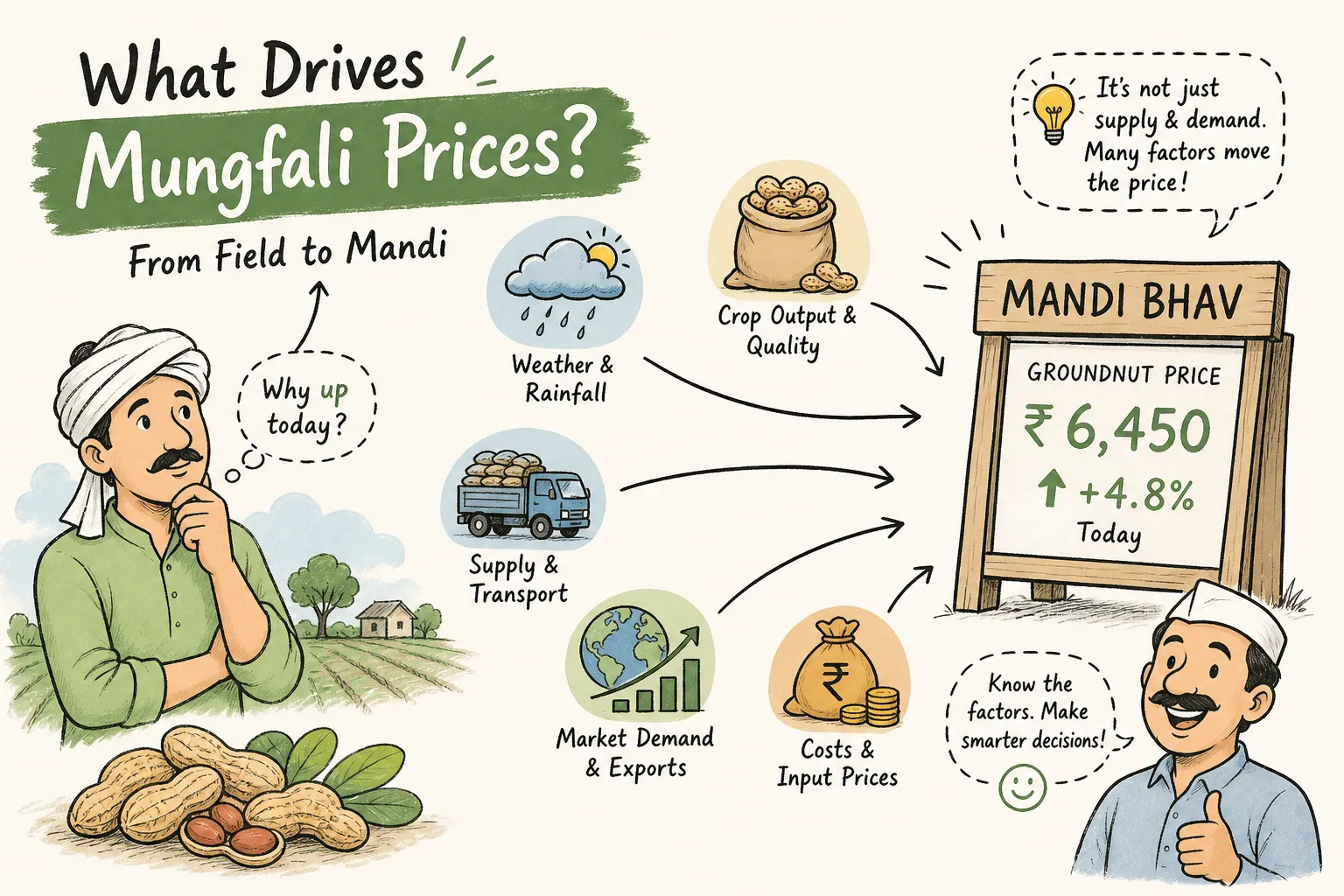
Groundnut price trends are not random. They respond to identifiable supply, demand, and policy signals. Understanding these nine oilseed market factors gives you the ability to make an informed decision: sell now, wait 60 days, or look for a different mandi.
Supply-side forces: monsoon, domestic yield, and arrival surge
Monsoon performance in Gujarat, Andhra Pradesh, and Rajasthan is the single most powerful supply-side driver of groundnut prices nationally. A weak monsoon reduces crop size, tightens supply, and firms prices. A bumper crop year increases arrivals sharply and can push mandi rates below MSP levels. The second supply factor is crop quality: a season with significant disease damage, aflatoxin contamination, or poor shelling percentage reduces effective usable supply even when the gross harvest looks large, which can support prices despite high arrivals.
The third supply factor is the post-harvest arrival surge. In the four to six weeks after the Kharif harvest, most farmers bring mungfali to the mandi simultaneously because they need immediate cash or lack storage. This concentrated selling typically creates a seasonal price trough, a pattern that recurs most years but can be moderated by strong crushing demand or government procurement activity. Farmers who can store for 60, 90 days after harvest consistently realise better rates, often ₹300, ₹600 per quintal more, once the arrival pressure eases and oil mills begin restocking.
Demand-side forces: crushing cycles, edible-oil imports, and export pull
Crushing demand from oil mills is the dominant buyer force at most groundnut mandis. When edible oil prices are firm, oil millers can afford to pay more for raw mungfali and still maintain their margin on groundnut oil sales. When cheaper imported edible oils, particularly palm oil and soybean oil, flood the domestic market, oil millers face compressed margins and reduce their buying price for raw groundnut. This import-price transmission is one of the most powerful and most misunderstood drivers of mungfali bhav.
The relationship works clearly in both directions: when global palm oil prices rise, imports become expensive, domestic crushing becomes more competitive, and millers bid more aggressively for mungfali. When palm oil is cheap, imports substitute for domestic crushing, and buying pressure at the mandi weakens. Export demand for groundnut kernels, primarily for confectionery, snack processing, and peanut butter in international markets, adds another demand layer. In strong export years, premium bold-kernel lots can trade significantly above the local base price, particularly from mandis in Gujarat's Saurashtra region.
Policy and trader behaviour: MSP, stocking cycles, and global price signals
The government's MSP for groundnut, set at ₹7,517 per quintal for 2026, 27, creates a psychological and practical floor in mandis. When open-market prices slide near the MSP, farmers hold back and government procurement agencies may activate Price Support Scheme (PSS) buying. This reduces selling pressure and stabilises rates. Farmers should register with the relevant state agency at the start of the season so they are eligible for MSP procurement if needed.
Trader and oil-mill stocking cycles create shorter-term price rhythms. When mills anticipate higher prices ahead, they build inventory aggressively, creating demand spikes at mandis. When they are over-stocked, buying cools and prices soften even if the overall supply situation has not changed. Finally, global peanut prices, influenced by production from China, Argentina, and the USA, affect India's export competitiveness and feed back into domestic mandi rates in a lagged but measurable way. When Indian groundnut is competitively priced for export, traders divert procurement to exporters, reducing local mandi supply and supporting rates.
Mungfali mandi bhav: how to check groundnut mandi rates and decide when to sell
Understanding what drives mungfali mandi bhav is only useful if you can access real-time price data to act on it. Knowing that oil mill demand is strong in your region does not help if you do not know which mandi is actually offering the best rate today.
Why mandi-wise price comparison matters before selling
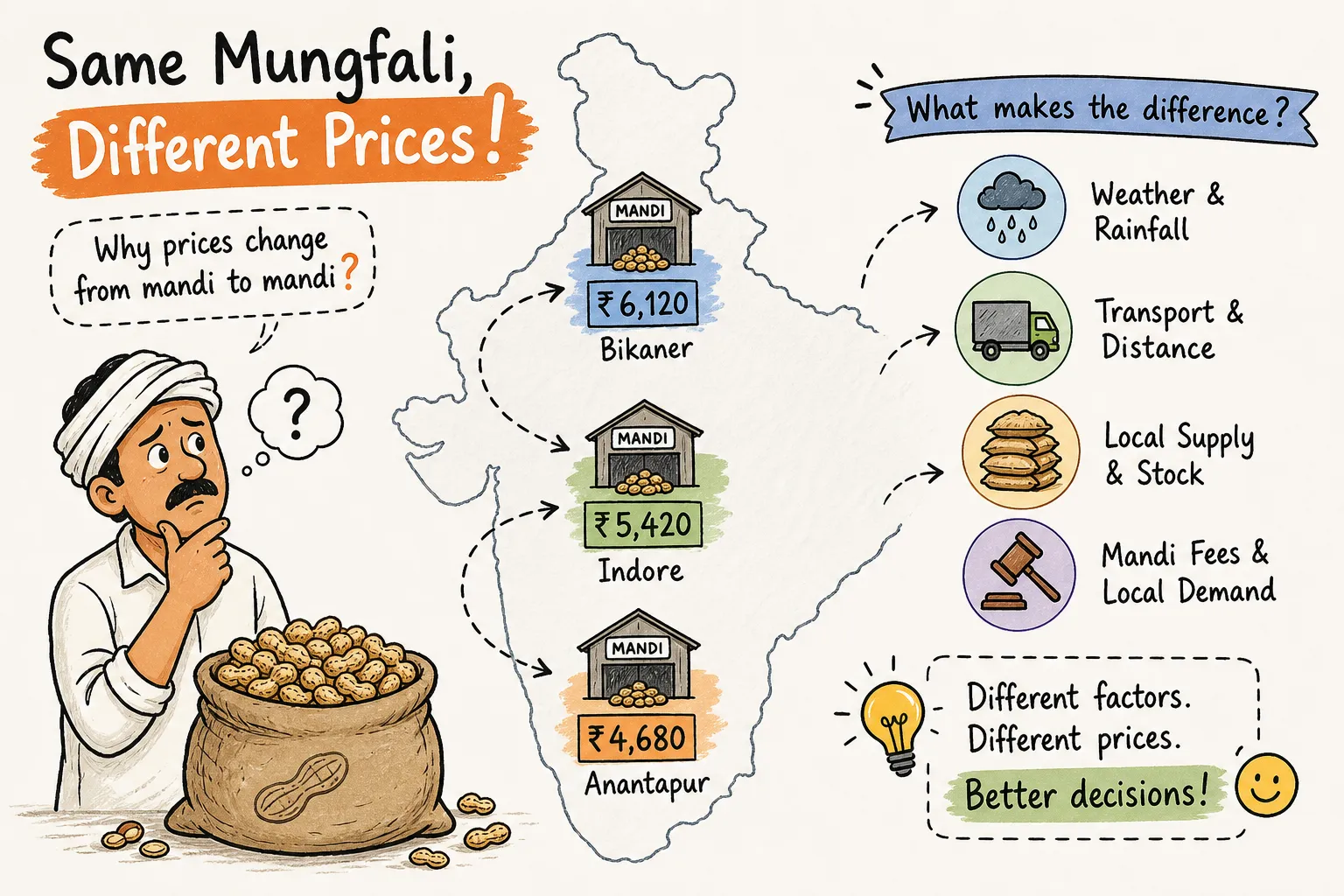
Groundnut prices vary significantly across APMC yards, sometimes by ₹200, ₹500 per quintal between nearby mandis on the same day. This variation reflects local buyer competition, the quality profile of arrivals at each yard, and trader appetite at that specific session. A farmer who checks only the nearest mandi without comparing nearby yards is regularly leaving real money on the table. On a 50-quintal lot, even a ₹300 per quintal difference amounts to ₹15,000, a figure that justifies spending five minutes on research before loading the trolley.
Using KhetiKisaan to monitor real-time mungfali mandi bhav
KhetiKisaan publishes daily mungfali mandi bhav sourced from on-ground contacts who are physically present at live APMC auction sessions across multiple mandis. The prices reflect actual transaction rates from the day's bol-chaal, not delayed government aggregates or estimated averages.
Before heading to the APMC yard, check the groundnut mandi rates across relevant centres on KhetiKisaan. The listings show mandi-wise prices per quintal in plain Hindi-English format, so you can immediately identify which yard is running a tezi (bullish) session and which is softer that day.
The inter-mandi spread on any given day makes comparison genuinely worthwhile. KhetiKisaan also covers Rajasthan mandis including Sri Ganganagar and Nohar, giving farmers in North India's Kharif belt the same groundnut price trends visibility that traders and large processors have always had access to.
Final takeaway: mungfali crop description and what affects mungfali mandi bhav
Mungfali is one of India's most commercially significant oilseed crops. Every decision a farmer makes, from variety selection and sowing date to post-harvest drying and choice of APMC yard, connects directly to the price received. The two halves of this article are not separate topics; they are the same topic. Better agronomy protects oil content. Better post-harvest handling protects moisture and grade. Better market intelligence protects the price you receive for the quality you have worked to produce.
The nine factors driving mungfali mandi bhav are now visible to you: monsoon performance, arrival surge timing, crop quality, crushing demand, edible-oil import prices, export demand, MSP policy, trader stocking cycles, and global peanut price signals. No single factor operates alone, but knowing the pattern helps you recognise the conditions under which holding stock makes sense versus selling immediately.
This mungfali crop description and what affects mungfali mandi bhav comes down to one practical conclusion: a groundnut farmer who monitors his quality parameters from field to storage and checks daily groundnut mandi rates on KhetiKisaan before selling is operating with the same information advantage that traders and large processors have always had. That gap is now closable. Use it.
Mungfali Bhav Aaj Ka
Mungfali Bhav Aaj Ka assists farmers in knowing the recent groundnut prices in various mandis. Groundnut/mungfali is a significant oilseed crop in India. It is cultivated in numerous regions and utilized in oil and food.
Mungfali is mainly a Kharif crop and is sown from June to July. It is also grown in summer from January to February where water is available. The crop grows well in warm weather and needs good sunlight. It gives better yield in sandy or sandy loam soil. Heavy soil is not suitable as the pods grow inside the soil.
Mungfali has a special growth where the pods develop under the soil after flowering. Farmers can find it helpful due to its ability to enrich the soil. The plants and leaves are utilized after harvest as animal feed.
Mungfali is in good demand because it is used by oil mills and in food products. Export demand also affects the market price.
Key Factors Affecting Mungfali Bhav
- Dry and clean pods get a better price
- Low moisture is important
- Good shell quality gives a higher rate
- Bright and clean produce is preferred
- Demand in the market affects rates
The changes are based on quality and demand. Farmers check Mungfali Bhav Aaj Ka daily to know the right time to sell and get better value for their crop.
| Mandi | Price | Date |
|---|---|---|
| Nohar | 7,601.00/- | 25 Sep, 2026 |
| Rawastar | 8,400.00/- | 24 Sep, 2026 |
| Bikaner | 7,400.00/- | 25 Sep, 2026 |
| Neemuch MP | 8,200.00/- | 25 Sep, 2026 |
| Mandsaur MP | 7,750.00/- | 25 Sep, 2026 |
| Sardarshahar | 7,205.00/- | 25 Sep, 2026 |
| Phalodi | 7,200.00/- | 25 Sep, 2026 |
| Shamgarh MP | 6,504.00/- | 25 Sep, 2026 |
| Nimbahera | 8,070.00/- | 25 Sep, 2026 |
| Ellenabad | 7,400.00/- | 25 Sep, 2026 |
| Pugal Road | 7,153.00/- | 25 Sep, 2026 |
| Chaksu | 6,655.00/- | 25 Sep, 2026 |
| Chomu | 8,034.00/- | 25 Sep, 2026 |
| Bassi | 7,000.00/- | 25 Sep, 2026 |
| Dausa | 7,550.00/- | 25 Sep, 2026 |
| Lalsot | 6,515.00/- | 25 Sep, 2026 |
| Barisadri | 6,900.00/- | 25 Sep, 2026 |
FAQ's
Related Blogs
 Sep 08, 2026
 by Pankaj Sihag