





Complete Guide to Wheat Farming: From Sowing to Harvest in Simple Steps
 Jun 26, 2026
 by Pankaj Sihag



Complete Guide to Wheat Farming: From Sowing to Harvest in Simple Steps
- Sow wheat between late October and mid-November for better yield.
- Well-drained loamy or clay-loam soil with a pH of 6.0 to 7.0 is best for wheat cultivation in India.
- Water at 20 to 25 days without fail. The crown root initiation (CRI) stage is the most important irrigation stage.
- The MSP for wheat is ₹2,585 per quintal for 2026–27. Actual profit depends on yield, input costs, and local mandi rates.
- Harvest when the straw turns dry and the grains harden, usually between March and April.
 Table of Contents
- Why Gehun Is Still One of India’s Most Reliable Rabi Crops
- What Kind of Soil Does Wheat Need?
- How to Prepare Your Field Before Sowing
- Choosing the Right Wheat Variety for Your Region
- When and How to Sow Wheat
- Fertiliser Application: What Wheat Needs
- How to Irrigate Wheat Crop at the Right Stages
- Wheat Growth Stages: From Germination to Maturity
- When and How to Harvest Wheat
- Final Thoughts
- FAQs
Why Gehun Is Still One of India’s Most Reliable Rabi Crops
Wheat farming is simple when the right work is done at the right time. Gehun is India’s second most important food crop after rice.
It has strong demand across the country, and in many major wheat-growing states, government procurement under minimum support price (MSP) gives farmers the necessary support.
The wheat cultivation guide for farmers in India comes down to knowing the right sowing time, irrigation timing, seed variety, and crop care. Whether you farm 1 acre or 10, the basics stay the same.
States like Uttar Pradesh, Punjab, Haryana, Madhya Pradesh, and Rajasthan are among India’s biggest wheat producers.
What Kind of Soil Does Wheat Need?
The soil requirement for wheat is simple. Wheat grows best in loamy soil, which means soft and fertile soil that holds enough moisture but drains extra water easily.
Avoid low-lying fields where water stays for too long, as this can damage the roots.
Key conditions to target:
- pH between 6.0 and 7.0
- Deep, well-drained, free of stones or gravel
- Apply 10 to 15 tonnes of farmyard manure (FYM) per hectare, 20 to 25 days before sowing
- If the crop shows zinc deficiency, apply zinc sulphate based on soil test advice
The alluvial (river-made) soils of UP, Punjab, Haryana, and Bihar are naturally ideal. The heavy, moisture-holding soils found in parts of Madhya Pradesh and Maharashtra also support wheat farming well.
How to Prepare Your Field Before Sowing
Good land preparation ensures even germination and strong roots. Five steps you have to take:
- After the kharif harvest (paddy or maize), plough deep to break up compacted soil.
- Harrow or rotavate 2 to 3 times to get a fine, crumbly seedbed.
- Level the surface with a traditional or laser leveller to prevent waterlogging in low spots.
- Work FYM or compost evenly into the soil before the final ploughing round.
- If white ants are common in your field, treat the soil or seeds with the recommended pesticide after checking with your local Krishi Vigyan Kendra (KVK) or agriculture officer.
If the field is dry after the monsoon crop, give one pre-sowing irrigation before planting. In many areas, farmers call this palewa. It helps bring moisture into the soil and makes field preparation easier.
Choosing the Right Wheat Variety for Your Region
Seed selection is one of the important farming practices wheat growers can use to improve output. The right variety for your local climate can improve crop performance and help reduce disease risk.
|
Region |
Recommended Varieties |
|---|---|
|
North India (Punjab, Haryana, UP, Rajasthan) |
HD 2967, PBW 550, DBW 187, PBW 343 |
|
Central India (MP, semi-arid Rajasthan) |
GW 322, HD 2781, HI 1544 |
|
Eastern Plains (Bihar, Jharkhand, West Bengal) |
HD 2967, HD 3086, MACS 6222, DBW 173 |
When and How to Sow Wheat
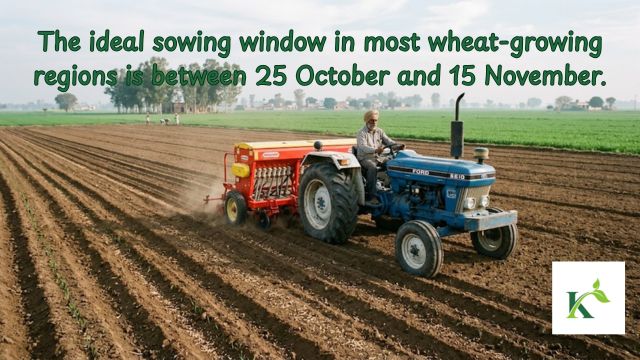
Late sowing is one of the biggest reasons for lower wheat yield. The ideal sowing window in most wheat-growing regions is between 25 October and 15 November.
Late sowing usually reduces yield because the crop gets less cool weather for proper grain development.
These farming practices wheat growers follow can improve sowing quality:
- Use a seed-cum-fertiliser drill for line sowing.
- Keep row spacing between 20 and 22 cm.
- Sow seeds at 5 to 6 cm depth.
- Use 100 to 120 kg seed per hectare for timely sowing.
- Increase to 125 kg per hectare for late sowing.
A seed drill places the seeds evenly at the right depth and distance. This helps the crop grow evenly and reduces seed wastage compared to scattering seeds by hand.
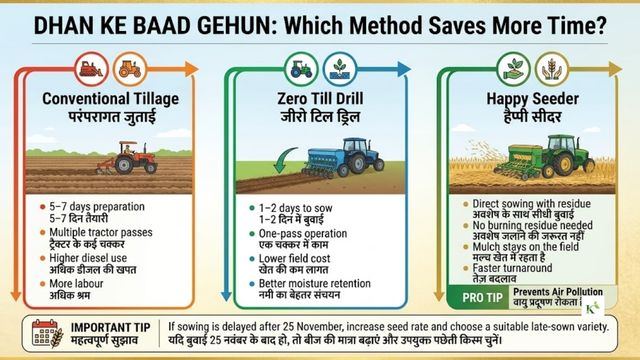
In zero tillage, wheat seeds are sown directly into the field after paddy harvest without ploughing or clearing the soil fully.
A zero-till seed drill places the seeds between the leftover paddy stalks. This saves fuel and labour, and helps keep moisture in the soil. Many farmers in Punjab and Haryana now use this method.
FIRB (raised-bed sowing) can help save irrigation water compared to flat sowing.
Fertiliser Application: What Wheat Needs
Balanced fertiliser use is part of good crop management for wheat.
Before applying fertilisers, farmers should understand that wheat needs proper nutrition in stages, not all at once.
Standard recommendation for irrigated wheat:
- Nitrogen (N): 80 to 120 kg/hectare
- Phosphorus (P₂O₅): 40 to 60 kg/hectare
- Potash (K₂O): 40 kg/hectare
Split application:
At the time of sowing: Mix the full dose of phosphorus and potash into the soil, along with half of the nitrogen.
At the CRI stage (20 to 25 days after sowing): Apply the remaining nitrogen. This helps the plant develop stronger roots and more tillers.
In sandy soils, split urea into more doses to reduce nutrient loss.
How to Irrigate Wheat Crop at the Right Stages
Proper irrigation wheat crop planning helps maintain crop health and grain weight.
Farmers should not water randomly. Wheat responds best when irrigation matches important growth stages.
|
Stage |
Days After Sowing (DAS) |
Importance |
|---|---|---|
|
Crown Root Initiation (CRI) |
20–25 days |
Establishes root strength and early tillering |
|
Tillering |
40–45 days |
Promotes better and more robust tiller development |
|
Jointing |
70–75 days |
Supports active upward stem growth |
|
Flowering |
90–95 days |
Crucial for healthy grain setting |
|
Milk / Dough Stage |
110–115 days |
Essential for final grain filling and weight |

Wheat Growth Stages: From Germination to Maturity
Understanding wheat growth stages helps farmers take action at the right time.
Here is what happens at each stage:
|
Stage |
Days |
What Happens |
Action |
|---|---|---|---|
|
Germination |
0–7 |
Seeds sprout |
Keep soil moist |
|
Seedling |
7–21 |
First leaves appear |
Check for termites |
|
Tillering |
21–50 |
Side shoots form |
Irrigate (CRI) + add nitrogen |
|
Jointing |
50–75 |
Fast upward growth |
Spray weeds (by day 45) |
|
Booting |
75–90 |
Earheads emerge |
Avoid unnecessary movement in the field and keep the crop stress-free |
|
Milking/Dough |
90–115 |
Grains fill up |
Watch for wind damage |
|
Maturity |
115–130 |
Field turns golden |
Harvest time |
When and How to Harvest Wheat
Harvesting at the right time is just as important as sowing.
Farmers should look for these signs:
- Grains become hard
- Straw turns yellow and dry
- Earheads dry properly
This usually happens between March and April.
Harvesting tips:
- Harvest at 15–20% grain moisture.
- Use sickles or combine harvesters depending on farm size.
- Dry grains in sunlight after threshing.
- Reduce moisture to around 12% before storage.
- Store in clean, dry and ventilated bags or bins.
Under good irrigated conditions, wheat yield often ranges between 18 and 25 quintals per acre, depending on variety, weather, and crop care.
Key Steps for Better Yield:
- Soil: Loamy/clay-loam, pH 6–7
- Sowing window: 25 Oct – 15 Nov
- Seed rate: 100–120 kg/hectare
- Critical irrigation: CRI (20–25 DAS)
- MSP 2026–27: ₹2,585/qtl
- Harvest: March–April
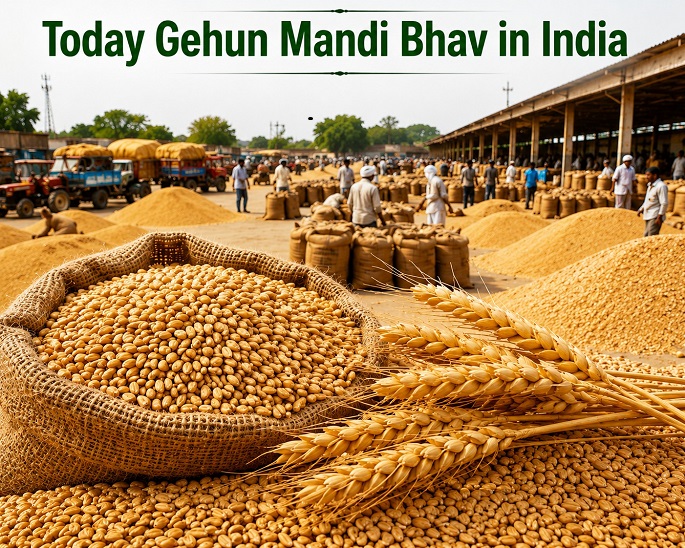
Check daily wheat mandi bhav before selling.
Final Thoughts
This wheat cultivation guide in India shows that a successful crop depends on doing simple things at the right time, like timely sowing, proper irrigation, balanced fertiliser use, and careful harvesting.
The MSP gives farmers price support, but actual returns depend on crop yield, grain quality, and local market conditions.
Before selling your gehun, check the live wheat mandi bhav on KhetiKisaan. Comparing nearby mandi prices can help farmers make better selling decisions.
FAQs
Related Blogs

Sep 10, 2026
by Pankaj Sihag
Sep 03, 2026
by Pankaj Sihag

Aug 27, 2026
by Pankaj Sihag
Aug 26, 2026
by Pankaj Sihag