










Blog Listing

 Sep 19, 2026
 by Pankaj Sihag
Isabgol ki kheti: Complete guide for farmers
Isabgol ki kheti is one of the highest-value rabi fasals (winter crops) a Rajasthan farmer can grow, yet most small kisaans still treat it as an afterthought planted on leftover land with leftover effort. That approach leaves serious money on the table. Isabgol (psyllium husk, botanically known as Plantago ovata) commands current mandi bhav (market rates) ranging from ₹12,000 to ₹18,000...
 Continue Reading

Sep 19, 2026
by Pankaj Sihag
APMC mandi vs e-NAM: which pays you more per quintal?
e-NAM is active in 1,656 mandis across 23 states and 4 Union Territories Rajasthan leads all states in e-NAM trading volume: 66.09 lakh metric tonnes in FY 2024, 25 Cumulative trade on e-NAM has crossed ₹4.84 lakh crore since launch Studies document 5% to 34% higher price realisation in e-NAM-integrated mandis Farmer registration on e-NAM is completely free When decidin...
Sep 14, 2026
by Pankaj Sihag
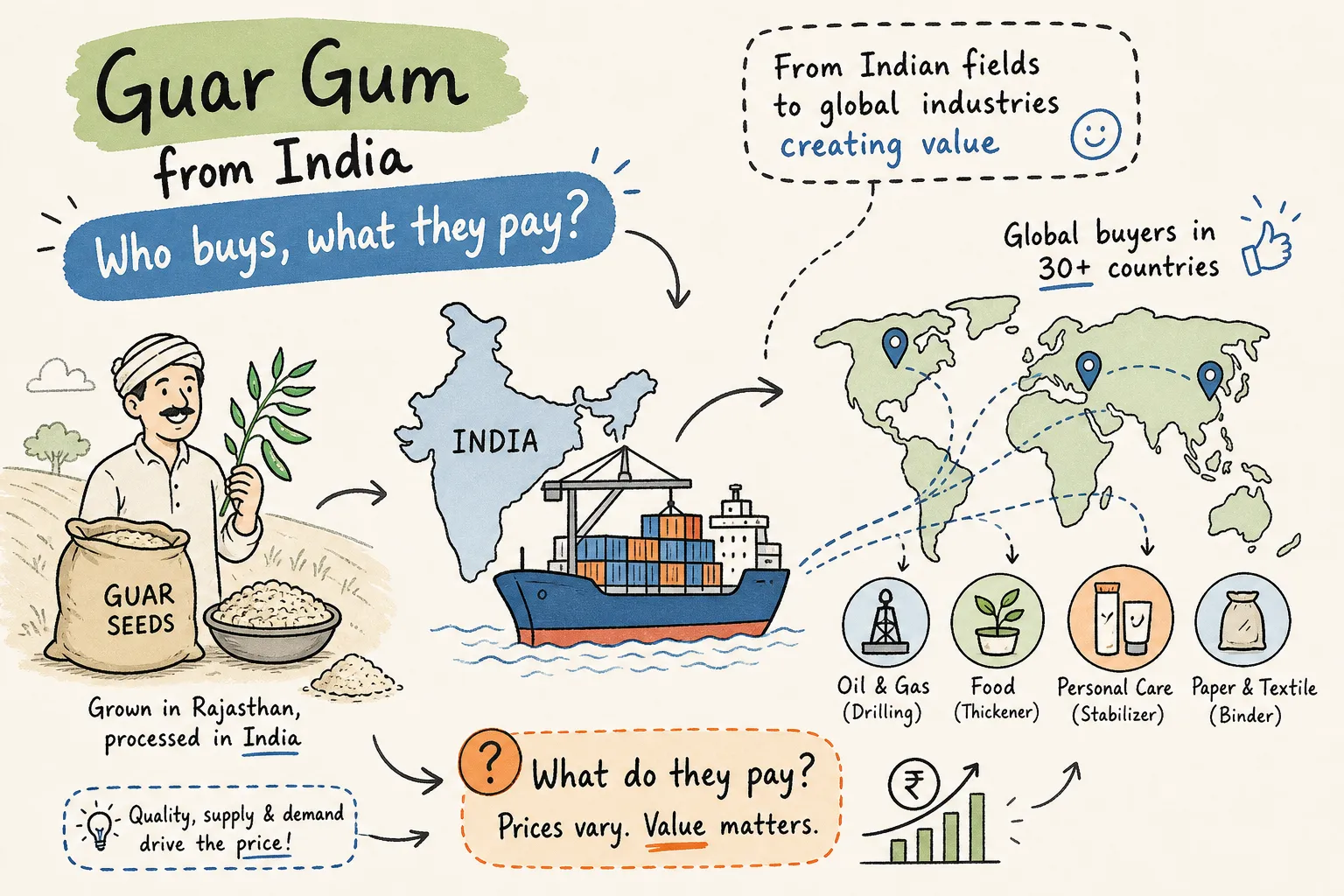
Guar gum exports from India: who buys, what they pay
Guar gum export from India reached over 4.74 lakh metric tonnes in FY25, earning more than USD 550 million in foreign exchange. That figure belongs to a crop grown largely on dry, rocky soil in Rajasthan's Barmer, Bikaner, and Nagaur districts, the same crop a kisaan there may call simply "gwar." Today, that gwar is pressurising oil wells in Texas, thickening yoghurt on sup...

Sep 12, 2026
by Pankaj Sihag
Narma vs Desi Cotton: Which Gives More Profit Per Acre?
Which cotton variety gives better profit, narma or desi cotton? Every kharif season, cotton growers in Rajasthan and Haryana face exactly this question: plant narma (Bt hybrid upland cotton) or stick with desi kapas? The instinct is to chase narma's higher raw yield. But yield per acre is only one piece of the profit equation, and chasing it without running the full numbers has cost...

Sep 11, 2026
by Pankaj Sihag
Online mandi vs local APMC: where do farmers earn more?
Every harvest season, kisaans (farmers) across Rajasthan, Haryana, and Punjab face the same decision: online mandi vs local APMC, which channel delivers more munafa (profit) per quintal after all deductions? The local APMC mandi is familiar. You know the arthiya (commission agent), you know the weighing shed, and you know roughly what to expect. But e-NAM promises wider competition, more...

Sep 11, 2026
by Pankaj Sihag
How Much Fibre Is in Isabgol and Why It Matters for Farmers Too
Most people reach for isabgol (psyllium husk) when their digestion needs help, but very few stop to ask what actually makes it work. The fibre in isabgol is the answer: roughly 4 grams packed into a single teaspoon, and close to 80 grams in every 100 grams of the dry husk. That is not just a health statistic; it is the reason isabgol commands strong prices at APMC mandis across Rajasthan...

Sep 10, 2026
by Pankaj Sihag
When to sell wheat after harvest to maximise price
Harvest window (Rajasthan & MP) Late March to mid-April Harvest window (Punjab) Mid-April to early May Harvest window (Haryana) Mid-April to late April Harvest window (UP) Early April to late April Price bottom April, when mandi arrivals peak across North India Mild recovery wind...
Sep 10, 2026
by Pankaj Sihag
How to Grow Isabgol in Rajasthan for Maximum Yield
Learning how to grow isabgol crop in Rajasthan for maximum yield is one of the most valuable agronomic decisions a rabi-season farmer can make. Isabgol (psyllium husk, botanically Plantago ovata) is among the most profitable winter crops available in the state. Kisaans who ask us at KhetiKisaan about high-value winter alternatives consistently return to isabgol, and for good reason. Raja...
Sep 08, 2026
by Pankaj Sihag
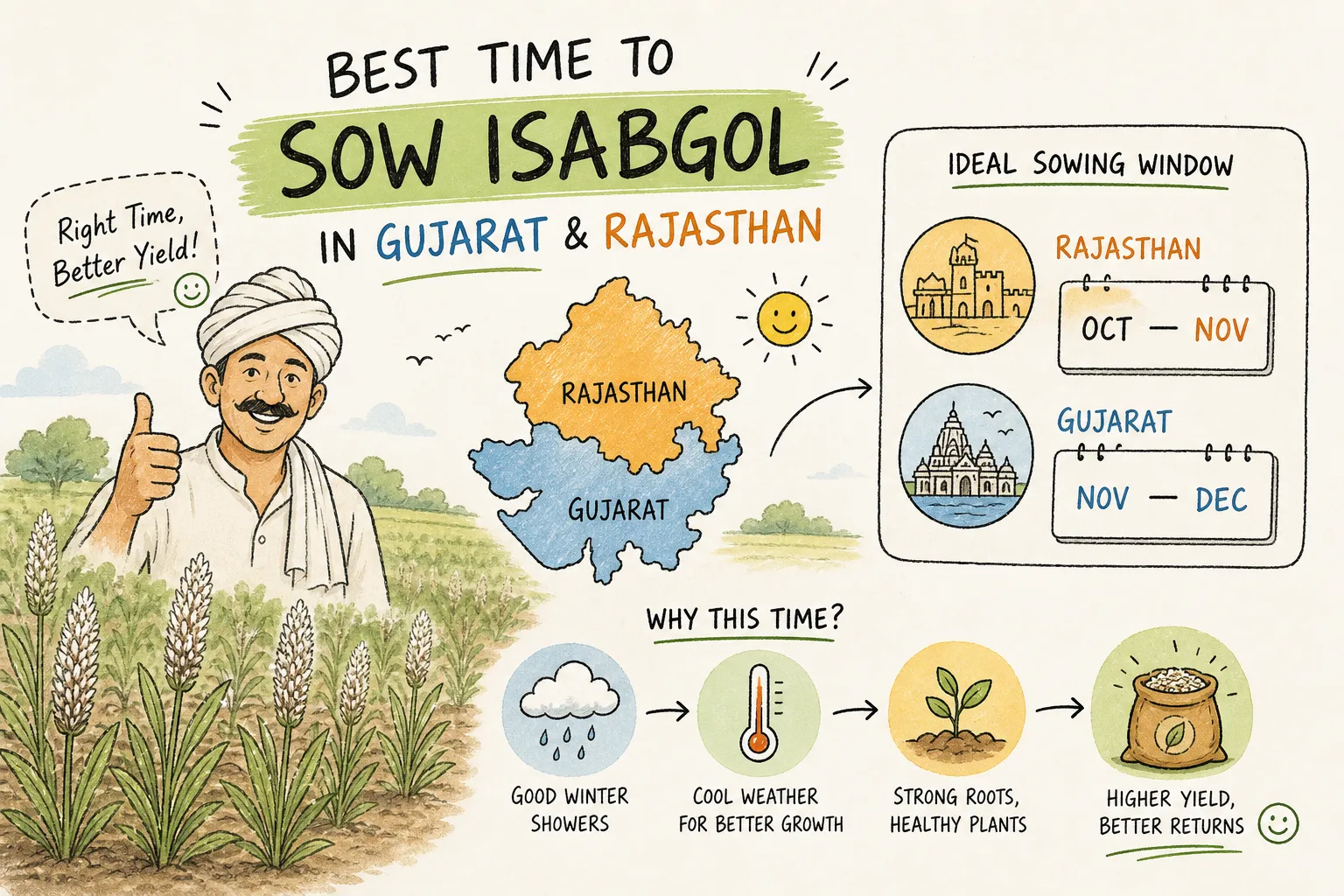
Best Time to Sow Isabgol in Gujarat and Rajasthan
What is the best time to sow isabgol in Gujarat and Rajasthan? The answer is November, with the core optimum window falling between the first and third weeks of November across most growing districts. That said, both states have distinct agro-climatic zones, so "November" is not a blanket answer for every farmer. The right window in Banaskantha looks slightly different from Bik...
Sep 08, 2026
by Pankaj Sihag
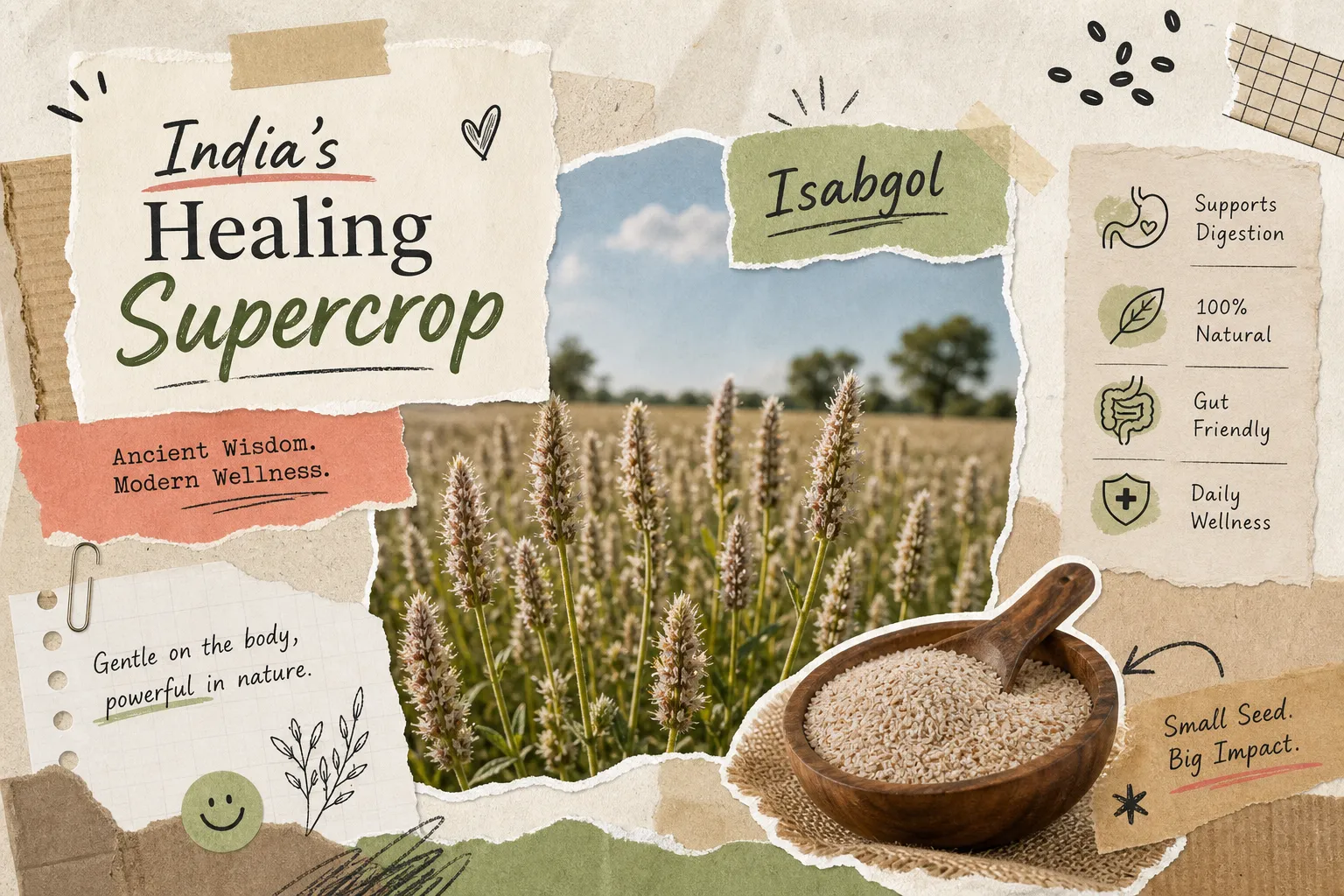
Isabgol: Complete Guide to India's Most Valuable Medicinal Crop
Botanical name Plantago ovata Crop type Rabi medicinal crop Top growing states Rajasthan, Gujarat India's global share ~85% of world psyllium husk supply Main uses Digestive health, cholesterol management, pharmaceutical ingredient Common forms Psyllium husk powder, capsules,...
Sep 08, 2026
by Pankaj Sihag
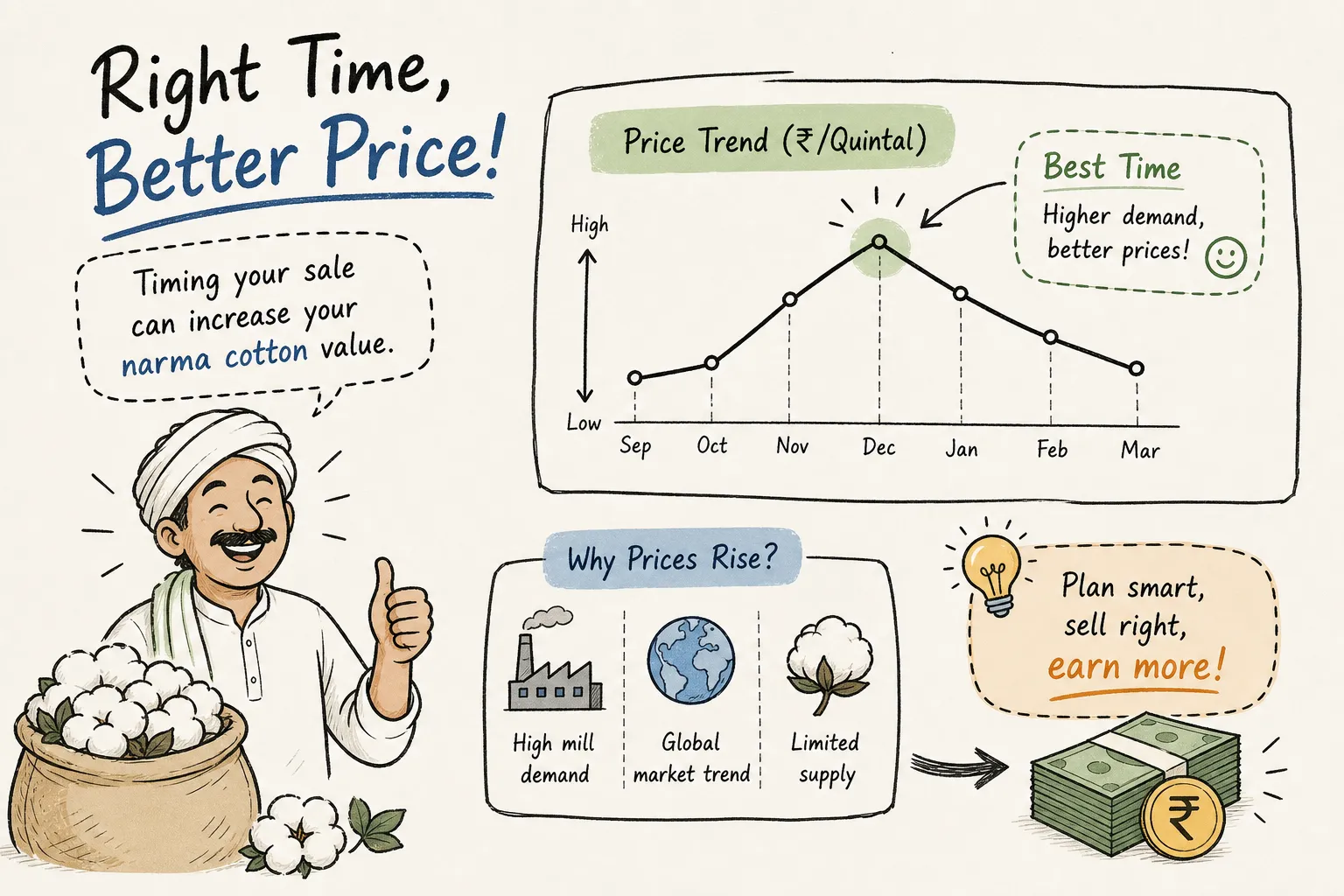
Best Time to Sell Narma Cotton for Maximum Price in India
Knowing the best time to sell narma can add thousands of rupees per quintal to your seasonal revenue, yet many narma growers sell at the worst possible time: right after harvest, in October or November, when every other farmer in the region is doing exactly the same thing. Large volumes hit the mandi simultaneously, traders have all the bargaining power, and you end up accepting whatever...
Sep 07, 2026
by Pankaj Sihag
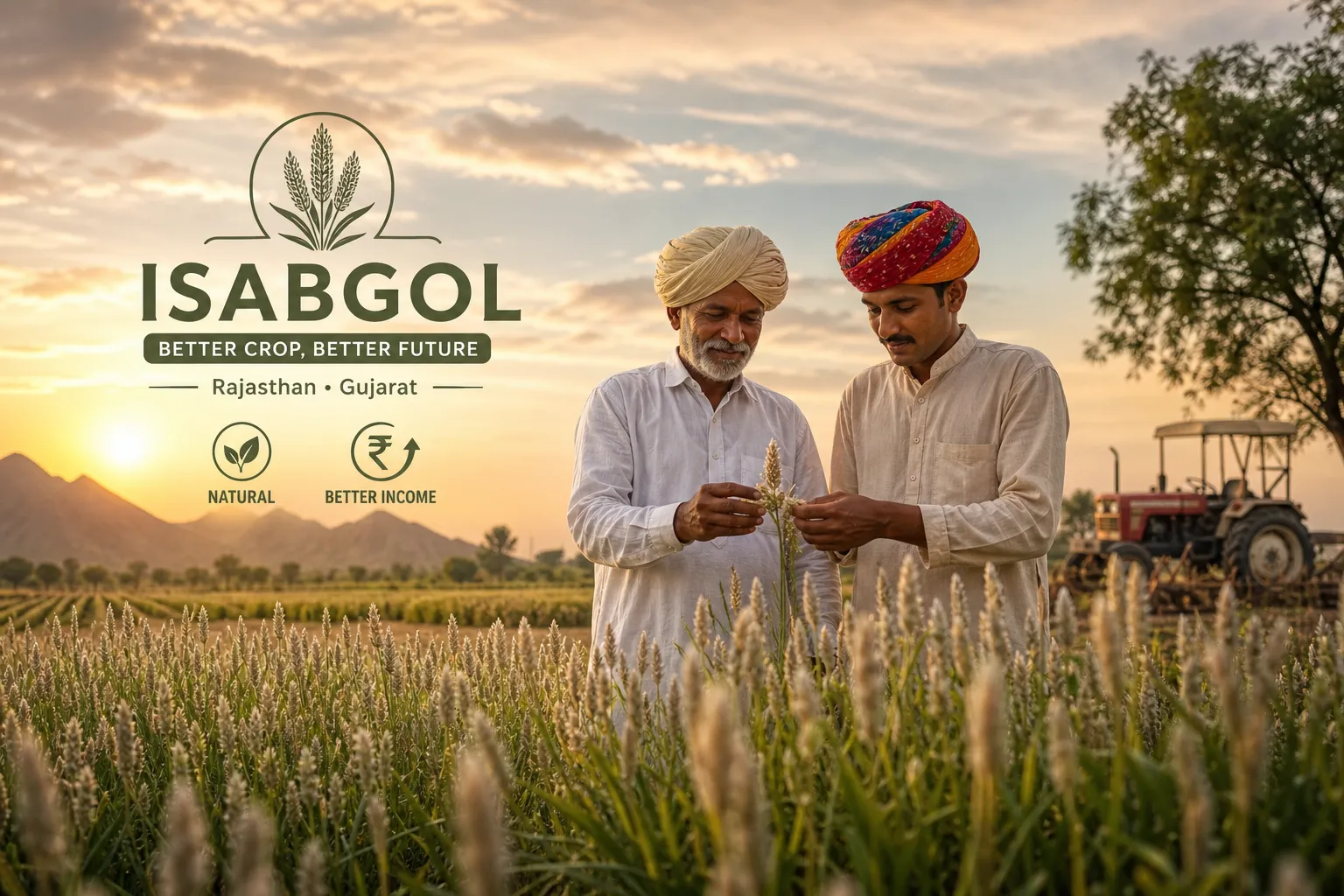
Isabgol cultivation guide for Rajasthan and Gujarat farmers
Crop type Rabi (winter season) Key growing states Rajasthan, Gujarat Sowing window Mid-November to mid-December Expected seed yield 8, 12 quintals per hectare Expected husk yield Approx. 3, 4 quintals per hectare (≈25, 30% of seed weight) Primary use Psyllium husk for pharm...
Sep 04, 2026
by Pankaj Sihag
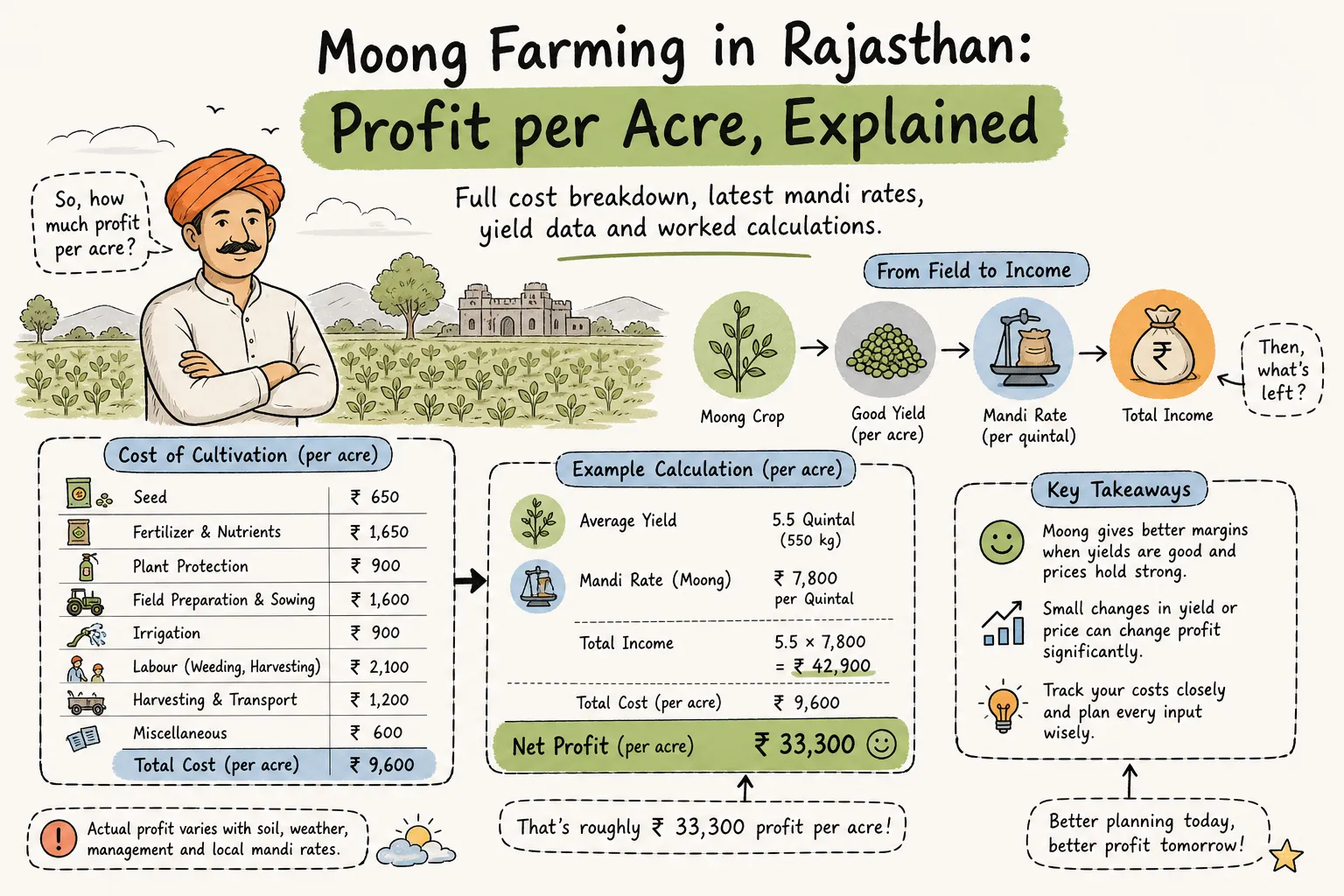
Moong Farming in Rajasthan: Profit per Acre Breakdown
Quick Facts: How much profit can a farmer make per acre from moong cultivation in Rajasthan Typical moong yield per acre in Rajasthan by season: approximately 1.2 quintal/acre (rainfed kharif) to 6.1, 7.3 quintal/acre (zaid/summer irrigated) Typical cultivation cost per acre: ₹12,000 to ₹16,000 for an irrigated crop Current mandi bhav (market price): ₹5,500 to ₹8,400 per quinta...

Sep 04, 2026
by Pankaj Sihag
Green gram cultivation guide for North Indian farmers
Moong (green gram), known botanically as Vigna radiata, is one of the few kharif crops that fits neatly into a 60, 75 day window, fixes nitrogen in the soil for the next fasal, and can return a decent munafa even in semi-arid conditions. For a Rajasthan or Haryana kisaan working with sandy loam soil and uncertain rainfall, that combination is hard to beat. The crop demands relatively mod...
Sep 03, 2026
by Pankaj Sihag
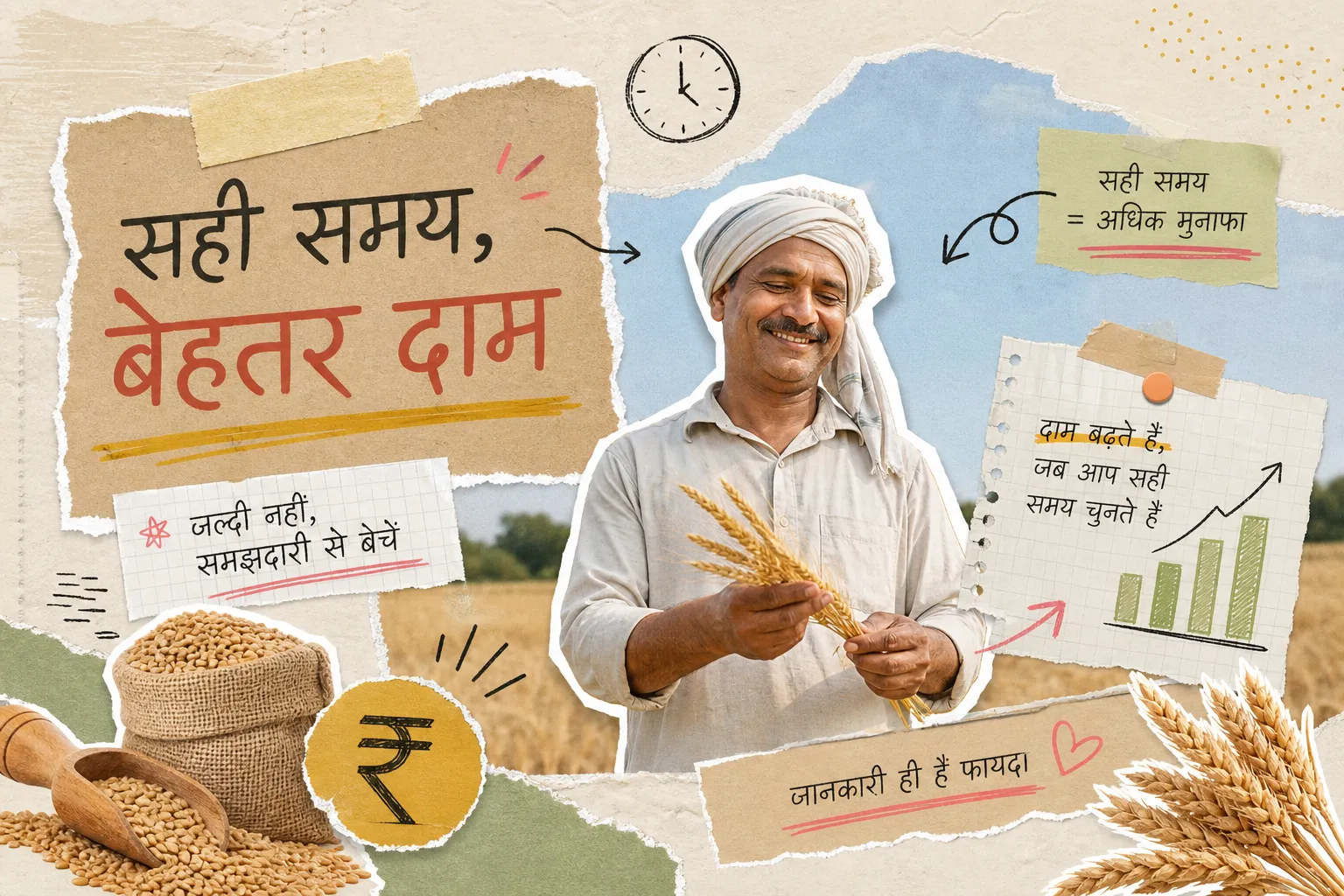
Gehun bechne ka sahi samay: sell wheat at the right time
Wheat MSP 2026-27: ₹2,585 per quintal (up ₹160 from last year) Procurement window: April to June in most states; UP: 30 March, 15 June 2026; Punjab and Haryana: till 31 May 2026; Rajasthan and MP: till 15 June 2026 Typical post-harvest mandi rate: Often ₹50, ₹150 below MSP in April, May (based on APMC spot-price data from major North India mandis) Best open-mar...
Aug 27, 2026
by Pankaj Sihag
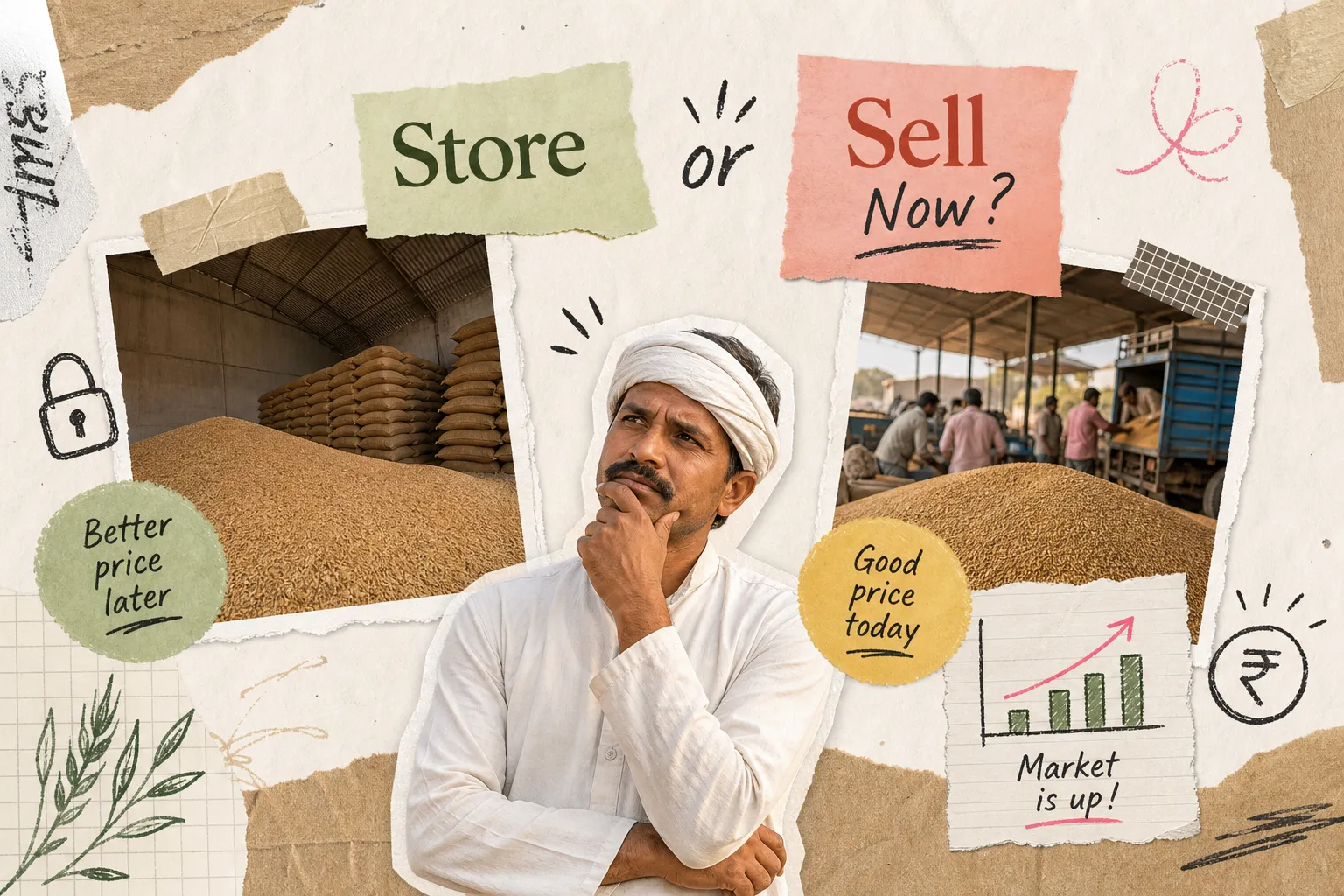
Store wheat after rabi harvest or sell it right away?
The moment gehun (wheat) arrives at the threshing floor, the pressure begins. Buyers are calling, the mandi is buzzing, and you are staring at a storage shed that may or may not be ready. Should you store wheat after the rabi harvest or sell immediately? This is one of the most financially significant calls a kisaan makes each year. Get it right and you capture an extra ₹100, ₹200 per qu...
Aug 24, 2026
by Pankaj Sihag
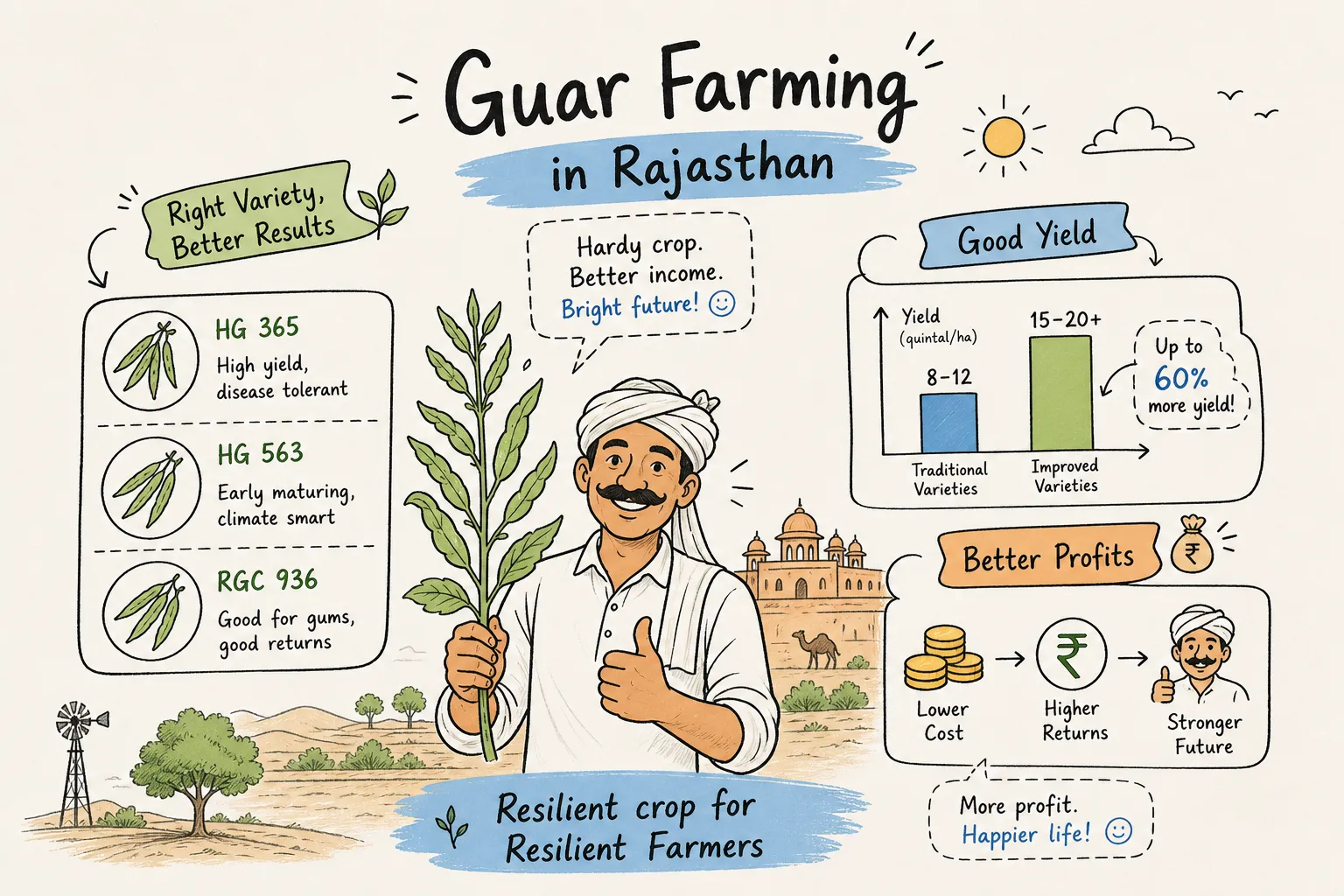
Guar Farming in Rajasthan: Varieties, Yield and Profits
Crop type Kharif legume (cluster bean / gawar) Sowing window June to mid-July (rainfed); 15, 30 June (irrigated) Maturity 80 to 100 days depending on variety Average yield 4 to 12 quintals per hectare Current mandi bhav ₹5,150, ₹6,050 per quintal (Rajasthan APMCs) Key mandis...
Aug 22, 2026
by Pankaj Sihag
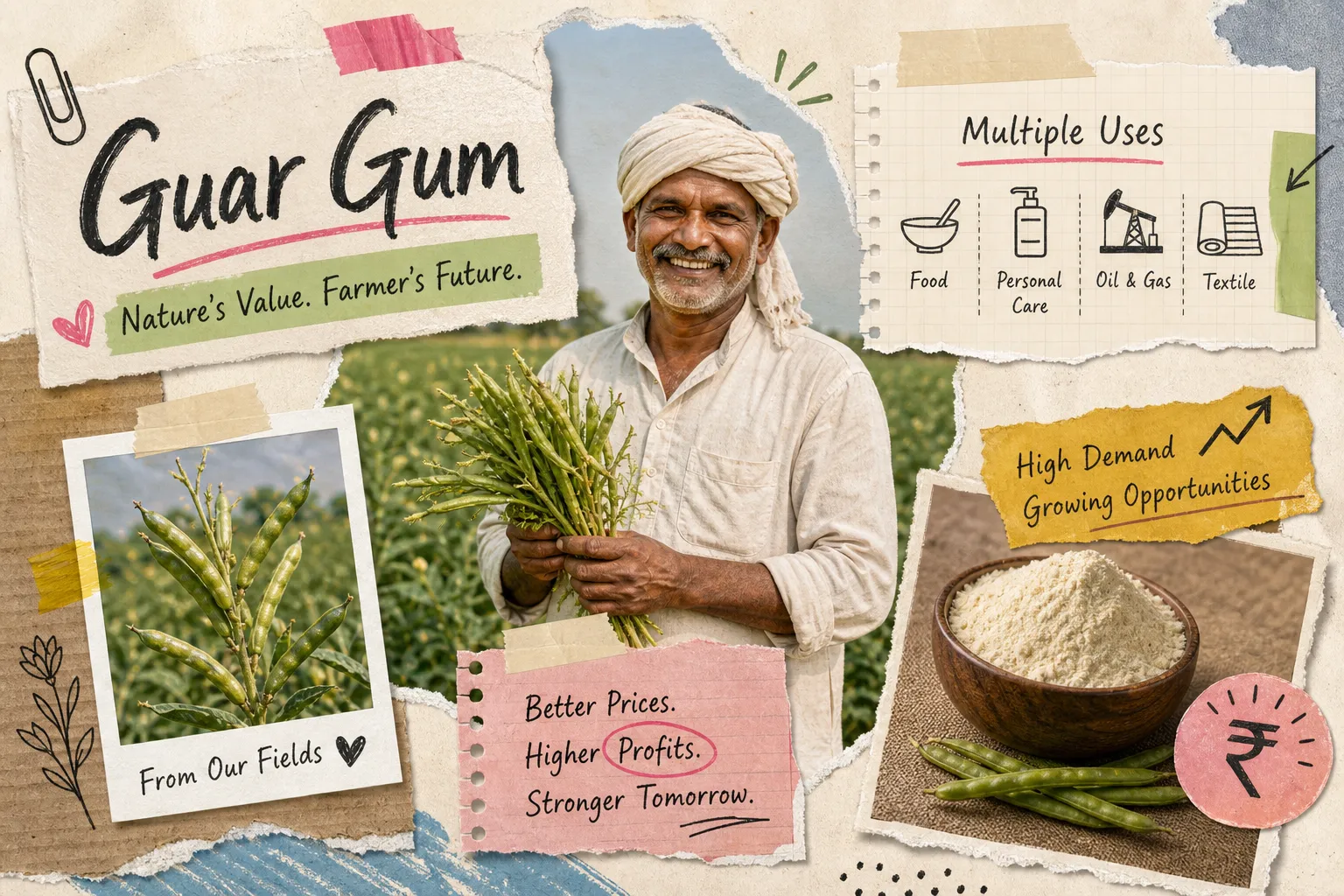
Guar gum benefits in India: uses, prices and farmer profits
India produces 80, 85 per cent of the world's guar gum, with Rajasthan contributing the largest share of cultivation. Guar gum carries the food additive code E412 and is used in ice cream, sauces, noodles, and gluten-free bakery products worldwide. Roughly 90 per cent of India's guar gum exports go to the oil and gas sector, not the food industry. As of...

Aug 20, 2026
by Pankaj Sihag
Best Moong Varieties for High Yield in North India
Quick Facts Details Best sowing seasons Kharif (mid-June to early July) and Zaid/Spring (mid-March to April) Top varieties Pusa Vishal, MH-421, SML-668, Virat (IPM 205-7), ML 818, Sheela Average yield range 8, 13 q/ha in official trials; exceptional irrigated plots with intensive management may reach higher depending o...
Aug 17, 2026
by Pankaj Sihag
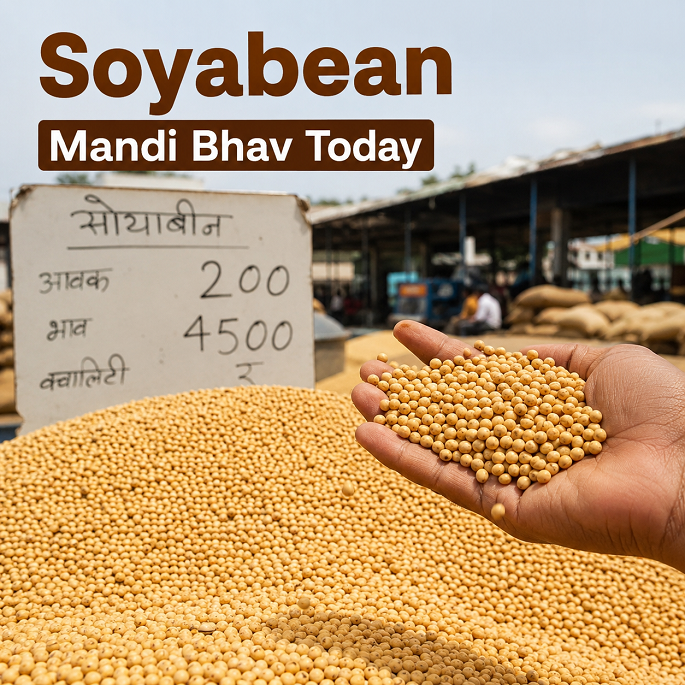
Soyabean Mandi Bhav Today for Better Market Prices
Monitoring the daily prices of soybean assists farmers make decisions towards making better sales. Checking Soyabean Mandi Bhav Today before visiting the mandi gives the current market rates and also enhances confidence when selling crops. Daily, the prices are varied with the demand, the arrivals, as well as local trading activity. The sale of outdated information can decreas...
Aug 15, 2026
by Pankaj Sihag
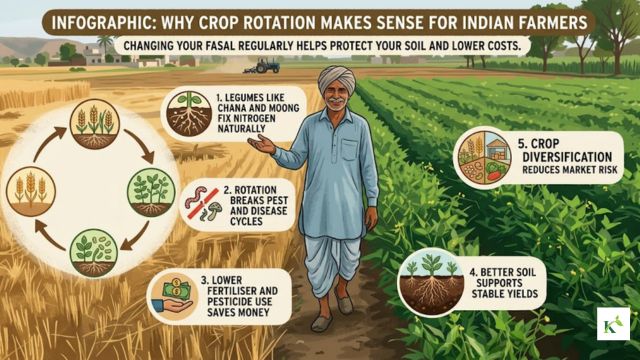
Why Crop Rotation is Important: Should Farmers Change Crops Every Season?
The benefits of crop rotation include better soil health, lower fertiliser costs, fewer pests, and more stable yields over time. Growing the same fasal on the same zameen year after year drains nutrients and allows pests to build up. Nitrogen-fixing crops like chana, moong, and arhar naturally replenish soil nitrogen and reduce urea dependency. Common crop rotation patterns in P...

Aug 14, 2026
by Pankaj Sihag
How to Improve Soil Fertility for Long-Term Farming Benefits
Soil fertility improvement methods like compost, green manure, and crop rotation can raise yields. Regular soil testing through the Soil Health Card scheme helps identify nutrient gaps and improves fertiliser use. Experts recommend combining organic and chemical fertilisers instead of relying on just one. Government schemes like PKVY and PM-PRANAM support kisaans moving towards...
Aug 02, 2026
by Pankaj Sihag
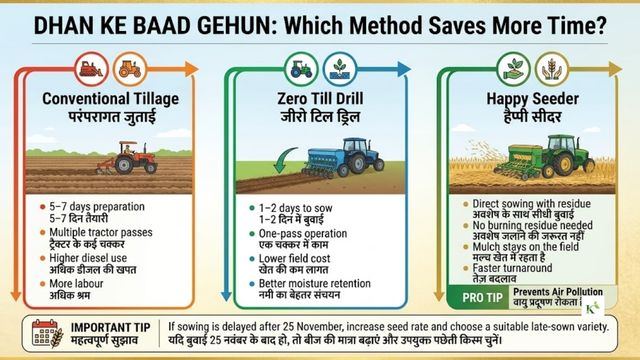
How to Prepare Gehun Field After Dhan Harvest and Save Time
Delaying gehun sowing after mid-November can reduce yield because the crop gets less cool weather to produce side shoots (tillers) and complete grain filling properly. Zero tillage gehun sowing saves 3–5 days of field preparation and can lower cultivation cost compared to repeated tillage. A gehun zero till drill machine lets you sow directly into dhan resi...
Jul 16, 2026
by Pankaj Sihag
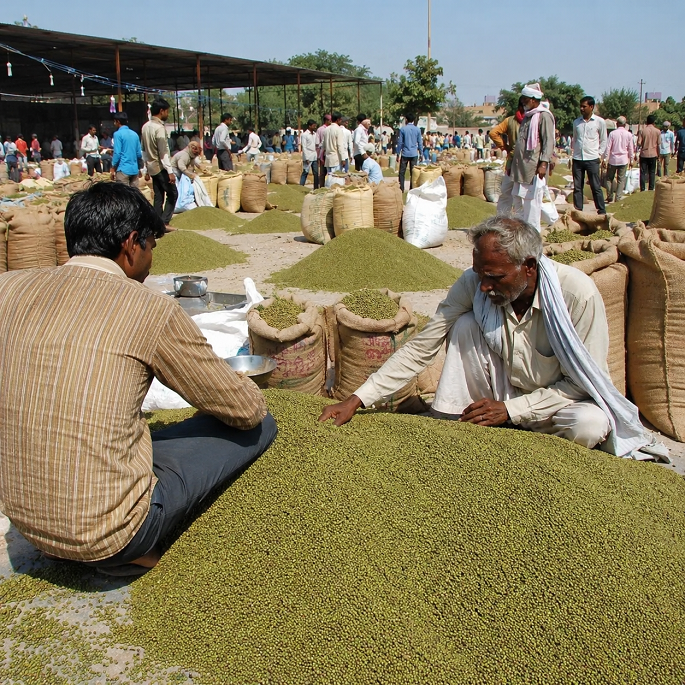
Market Signals Behind Guar Mandi Bhav Today and Farm Trends
Many farmers depend on market information before selling their crops. Tracking Guar Mandi Bhav Today helps farmers understand current price movement across different mandis. Daily rates often reflect changing demand from buyers and traders. Small price differences can create a noticeable impact on overall farm income. Farmers who stay informed usually make better selling...