







Easy Water Management Tips to Improve Crop Growth and Production
 Jul 03, 2026
 by Pankaj Sihag



Easy Water Management Tips to Improve Crop Growth and Production
-
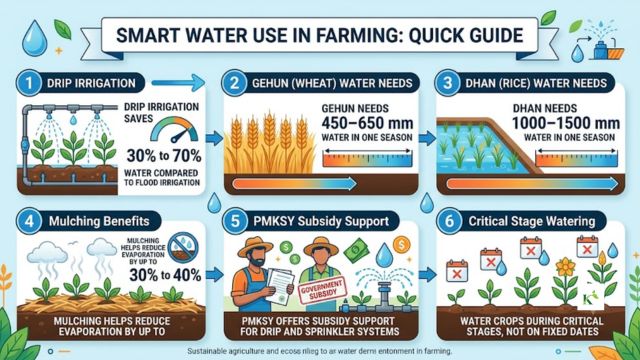
Irrigation management farming means giving your fasal the right amount of water at the right time.
-
Drip irrigation can save 30% to 70% water compared to flood irrigation while improving yield.
-
Understanding crop water requirement helps avoid overwatering and saves input costs.
-
Covering the soil with straw (mulching), irrigating early, and checking soil moisture can help save water and improve crop growth.
-
Government schemes like PM Krishi Sinchayee Yojana (PMKSY) can help kisaans install drip and sprinkler systems at lower cost
 Table of Contents
- Why Water Management Matters for Your Fasal
- Know Your Crop Water Requirement Before Irrigation
- Which Farming Irrigation Method Works Best for You?
- Government Support for Micro-Irrigation
- How to Check Soil Moisture Before Watering
- Practical Water Saving Agriculture Tips That Work
- How Better Irrigation Improves Agriculture Efficiency
- Final Takeaway
- FAQs
Why Water Management Matters for Your Fasal
Water is one of the biggest inputs in kheti. If your crop does not get enough water, growth slows down. If it gets too much, roots weaken, disease risk increases, and fertiliser gets wasted.
That is why irrigation management farming matters. It helps you use water properly based on your crop’s actual need, not on habit.
In many farming states like Punjab, Haryana, Rajasthan, and Uttar Pradesh, groundwater levels are falling every year. This makes smart water use important for both yield and long-term farming.
Know Your Crop Water Requirement Before Irrigation
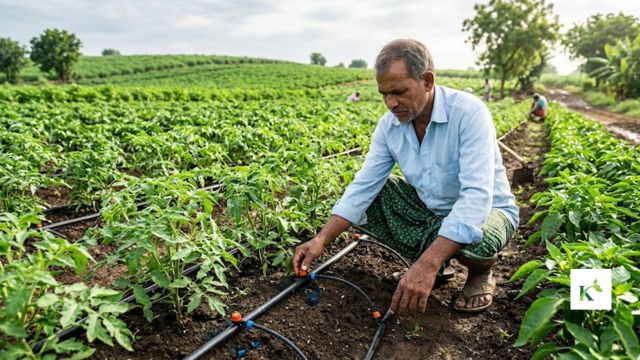
Every fasal has a different crop water requirement. Watering all crops the same way leads to waste.
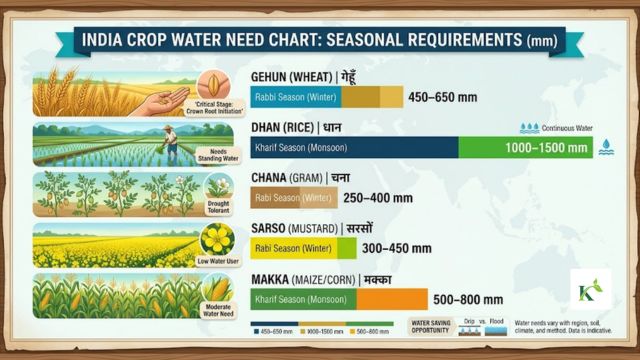
Here are the approximate seasonal water needs of common crops:
|
Fasal (Crop) |
Season |
Water Requirement |
|---|---|---|
|
Gehun |
Rabi |
450–650 mm |
|
Dhan |
Kharif |
1000–1500 mm |
|
Makka |
Kharif |
500–800 mm |
|
Chana |
Rabi |
300–400 mm |
|
Sarso |
Rabi |
250–400 mm |
The exact requirement depends on:
-
Soil type
-
Weather
-
Crop stage
-
Rainfall received
For example:
-
Sandy soil dries faster and needs more frequent watering.
-
Clay soil holds water longer and may need fewer irrigations.
A simple rule is not to irrigate just because a fixed date has arrived. Check the field first.
Which Farming Irrigation Method Works Best for You?
Choosing the right farming irrigation methods depends on your zameen, crop type, and water source.
Flood Irrigation (Naali System)
This is the most common method in Indian farming. Water flows through field channels and spreads across the field.
Benefits:
-
Low setup cost
-
Easy to manage
Problems:
-
High evaporation loss
-
Uneven water spread
-
Higher water waste
Proper levelling can improve this system.
Sprinkler Irrigation
Sprinklers spray water like rainfall.
This method works well for:
-
Gehun
-
Sarso
-
Chana
-
Vegetables
Benefits:
-
Better water spread
-
Less runoff
-
Suitable for uneven fields
Sprinklers can improve water-use efficiency in agriculture compared to flood irrigation.
Drip Irrigation
Drip is one of the most efficient irrigation systems today.
Water moves slowly through pipes and reaches the plant roots directly.
Major drip irrigation benefits:
-
30% to 70% less water use
-
Better root moisture control
-
Lower weed growth
-
Better fertiliser use
-
Lower labour requirement
Best suited for:
-
Cotton
-
Vegetables
-
Sugarcane
-
Fruit crops
Drip is less useful for paddy fields.
Government Support for Micro-Irrigation
Under the Pradhan Mantri Krishi Sinchayee Yojana (PMKSY), farmers can get subsidy support for drip and sprinkler systems.
Under the Per Drop More Crop (PDMC) scheme:
-
Small and marginal farmers can get up to 55% subsidy
-
Other farmers can get up to 45% subsidy
The final amount depends on your state and crop type.
To apply, contact your district agriculture office or check the PMKSY portal.
How to Check Soil Moisture Before Watering
Good soil moisture management helps prevent overwatering. You do not need expensive machines for basic checking.
Use the Feel Test
Follow this simple method:
-
Dig 5–8 cm into the soil.
-
Take a handful.
-
Press it in your hand.
What it tells you:
-
If it forms a soft ball, moisture is good.
-
If it crumbles quickly, irrigation is needed.
-
If it feels sticky and wet, wait.
Practical Water Saving Agriculture Tips That Work
These simple methods improve sustainable water use without major investment:
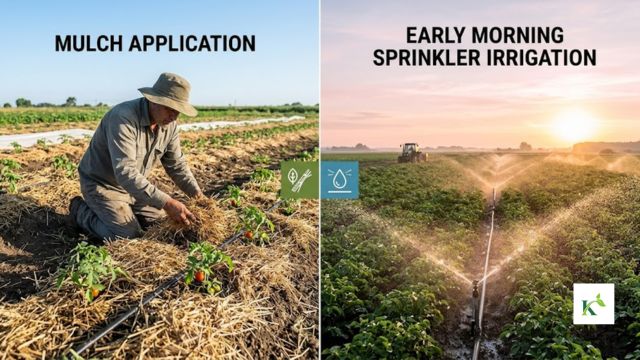
Use Mulch
Spread straw, dry grass, or crop residue on the soil surface.
This helps:
-
Reduce evaporation
-
Keep soil cool
-
Hold moisture longer
Mulching is especially useful in summer.
Irrigate Early Morning or Evening
Watering in peak heat increases evaporation.
Best timing:
-
Before 8 AM
-
After 6 PM
This improves water use efficiency.
Water at Critical Crop Stages
Some crop stages need more water.
For gehun:
-
Crown root initiation (CRI)
-
Tillering
-
Jointing
-
Grain filling
Missing irrigation during these stages can reduce yield sharply.
Level Your Fields Properly
Uneven fields waste water. Low areas collect excess water while high areas stay dry. Proper levelling improves water spread and reduces wastage.
How Better Irrigation Improves Agriculture Efficiency
Better irrigation improves more than just water use.
It also helps:
-
Lower fuel and electricity costs
-
Better fertiliser absorption
-
Lower disease pressure
-
Better root growth
-
Better grain filling
-
More stable yield
Even small changes can improve overall agriculture efficiency over time.
Final Takeaway
Saving water does not mean giving less water. It means using it wisely.
Good irrigation management farming starts with knowing your crop’s need, checking your soil moisture, and choosing the right watering method.
Simple habits like mulching, proper field levelling, and stage-based irrigation can reduce waste and improve yield without increasing cost.
For more practical farming tips, crop updates, and daily mandi bhav, keep following KhetiKisaan.