







Makka Fertiliser Schedule: Exactly When to Apply Urea, DAP and Zinc for Maximum Cob Size
 Jun 25, 2026
 by Pankaj Sihag



Makka Fertiliser Schedule: Exactly When to Apply Urea, DAP and Zinc for Maximum Cob Size
- A good makka fertiliser schedule splits urea into three stages. Do not apply all urea at once.
- DAP and potash should go into the soil at sowing time.
- Total makka urea dose per acre in India is usually around 100–110 kg (about 2 to 2.5 bags) across the full season.
- Zinc helps stop yellow striping in leaves and improves plant growth. Apply 10 kg zinc sulphate per acre at sowing on deficient soils.
- The knee-high urea dose at 30–35 days is the most important application for bigger cobs.
 Table of Contents
Why Fertiliser Timing Matters in Makka
Many farmers know makka needs urea and DAP. But many lose yield because they apply them at the wrong time.
Giving the right fertiliser at the wrong stage wastes money and can affect bhutta or cob size and grain filling. A simple makka fertiliser schedule helps the crop get nutrients when it needs them most.
If you miss the important stages, the crop may look green but the cobs, which are the thick central part of the bhutta where the grains grow, stay thin or half-filled.

What is the Total Fertiliser Requirement Per Acre?
For one acre of kharif hybrid makka or maize under irrigated conditions, experts recommend these nutrient targets:
These are the makka NPK dose per bigha India figures most useful for farmers in Uttar Pradesh, Rajasthan, and Haryana. One bigha is roughly 0.4 acres in many parts of North India.
Makka Fertiliser Schedule: Stage by Stage
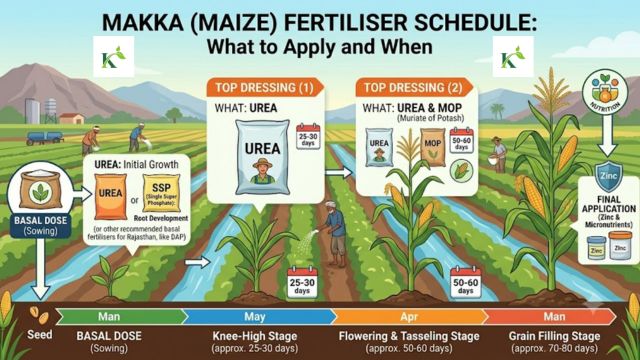
Here is the full makka basal dose vs top dressing guide across the kharif season. These four timings often decide whether the cob fills properly or stays thin:
Stage 1: At Sowing (Basal Dose)
At sowing, apply these fertilisers into the soil during the last ploughing or place them below the seed line:
- Around 50 kg DAP
- 25–27 kg potash (MOP)
- 20–25 kg urea
- 10 kg zinc sulphate if the field has a history of deficiency
This basal dose helps build:
- Strong roots
- Healthy early plant growth
- Better plant stand
Stage 2: Knee-High Stage (30–35 Days After Sowing - DAS)
This is the most critical makka top dressing urea stage.
At this stage, the plant grows fast and starts preparing for cob formation. This is when the crop needs the most nitrogen for fast stalk growth and cob formation.
Apply: 40–45 kg urea per acre
Apply it:
- Between the rows
- 7–10 cm away from the plant
- Cover lightly with soil
If the soil is dry, irrigate immediately after applying. Urea on dry soil often turns to gas and is lost.
Missing this stage or delaying it beyond 40 days often leads to smaller cobs.
Stage 3: Flowering Stage (60–65 DAYS)
This is when the top flowers (tassels) come out and the bhutta threads (silk) start showing.
This stage is important because it supports:
- Grain setting
- Grain weight
- Fuller cobs
Apply: 40–45 kg urea per acre
Spread it between rows and irrigate if there has been no rain in the last few days.
Stage 4: Potash at Flowering (Optional)
If you want to split potash instead of giving all of it at sowing, apply half at sowing and the rest at flowering.
Apply: 12–13 kg potash (MOP)
Potash helps improve grain filling and keeps tall plants from falling.
How to Spot and Fix Zinc Deficiency in Makka
Zinc shortage is common in many fields. The makka zinc deficiency treatment India farmers need starts with spotting the problem early.
Look for these signs in the first 2–3 weeks:
- White or yellow striping on young leaves
- Short plants
- Slow growth
- Uneven field colour
To fix it: At Sowing Apply 10 kg zinc sulphate per acre.
If the Problem Appears Later:
Mix:
- 500 grams zinc sulphate
- 250 grams lime
- In 200 litres of water per acre
Spray 2 times with a gap of 7 days.

Timing matters as much as quantity in makka.
For one acre:
- At sowing (approx.): 50 kg DAP + 25 kg MOP + 20–25 kg urea + 10 kg zinc sulphate (if needed)
- At 30–35 DAYS (knee-high): 40–45 kg urea
This is the most important top dressing for cob size.
- At 60–65 DAS (flowering): 40–45 kg urea
- Supports grain set and grain weight.
Total urea: 100–110 kg across three splits.
Final Thoughts
A good makka fertiliser schedule works like this: DAP and potash at sowing, urea split across three stages, and zinc on deficient soils.
The work is simple, but the timing matters. If you get the timing right, the crop usually pays you back with better cob weight and grain filling.
Apply the knee-high dose on time. That one step does more for makka yield than almost anything else during the season.
Once your crop is harvested and dried, check the live makka mandi bhav on KhetiKisaan before loading your tractor.