





Paddy Yield Improvement: Smart Techniques for More Rice
 Jun 22, 2026
 by Pankaj Sihag



Paddy Yield Improvement: Smart Techniques for More Rice
-
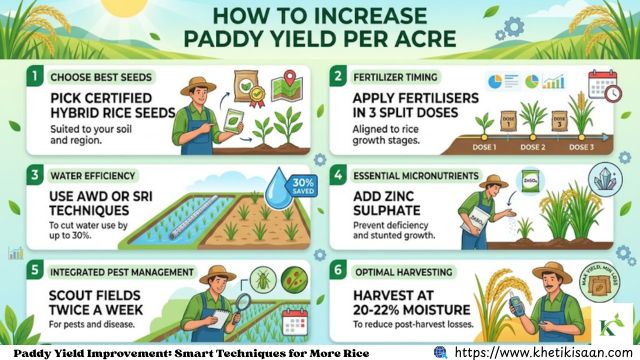
Choosing the right hybrid rice variety for farming is the first step to better yields.
-
Managing the different growth stages of paddy with correct fertiliser use can significantly boost output.
-
Water-saving techniques such as AWD reduce input costs without affecting production.
-
Proper spacing and transplanting methods directly affect rice production per acre.
-
Regular crop monitoring and timely pest control help protect your yield before harvest.
 Table of Contents
- Why Your Paddy Yield Is Not Reaching Its Full Potential
- Choose the Right Variety for Your Soil and Season
- Understand and Manage Paddy Growth Stages
- Smart Fertiliser Use in Rice Farming
- Water Saving Techniques For Rice That Work
- Pest and Disease Control During Kharif Rice Season
- Smarter Farming Starts with Better Information
- FAQs
Why Your Paddy Yield Is Not Reaching Its Full Potential
There are many farmers who face this problem. Their paddy field looks healthy, but the harvest still falls short.
For paddy yield improvement, you should start with understanding where losses happen.
There can be several causes such as the wrong variety, poor soil health, excess water or untimely fertiliser application.
Each of these factors affects your final rice production per acre.
Millions of farmers across India face this reality every kharif season.
The good news is that there are some modern farming practices that can help you change the situation.
Choose the Right Variety for Your Soil and Season
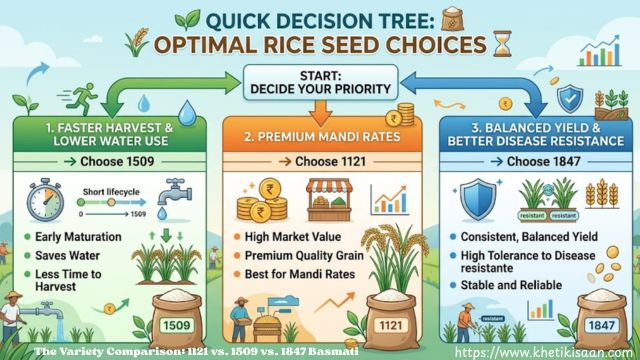
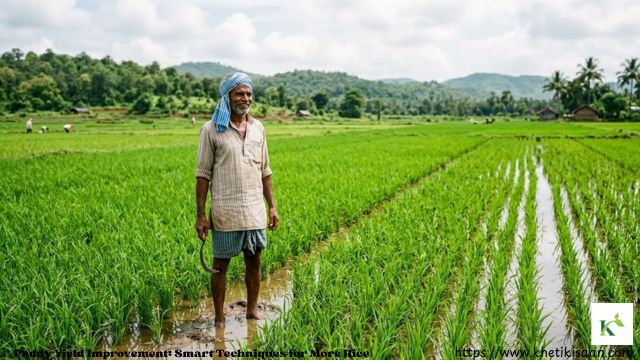
Seed selection is the most important part of paddy yield improvement. Not all rice varieties are suitable for every region.
There are some hybrid rice varieties for farming, like PA 6444, which have been consistently yielding better results than traditional varieties.
Apart from higher disease resistance, such hybrids have shorter crop duration and higher grain count per panicle.
Several times, hybrid rice farming has delivered significantly better yield during trials compared to traditional open-pollinated varieties under the same conditions.
So, before you buy the seeds, you can check with your local Krishi Vigyan Kendra (KVK) or state agriculture department to know about the varieties recommended for your district.
Understand and Manage Paddy Growth Stages
The paddy growth stages include vegetative, reproductive and ripening. The paddy plant has distinct needs during each stage, and you can maximise your yield with the right intervention at each stage:
Vegetative stage (0 to 45 days): During this stage, you need to focus on nitrogen to build strong tillers. Apply the first dose of urea at transplanting and the second at active tillering.
Reproductive stage (45 to 65 days): This is the most critical stage for panicle initiation. You need to ensure adequate water and apply potassium and phosphorus to support grain formation.
Ripening stage (65 days to harvest): Reduce irrigation gradually. Do not drain the field too early as it can reduce grain weight.
Time your inputs according to paddy growth stages. This is one of the most reliable rice farming tips that can directly improve output without increasing cost.

Smart Fertiliser Use in Rice Farming
Over-fertilising is a waste of money, while under-fertilising kills yield. Balanced fertiliser use in rice farming is the recommended path for most farmers.
120 kg of nitrogen, 60 kg of phosphorus and 60 kg of potassium per hectare are generally recommended for paddy crops. However, this can change based on your soil test results. You can get a soil health card before the kharif rice season. This will help you apply only what the soil needs.
Dividing the total dose of nitrogen into three equal parts for application at transplanting, tillering and panicle initiation can improve nutrient use efficiency. Do not broadcast all fertiliser at once, as it can lead to heavy losses through leaching and volatilization.
Zinc deficiency is common in paddy farms across India. Apply 25 kg zinc sulphate per hectare at planting to prevent yellowing and stunted growth. These may hurt rice production per acre.
Water Saving Techniques For Rice That Work
Even if paddy needs a lot of water, it should not be flooded at all times.
Water saving techniques for rice like Alternate Wetting and Drying (AWD) can reduce water use while maintaining yield stability.
Using this technique, you have to let the field dry until the water level drops 15 cm below the soil surface and then re-irrigate.
You can monitor the water table without entering the field with the help of a simple perforated pipe inserted into the ground.
Another good method is the System of Rice Intensification (SRI), which uses younger seedlings, wider spacing and less water.
Pest and Disease Control During Kharif Rice Season
Kharif rice techniques must also include a clear plan for pest control.
Brown plant hoppers, stem borers and blast disease are the biggest threats to paddy yield.
Starting from the vegetative stage, you should scout your fields at least twice a week.
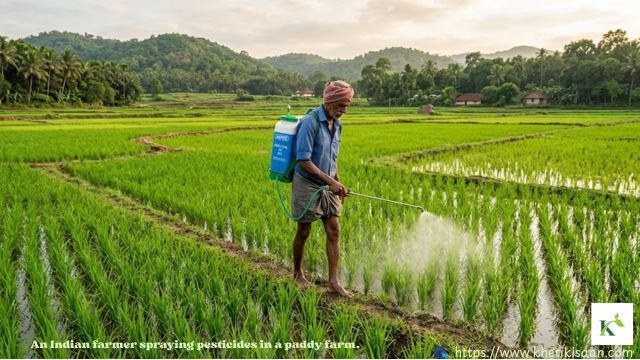
Do not apply any pesticides before the pest population crosses the minimum limit. It can damage beneficial insects that naturally control pests.
Besides that, you should maintain proper field drainage and avoid excess nitrogen application to prevent blast disease.
If blast is a recurring problem in your area, you can grow resistant varieties.
Smarter Farming Starts with Better Information
Paddy yield improvement does not involve doing more work. It is about making smarter decisions at the right time.
From selecting the right hybrid rice variety for farming to applying fertilisers based on paddy growth stages and using water saving techniques, every step is important for a better harvest.
At KhetiKisaan, we help Indian farmers stay updated with live mandi rates, crop-specific guidance and practical rice farming tips written for real field conditions.
Whether you are tracking kharif rice prices or looking for advice on fertiliser use in rice, KhetiKisaan is your trusted farming partner. Visit khetikisaan.com to explore more.