







Soil Health Card Scheme Explained: How It Helps Farmers Increase Crop Yield Naturally
 Jul 03, 2026
 by Pankaj Sihag



Soil Health Card Scheme Explained: How It Helps Farmers Increase Crop Yield Naturally
-
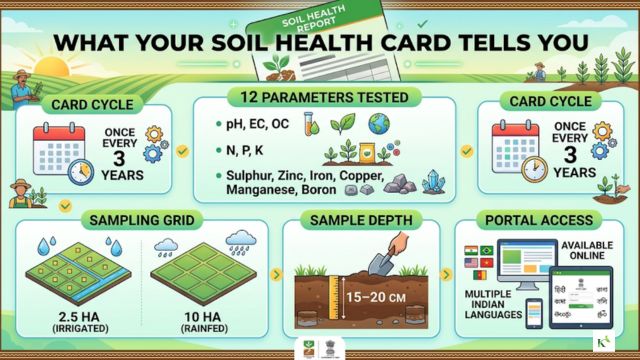
The Soil Health Card scheme tests your zameen for 12 key soil parameters and tells you which nutrients it needs.
-
Cards are generally issued once every three years, helping farmers track changes in soil fertility over time.
-
Sampling is done on a 2.5-hectare grid in irrigated areas and a 10-hectare grid in rainfed areas.
-
The card helps farmers reduce unnecessary fertiliser use and improve nutrient balance
 Table of Contents
What is the Soil Health Card Scheme?
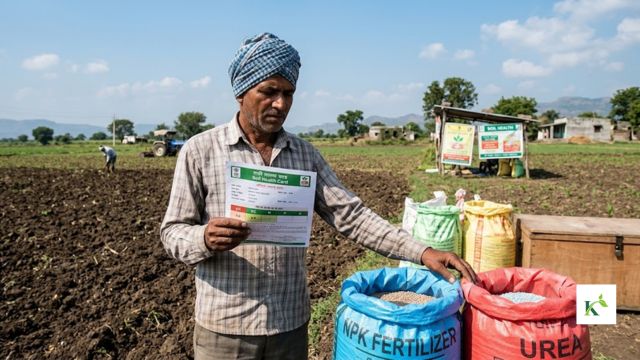
The Soil Health Card scheme is a government programme that tests farmland and gives farmers a report showing whether their soil nutrients are low, medium, or high. Based on this, it recommends the right fertiliser and organic manure dose for the field.
Launched by the Union Ministry of Agriculture and Farmers Welfare in 2015, the scheme now runs under the Rashtriya Krishi Vikas Yojana (RKVY) through its Soil Health and Fertility component. This government agriculture scheme helps farmers use fertilisers in a balanced way.
Instead of applying fertilisers based on habit or local advice, farmers can make decisions based on actual soil data from their own land.
What Does Soil Testing Actually Measure?
Under the Soil Health Card scheme, soil testing India checks 12 parameters:
Physical Properties
-
pH
-
Electrical Conductivity (EC)
-
Organic Carbon (OC)
Macronutrients
-
Nitrogen (N)
-
Phosphorus (P)
-
Potassium (K)
Secondary and Micronutrients
-
Sulphur (S)
-
Zinc (Zn)
-
Iron (Fe)
-
Copper (Cu)
-
Manganese (Mn)
-
Boron (B)
This helps farmers identify nutrient deficiencies that may not be visible through crop observation alone.
Soil samples are collected from a depth of 15–20 cm using a V-shaped cut from multiple spots in the field and then mixed into one composite sample.
How Do You Read Your Soil Fertility Report?
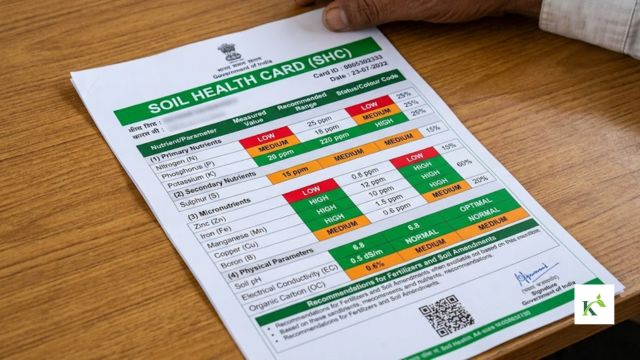
A soil fertility report marks each nutrient as low, medium, or high and gives crop-wise recommendations.
For example, if zinc is low, the report may recommend zinc sulphate. If organic carbon is low, it may suggest adding farmyard manure or compost.
The report also gives correction advice:
-
Lime for acidic soils
-
Gypsum for alkaline soils
This makes the soil fertility report useful because the advice is based on your own field, not a general estimate.
How Does It Help Improve Crop Productivity?
The Soil Health Card Scheme supports crop productivity improvement by correcting nutrient imbalances.
Excess fertiliser use, especially heavy nitrogen application, can weaken soil fertility and increase farming costs. By following the card’s recommendations, farmers can:
-
Reduce unnecessary fertiliser use
-
Improve soil condition
-
Lower input costs
-
Maintain balanced crop nutrition
It also recommends organic manure along with chemical fertilisers, making it a practical nutrient management soil tool for long-term soil improvement.
How To Get Your Soil Health Card
The process usually works like this:
1. Soil Sample Collection
Agriculture department staff or trained field workers collect soil samples from the farm.
2. Lab Testing
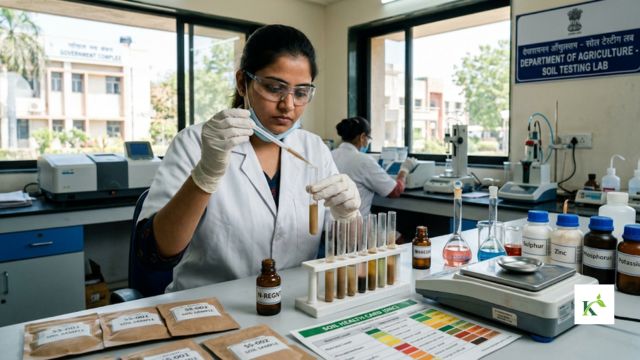
The sample is sent to an approved soil testing laboratory.
3. Report Generation
The results are uploaded to the National Soil Health Card Portal.
4. Card Access
Farmers can collect the printed card or check it online through the portal or Common Service Centres (CSCs).
Under the Soil Health Card scheme, soil sample collection, testing, and card generation are funded by the government, so farmers do not have to pay for the standard testing cycle.
Final Thoughts
The biggest benefit of the Soil Health Card scheme is that it replaces guesswork with actual field data. Instead of spending blindly on fertilisers, farmers can understand what their soil needs and apply only the right amount.
Regular soil testing in India supports long-term crop productivity improvement by helping farmers make better input decisions season after season.
Over time, comparing one card cycle to the next helps farmers track whether soil quality is improving or declining.
Since fertiliser planning directly affects crop costs and profit margins, keeping an eye on crop prices and mandi trends on KhetiKisaan can help farmers make better decisions.