







How to Choose the Right Crop Based on Your Soil Type in India
 Jul 01, 2026
 by Pankaj Sihag



How to Choose the Right Crop Based on Your Soil Type in India
-
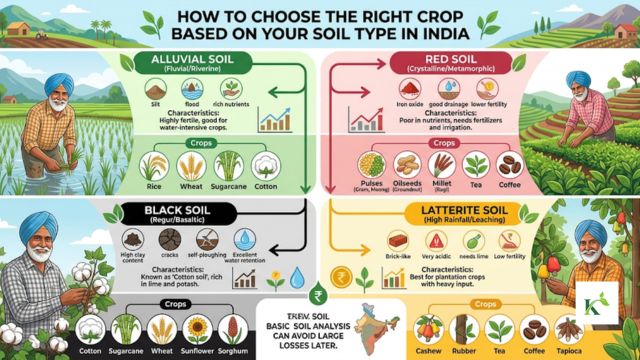
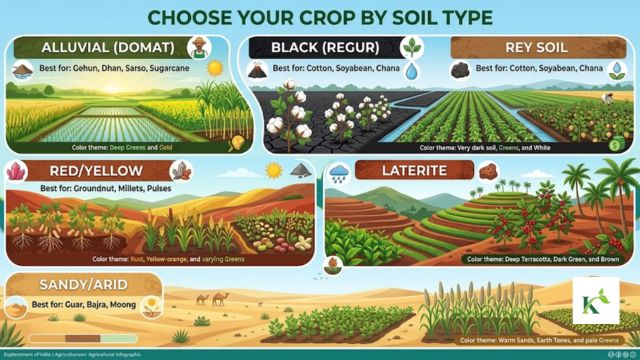
India has eight major soil types, but five are most important for farming decisions.
-
Crop selection for soil type helps reduce fertiliser waste, improve yield, and lower farming risk.
-
Alluvial soil is best for gehun, dhan, sarso, and sugarcane.
-
Black soil suits cotton, soyabean, chana, and jowar because it holds moisture for longer.
-
Always get an agriculture soil testing report before changing your crop plan
 Table of Contents
- Soil First, Crop Second is the rule
- What are the Main Soil Types in India?
- Alluvial Soil: Best for High-Yield Farming
- Black Soil: Made for Cotton and Soyabean
- Red and Yellow Soil: Better for Dryland Crops
- Laterite Soil: Good for Plantation Crops
- Sandy Soil: Suitable for Drought-Resistant Crops
- Quick Crop Suitability Guide by Soil Type
- How to Know Your Soil Before You Sow
- How to Test Your Soil
- Final Thoughts
- FAQs
Soil First, Crop Second is the rule
Choosing the right fasal for your zameen is one of the most important decisions you make as a kisaan. Many farmers first look at mandi bhav or nearby sowing trends. But if the soil does not suit the crop, even strong market prices cannot protect your yield.
That is why crop selection for soil type should come before buying seeds.
India has different soil types, and each one behaves differently. Some hold water longer, some drain quickly, and some naturally carry more nutrients. Understanding your soil helps with better fertiliser use, stronger soil fertility farming, and fewer losses.
A crop that grows well in Punjab’s alluvial belt may fail in Rajasthan’s sandy fields. In the same way, cotton thrives in black soil but struggles where drainage is poor.
This simple crop planning guide explains the main soil types in India, the crops best suited to them, and how farmers can test their land before sowing.
What are the Main Soil Types in India?
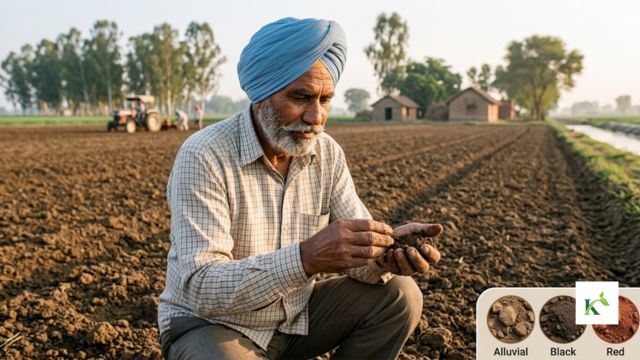
According to the Indian Council of Agricultural Research (ICAR), India has eight major soil groups. For most farmers in north and central India, these five matter the most:
-
Alluvial soil
-
Black soil
-
Red and yellow soil
-
Laterite soil
-
Sandy or arid soil
Understanding these helps improve crop suitability in India decisions.
Alluvial Soil: Best for High-Yield Farming
Alluvial soil, also called domat mitti, covers much of Punjab, Haryana, Uttar Pradesh, Bihar, and West Bengal. It is one of India’s most fertile soils.
It is rich in potash and lime but usually lower in nitrogen and organic matter.
There are two types:
-
Khadar – newer and more fertile
-
Bhangar – older, slightly less fertile
Best crops:
-
Gehun (wheat)
-
Dhan (paddy)
-
Sarso (mustard)
-
Sugarcane
-
Makka (maize)
-
Chana
This soil supports both kharif and rabi crops well.
Farming tip: Rotate cereals with pulses to maintain fertility. You can also check crop guides for seasonal sowing patterns.
Black Soil: Made for Cotton and Soyabean
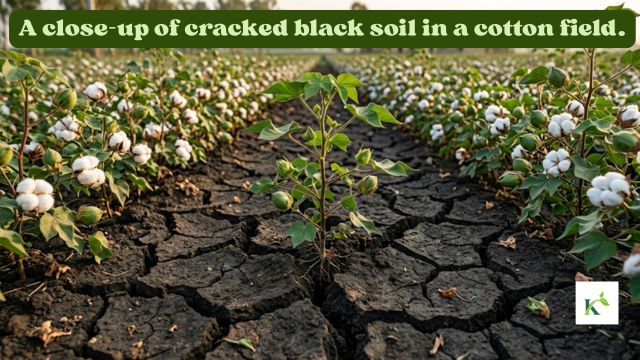
Black soil, or regur, is common in Madhya Pradesh, Maharashtra, Gujarat, Telangana, and Andhra Pradesh.
It forms from volcanic rocks and is rich in iron, magnesium, and lime.
Its biggest strength is moisture retention.
This makes it ideal for:
-
Soyabean
-
Chana
-
Jowar
-
Sunflower
In irrigated fields:
-
Sugarcane
Black soil can stay wet for long periods. That helps rain-fed crops but can harm crops needing quick drainage.
Farming tip: Avoid over-irrigation in black soil.
Red and Yellow Soil: Better for Dryland Crops
Red and yellow soils are common in Karnataka, Tamil Nadu, Odisha, Chhattisgarh, and parts of Madhya Pradesh.
The red colour comes from iron oxide.
This soil drains fast and has lower nitrogen and phosphorus.
Best crops:
-
Groundnut
-
Pulses
-
Millets
-
Tobacco
-
Potato
With irrigation:
-
Cotton
-
Wheat
-
Sugarcane
This soil needs regular nutrient support for better output.
Laterite Soil: Good for Plantation Crops
Laterite soil is mostly found in high-rainfall regions like Kerala, Karnataka, Assam, Odisha and parts of Tamil Nadu.
It forms when heavy rainfall washes away nutrients from the topsoil, leaving behind iron and aluminium. This makes the soil acidic and low in fertility.
It is poor in NPK (nitrogen, phosphorus, and potassium).
Best crops:
-
Tea
-
Coffee
-
Rubber
-
Coconut
-
Cashew
In wetter areas:
-
Paddy
Liming helps reduce acidity and improves nutrient absorption. This makes it easier for roots to absorb phosphorus and calcium.
Farming tip: Use lime and compost regularly to improve laterite soil.
Sandy Soil: Suitable for Drought-Resistant Crops
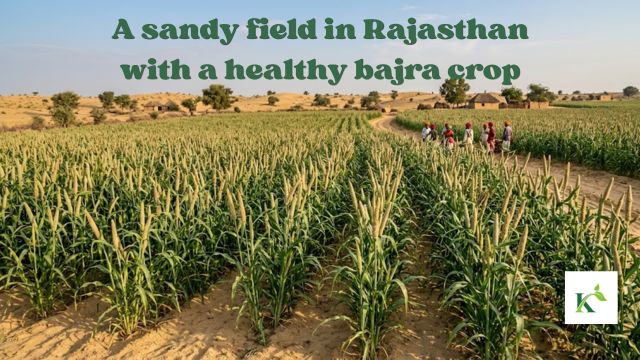
Sandy soils are common in Rajasthan and western Haryana.
Water drains quickly, and nutrients wash away fast.
This makes sandy soil crops important for dry regions.
Best crops:
-
Bajra
-
Guar
-
Moth (moth bean)
-
Sesame (til)
-
Moong
-
Watermelon (Matira)
With irrigation:
-
Sarso
Avoid:
-
Paddy
-
Sugarcane
These crops need too much water.
Quick Crop Suitability Guide by Soil Type
|
Soil Type |
Best Crops |
Avoid |
|---|---|---|
|
Alluvial |
Gehun, Dhan, Sarso, Sugarcane, Chana |
Acidic crops |
|
Black |
Cotton, Soyabean, Chana, Jowar |
Wet/slow-draining crops |
|
Red/Yellow |
Groundnut, Millets, Pulses |
Water-intensive crops |
|
Laterite |
Tea, Coffee, Coconut, Rubber |
Heavy-feeding crops |
|
Sandy |
Bajra, Guar, Sesame, Moong |
Dhan, Sugarcane |
Tip: Get a Soil Health Card before every major sowing season.
How to Know Your Soil Before You Sow
A proper agriculture soil testing report tells you:
-
Soil pH (confirms whether your zameen is too acidic or alkaline)
-
Nitrogen
-
Phosphorus
-
Potassium
-
Organic carbon
-
Zinc and sulphur levels
This helps improve fertiliser planning and long-term soil fertility farming.
The Union Government’s Soil Health Card Scheme offers free testing support.
How to Test Your Soil
Step 1: Collect samples
Take 10–15 soil samples from different spots in your field.
Step 2: Dig properly
Take soil from 15 cm depth in a zig-zag pattern.
Step 3: Mix samples
Mix them and keep around 500 grams.
Step 4: Submit at lab
Take it to your nearest Krishi Vigyan Kendra (KVK) or soil testing centre.
Step 5: Follow recommendations
Use the report to decide fertiliser needs and crop suitability.
Final Thoughts
A strong harvest does not begin with seeds. It begins with understanding your soil.
The right crop selection for soil type reduces unnecessary fertiliser use, improves water efficiency, and increases your chances of better yield.
From the alluvial plains of Punjab to the sandy belts of Rajasthan and the black soils of Madhya Pradesh, every zameen has its own strength.
Work with your soil, not against it.
Before sowing your next fasal, test your land, match your crop properly, and check the latest mandi bhav and crop price updates on KhetiKisaan to plan your selling strategy better.