







How to Improve Soil Fertility for Long-Term Farming Benefits

 Aug 14, 2026
 by Pankaj Sihag



How to Improve Soil Fertility for Long-Term Farming Benefits
- Soil fertility improvement methods like compost, green manure, and crop rotation can raise yields.
- Regular soil testing through the Soil Health Card scheme helps identify nutrient gaps and improves fertiliser use.
- Experts recommend combining organic and chemical fertilisers instead of relying on just one.
- Government schemes like PKVY and PM-PRANAM support kisaans moving towards sustainable soil management.
- Healthy zameen today means better harvests and lower input costs over the long term.
 Table of Contents
Why Your Zameen Needs More Than Just Urea
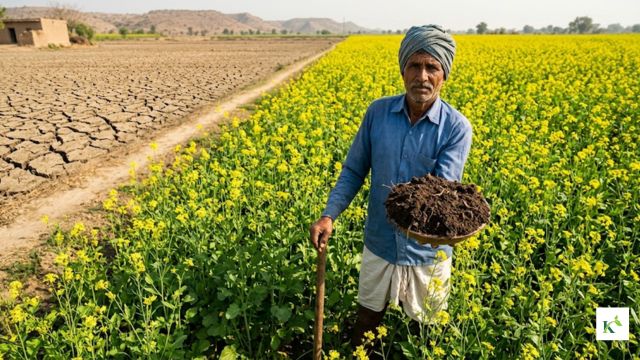
When the zameen is fertile, crops absorb nutrients properly, roots grow deeper and yields stay stable year after year. But when soil health declines, adding more fertiliser alone rarely fixes the problem. It often gives only short-term relief.
This is where soil fertility improvement methods become important. Methods like organic compost farming, green manure, and balanced nutrient use help improve the land naturally and support long-term productivity.
Soil health studies show that many Indian soils now face nutrient imbalance, low organic carbon, and pH-related problems. Kisaans across Punjab, Haryana, Rajasthan, and Uttar Pradesh are already seeing this - fertiliser costs keep rising, but yields do not improve at the same speed.
What Makes Soil Fertile in the First Place?
Soil fertility is more than just nitrogen, phosphorus, and potassium (NPK).
Healthy soil is a living system. It needs nutrients, organic matter, water, and microbial life to support crop growth.
Three main things decide soil fertility:
- Nutrient Availability: Nitrogen, phosphorus, potash, zinc, sulphur, and boron must be available in the right amount.
- Soil Structure: Loose soil helps roots grow deeper and improves water movement.
- Biological Activity: Earthworms and microbes break down organic matter and release nutrients for crops.
If any of these weaken, farm land improvement becomes harder and more expensive.
Practical Soil Fertility Improvement Methods That Work
There is no single solution for every farm. But these practical methods work well across different soil types:
1. Use Organic Compost Regularly
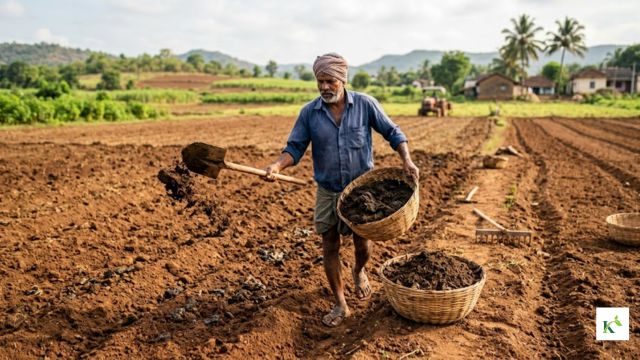
Organic compost farming is one of the easiest ways to improve soil over time. Compost made from gobar khaad, crop residue, or vermicompost adds organic carbon to the land.
Benefits:
- Improves water retention
- Improves soil structure
- Supports microbial life
- Reduces dependence on extra fertiliser
Studies show that combining farmyard manure with NPK fertilisers improves both yield and soil health better than chemical fertilisers alone.
Under the Paramparagat Krishi Vikas Yojana (PKVY), the government provides support for organic inputs like compost, biofertilisers, and organic manure.
2. Try Green Manure Farming
Green manure farming means growing crops like dhaincha, sunhemp, or moong and ploughing them back into the soil before they mature.
This adds:
- Organic matter
- Nitrogen
- Better moisture-holding capacity
If you have a short gap between two crop seasons, using green manure can improve soil health and reduce fertiliser needs in the next crop.
This is especially useful for kisaans growing back-to-back crops.
3. Follow a Crop Rotation Plan
Growing the same fasal on the same land every season drains the same nutrients repeatedly.
Crop rotation helps:
- Add nitrogen naturally
- Reduce pest pressure
- Improve soil balance
- Reduce chemical use
This is one of the most practical sustainable soil management methods.
4. Balance Chemical and Organic Inputs
Using only urea or DAP every season can reduce soil quality over time.
At the same time, completely avoiding chemical fertilisers on weak soils can affect yield.
The better option is balanced use.
Soil experts recommend integrated nutrient management by using:
- NPK fertilisers
- Organic manure
- Biofertilisers
- Green manure
This keeps the soil productive and improves crop productivity over time.
How the Soil Health Card Scheme Helps
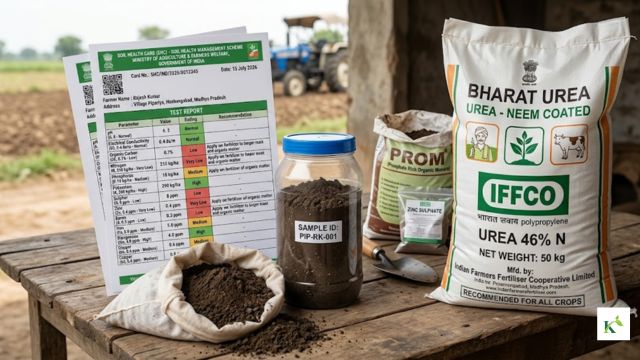
The Soil Health Card scheme helps kisaans test their soil and understand what nutrients are missing.
It checks:
- Nitrogen
- Phosphorus
- Potassium
- Sulphur
- Zinc
- Boron
- pH level
This helps farmers apply the right fertiliser in the right amount.
Your soil problem may not be the same as your neighbour’s, even if you grow the same crop. Soil testing saves money and improves yield.
Government Support for Sustainable Soil Management
Several schemes support better soil care for agriculture:
The National Mission on Natural Farming (NMNF) also supports practices like mulching, biomass use, and mixed cropping.
How Soil Quality Affects Crop Productivity
Poor soil needs more fertiliser to produce the same yield. But even then, output may stay low.
When organic carbon drops:
- Soil holds less water
- Nutrients get wasted
- Root growth weakens
This increases farming costs.
But when you improve soil health slowly over two or three seasons:
- Input use becomes more efficient
- Crop quality improves
- Yield becomes more stable
- Soil handles dry weather better
This is real farm land improvement.
Final Thoughts
Improving soil fertility does not always mean buying more fertiliser. It means understanding what your zameen needs and improving it step by step.
Start with a soil test. Add compost. Try green manure. Rotate your crops. Balance your fertilisers.
Healthy soil supports better farming, lower costs, and stronger harvests.
For practical crop guides, mandi bhav, and farming advice, keep checking KhetiKisaan.