







How to Select Good Quality Seeds for Better Crop Production
 Jul 11, 2026
 by Pankaj Sihag



How to Select Good Quality Seeds for Better Crop Production
- Good quality seeds improve germination, crop uniformity, and overall yield potential.
- Always check seed labels, certification tags, batch details, and source before buying.
- Certified seeds usually offer better purity and more reliable germination than repeatedly reused farm-saved seeds.
- Hybrid seeds can give higher yield potential but usually need fresh purchase every season.
- Seed treatment before sowing helps protect against soil-borne and seed-borne diseases.
 Table of Contents
- Why the Right Seed Makes All the Difference
- What are the Different Agriculture Seed Types?
- How to Check Seed Quality Before Buying
- Matching Crop Seeds to Your Zameen and Zone
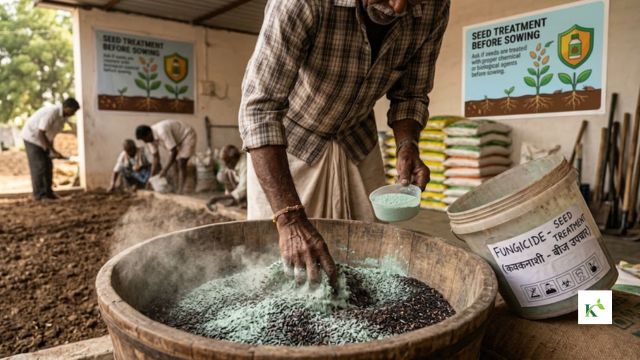
- Seed Treatment Basics: One Step That Pays Back
- Common Seed Treatment Options
- Where to Buy High-Yield Seeds Safely
- Final Thoughts
- FAQs
Why the Right Seed Makes All the Difference
Selecting the best seeds for farming in India is one of the most important decisions before sowing begins. Poor seed quality can lead to patchy germination, weak crop stands, and lower yield.
Many kisaans lose money not because of fertiliser or labour, but because the seed itself was weak, mixed, or unsuitable for their zameen.
The Indian seed market offers many options, like farm-saved seed, open-pollinated varieties, certified seeds, and hybrids. Understanding the difference helps you choose better for your kheti.
What are the Different Agriculture Seed Types?
These are the main agriculture seed types available in India:
1. Farm-Saved Seed
This is seed kept from your previous harvest.
Benefits:
-
Lower cost
-
Easily available
Limitations:
-
Purity can drop over time
-
Disease can carry over
-
Germination may become uneven
Suitable for stable desi varieties in low-risk conditions.
2. Open-Pollinated Varieties (OPV)
These are naturally pollinated varieties.
Farmers can often save and replant them for a few seasons if varietal purity is maintained.
Benefits:
-
Lower cost than hybrids
-
More stable seed-saving option
Many OPVs are developed by the Indian Council of Agricultural Research institutes and State Agricultural Universities for different agro-climatic zones.
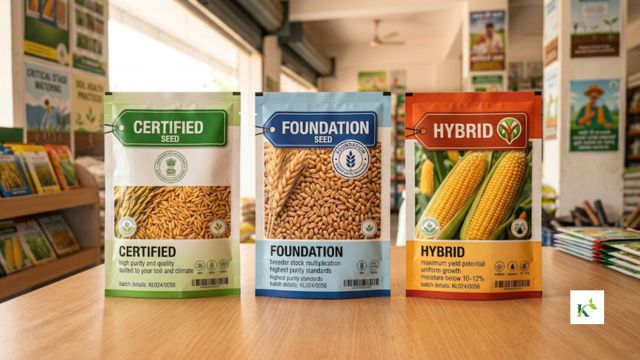
3. Certified Seeds
Certified seeds are checked by state seed certification agencies.
They must meet standards for:
-
Genetic purity
-
Physical purity
-
Germination percentage
-
Seed health
Certified seeds carry an Azure Blue tag.
Foundation seeds carry a White tag.
Breeder seeds carry a Golden Yellow tag.
If the packet has no tag, do not buy without checking the source.
4. Hybrid Seeds
Hybrid seeds are made by crossing specific parent lines.
They are usually chosen for:
-
Higher yield potential
-
Better uniformity
-
Sometimes, better disease tolerance
Must Read:
But hybrid seeds should not usually be saved for the next season because their performance drops.
Hybrid seeds are common in:
-
Makka
-
Sunflower
-
Vegetables
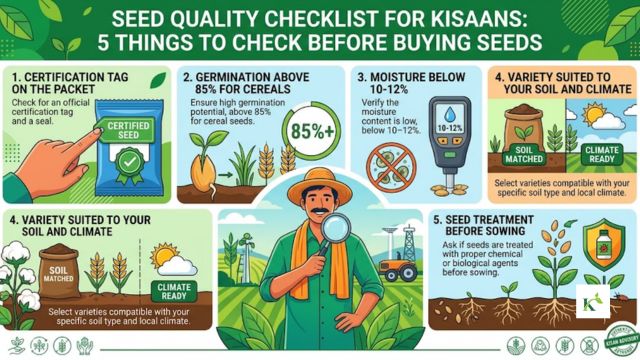
How to Check Seed Quality Before Buying
Do not buy seeds based only on price.
Follow these:
-
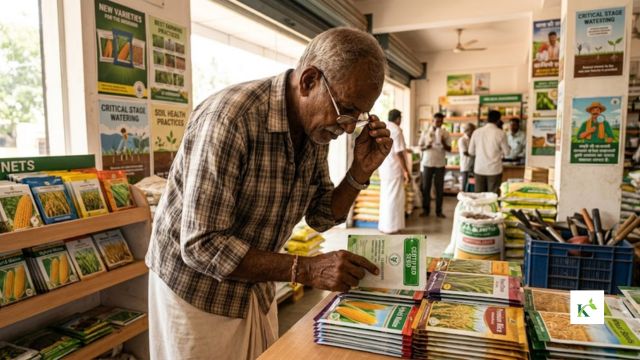
Check the Certification Tag
Always check:
-
Tag colour
-
Batch number
-
Packing date
-
Variety name
The draft Seeds Bill, 2025, has proposed QR-code-based traceability for seed packets, but implementation is still under process.
-
Check Germination Percentage
The packet should clearly mention germination percentage.
For most cereals like gehun:
-
Above 85% is considered good.
For oilseeds and vegetables, acceptable levels may differ.
-
Check Moisture Content
Good seed storage usually keeps moisture below 10% to 12%.
Signs of bad storage:
-
Damp feeling
-
Fungus smell
-
Sticky surface
High moisture reduces seed life.
-
Check Physical Purity
Good seed should be free from:
-
Weed seeds
-
Dirt
-
Broken grains
-
Crop residue
Certified seed must meet crop-specific physical purity standards, often 98% or higher for many major crops.
-
Try a Home Germination Test
Take 50 to 100 seeds.
Wrap them in a wet cloth and keep them for 3 to 5 days.
Count the sprouts.
If less than 75% to 80% germinate, avoid using that lot.
This is one of the easiest ways to test seed quality at home.
Matching Crop Seeds to Your Zameen and Zone
The same seed variety does not perform equally in every district.
Before buying, match the seed with:
Soil Type
-
Sandy soil suits crops like chana and sarso.
-
Clay-heavy soil supports dhan better.
Water Availability
Rain-fed fields need drought-tolerant varieties.
High-yield seeds often need regular irrigation.
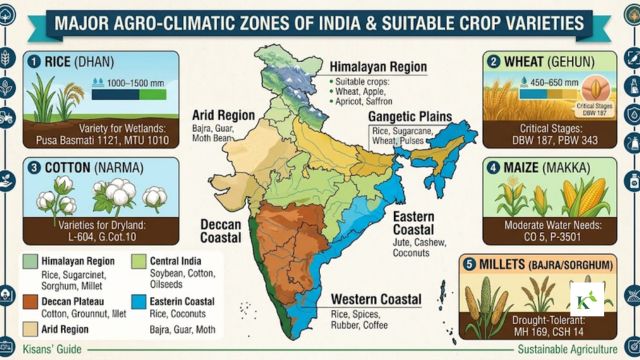
Agro-Climatic Zone
For example:
-
Punjab and Haryana gehun farmers should check varieties released for North Western Plain Zone (NWPZ).
-
Eastern Uttar Pradesh farmers should check North Eastern Plain Zone (NEPZ).
A variety not suited to your zone may show weak growth, uneven maturity, or lower yield.
Disease History
If your field had recurring diseases in earlier seasons, choose resistant seed varieties to reduce the risk.
Your local Krishi Vigyan Kendra (KVK) can help identify the right variety.
Seed Treatment Basics: One Step That Pays Back
Good seed still needs protection before sowing.
Basic seed treatment helps protect young seedlings from:
-
Seed-borne fungal diseases like loose smut and bunt
-
Soil-borne diseases like damping-off and root rot
-
Early-stage pest damage in some crops
-
Poor seedling establishment caused by hidden infections
Must Read: Pink Bollworm Management in Bt Cotton
Proper seed treatment can improve early plant health and reduce crop loss.
Common Seed Treatment Options
Here are some important seed treatment options for major crops grown in India.
For Gehun
Recommended:
-
Carboxin 75 WP at 2.5 gm/kg seed
-
Tebuconazole 2DS at 1.25 gm/kg seed
-
Trichoderma viride at 4 gm/kg seed
Useful against:
-
Loose smut
-
Common bunt
-
Seedling blight
-
Root rot
For Dhan
Recommended:
-
Sun drying for 2–3 hours
-
Hot water treatment at 52°C for 10 minutes
-
Carbendazim 50 WP at 2 gm/kg seed
-
Thiram at 3 gm/kg seed
Useful against:
-
Seed rot
-
Damping-off
-
Certain seed-borne fungal infections
-
Early-stage seedling diseases
For Sarso and Oilseeds
Recommended:
-
Thiram
-
Trichoderma
Especially useful in fields with recurring fungal disease pressure. Always dry treated seeds in shade before sowing.
Where to Buy High-Yield Seeds Safely
Buy from trusted sources like:
-
National Seeds Corporation (NSC)
-
State seed corporations
-
Licensed private companies
-
KVK outlets
-
Agriculture department centres
Avoid:
-
Loose seed sold without labels
-
Blurred or missing tags
-
Unregistered sellers
-
Varieties not recommended for your area
Buying from trusted sources reduces the risk of fake seeds.
Final Thoughts
Seed selection is not just a buying decision. It is the starting point of your crop’s productivity.
A certified or suitable hybrid variety matched to your zameen, local weather, and crop needs gives your fasal a stronger start.
Checking the seed tag, germination rate, moisture, and treating the seed before sowing can reduce field problems and improve your harvest chances.
Before the next sowing season, keep following KhetiKisaan for crop guides, mandi bhav, and farming updates.