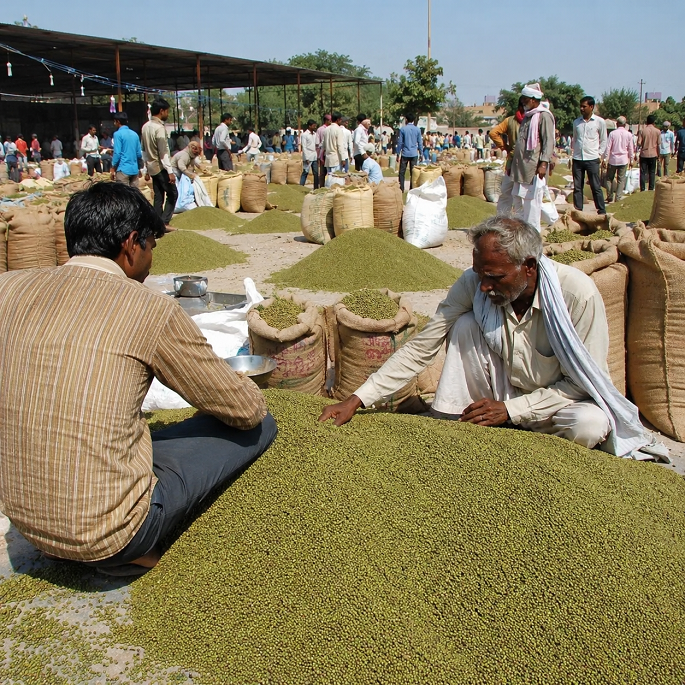






Guar Mandi Bhav Today: Latest Gwar Seed Prices
 Sep 01, 2026
 by Pankaj Sihag



Guar Mandi Bhav Today: Latest Gwar Seed Prices
- The latest available Rajasthan mandi records show guar seed prices of ₹5,400 to ₹6,618 per quintal. The wider recorded range was ₹5,100–₹6,800.
- Guar prices can differ between mandis because of arrivals, seed quality, buyer demand and local market conditions.
- India is the world's largest guar producer, and demand for guar gum from petroleum and shale-gas industries is an important market factor.
- Guar seed is not included in the government's MSP list for Kharif Marketing Season 2026–27.
- Checking the latest guar mandi rate for your own market can help you compare nearby prices before selling.
 Table of Contents
What is the Guar Mandi Bhav Today?
Guar mandi bhav today can be different from one mandi to another. In the latest available Rajasthan records, guar seed was priced at ₹6,118 per quintal in Bassi, ₹6,600 in Jayal and Degana, and ₹6,100 in Bijaynagar. Across these mandis, prices ranged from ₹4,700 to ₹6,800 per quintal.
The guar mandi rate can change with daily arrivals, seed quality, buyer demand and local market conditions. Before taking your crop to market, check the latest rate for your own mandi and compare it with nearby markets.
Why Does the Guar Price Differ Between Mandis Today?
The guar price today can differ between mandis because every market has its own arrivals, buyers and trading conditions. Seed quality, variety, grade and cleanliness can also affect the rate offered by buyers.
Guar is mainly grown in dry and semi-dry areas, with Rajasthan being the country's largest producing state. India produces about 80% of the world's guar, and around 72% of India's Guar production comes from Rajasthan, according to the Agricultural and Processed Food Products Export Development Authority (APEDA).
For farmers, this means the current guar market price in one mandi may not be the same as the rate available in another nearby market.
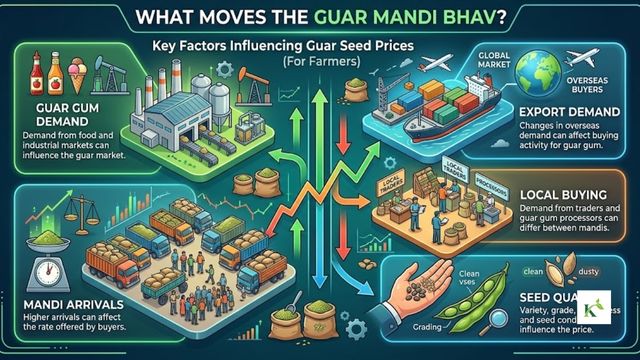
What Affects the Guar Seed Mandi Bhav?
The guar seed mandi bhav depends on local supply, buyer demand and the quality of the seed. Daily arrivals, available stocks, seed variety and condition can all affect the price offered by buyers.
Guar seed is not included in the government's minimum support price (MSP) list for Kharif Marketing Season 2026–27. So, unlike crops covered by the MSP list, farmers do not have an MSP figure for guar to use as a price benchmark.
Demand for guar gum also matters. The Agricultural and Processed Food Products Export Development Authority (APEDA) notes that around 90% of processed guar gum is exported, with oil and shale-gas applications accounting for a major share of export demand.
This does not mean that every change in crude oil prices will immediately change the guar rate today in India. Export demand, processing activity and local mandi conditions also matter.
How Can You Check the Guar Rate Before Selling?
The best way to check the guar seed price today is to look at the latest rate for your own mandi and then compare it with nearby markets.
Before taking your guar to market, check:
- The latest rate in your local mandi
- Rates in nearby mandis
- The variety and grade of your seed
- Current arrivals and buyer demand
- Transport and other selling costs
A mandi offering a higher rate may not give you a better final return if reaching that market costs more.
Note: All prices are subject to change based on live Agricultural Produce Market Committee (APMC) auction activity.
When Is a Good Time to Sell Guar?
Guar is generally sown after the monsoon and harvested around late October to early November, although timing can vary with rainfall and local conditions.
Prices can change with arrivals, available stocks, export demand and buying activity. If you have suitable storage and do not need to sell immediately, compare the current rate with later mandi prices before deciding whether to sell or hold your crop.
However, future prices are uncertain. Storage also has costs and can affect grain quality if the crop is not stored properly.
How Can Farmers Get a Better Guar Mandi Rate?
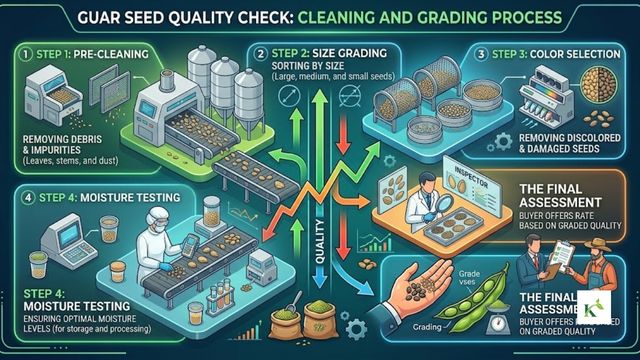
A better guar mandi rate starts with knowing the market before you sell. Keep your guar clean, properly stored and ready for the quality checks required by the buyer.
Compare rates in nearby mandis and consider transport costs before choosing where to sell. If you are planning to store the crop, also consider the cost of storage and the possibility that future prices may move lower.
Conclusion
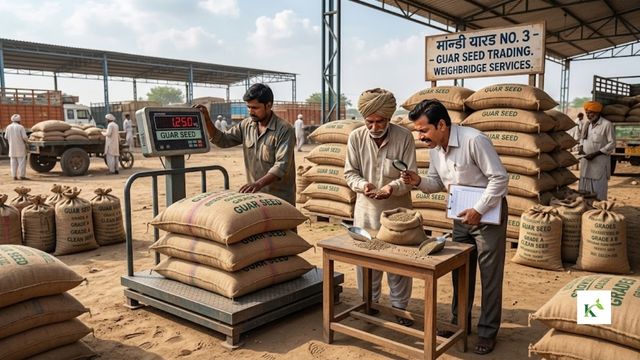
Guar prices can vary across markets, so checking the latest rate before selling is important. Look at the guar mandi bhav, compare what nearby mandis are offering, and factor in the quality of your seed along with transport and storage expenses.
KhetiKisaan helps farmers stay updated with mandi prices and market information, making it easier to assess the available options before taking their crop to market.
FAQs
Related Blogs
Oct 12, 2026
by Pankaj Sihag
Oct 02, 2026
by Pankaj Sihag
Sep 14, 2026
by Pankaj Sihag
Aug 24, 2026
by Pankaj Sihag