





1121 vs 1509 vs 1847 Basmati: Which Gives Better Mandi Bhav?
 Jun 24, 2026
 by Pankaj Sihag



1121 vs 1509 vs 1847 Basmati: Which Gives Better Mandi Bhav?
-
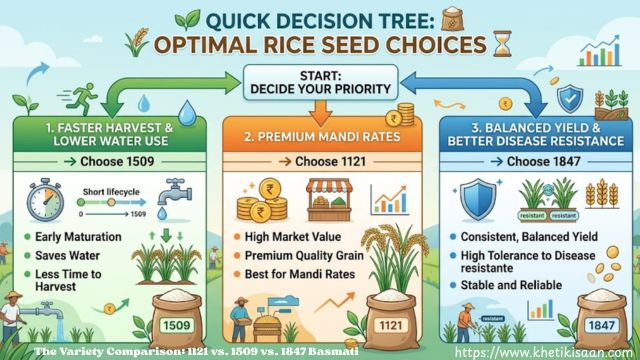
Pusa Basmati 1121 takes the longest time to mature (around 140–145 days) but usually gets better mandi bhav because of its grain quality.
-
Pusa Basmati 1509 matures much faster (115–120 days), helping farmers save water and clear fields early for the next crop.
-
Pusa Basmati 1847 is a newer basmati variety with stronger resistance against bacteria, which can reduce crop losses.
-
Seed cost is similar for all Basmati varieties, but disease-resistant crops like 1847 may lower farming costs
 Table of Contents
Which Basmati Variety Should You Choose This Season?
If you are comparing 1121 vs 1509 vs 1847 Basmati, the answer depends on three things: your water availability, your budget and when you want to sell your crop.
For farmers in Haryana, Punjab, Rajasthan and western UP, this choice affects profit, irrigation costs and next crop planning. Choosing the right basmati dhan before sowing can directly affect your profit once the fasal reaches the mandi.
In most cases, farmers compare seed cost, time to harvest and average market price trends before deciding which basmati dhan to sow.
In this guide, let us compare these three popular varieties based on crop duration, seed cost, yield and market demand.
How Do 1121, 1509 and 1847 Basmati Compare?
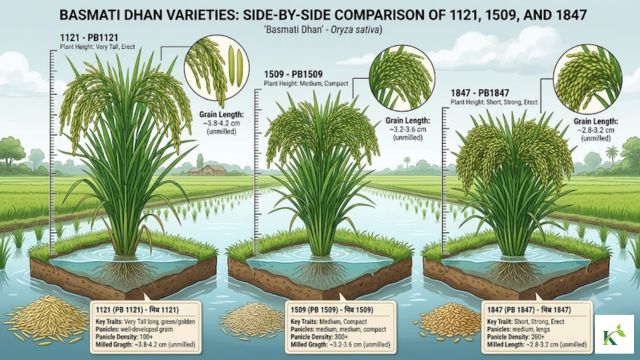
To understand the core differences between these seeds, let us look at how they fare side by side:
|
Factor |
1121 Basmati |
1509 Basmati |
1847 Basmati |
|---|---|---|---|
|
Crop Duration |
140-145 Days (Long) |
115-120 Days (Short) |
115-120 Days (Short) |
|
Seed Cost |
Rs.80-120/kg |
Rs.80-120/kg |
Rs.110-140/kg |
|
Avg. Yield (Per Acre) |
15-18 Qtls |
20-22 Qtls |
20-24 Qtls |
|
Disease Resistance |
Low |
Low to Medium |
Better at handling common paddy diseases (blight and blast) |
|
Mandi Demand |
Premium (Highest export value) |
Good |
Growing (Rising popularity) |
|
Water Requirement |
High |
Lower |
Lower |
Our Tip: This comparison gives a simple idea, but the right choice depends on your farm conditions!
Time to Harvest: Which Basmati Gets Ready Faster?
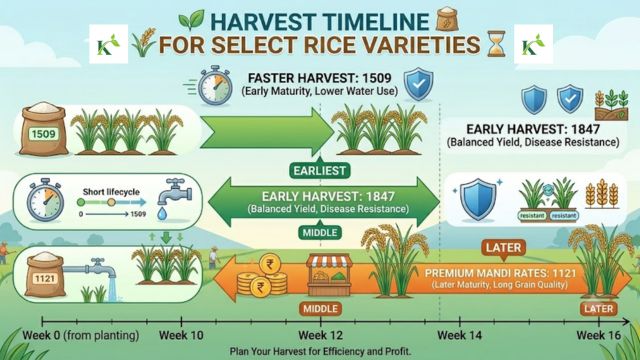
If your goal is early harvesting, both 1509 and 1847 are strong options.
-
1509 usually matures in about 115 to 120 days. This helps farmers clear fields early and prepare for wheat or vegetable sowing.
-
1847 has a similar crop duration and offers the same advantage of early harvesting.
-
In comparison, 1121 takes around 140 to 145 days. This longer cycle means more irrigation rounds and a longer wait before selling.
Choosing a variety that can harvest early may help you sell your crop before the mandi gets crowded.
Which Basmati Gives Better Mandi Bhav?
1121
-
Usually gets the highest mandi bhav
-
Strong export demand
-
Better known for premium grain quality
1509 & 1847
-
Usually sell at a lower mandi bhav than 1121
-
Higher yield can help improve total returns per acre
-
Good option for farmers looking at faster harvest and balanced profit
Don’t look at JUST price!
While 1121 often gets the best pure rate per quintal, final profit depends on both mandi bhav and yield. In many cases, 1509 and 1847 can balance lower rates by producing more per acre.
Compare seed cost, harvest time and yield before choosing the right Basmati dhan for your kheti.
Remember, mandi prices change frequently based on arrivals, demand and export trends.
Tip: You can check live rates from KhetiKisaan: Aaj Ka Dhaan Bhav
How Does Seed Cost and Yield Compare?
When farmers compare seed cost, harvest time and average mandi bhav trends, the economic difference becomes easier to understand.
Initial Investment
Certified seeds of 1121 and 1509 usually cost around ₹80 to ₹120 per kg. 1847 is slightly higher at ₹110 to ₹140 per kg.
Spray Cost
1121 and 1509 may need more sprays if diseases like blight or blast become a problem. Since 1847 has better resistance, it may help reduce spray costs in some seasons.
Yield
Under good management, 1847 and 1509 often give slightly better yield than 1121 because of lower disease loss and stronger plant health.
Which Variety is Better for Your Zameen?
Every piece of agricultural land is unique.
Choose 1509 or 1847 if:
-
Water is limited
-
You want early harvesting
-
You want to sow wheat on time
-
You want lower disease risk
On the other hand, choose 1121 if:
-
You have strong irrigation support
-
Your soil handles long-duration dhan well
-
Your focus is better mandi bhav
Remember, a variety that performs well in Karnal may not see the same demand in Sri Ganganagar or Bareilly. Always check nearby mandi trends before finalising your seed.
Your Final Decision
There is no single best Basmati variety for every farm.
The right choice depends on water availability, sowing plan, disease pressure and the kind of mandi demand in your area.
On KhetiKisaan, farmers can track live mandi bhav, monitor arrivals and understand local market trends to make better decisions before sowing and selling.
FAQs
Related Blogs
Jun 22, 2026
by Pankaj Sihag