







How to Prepare Gehun Field After Dhan Harvest and Save Time
 Aug 02, 2026
 by Pankaj Sihag



How to Prepare Gehun Field After Dhan Harvest and Save Time
- Delaying gehun sowing after mid-November can reduce yield because the crop gets less cool weather to produce side shoots (tillers) and complete grain filling properly.
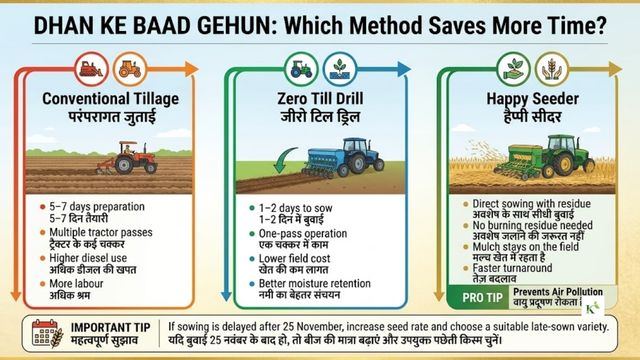
- Zero tillage gehun sowing saves 3–5 days of field preparation and can lower cultivation cost compared to repeated tillage.
- A gehun zero till drill machine lets you sow directly into dhan residue without burning and without waiting for extra field preparation.
- Proper paddy stubble management wheat methods protect soil moisture and improve soil health over time.
- If sowing is delayed beyond 25 November, increase seed rate slightly and use a suitable late-sown variety.
 Table of Contents
- Every Day After Dhan Harvest Matters for Gehun Yield
- Why Does Wheat Field Preparation Take Longer After Paddy?
- Zero Tillage - The Fastest Way to Sow After Dhan
- Happy Seeder - Best for Heavy Paddy Residue
- Conventional Tillage - When Zero Till Does Not Fit
- What to Do If Wheat Sowing is Already Late
- Why You Should Avoid Burning Paddy Stubble
- Final Thoughts
- FAQs
Every Day After Dhan Harvest Matters for Gehun Yield
The time between harvesting dhan and sowing gehun is one of the shortest crop transition windows in Indian farming.
For kisaans in Punjab, Haryana, Uttar Pradesh, and Rajasthan, wheat field preparation after paddy is often a race against time.
Most of the delay happens because of:
- Heavy paddy residue left by combine harvesters
- Wet soil from the final paddy irrigation
- Waiting for machinery availability
- Repeated tillage passes using ploughs, cultivators, or rotavators to prepare the soil
These delays can push sowing beyond the ideal wheat window.
In north India, the best gehun buvai ka sahi samay usually falls between November 1 and November 25. Sowing after this period can reduce yield because the crop gets less time for tillering and grain filling before temperatures rise in spring.
Why Does Wheat Field Preparation Take Longer After Paddy?
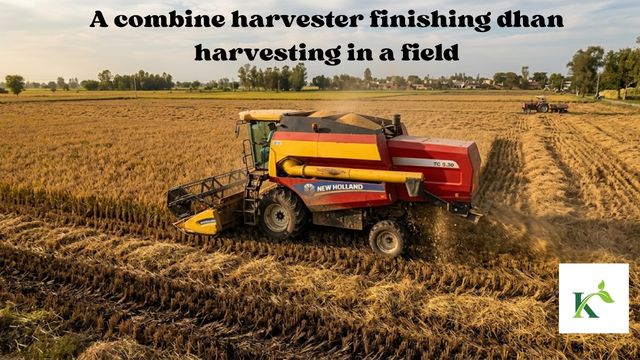
After combine harvesting, dhan fields are often left with:
- Loose straw on the surface
- Rooted stubble in the soil
- Moist topsoil
This makes normal ploughing slower.
Many kisaans use:
- One deep plough
- Two or three cultivator or rotavator passes
- One leveling pass
This usually takes 5–7 days, and sometimes longer if the soil is still wet.
The problem is that every extra day delays sowing.
That is why reducing field preparation time matters more than adding extra inputs.
Zero Tillage - The Fastest Way to Sow After Dhan
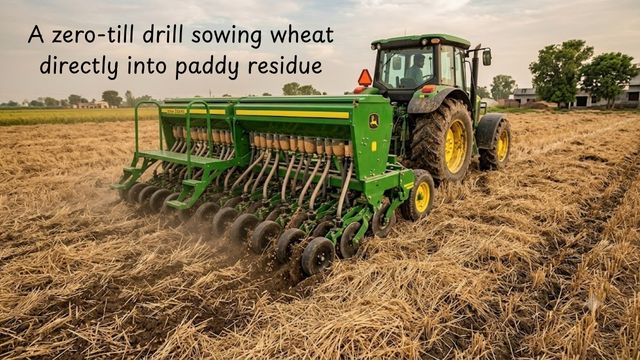
Zero tillage gehun sowing allows farmers to sow wheat directly into harvested paddy fields without repeated ploughing.
The gehun zero till drill machine:
- Opens a narrow slit
- Places seed and fertiliser together
- Covers the seed in one pass
Benefits:
- Saves 3–5 days of field preparation
- Reduces fuel and labour use
- Preserves soil moisture
- Reduces soil disturbance
- Supports timely sowing
This method works best when:
- The field has no standing water
- Soil has workable moisture
- Residue is evenly spread
Zero tillage is widely used in the Indo-Gangetic belt because it helps farmers stay within the ideal sowing window.
Happy Seeder - Best for Heavy Paddy Residue
The Happy Seeder, the tractor-mounted, zero-till seed drill, is useful when the field has heavy straw load after combine harvesting.
It:
- Cuts and lifts loose straw
- Sows seed below the residue
- Spreads the cut straw back on the soil surface as mulch
This is one of the most effective paddy stubble management wheat methods.
Benefits:
- Avoids stubble burning
- Saves field clearing time
- Keeps soil covered
- Reduces moisture loss
- Helps suppress early weed growth
The Happy Seeder use has increased in Punjab and Haryana because it allows direct wheat sowing even in heavy residue conditions.
Conventional Tillage - When Zero Till Does Not Fit
Zero tillage is not suitable in every field.
If your land has:
- Heavy clay soil
- Poor drainage
- Standing water
- Uneven residue load
Conventional tillage may still be the better option.
A faster conventional process:
Step 1: Let the field dry for 2–3 days.
Step 2: Do one deep plough to break rooted stubble.
Step 3: Do one or two rotavator passes only if needed.
Step 4: Level the field properly.
Step 5: Use a seed-cum-fertiliser drill at 4–6 cm depth.
What to Do If Wheat Sowing is Already Late
If sowing gets delayed beyond 25 November, adjust your method.
These are practical late sowing wheat India tips:
Increase Seed Rate
- For normal sowing: 40–45 kg per acre
- For late sowing: 50–55 kg per acre
This helps make up for lower tillering.
Use Suitable Late-Sown Varieties
Short-duration varieties perform better in delayed sowing.
Commonly recommended varieties in north India may include:
- HD 2967
- HD 3059
- DBW 173
Always confirm with your local agriculture department or KVK.
Do Not Miss First Irrigation: The first irrigation at crown root initiation (CRI) around 20–25 days after sowing is critical.
Manage Nitrogen Properly: Split nitrogen into stages instead of applying it all at once.
This improves nutrient use in late-sown crops.
Why You Should Avoid Burning Paddy Stubble
Burning is fast, but it creates long-term problems.
It:
- Causes immediate nutrient loss
- Reduces soil organic matter over time
- Harms soil microbes
- Reduces water infiltration
- Increases air pollution
Machines like Happy Seeder and zero-till drills offer faster and safer alternatives.
This helps both your current wheat crop and your long-term soil health.
Final Thoughts
The biggest mistake after dhan harvest is waiting too long to start.
Whether you use zero till drill, Happy Seeder, or fast conventional tillage, the goal is the same: get your gehun into the ground on time.
Check Latest Dhan Bhav Aaj Ka and Gehun Mandi Bhav.
In the rice-wheat belt, timely sowing often matters more than extra fertiliser.
The faster your wheat field preparation after paddy, the better your chances of protecting tillering, grain filling, and final yield.
Before your next sowing season, plan your machine, seed, and residue management in advance. And keep checking live mandi bhav and crop updates on KhetiKisaan to plan your harvest and selling strategy better.