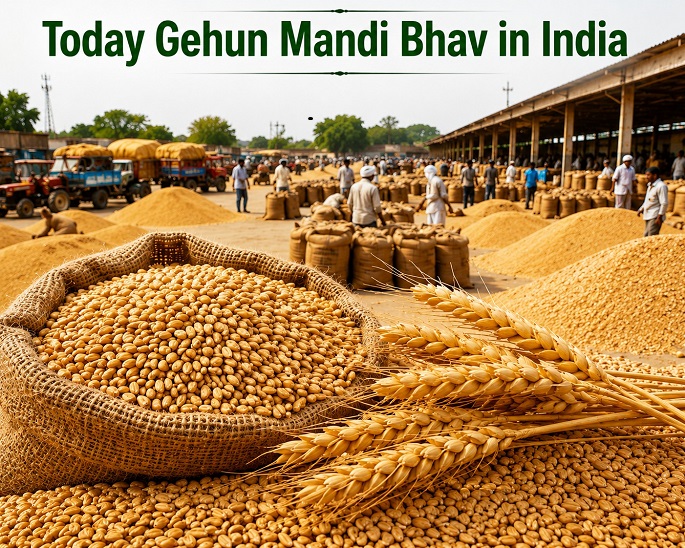






Today Gehun Mandi Bhav in India: Wheat Rates
 Aug 26, 2026
 by Pankaj Sihag



Today Gehun Mandi Bhav in India: Wheat Rates
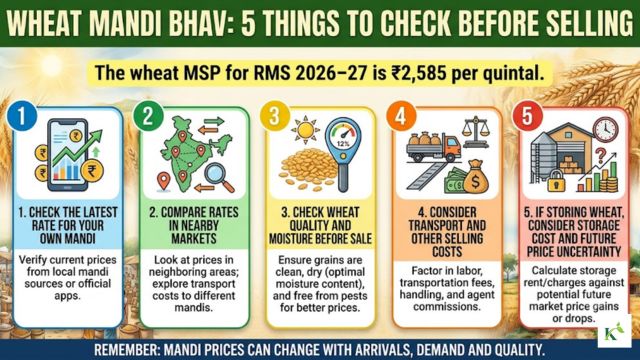
- The wheat MSP for Rabi Marketing Season (RMS) 2026–27 is ₹2,585 per quintal, up ₹160 from ₹2,425 in 2025–26.
- The actual wheat mandi rate can be higher or lower than MSP depending on the mandi, wheat quality, arrivals and buyer demand.
- There is no single gehun price today for all of India. Rates can differ between nearby mandis.
- Before selling, compare the latest rate for your mandi with nearby markets and consider transport, quality and storage costs.
- KhetiKisaan provides daily mandi bhav updates to help farmers check wheat prices before taking their crop to market.
 Table of Contents
What Is Today Gehun Mandi Bhav in India?
The today Gehun mandi bhav in India varies from one mandi to another. There is no single wheat rate for the whole country because prices can change with daily arrivals, wheat quality, local demand and buyer activity.
The wheat mandi rate can also differ between nearby markets. A mandi receiving more wheat may see different bidding from one where arrivals are lower. This is why farmers should check the latest rate for their own mandi and compare nearby markets before taking their crop for sale.
What Is the Wheat MSP for 2026–27?
The wheat minimum support price (MSP) for Rabi Marketing Season (RMS) 2026–27 is ₹2,585 per quintal. This is ₹160 higher than the ₹2,425 MSP announced for RMS 2025–26. The Cabinet Committee on Economic Affairs approved the 2026–27 Rabi MSP on 1 October 2025.
MSP and mandi bhav are not the same thing. MSP is a government-announced benchmark for crop procurement, while the open-market wheat mandi rate depends on actual buying and selling conditions at the mandi. Farmers may sell wheat through government procurement arrangements or in the open market.
So, use ₹2,585 per quintal as a useful benchmark, but check the actual rate available for your crop and location.
Why Does the Wheat Price Today in India Differ Between Mandis?
The wheat price today in India can change from one mandi to another because market conditions are different.
The main factors include:
-
Mandi arrivals: A large quantity of wheat arriving at the same time can affect the day's bidding.
-
Grain quality: Moisture, cleanliness, foreign matter and grain condition can affect the price offered by buyers.
-
Local demand: Flour mills, traders and other buyers may offer different rates depending on their requirements.
-
Variety: Different wheat varieties and grades may attract different prices.
-
Location: Transport costs and the number of active buyers can affect local market rates.
The National Agriculture Market (eNAM) platform also publishes mandi-level information on commodity prices and arrivals, showing why checking a specific market is more useful than relying only on an all-India figure.
How Can You Check the Current Wheat Market Price?
The easiest way to understand the current wheat market price is to check the latest rate for your specific mandi and compare it with nearby markets.
Do not look only at the highest quoted rate. If another mandi is offering ₹50 or ₹100 more per quintal but requires much higher transport costs, the higher rate may not leave you with more money.
Before taking your gehun to the mandi, check:
- The latest wheat mandi rate in your local market.
- Rates in nearby mandis.
- The variety and quality accepted by buyers.
- Current arrivals and buyer demand.
- Transport and other selling costs.
Note: All prices are subject to change based on live Agricultural Produce Market Committee (APMC) auction activity.
When Is the Best Time to Sell Wheat?
There is no fixed date that guarantees the best wheat price. Wheat is mainly harvested during the March–April period in much of northern India, after which the market can receive wheat from stored stocks as well as ongoing trading activity.
Prices can change after harvest depending on crop arrivals, government procurement, demand, stocks and other market conditions. Because these factors can change, waiting for a particular month does not guarantee a higher rate.
If you have suitable storage and do not need to sell immediately, compare the current wheat rate per quintal today with later market rates before making a decision. Also consider storage costs, grain quality and the risk of price changes.
If you need money for the next crop or household expenses, selling a suitable portion when the available rate works for you may make more sense than waiting only for a possible price increase.
What Should Farmers Check Before Selling Gehun?
A good selling decision starts with the actual amount you will receive, not just the mandi's headline rate.
Check the local gehun price today, compare nearby markets and understand any costs involved in transporting and selling the crop. If you are considering holding your wheat, also check whether you have suitable storage and whether the expected price difference justifies the additional cost and risk.
KhetiKisaan can help farmers keep track of mandi bhav and compare current market information before taking a selling decision.
Conclusion
The rate that matters most is the one available for your wheat in your market. A national average may not tell you what a buyer in your nearby mandi is willing to pay.
Before taking your crop to market, check the latest wheat mandi bhav today, compare nearby rates and consider your wheat quality and selling costs. KhetiKisaan provides daily mandi bhav information to help farmers make that comparison before selling.