





What Is Isabgol Powder and Why Does It Matter for Farmers
 Oct 06, 2026
 by Pankaj Sihag



What Is Isabgol Powder and Why Does It Matter for Farmers
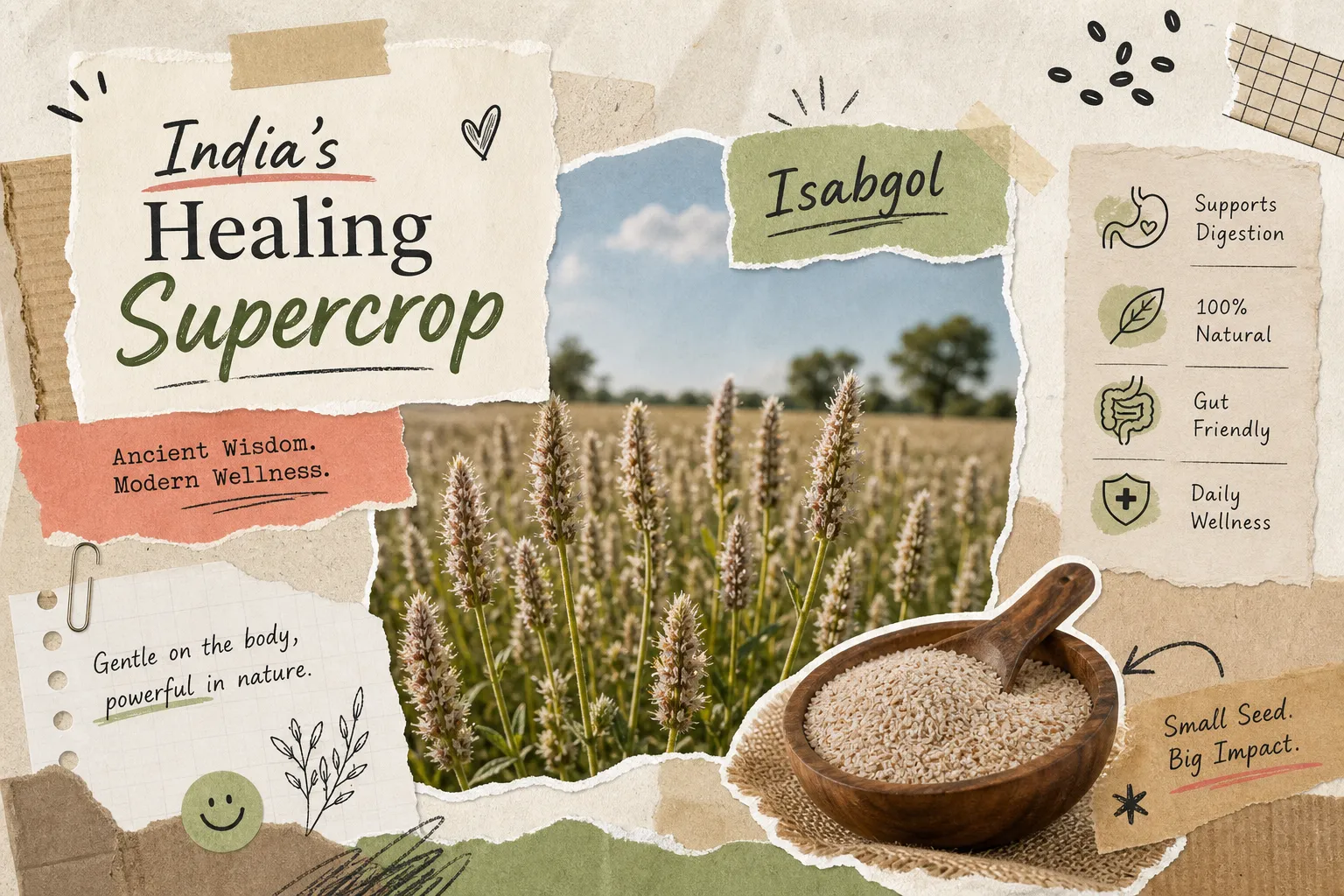
Isabgol powder is not just a pharmacy product you see on chemist shelves. It is the processed, milled form of the same isabgol crop that farmers in Rajasthan and Gujarat sow every Rabi season on their dry, sandy fields. The small seed harvested from Plantago ovata travels through cleaning machines, dehulling rollers, and milling units before it becomes the fine, off-white powder that ends up in blister packs and health supplement bottles. India is the world's leading supplier of isabgol, exporting roughly 50,000 to 55,000 tonnes of husk and powder annually, making this one of the most commercially significant export crops grown anywhere in the subcontinent.
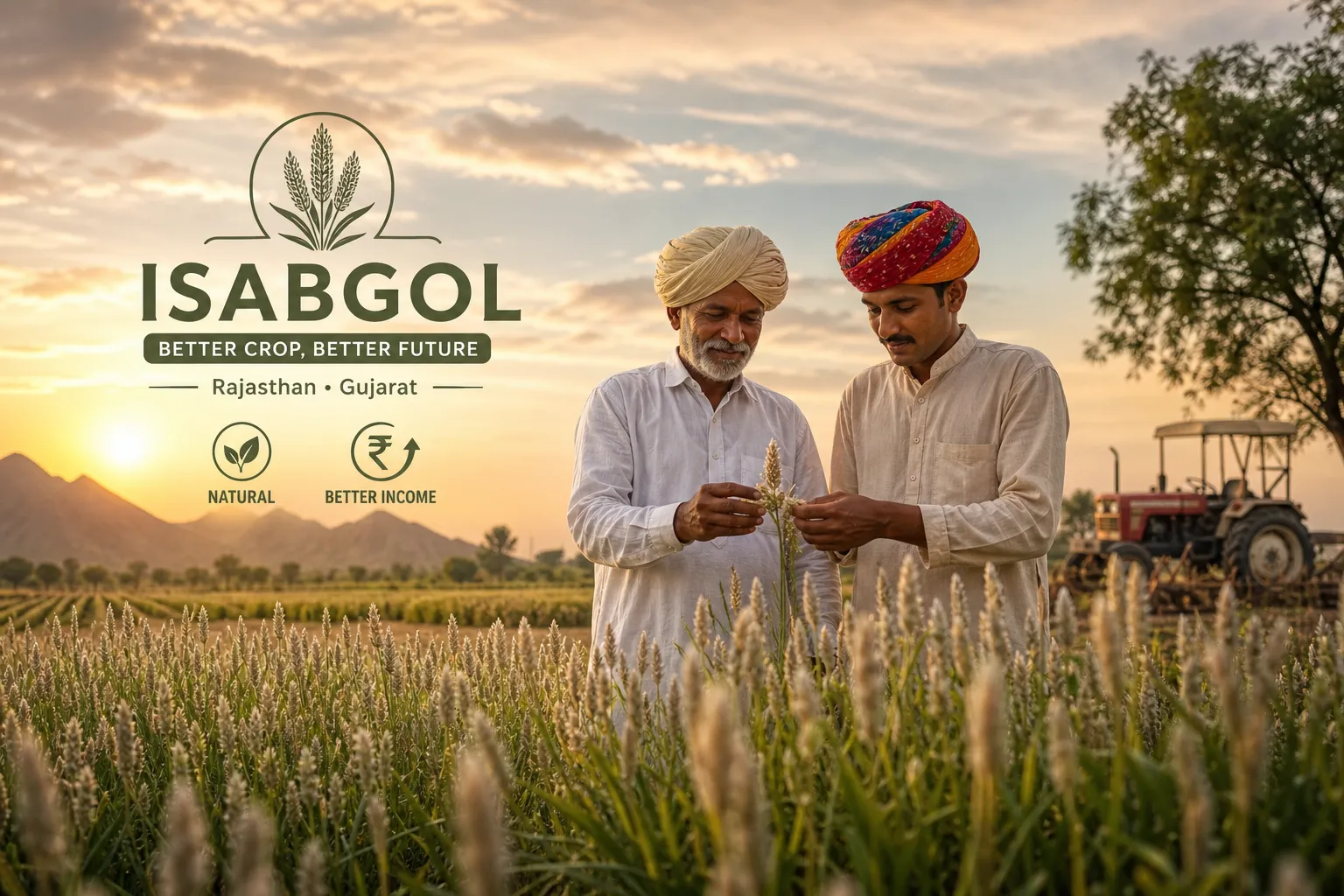
Understanding what isabgol powder actually is, how it is made, and who buys it is not just useful consumer knowledge. For farmers growing this fasal (crop) in districts like Jalor and Barmer, it is directly relevant information because the industrial demand for processed powder is what drives the mandi bhav they receive at harvest time. This article covers the full chain: from the seed on the zameen (land) to the packaged powder on pharmacy shelves, and why every link in that chain matters to the kisaan who grows it.
 Table of Contents
- What is isabgol powder?
- Quick facts snapshot
- From field to powder: how isabgol is processed
- Pharmaceutical companies: the biggest industrial buyers of isabgol powder
- Food and nutraceutical industry uses
- Health benefits that keep consumers buying isabgol powder
- How industry demand shapes isabgol mandi bhav in Rajasthan
- What bulk buyers look for: quality signals that affect your price
- Top isabgol powder brands in India and what they tell you about the market
- The full chain, from Rajasthan field to pharmacy shelf
- FAQs
What is isabgol powder?
Isabgol powder comes from the outer seed coat, called the husk, of Plantago ovata , a small herb cultivated almost entirely in Rajasthan and Gujarat. The terms isabgol, psyllium husk, ispaghula husk, and ispaghula powder all refer to material from the same plant. "Powder" specifically means this husk has been milled into a fine, off-white to cream-coloured consistency that dissolves quickly in water and forms a thick, mucilaginous gel.
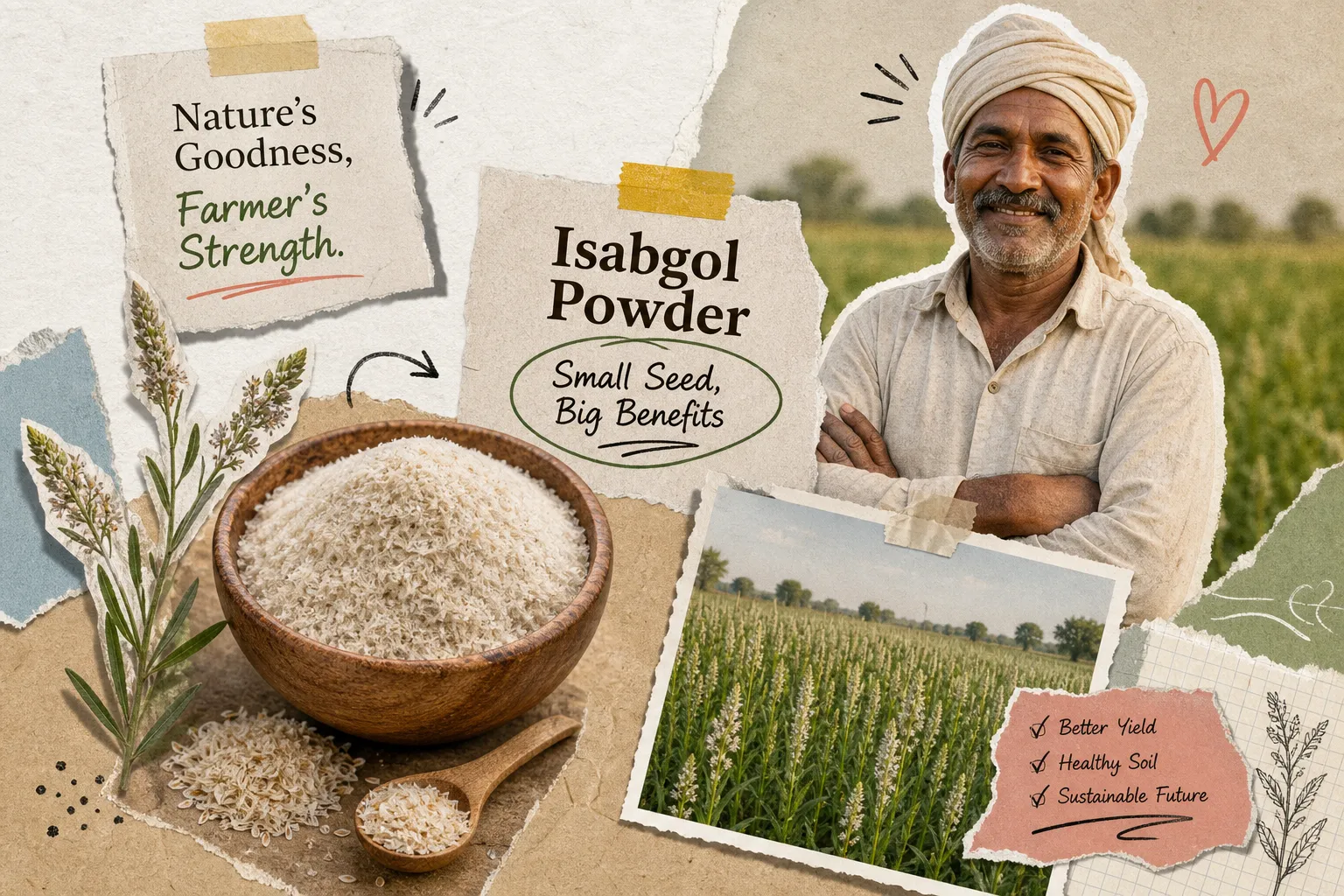
Three distinct commercial forms are traded in Indian and global markets. Whole isabgol seed is less commonly traded than husk or powder and may be used in some traditional Ayurvedic applications. Isabgol husk is the separated seed coat, coarser in texture, used in traditional preparations and some consumer products. Isabgol powder is the same husk milled to a finer particle size, and this is the form that pharmaceutical manufacturers and food processors prefer because it disperses uniformly in formulations and water. The powder grade is the most widely traded form globally, and it commands the highest price per kilogram at the processing unit level.
Quick facts snapshot
| Detail | Information |
|---|---|
| Common name | Isabgol / Psyllium / Ispaghula |
| Scientific name | Plantago ovata |
| Primary growing states | Rajasthan (Jalor, Barmer), Gujarat |
| Key commercial form | Milled husk powder (40 to 100 mesh) |
| Primary industrial buyers | Pharmaceutical, food, nutraceutical manufacturers |
| India's export volume | Approx. 50,000, 55,000 tonnes annually (world's leading supplier) |
| Rajasthan annual production | Approx. 1,70,670 tonnes; Barmer 36%, Jalor 31% |
| Typical farm-gate price | ₹9,500 to ₹14,500 per quintal for raw seed |
From field to powder: how isabgol is processed
After farmers thresh the crop to separate seeds from stalks, the raw seed goes through pre-cleaning screens that remove straw, dust, and oversized material. Moisture control at this stage is critical. Processing units reject seed lots above a specified moisture threshold because high moisture reduces the swelling index of the finished powder and shortens shelf life. Seed arriving at the mill dry and clean is already in a stronger position before a single machine touches it.
The core of isabgol processing is mechanical dehulling. Specialised abrasive mills, rollers, or emery-type machines subject the seed to controlled rubbing and impact, loosening the thin outer husk without pulverising the inner kernel. This is followed by pneumatic aspiration, where a fan system draws the lighter husk upward while heavier kernel fragments fall separately. The recovered husk then passes through vibratory sieves, gravity separators, and, in modern plants, optical colour sorters to remove dark particles and foreign matter. Commercial processing lines repeat this dehulling and separation cycle multiple times to recover maximum husk yield from each lot of seed.
Once purified, the husk is fed into milling equipment, pin mills, hammer mills, or ultrafine grinders, to produce powder at specific mesh sizes. Common grades are 40-mesh, 60-mesh, or 100-mesh, depending on the end buyer's requirement. Pharmaceutical-grade powder demands a finer mesh and a tighter swelling-index specification than food-grade powder. Higher-purity, finer-mesh powder commands a meaningful premium over standard food-grade material, wholesale price data from the 2026 season shows pharmaceutical-grade powder reaching ₹220 to ₹300 per kg compared to ₹200 to ₹260 per kg for food-grade material. Some of this processing premium may be reflected in higher procurement prices for superior seed lots, depending on local procurement practices and the terms of individual contracts.
Pharmaceutical companies: the biggest industrial buyers of isabgol powder
Pharmaceutical manufacturers are the single largest buyers of isabgol husk powder globally, and their demand is what provides a stable price floor at Indian mandis. Pharma companies use it in over-the-counter laxatives, fibre supplement sachets, and tablet binders. Products like Dabur Sat Isabgol, Baidyanath Isabgol, Softovac, and Naturolax-A all use psyllium's gel-forming soluble fibre as the active or functional ingredient.
For a batch of isabgol powder to qualify for pharmaceutical use, it must meet a minimum swelling index of 40 mL per gram, a measure of how much mucilaginous gel one gram of powder produces when mixed with water, with premium contracts specifying 50 to 70 mL per gram. Moisture must typically stay below 10 to 12 percent, and microbial counts and pesticide residues must comply with EU or US maximum residue limits. Pharma demand is year-round and relatively price-inelastic, meaning these companies continue purchasing even when crop prices rise modestly. This steady procurement creates a consistent demand base that supports isabgol mandi rates even during off-peak months.
Food and nutraceutical industry uses
Beyond pharma, food manufacturers have become a fast-growing buyer segment for isabgol powder. Its gel-forming property allows it to replace gluten's structural role in dough, making it a valued ingredient in gluten-free bread, breakfast cereals, and low-glycaemic food products. Export markets in the United States, European Union, and Australia have seen strong growth in this segment as consumer demand for high-fibre and allergen-free products has expanded over the past decade.
Nutraceutical companies bottle isabgol husk powder as standalone psyllium fibre supplements. The cosmetic industry uses psyllium gel in certain skin-care and hair-conditioning formulations. Animal feed is a smaller but growing application. Together, these non-pharma uses create a secondary layer of industrial demand that helps support isabgol prices when pharmaceutical procurement slows seasonally. For farmers, this diversification of industrial buyers is a structural advantage that isabgol holds over many other Rabi crops.
Health benefits that keep consumers buying isabgol powder
Isabgol powder's sustained commercial demand rests on a well-established health benefit profile backed by clinical evidence. It reliably relieves constipation by increasing stool bulk and water content. It produces a modest but documented reduction in LDL cholesterol when taken regularly alongside a diet low in saturated fat. It also slows post-meal glucose absorption in people with prediabetes or type 2 diabetes. These are not marketing claims; they sit confidently in pharmacies alongside prescription medicines because the clinical evidence is robust.
The standard isabgol dosage for adults is 5 to 10 grams per day, roughly one to two teaspoons, mixed in at least 240 mL of water and consumed immediately, never swallowed dry. Starting with a smaller amount and increasing gradually reduces the most common side effects: temporary gas and bloating during the initial adjustment period. People on prescription medicines should space their isabgol intake about two hours away from their medication to avoid absorption interference. Year-round consumer and pharmaceutical demand contributes to steadier industrial procurement relative to highly seasonal crops, which helps underpin isabgol mandi rates across most of the calendar year.
Compared to methylcellulose and wheat bran, isabgol powder holds the strongest clinical evidence across multiple health outcomes. Methylcellulose causes less gas but lacks psyllium's cholesterol-lowering data. Wheat bran is effective for stool bulk but has none of isabgol's metabolic benefits. This competitive advantage in the global supplement market keeps demand for Indian isabgol consistently high, a dynamic that matters directly to the farmer watching the rate board at the mandi.
How industry demand shapes isabgol mandi bhav in Rajasthan
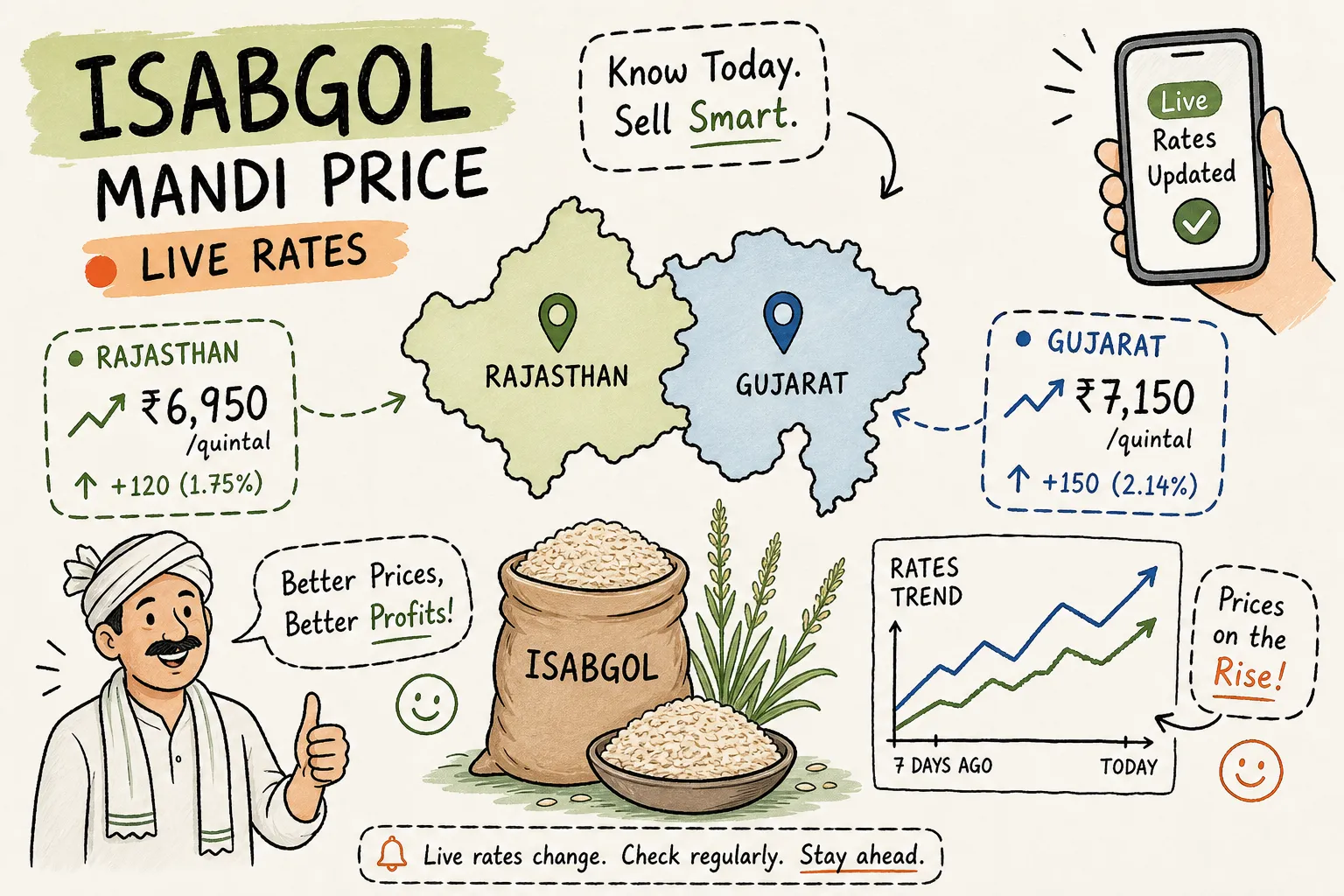
Rajasthan produces the majority of India's isabgol crop, with Barmer contributing approximately 36 percent of state output and Jalor around 31 percent. Procurement by pharmaceutical manufacturers and export trading houses is the primary driver of what rate a farmer gets at the mandi. When pharma companies activate forward purchasing, typically between October and March to align with post-harvest availability, mandi rates for isabgol seed and husk rise because multiple processing units compete for available stock. When export volumes to the US or EU soften due to currency movements or regulatory changes, local rates follow downward.
India exports approximately 50,000 to 55,000 tonnes of isabgol husk and powder annually, with the United States accounting for roughly 53 percent of shipments, followed by Bangladesh at around 18 percent, and Italy and other EU markets making up most of the remainder. A surge in functional food demand abroad or a shortfall in any competing producing region can move isabgol mandi bhav significantly within a single season. Farmers who understand this buying cycle and track export signals are in a position to time their mandi visit to capture the price peak rather than selling under pressure immediately after harvest.
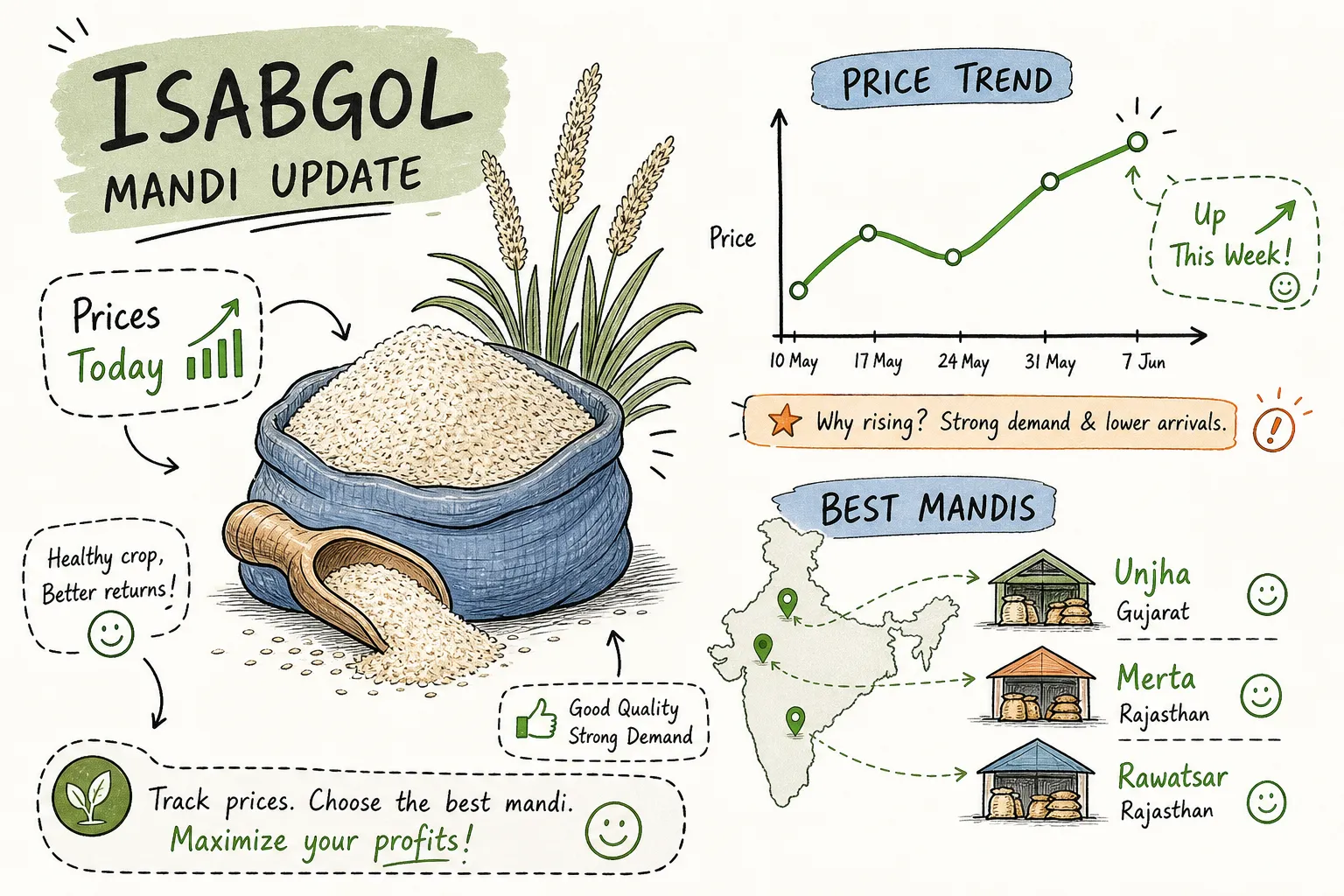
Isabgol mandi rates fluctuate week to week during the procurement season, and price timing can materially affect returns, selling before a procurement peak may reduce the realised price by hundreds of rupees per quintal in some seasons. Platforms like KhetiKisaan publish live isabgol mandi bhav sourced directly from APMC auction yards, giving farmers an accurate, real-time view of what the crop is actually fetching at major mandis, not delayed government averages or estimated figures. Checking the live rate before loading your trolley for the mandi is the same discipline that every successful commodity trader applies every single day.
What bulk buyers look for: quality signals that affect your price
Pharmaceutical and food-grade buyers assess every incoming lot of isabgol by its swelling index, moisture content, ash content, and particle-size distribution. Seed quality delivered by farmers determines which grade the processing unit can ultimately produce. A high-quality seed lot with low foreign matter, correct moisture at delivery, and no pest damage allows the miller to produce pharmaceutical-grade powder, and pass a portion of that premium back to the grower as a better procurement price.
Buyers reject isabgol lots that arrive with excess moisture, discolouration, musty odour, or high weed-seed content. Farmers who clean, dry, and store their crop carefully before bringing it to the mandi consistently negotiate from a stronger position than those who do not. Increasingly, large export-focused processors also request documentation of pesticide practices because end-use markets in the EU and US enforce maximum residue limits on every incoming shipment. Maintaining a basic spray record is no longer just good practice; for isabgol growers, it is becoming a practical market advantage that can open access to premium buyers and export-linked isabgol psyllium powder price tiers in India's processing sector.
Top isabgol powder brands in India and what they tell you about the market
The retail isabgol powder market in India gives you a useful window into how much value is added between the farm gate and the pharmacy shelf. A farmer selling raw isabgol seed at ₹11,500 per quintal (₹115 per kg) is at the base of a value chain where processed, branded powder retails at substantially higher prices, reflecting processing, packaging, and branding margins that accumulate at each stage.
- Dabur Sat Isabgol: Available in 45 g to 200 g packs; retail price ranges from ₹70 to ₹290 depending on pack size.
- Baidyanath Isabgol: Sold in 100 g to 350 g packs; typically ₹130 to ₹600 at retail.
- Patanjali Isabgol: Available at ₹55 to ₹150 for a 100 g pack, positioned as the value option.
- Organic India Sat Isabgol: Priced at approximately ₹225 to ₹250 for 100 g, targeting the premium health-conscious consumer.
- Softovac and Naturolax-A: Sold in larger packs (300 to 450 g) at ₹300 to ₹600, typically through pharmacy channels.
The wholesale price for standard processed isabgol powder sits at approximately ₹200 to ₹260 per kg, with pharmaceutical-grade powder reaching ₹220 to ₹300 per kg or more. Every rupee of premium that a pharmaceutical-grade powder commands at the wholesale level began with the quality of seed that a farmer delivered to the processing unit. That is the direct link between what grows in Barmer and what sits on a pharmacy shelf in Mumbai.
The full chain, from Rajasthan field to pharmacy shelf
Isabgol powder starts as a small seed sown in Rajasthan's dry Rabi fields. It passes through cleaning, dehulling, milling, and testing before it becomes a globally traded commodity that ends up on pharmacy shelves and in functional food products used by consumers in the United States, Europe, Japan, and across India. The strength of that consumer and industrial demand is what ultimately moves the isabgol rate at Jalor and Barmer mandis every season.
For farmers, understanding what downstream buyers need in terms of quality, purity, and timing is as important as the agronomic decision of when to sow. Delivering clean, dry seed with low foreign matter, maintaining a basic pesticide record, and storing the crop until procurement demand peaks are not small details. They are the practical steps that separate a farmer who gets a fair price from one who sells under pressure and leaves munafa (profit) on the table.
Before taking your isabgol crop to the mandi, check live mandi bhav to know what the market is actually paying that week, not what it paid last month. KhetiKisaan publishes real-time isabgol mandi rates sourced directly from APMC auction yards so you have accurate, ground-level data when it matters most. That one step, checking the rate before you load, can realistically recover several hundred rupees per quintal that would otherwise be left on the table.
FAQs
Related Blogs
Sep 23, 2026
by Pankaj Sihag
Sep 19, 2026
by Pankaj Sihag

Sep 09, 2026
by Pankaj Sihag
Sep 08, 2026
by Pankaj Sihag