





How Much Fibre Is in Isabgol and Why It Matters for Farmers Too

 Sep 10, 2026
 by Pankaj Sihag



How Much Fibre Is in Isabgol and Why It Matters for Farmers Too
Most people reach for isabgol (psyllium husk) when their digestion needs help, but very few stop to ask what actually makes it work. The fibre in isabgol is the answer: roughly 4 grams packed into a single teaspoon, and close to 80 grams in every 100 grams of the dry husk. That is not just a health statistic; it is the reason isabgol commands strong prices at APMC mandis across Rajasthan and Gujarat, and why India supplies approximately 80, 85% of the world's psyllium husk demand.
This article gives you the exact fibre numbers, explains how that fibre works in your body, covers the clinical evidence behind isabgol's benefits, and walks you through safe dosage and precautions. For farmers growing this fasal (crop), there is a dedicated section on what rising global demand means for isabgol bhav (market price) at the mandi. At KhetiKisaan, we track isabgol both as a health subject and as one of the most commercially significant medicinal crops grown in North India. Here is everything you need to know.
 Table of Contents
- Fibre in isabgol: the exact numbers per serving
- Soluble versus insoluble: how the fibre in isabgol actually works
- What clinical research actually shows about isabgol's health benefits
- Safe dosage and how to prepare isabgol the right way
- Side effects, choking risks, and who must be careful
- Why isabgol is one of India's biggest medicinal crop exports
- How rising global demand is pushing isabgol mandi bhav higher
- Final takeaway: one crop, two kinds of value
- FAQs
Fibre in isabgol: the exact numbers per serving
One teaspoon of isabgol husk weighs approximately 5 grams and delivers around 4 grams of dietary fibre. That means 80% of its weight is pure fibre, an extraordinary concentration for any natural food ingredient. Scale up to one tablespoon (about 10 grams) and you get roughly 8 grams of fibre in a single dose.
To put that in perspective: a 40-gram serving of oats contains about 2.7 grams of fibre, and 30 grams of wheat bran delivers around 3.5 grams. Isabgol achieves a comparable fibre load in a fraction of the serving size. This is precisely why isabgol is used medicinally in small spoonfuls rather than eaten as a regular food; even a modest dose carries a significant fibre punch.
Husk versus whole seed: a big difference
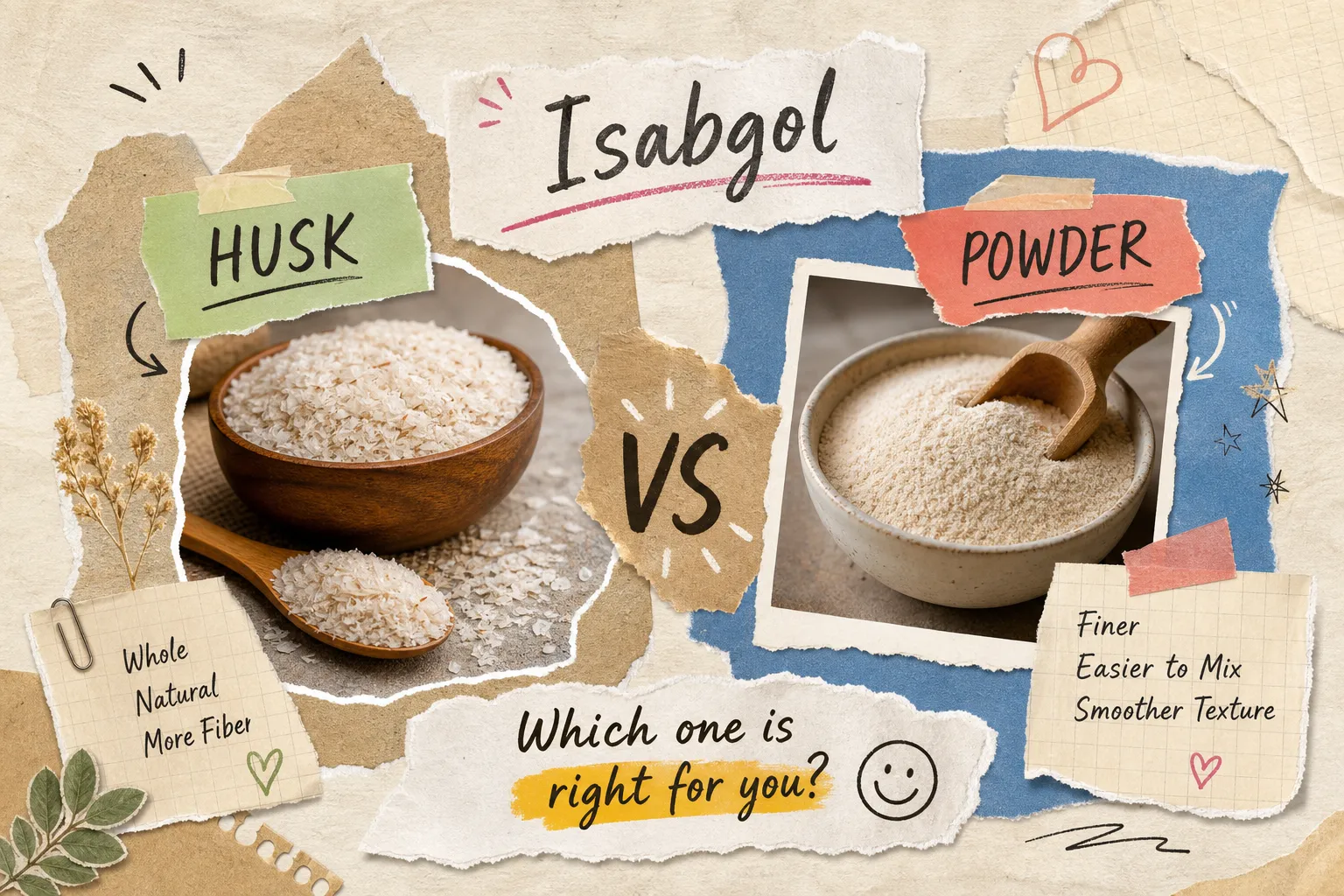
Per 100 grams, isabgol husk (bhusi) contains approximately 77, 81 grams of total dietary fibre. The whole isabgol seed, by comparison, contains only around 24, 25 grams per 100 grams. The husk is the outer mucilage coating of the seed, where virtually all functional fibre is concentrated. Whole seeds include the inner seed components that dilute the fibre fraction significantly.
The practical takeaway: always look for isabgol husk or bhusi specifically, not whole seeds, when purchasing for health use. The husk is roughly three times richer in dietary fibre by weight, and it is the husk that all clinical research focuses on. Many fruits and vegetables contain only a few grams of fibre per 100 grams; the fibre in isabgol husk runs to 77, 81 grams per 100 grams, which explains its outsized effects at small doses.
Soluble versus insoluble: how the fibre in isabgol actually works
Isabgol fibre is approximately 70% soluble and 30% insoluble by weight. This ratio is unusually high in soluble fibre compared with most grain-based fibres like wheat bran, which is predominantly insoluble. That distinction matters because the two types of fibre behave very differently in the gut and produce different effects.
Soluble fibre dissolves in water and forms a gel. Insoluble fibre adds bulk without dissolving. In isabgol, the insoluble fraction drives physical bulk and intestinal transit, while the soluble fraction is responsible for the gel-forming effects that most of its clinical benefits depend on. This 70:30 balance is what makes isabgol effective for both constipation (which needs bulk and softening) and loose motions (which need form and binding). Very few fibres work in both directions simultaneously.
Mucilage: the gel-forming compound that does the real work
Mucilage is the technical name for the viscous, water-absorbing polysaccharide in isabgol's husk. When it contacts water in the gut, it swells into a thick, non-digested, non-fermented gel mass. This gel holds water in the colon, softens stool, and slows the movement of food through the small intestine. It is this slowing effect in the small intestine that influences cholesterol absorption and blood sugar levels.
Because psyllium mucilage is less fermentable than many other soluble fibres such as inulin or fructo-oligosaccharides (FOS), isabgol tends to produce less gas. The effects are primarily mechanical and physical rather than fermentation-driven. This is also why adequate water intake is non-negotiable: the mucilage needs sufficient liquid to form a freely moving gel rather than a sticky mass that can cause blockage.
What clinical research actually shows about isabgol's health benefits
The evidence for isabgol is genuinely strong in some areas and more limited in others. It is worth being clear about the difference, because overstating any remedy does not serve anyone well.
Constipation relief: the strongest and most consistent evidence
A 2022 meta-analysis of 16 randomised controlled trials involving 1,251 participants found that psyllium significantly improved constipation outcomes compared to control groups. Higher doses (above 10 grams per day) and longer duration (four weeks or more) showed the best results. A separate double-blind trial in patients with irritable bowel syndrome (IBS) found that ispaghula husk significantly reduced constipation and transit time versus placebo.
Isabgol is not simply a traditional remedy endorsed by habit. It is one of the most evidence-supported dietary fibres for constipation in clinical literature. The mechanism is straightforward: the gel softens stool and adds bulk, making passage easier without stimulating the gut with chemicals the way laxatives do.
Cholesterol lowering and blood-glucose control
A randomised controlled trial in adults with type 2 diabetes and chronic constipation found that psyllium significantly reduced total cholesterol and triglycerides and improved HDL-C (the "good" cholesterol) compared to placebo. The same trial documented improvements in glycaemic (blood sugar) values, making isabgol one of the few dietary fibres with evidence for both conditions in the same population.
The biological mechanism explains both benefits. The mucilage gel in the small intestine slows glucose absorption, which reduces the post-meal blood-sugar spike. Simultaneously, the gel traps bile acids in the gut; since the body uses bile acids (made from cholesterol) to produce more bile, trapping them forces the liver to pull more cholesterol from the blood. These benefits are supportive, not curative. Isabgol should be used alongside prescribed medicines for diabetes or high cholesterol, not as a replacement for them.
Can isabgol help with loose motions and diarrhoea?
The physiological logic is sound: isabgol's gel adds form and structure to loose stool, absorbing excess water and slowing transit time. Clinical trial evidence specifically for diarrhoea is less direct than for constipation, but review literature consistently describes isabgol as a stool normaliser that works in both directions. This makes it particularly useful for people whose bowel habits swing between constipation and loose motions, as in IBS-mixed type.
In practice, isabgol is one of the few fibres that can be recommended regardless of which direction the digestive problem leans. That versatility is unusual and clinically valuable. People with IBS-mixed type, whose symptoms alternate between constipation and loose motions, tend to find it particularly helpful precisely because it normalises rather than pushes in one direction.
Safe dosage and how to prepare isabgol the right way
The standard starting dose for adults is 1 teaspoon (5 grams) of isabgol husk once daily. This can be increased to 1, 2 teaspoons twice daily (up to 10, 15 grams per day) based on tolerance and need. Do not start at the highest dose; give your body a week to adjust and increase gradually to avoid bloating and cramping.
Research doses used in specific conditions, such as 20 grams per day in some IBS trials, are not appropriate for self-treatment. They were administered under clinical supervision in controlled settings. For children aged 6 to 12 years, a supervised dose of 2, 5 grams per day is commonly cited, but children should not receive adult doses without medical advice.
How to mix and drink it correctly
Dissolve 1, 2 teaspoons of isabgol husk in a full glass of water (200, 250 mL) and stir well. Drink it immediately after stirring. Do not let it sit, because the mucilage begins to gel within minutes; a thick mixture increases the risk of choking, particularly for elderly users. Follow with an additional glass of water, and maintain high fluid intake throughout the day.
Isabgol only works safely and effectively when there is enough water to allow the gel to move freely through the digestive tract. Inadequate fluid intake is a common cause of side effects and the main choking risk with this supplement.
Timing and the essential medicine gap
For constipation relief, taking isabgol after dinner or before bed works well for many people, supporting a morning bowel movement. For blood-sugar or cholesterol benefits, taking it before meals is more commonly recommended to slow nutrient absorption during eating. Consistency matters more than the exact clock time.
As a conservative guideline, keep at least a 2-hour gap between isabgol and most oral medications. Mucilage can bind drugs and reduce their absorption, which means taking isabgol too close to your medicines can make those medicines less effective. This timing gap is especially important for narrow-therapeutic-index drugs such as lithium, digoxin, or blood-thinners, where even modest changes in absorption carry clinical consequences. When in doubt, confirm timing with a pharmacist.
Side effects, choking risks, and who must be careful
Gas, bloating, stomach cramps, nausea, and loose motions are the most frequently reported side effects of isabgol, particularly when starting at too high a dose or increasing too quickly. Most of these settle within a week as the gut adjusts. Starting at a low dose and increasing gradually is the most reliable way to minimise discomfort.
Allergic reactions are rare but possible. A rash, hives, itching, swelling, or breathing difficulty after taking isabgol needs immediate medical attention. People who work with psyllium dust in processing or packaging environments have a higher occupational sensitisation risk, but for general consumers, severe allergy is uncommon.
The choking hazard: why water is non-negotiable
If isabgol is swallowed without sufficient liquid, the mucilage can swell rapidly in the throat or oesophagus and cause choking or blockage. This is a documented, serious risk, not a theoretical one. People with pre-existing swallowing difficulty, oesophageal narrowing, or any history of bowel obstruction should avoid isabgol or use it only under direct medical supervision.
Elderly users face a higher risk of oesophageal obstruction if they take isabgol with too little water. Caregivers must ensure a full glass accompanies every dose and that the person drinks it quickly after stirring, before the gel thickens in the glass.
Drug interactions and high-risk groups
As a general rule, maintain at least a 2-hour gap between isabgol and most oral medications. Isabgol can reduce the absorption of medicines taken at the same time, and for some drugs, even a small reduction in absorption can have meaningful clinical consequences. People on multiple prescription medicines, particularly those with a narrow therapeutic index, should confirm the safest timing with their pharmacist or doctor before starting isabgol.
Pregnant and breastfeeding women may use isabgol, as it is not absorbed by the body and is not expected to pose foetal risk based on current guidance. However, controlled pregnancy-specific data remain limited, and self-dosing without guidance is not recommended, particularly if other medications or pregnancy complications are involved. Confirm with your clinician if you are unsure.
Why isabgol is one of India's biggest medicinal crop exports
India supplies approximately 80, 85% of the world's psyllium husk demand. The United States, Germany, the United Kingdom, France, and several other countries import large volumes every year for use in pharmaceutical products, dietary supplements, breakfast cereals, and functional food formulations. India's isabgol export value grew from around US$220 million in 2020, 21 to roughly US$320, 340 million by 2024, 25, a substantial increase driven by rising global demand for natural, high-fibre ingredients.
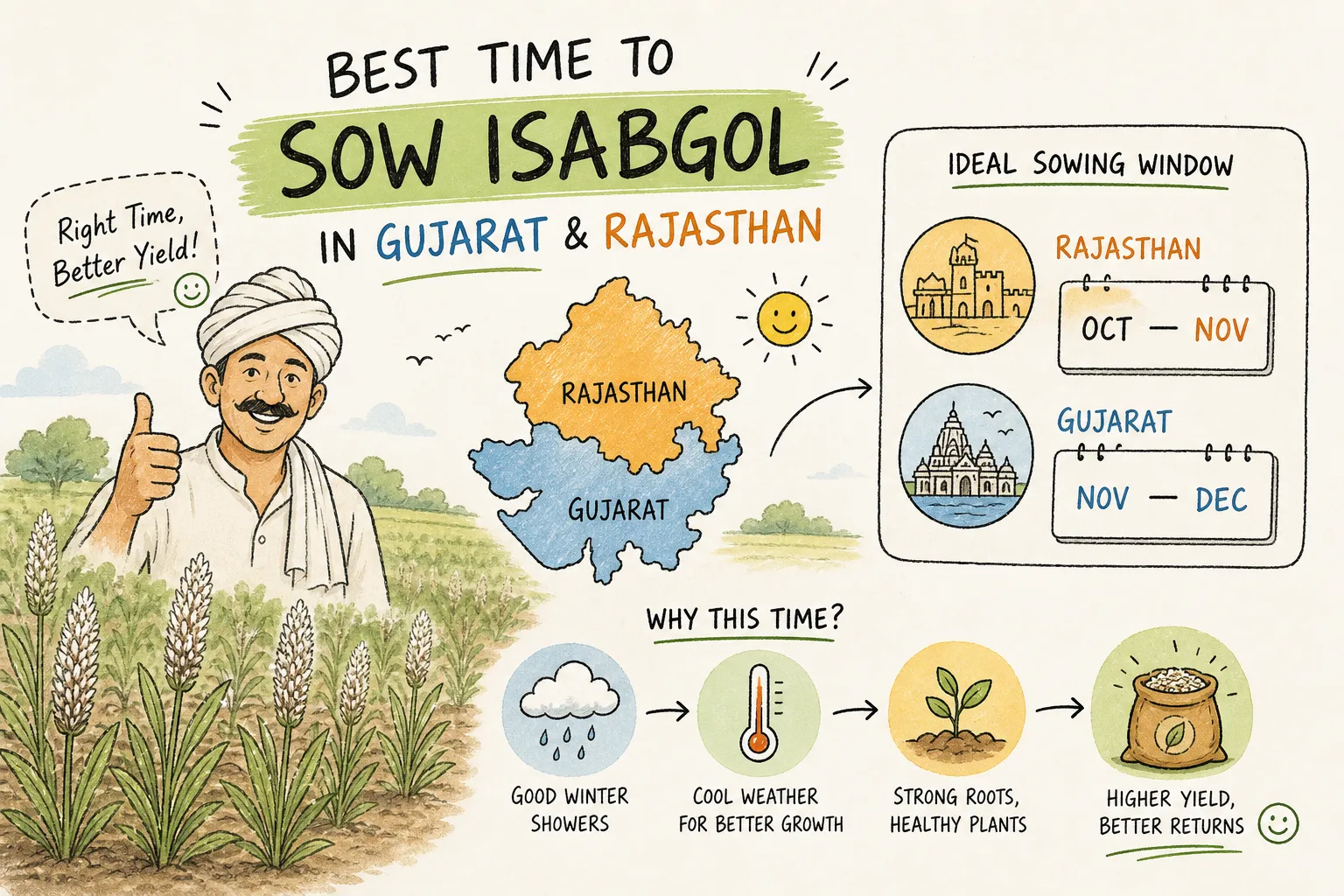
Isabgol is primarily grown in Rajasthan and Gujarat during the Rabi season, sown in October, November and harvested in February, April. The crop thrives in dry, sandy soils with low irrigation requirements, making it particularly well suited to Rajasthan's terrain. For farmers in water-stressed regions, isabgol offers a financially attractive alternative to more water-intensive crops like wheat or cotton.
What global buyers are actually paying for
Pharmaceutical companies, nutraceutical brands, and food manufacturers import isabgol specifically because of its exceptionally high soluble fibre and mucilage content. The same qualities discussed throughout this article are precisely what international buyers value and pay a premium for. Product grades depend on fibre purity and husk separation quality; higher-grade husk commands significantly better export prices per quintal.
The global trend toward high-fibre functional foods and gut-health supplements has made psyllium husk a consistent earner for India's agricultural export basket. As more consumers in North America and Europe add fibre supplements to their daily routine, demand for Rajasthan and Gujarat-grown isabgol remains structurally strong.
How rising global demand is pushing isabgol mandi bhav higher
When global buyers increase procurement of psyllium husk, competition at Indian APMC mandis intensifies and isabgol bhav tends to rise. Unlike many Rabi crops where the MSP (Minimum Support Price) sets a reliable price floor, isabgol prices are largely export-driven. Price movements follow international health industry trends more than domestic government policy. This means kisaans growing isabgol are exposed to global market dynamics in a way that wheat or chana growers typically are not.
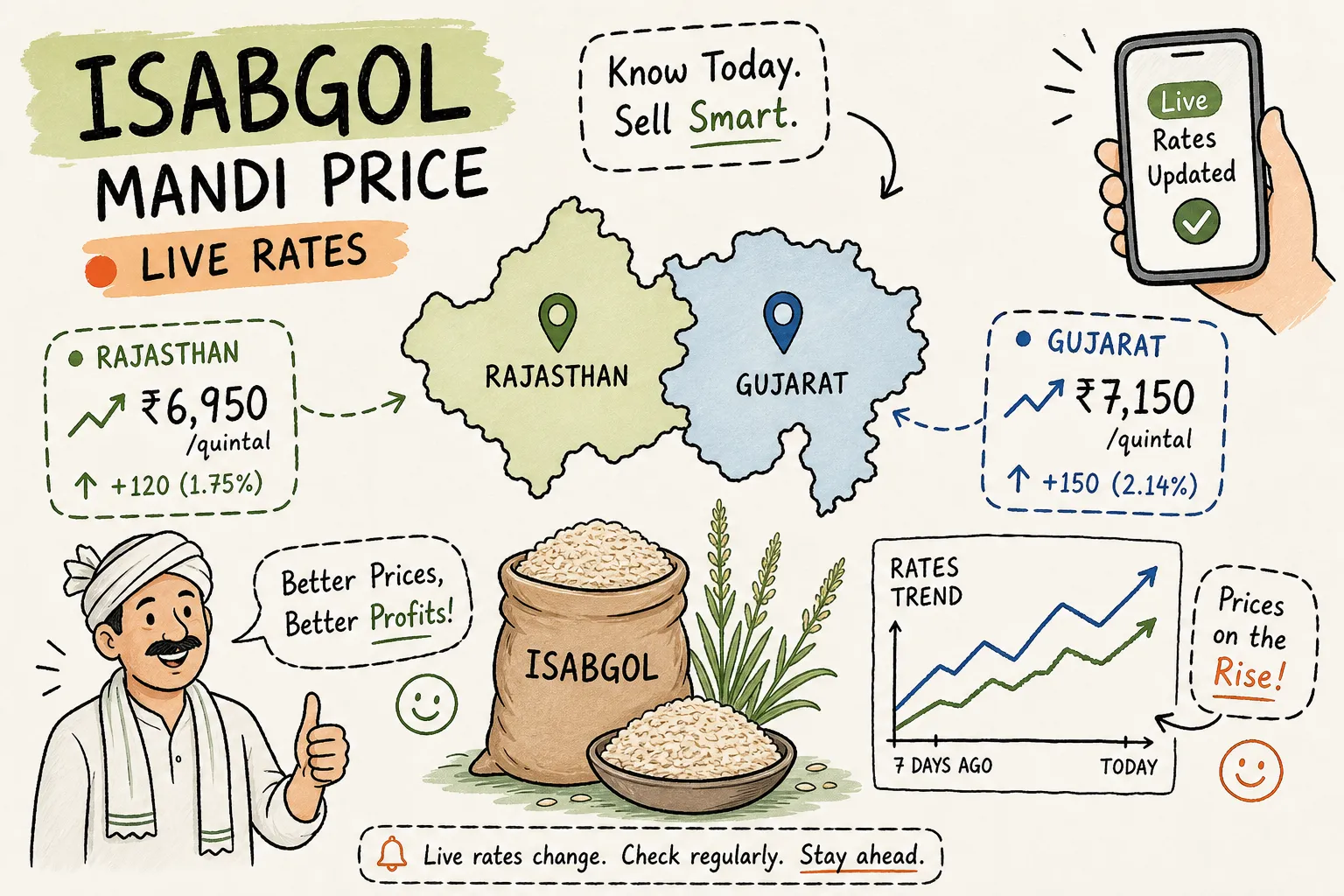
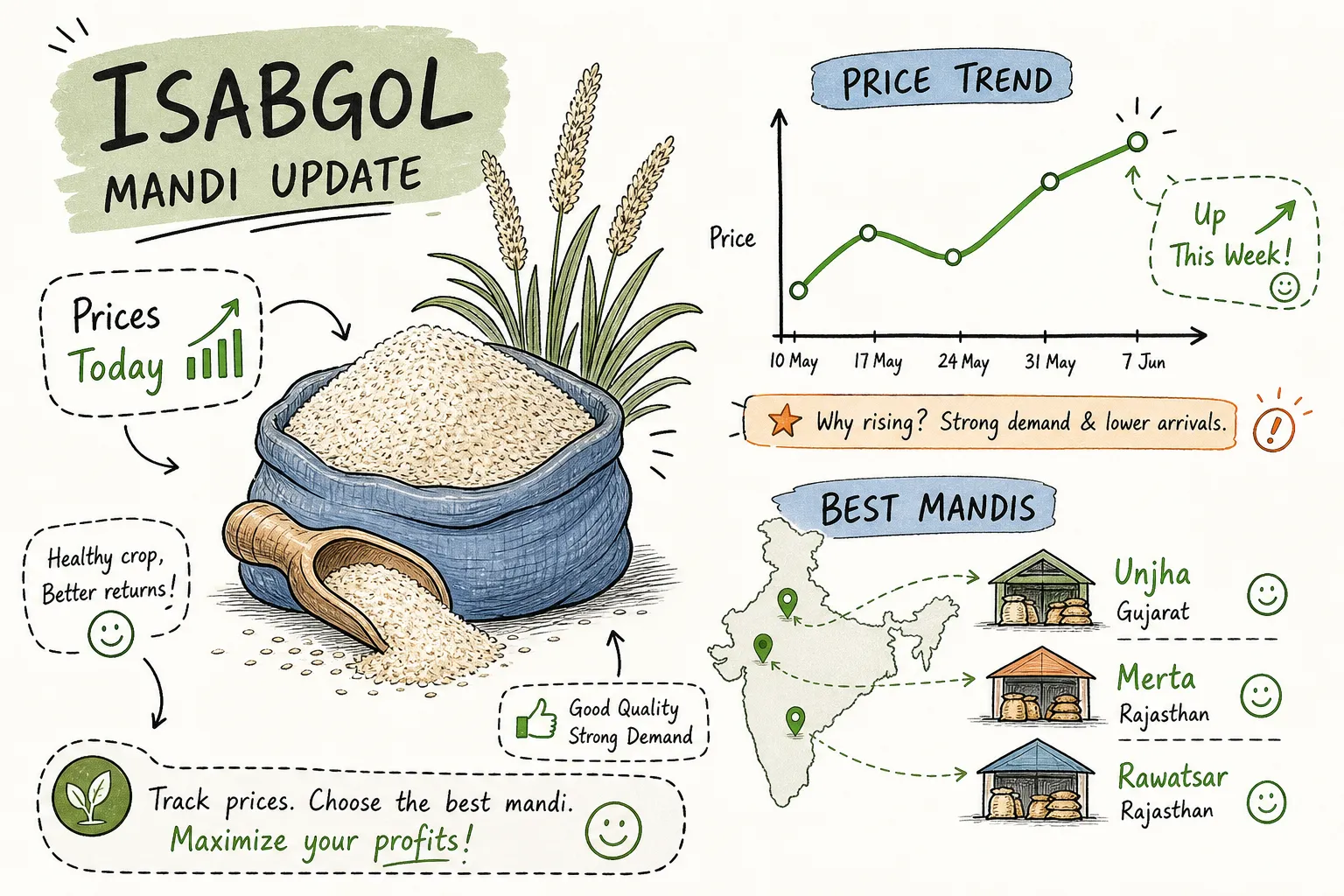
Major trading activity happens at Unjha APMC in Gujarat, which is widely regarded as one of Asia's largest isabgol and spice trading hubs. Much of the crop from Rajasthan is routed through Unjha for processing and export. Within Rajasthan, mandis with active isabgol trading include Sri Dungargarh, Bajju, Bhinmal, Merta City, Madanganj Kishangarh, and Bhagat Ki Phalodi. Recent price data from Sri Dungargarh showed isabgol trading in a range of approximately ₹9,200, ₹10,301 per quintal, while prices across Rajasthan mandis have varied from ₹4,000 to over ₹20,000 per quintal depending on the market, the date, and the grade of husk.
Why tracking live isabgol bhav matters for farmers
Isabgol prices can vary meaningfully across mandis within the same week, and sometimes within the same day. The farmer who knows today's rate across multiple APMC centres is in a far stronger negotiating position than one relying on last week's information or a neighbour's estimate. Grade differences also matter: premium-quality husk with higher mucilage separation commands better prices, so knowing what is trading where and at what level helps a farmer decide both when and where to sell.
KhetiKisaan tracks live isabgol bhav from APMC mandis across Rajasthan, with prices sourced from ground-level coverage of actual auctions rather than delayed government feeds or estimated averages. For any kisaan holding isabgol stock and deciding the right time to head to the bazar, checking current mandi rates before leaving can be the difference between a fair price and leaving munafa (profit) on the table. Explore isabgol mandi bhav updates and farming guides on KhetiKisaan to stay ahead of the market.
Final takeaway: one crop, two kinds of value
The fibre in isabgol tells a complete story on its own: approximately 4 grams per teaspoon, close to 80 grams per 100 grams of husk, with roughly 70% of that fibre being soluble mucilage. That profile is what produces the clinical benefits for constipation, cholesterol, and blood sugar, and it is also what drives global demand and keeps isabgol mandi bhav supported year after year. The health value and the commercial value are two expressions of the same underlying quality in the husk.
For safe use, the rules are straightforward: start at a low dose, drink a full glass of water with every serving, never take it dry, and maintain at least a 2-hour gap from most other medicines. For farmers, the rules are equally clear: understand that isabgol prices follow export demand more than MSP policy, know your grade quality, and check live mandi rates before deciding when and where to sell.
Whether you are a consumer looking to add more fibre to your diet or a kisaan deciding the right time to bring your fasal to the mandi, staying informed is your biggest advantage. Visit KhetiKisaan for real-time isabgol bhav updates, crop guides, and farming insights that help you make smarter decisions at every stage of the agricultural cycle.
FAQs
Related Blogs
Oct 08, 2026
by Pankaj Sihag
Sep 23, 2026
by Pankaj Sihag

Sep 19, 2026
by Pankaj Sihag

Sep 09, 2026
by Pankaj Sihag
Sep 08, 2026
by Pankaj Sihag