





What Is Isabgol Ki Bhusi & Its Market Value
 Oct 08, 2026
 by Pankaj Sihag



What Is Isabgol Ki Bhusi & Its Market Value
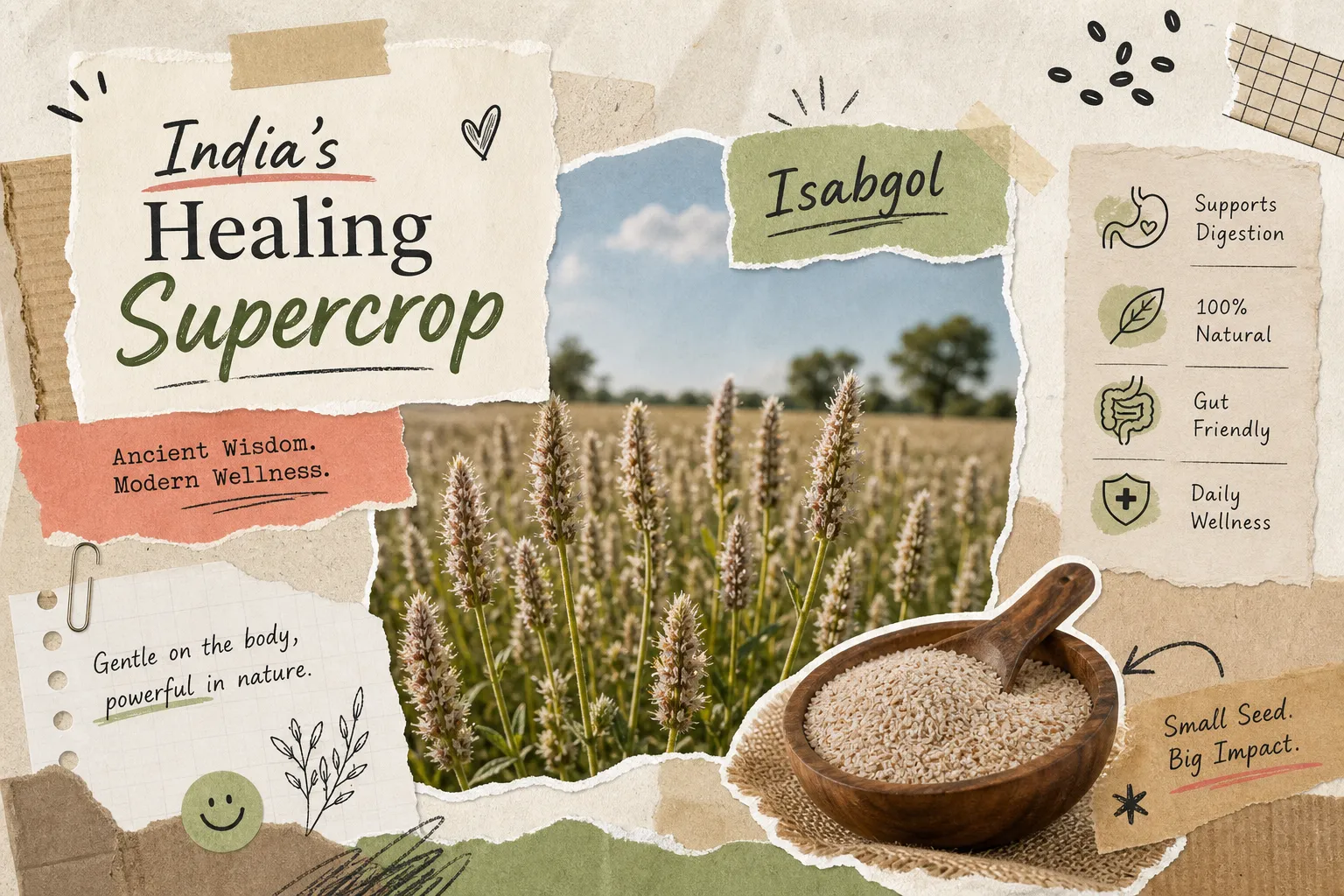
- Crop: Isabgol ki bhusi, the outer husk of Plantago ovata, is the commercially valuable fraction of a short-season Rabi crop harvested between February and March.
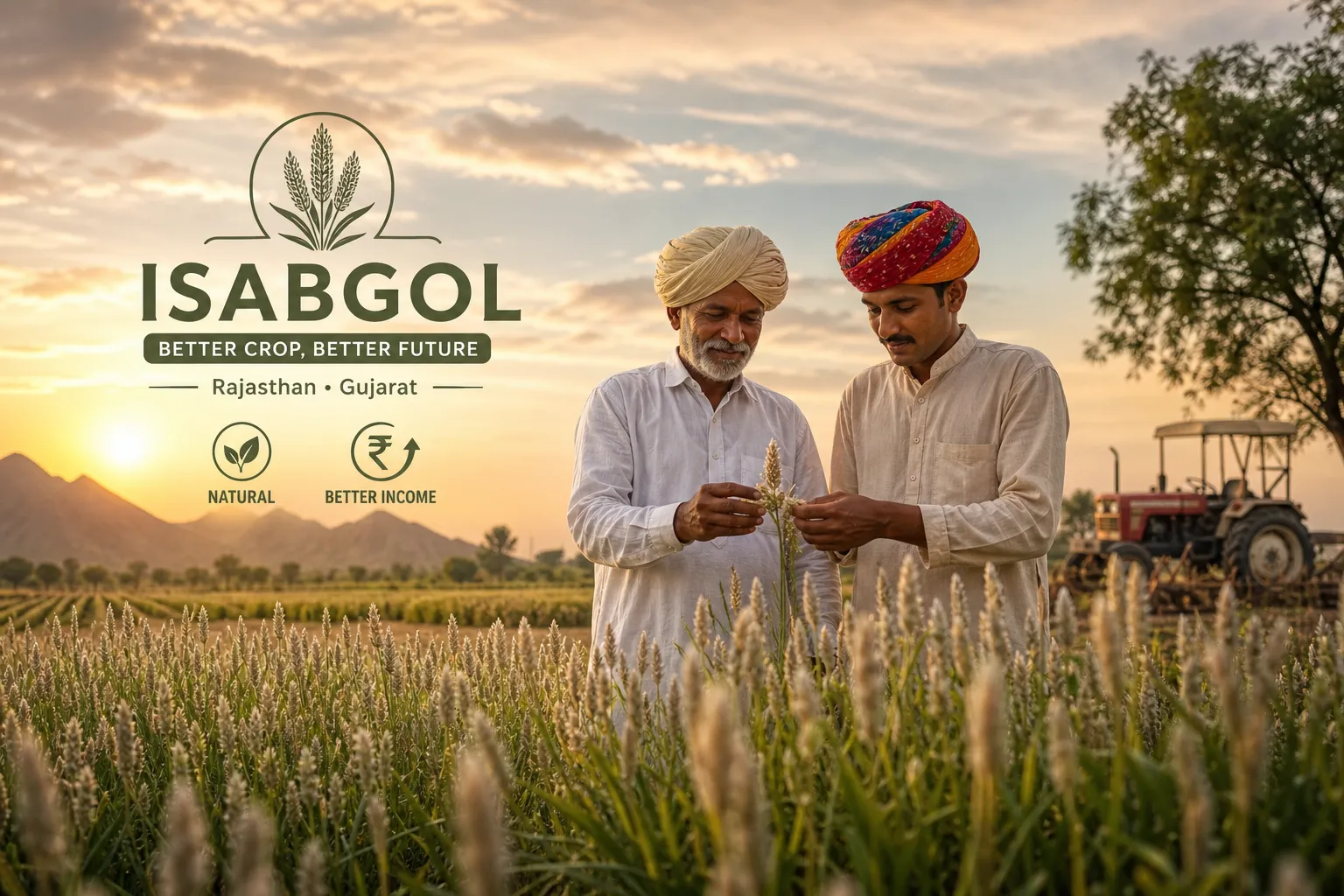
- Where it grows: Rajasthan (Barmer, Jalore, Nagaur), Gujarat, and Madhya Pradesh are the primary producing states. India supplies over 80% of global psyllium husk demand.
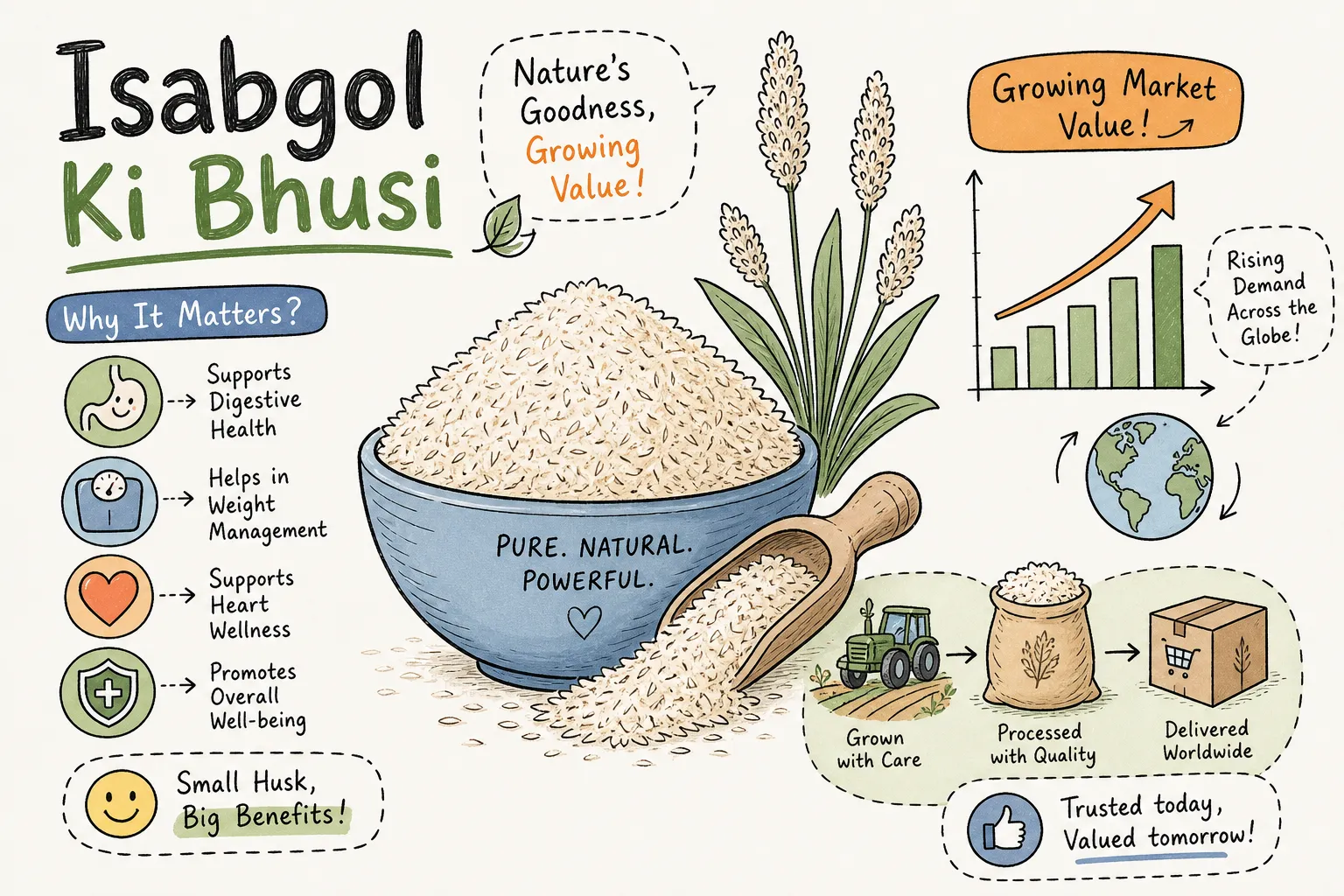
- Bhusi vs. whole seed: Bhusi is the thin, translucent outer husk peeled from the seed during milling. The husk, not the inner seed, contains the commercially valuable soluble fibre (mucilage).
- Two key markets: Export demand from pharmaceutical and nutraceutical companies (USA, EU) and domestic consumer demand for digestive health supplements.
- Isabgol Mandi Bhav range: Approximately ₹9,000 to ₹15,855 per quintal at major APMC mandis, with modal prices at most key centres currently sitting between ₹11,000 and ₹13,500 per quintal.
- No MSP: Isabgol has no Minimum Support Price. Prices are entirely market-driven, making daily mandi rate tracking essential for farmers.
 Table of Contents
- What is isabgol ki bhusi?
- How bhusi is separated from the isabgol seed after harvest
- Industrial uses that put isabgol ki bhusi in global demand
- Medicinal and health benefits that sustain domestic consumer demand
- How to take isabgol bhusi correctly: dosage, timing, and preparation
- Side effects, drug interactions, and who should be careful
- Isabgol ki bhusi mandi bhav: what price per quintal should farmers expect at APMC
- Consumer buying guide: forms, brands, and what to check before buying
- Isabgol ki bhusi: the crop that connects farm to pharmacy
- FAQs
What is isabgol ki bhusi?
The isabgol plant and its place in Indian farming
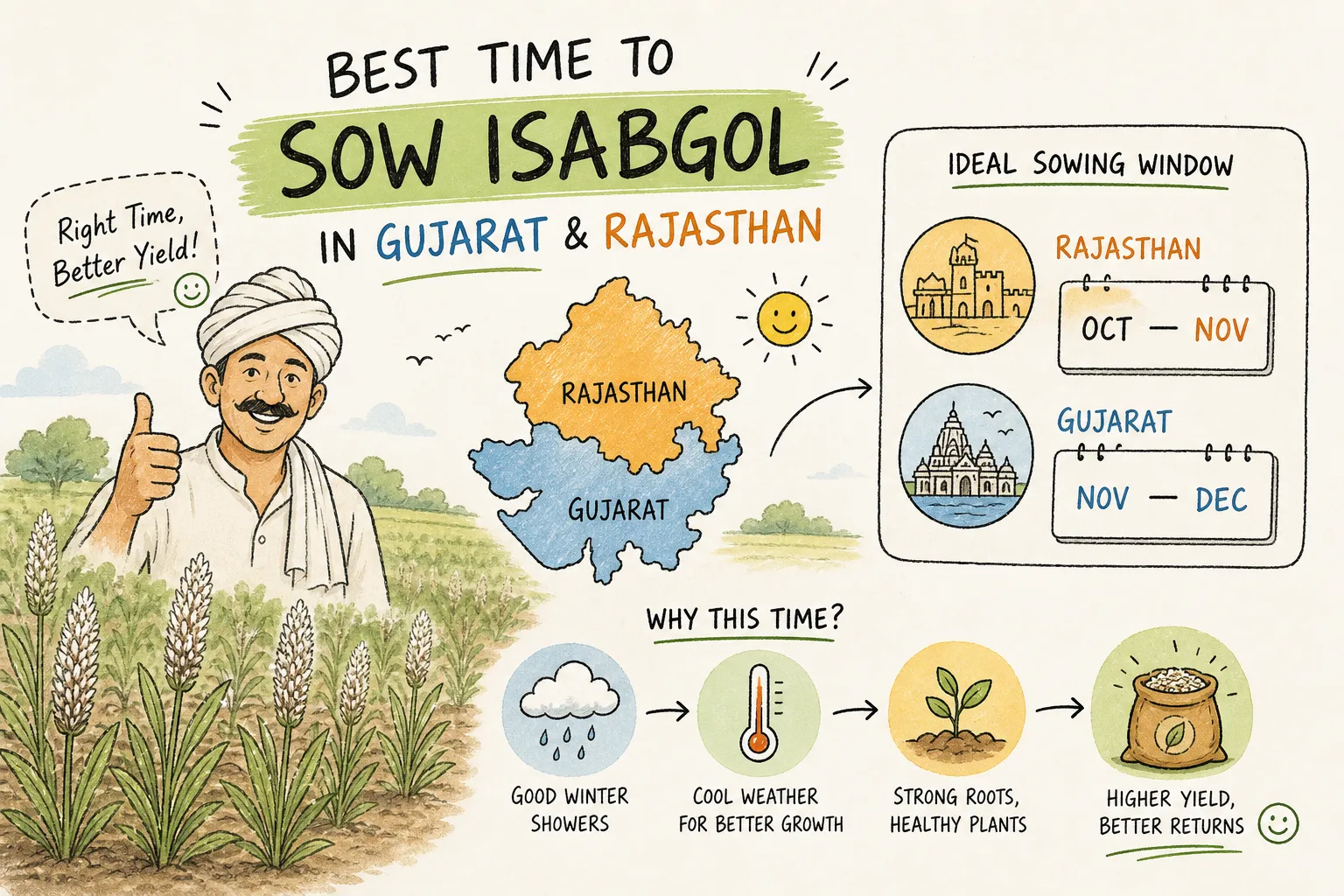
Isabgol ( Plantago ovata) is a low-water Rabi crop that thrives in the dry, sandy soils of western Rajasthan and northern Gujarat. Barmer, Jalore, Nagaur, Jaisalmer, and Jodhpur districts in Rajasthan are the core growing belts, with Chittorgarh and Bikaner also contributing meaningfully to total state output. The crop is sown between October and November and harvested in February and March, fitting neatly into the Rabi calendar without competing heavily for water resources.
India's position in the global psyllium market is extraordinary. The country produces approximately 2.6 lakh tonnes of psyllium annually and supplies over 80% of global demand. The United States alone absorbs roughly 45% of India's husk exports, with Germany, Canada, the UK, and several other European nations making up the balance. For a kisaan (farmer) growing isabgol in Rajasthan, this global footprint means that export order patterns in Chicago or Frankfurt directly affect what a buyer offers at the Nagaur or Unjha mandi.
The difference between the seed and the bhusi (husk)
The word bhusi in Hindi means "outer covering" or "husk." In the context of isabgol, bhusi specifically refers to the thin, pale, translucent seed coat that envelopes the small, oval isabgol seed. This outer layer is physically separated from the inner seed kernel during milling, producing two distinct commercial products: the bhusi (husk) and the de-husked seed or seed flour (beej). When consumers buy "isabgol" from a pharmacy or grocery shop, they are almost always buying isabgol ki bhusi, not the whole seed.
The bhusi is where the biological action happens. It is packed with a soluble fibre called mucilage, which swells dramatically when it contacts water, forming a thick, gel-like mass. This gel property is precisely what makes isabgol bhusi valuable in both medicine and food manufacturing. The inner seed, by contrast, contains mostly starch and protein and is traded separately at lower values.
Why bhusi commands a higher price than the whole seed
Pharmaceutical manufacturers, nutraceutical companies, and food processors specifically demand isabgol ki bhusi because of its high mucilage content. When a company manufactures a bulk laxative, a fibre supplement capsule, or a gluten-free bakery ingredient, it needs concentrated, high-purity husk, not the whole seed. This specific industrial demand is what makes the bhusi fraction so much more commercially valuable than the residual seed material left after de-husking.
A farmer who understands this distinction is better placed at the mandi negotiation table. The price a buyer offers for raw isabgol seed at the mandi is calculated backward from the expected bhusi recovery rate and the prevailing bhusi price. Knowing the bhusi market directly helps a farmer assess whether the offered seed price is fair.
How bhusi is separated from the isabgol seed after harvest
Threshing and cleaning the harvested crop
After the isabgol plant dries in the field, the harvested spikes are threshed to release the tiny seeds. This is done either by hand, with bullocks, or with a mechanical thresher depending on the farm size. The threshed material contains seeds mixed with chaff, dust, and broken plant material, all of which must be cleaned before the seeds are worth anything to a processor.
Cleaning is done through air-blowing, mechanical sieving, and gravity separation. The goal at this stage is to produce a clean, uniform seed lot with minimal foreign matter. Farmers who deliver cleaner seed to the mandi receive better prices because processors face lower cleaning costs on their end. Moisture management during this stage is equally critical, as damp seed fetches significant deductions at auction.
The milling process that produces commercial bhusi
At the processing mill, cleaned seed is passed through a series of attrition mills or roller mills under carefully controlled pressure. The objective is to crack and loosen the outer husk without grinding the inner kernel into flour, since mixing seed flour into the bhusi reduces purity and market value. After the initial milling pass, the lighter, flaky husk particles are separated from the heavier seed kernels using sieves, air aspiration, and gravity separators, a process sometimes called winnowing.
The first milling pass produces the cleanest, highest-value isabgol ki bhusi. Residual husk recovered in later passes tends to be darker and less pure, fetching lower prices. Total bhusi recovery from cleaned seed is typically around 25 to 30% of the seed weight by mass.
Husk grades and purity percentages
Commercial isabgol bhusi is sold in purity grades, with 85%, 95%, 98%, and 99% being the standard trade grades. A 99% purity bhusi means that 99% of the product by weight is genuine psyllium husk with minimal seed fragment contamination. Pharmaceutical exporters, particularly those supplying the US and EU markets, almost exclusively demand 98% or 99% purity material. Domestic food companies typically work with 95% grade.
For the farmer, understanding this grading system matters because the price a mandi buyer offers for raw seed is calculated based on expected husk recovery and the grade that recovery is likely to achieve. A lot with clean, dry, uniform seed will yield higher-purity bhusi, and that directly translates to a better farm-gate price at auction. Presenting a well-cleaned, dry lot is not just about pride of produce; it is a concrete rupee-per-quintal decision.
Industrial uses that put isabgol ki bhusi in global demand
Pharmaceutical and nutraceutical manufacturing
The single largest use of isabgol ki bhusi globally is in pharmaceutical and nutraceutical manufacturing. Bulk laxative powders, fibre supplement sachets, capsule formulations, and oral rehydration preparations all rely on high-purity psyllium husk as their active or primary ingredient. Major domestic pharma companies and international supplement brands source this raw material from Indian APMC mandis, primarily through traders operating out of Unjha in Gujarat and several Rajasthan centres.
This pharmaceutical demand is the dominant price driver in the isabgol market. When global supplement companies place large forward orders ahead of a new product launch, mandi prices in Nagaur and Bikaner respond within days. This is why farmers benefit from tracking not just local mandi arrivals but also broader signals about export order pipelines.
Food processing, bakery, and dairy applications
Beyond pharma, isabgol bhusi serves as a natural thickener, stabiliser, and binding agent in food manufacturing. It is used in gluten-free bakery products, where it mimics the structural role of gluten; in ice cream and dairy desserts as a texture agent; and in sauces and condiments as a clean-label thickener. European and North American food companies, driven by consumer demand for natural fibre ingredients without synthetic additives, have steadily increased their imports of food-grade psyllium husk from India over the past decade.
Export volumes and international market relevance
India's official export earnings from isabgol husk and seed combined were recorded at approximately ₹302.6 crore in FY 2022, 23, and broader psyllium product export estimates by industry bodies suggest values significantly higher when processed formulations are included. The United States is the dominant buyer, followed by Germany, Canada, and the United Kingdom. When export demand from these markets is strong, mandi bhav across Rajasthan and Gujarat rises accordingly. When global demand softens or competing origins gain ground, farm-gate prices follow the same downward path. For a kisaan deciding whether to sell now or hold stock, this global demand pulse is the most important variable to monitor.
Medicinal and health benefits that sustain domestic consumer demand
Constipation relief: what clinical studies actually show
Isabgol bhusi is one of the most clinically studied bulk-forming laxatives available. Randomised trials show that psyllium husk increases stool frequency and softness within approximately two weeks of regular use. In a study of 170 adults with chronic constipation, psyllium outperformed docusate, a commonly prescribed stool softener, in improving both stool water content and bowel-movement frequency. It works by absorbing water in the gut and forming a gel that bulks and softens stools, making passage easier without stimulating or irritating the intestinal lining.
Clinical evidence places isabgol on par with lactulose for managing chronic idiopathic constipation and suggests it performs reasonably well compared with other bulk laxatives. It is gentler and better suited to long-term use than stimulant laxatives. The key requirement is adequate fluid intake with every dose, something many people overlook, and which accounts for most of the complaints people report.
Blood sugar management for diabetics
The soluble fibre gel that isabgol ki bhusi forms in the digestive tract slows carbohydrate digestion and reduces the rate at which glucose enters the bloodstream after a meal. Clinical evidence shows modest reductions in post-meal blood sugar spikes, and some studies report small improvements in fasting glucose and HbA1c in people with type 2 diabetes who use isabgol consistently over several weeks. These are real benefits, though isabgol functions as an adjunct to diabetes management rather than a substitute for prescribed medication.
Diabetics who add isabgol to their routine need to monitor blood glucose more frequently when starting, because, as discussed further in the drug interactions section below, isabgol can enhance the glucose-lowering effect of insulin and oral diabetes drugs, raising the risk of hypoglycaemia. Never reduce diabetes medication without discussing it with a doctor first.
Weight management and feeling full for longer
Isabgol expands significantly in the stomach when mixed with water, creating a feeling of fullness that can reduce overall food intake over the course of a day. Clinical research supports modest reductions in body weight, BMI, and waist circumference in people who use isabgol consistently alongside a calorie-appropriate diet. The weight loss effect is real but gradual; isabgol does not "burn fat" and does not work independently of dietary habits. It is best understood as a practical tool that makes eating less feel easier, not as a standalone weight-loss treatment.
How to take isabgol bhusi correctly: dosage, timing, and preparation
Recommended adult dosage and how to mix it properly
The standard adult starting dose is 5 g (approximately one level teaspoon) once daily. This can be increased to 5, 10 g once or twice daily if needed and well tolerated. The single most important preparation rule: mix each dose in at least 240 ml of water (a full standard glass), stir briskly, and drink it immediately before the mixture thickens. Follow immediately with a second full glass of water. Taking isabgol without enough fluid is the most common cause of bloating, cramps, and in serious cases, intestinal blockage.
In India, people commonly mix isabgol in chaas (buttermilk), juice, or warm water with a little lemon, all perfectly acceptable ways to take it. Starting with a smaller dose and building up gradually over a week or two significantly reduces gas and bloating as the gut adjusts.
Timing and what to avoid when taking it
Do not take isabgol immediately before lying down or going to bed. It is best taken during the day, ideally with a meal or between meals, when you are upright and able to drink plenty of fluids. Keep isabgol at least two hours away from other oral medicines, and ideally three hours away from aspirin, digoxin, and nitrofurantoin specifically. This separation matters because isabgol can delay or reduce the absorption of other drugs, including thyroid medicines like levothyroxine, seizure medications, and some antidepressants. If you are on multiple medications, ask your pharmacist to confirm the right separation intervals for your specific drugs.
Side effects, drug interactions, and who should be careful
Common gastrointestinal side effects and how to manage them
Gas, bloating, and mild abdominal cramping are the most commonly reported side effects when starting isabgol. These typically ease within a week as the digestive system adjusts to increased fibre. Starting with a half-dose for the first few days and increasing gradually reduces this adjustment discomfort considerably. The most serious physical risk is taking isabgol with insufficient water; if the husk swells in the throat or oesophagus before reaching the stomach, it can cause choking or, further down, intestinal obstruction. Never swallow dry isabgol powder directly.
Drug interactions: diabetics and people on blood thinners
Diabetics face two specific concerns. First, isabgol can enhance the glucose-lowering effect of insulin, glipizide, glimepiride, and other diabetes drugs, raising the risk of hypoglycaemia (low blood sugar). Monitor glucose readings more frequently when you first start isabgol and watch for symptoms like sweating, shakiness, dizziness, or confusion. Second, some flavoured isabgol products contain added sugar or sodium, so always read the label if you are managing blood sugar or blood pressure carefully.
For people on warfarin or other blood thinners, the direct interaction with isabgol is not strongly established in the evidence, but altered fibre intake can affect drug absorption consistency. Keep your isabgol intake consistent day to day and have your INR (blood clotting) checked after starting it. Users of aspirin, digoxin, and nitrofurantoin should maintain at least a three-hour gap between these medicines and their isabgol dose, the same separation principle mentioned in the timing section above. When in doubt, a five-minute conversation with your pharmacist before starting isabgol is always the safest approach.
Who should consult a doctor before starting isabgol
Certain conditions require medical clearance before using isabgol. Do not start it without consulting a doctor if you have suspected intestinal obstruction, significant difficulty swallowing, unexplained rectal bleeding, severe abdominal pain, or if you are under fluid restriction for a kidney or heart condition. Children under 12 should only use isabgol under the guidance of a paediatrician. If constipation is accompanied by unexplained weight loss, blood in the stool, or vomiting, seek medical evaluation rather than self-treating with any laxative, including isabgol.
Isabgol ki bhusi mandi bhav: what price per quintal should farmers expect at APMC
Current price range at major APMC mandis
As of now, isabgol ki bhusi prices at major APMC mandis are ranging broadly between ₹9,000 and ₹15,855 per quintal depending on quality, moisture content, and the specific mandi. For ordinary-to-good quality lots, the practical working range across Rajasthan and Gujarat mandis is approximately ₹11,000 to ₹13,500 per quintal. Premium, high-purity, low-moisture lots at mandis like Unjha, Bikaner, Phalodi, and Nagaur have been touching or exceeding ₹13,500.
| State | Major APMC Mandi | Recent Price Range (₹/quintal) | Modal Price Indication |
|---|---|---|---|
| Rajasthan | Nagaur | ₹9,000, ₹13,500 | ~₹12,000 |
| Rajasthan | Phalodi | ₹11,500, ₹13,800 | ~₹12,800 |
| Rajasthan | Nokha | ₹9,800, ₹13,250 | ~₹12,500 |
| Rajasthan | Bikaner Grain | ₹12,975, ₹13,413 | ~₹13,000 |
| Rajasthan | Jodhpur Grain | ₹9,000, ₹13,500 | ~₹11,250 |
| Rajasthan | Bhinmal | ₹9,500, ₹9,950 | ~₹9,732 |
| Gujarat | Unjha | ₹10,000, ₹13,625 | ~₹13,550 |
| Gujarat | Siddhpur | ₹10,555, ₹13,047 | ~₹11,500 |
| Gujarat | Dhanera (Banaskantha) | ₹11,000, ₹11,525 | ~₹11,275 |
| Gujarat | Sami | ~₹11,750 | ~₹11,750 |
These are wholesale APMC auction indications reflecting actual bol-chaal (bidding) outcomes, not guaranteed farm-gate offers. Isabgol has no declared MSP, so prices are entirely market-determined and can shift meaningfully from one day to the next based on arrivals and buyer activity.
What factors push isabgol bhusi prices up or down
The most powerful price driver for isabgol ki bhusi is export demand from the US, EU, and other major importing countries. When pharmaceutical companies place large forward orders, buyers at Unjha and Nagaur compete more aggressively and prices across the belt rise quickly. The reverse is equally true: if global demand softens or carryover stocks are heavy, mandi prices can drop sharply even within a single week. Seasonal arrival volume matters enormously too; heavy arrivals immediately after harvest increase seller competition and push prices down, while thin arrivals in the lean season support prices.
Quality is a consistent premium driver. Clean, dry, well-sorted lots with low moisture and minimal foreign matter fetch better prices at every mandi, regardless of the broader market direction. Damp or contaminated lots receive deductions that can amount to hundreds of rupees per quintal. For a farmer deciding when to move their fasal (crop) to the mandi, monitoring both quality-related deductions and daily arrival volumes at Unjha, the primary price-discovery centre for this commodity, gives the clearest picture of where to sell and when.
How to track live isabgol bhusi rates before selling
Relying on word-of-mouth mandi gossip before deciding where to transport your fasal is a costly habit. Prices at Sikar, Jalore, and Unjha can differ by hundreds of rupees per quintal on the same day, and the cost of choosing the wrong mandi can easily exceed a day's transport savings. KhetiKisaan publishes verified, ground-sourced isabgol ki bhusi mandi bhav daily, with prices pulled from our network of on-ground contacts physically present at live APMC auctions during actual bol-chaal bidding. These are not delayed government feeds or averaged estimates; they reflect what buyers are actually paying that day.
Before loading your isabgol lot onto a truck, check KhetiKisaan for rates across multiple mandis. Comparing Nagaur, Bikaner, and Unjha rates in real time takes less than five minutes and can mean a difference of ₹500 to ₹1,000 per quintal in your favour. For a kisaan with five to ten quintals to sell, that is a straightforward and meaningful improvement in munafa (profit).
Consumer buying guide: forms, brands, and what to check before buying
Whole husk vs powder vs capsules: which form suits you
For everyday constipation management and regular fibre supplementation, plain whole isabgol ki bhusi is the best-value option available in India. It is unprocessed beyond the milling step, mixes easily with water or chaas, and delivers a full dose of mucilage without additives. Powder is finer and mixes slightly faster, but it also thickens faster in the glass, so you need to drink it immediately after stirring. Both husk and powder deliver comparable fibre; the choice is mostly about texture preference.
Capsules are convenient for travel or occasional use, but they are expensive for daily supplementation. Each capsule typically contains 500, 1,000 mg of psyllium, meaning you may need four to eight capsules to match a single teaspoon of husk. At ₹300 to ₹450 per bottle of 60 to 120 capsules, the per-dose cost adds up quickly. Use capsules when convenience is the priority; stick to husk or powder for daily use.
Reliable brands and realistic price ranges in India
India has a well-established range of isabgol products across price points. The table below covers the main options currently available at pharmacies and online retailers.
| Form | Common Brands | Indicative Retail Price |
|---|---|---|
| Whole husk / flakes (bhusi) | Sat-Isabgol, Dabur Sat Isabgol, Organic India, Baidyanath, Patanjali, Organic Tattva | ₹150, ₹350 for 100, 200 g |
| Powder (plain) | Baidyanath, Dabur Nature Care, Patanjali, Organic India, Multani Essentials | ₹130, ₹400 for 100, 375 g |
| Flavoured or combination products | Fybogel, Softovac, Dabur Nature Care, Naturolax-A, Carbamide Forte | ₹170, ₹600 depending on size and formulation |
| Capsules | Carbamide Forte, Bhumija Lifesciences | ₹300, ₹450 for 60, 120 capsules |
When comparing products, use price per 100 g as your benchmark, not the total pack price. A 200 g pack at ₹300 is better value than a 100 g pack at ₹180, even though the absolute price is higher. Always choose a sealed product that clearly states the psyllium or isabgol content per serving. Avoid products that list many additional herbs or flavourings unless you specifically want them, as these additions make it harder to gauge the actual fibre dose you are getting.
Isabgol ki bhusi: the crop that connects farm to pharmacy
Isabgol ki bhusi is genuinely rare in Indian agriculture: it is a crop where the farmer growing it in the sandy fields of Barmer, the pharmaceutical manufacturer sourcing it from an Unjha trader, and the urban consumer mixing it into a glass of water every morning are all depending on the same product. For farmers, bhusi is a high-demand export commodity with volatile but potentially strong prices, where quality management and market timing directly determine profit. For consumers, it is one of the most well-evidenced natural fibre supplements available, with solid clinical backing for constipation relief, blood sugar management, and appetite control when used correctly.
Understanding both sides of this supply chain makes everyone in it smarter. A farmer who understands pharmaceutical export demand cycles makes better selling decisions. A consumer who understands the importance of water intake and drug-separation timing gets better results from the same product. The connection between the Rajasthan field and the pharmacy shelf is shorter than most people realise, and the quality of information at each step determines the outcome at every other step.
For daily, ground-verified isabgol ki bhusi mandi bhav across Rajasthan and Gujarat mandis, bookmark KhetiKisaan. Our on-ground contacts report live auction prices from APMC yards every day, giving you the rate information you need to negotiate with confidence rather than guesswork.
FAQs
Related Blogs
Sep 23, 2026
by Pankaj Sihag
Sep 19, 2026
by Pankaj Sihag

Sep 09, 2026
by Pankaj Sihag
Sep 08, 2026
by Pankaj Sihag